
BAM 73 Zero Denim
Gear
Stories Behind the Gear: BAM 73 Zero Denim
Sustainable Jeans Made For Action
Written by Jenny Tough // Photography courtesy of BAM
‘First and foremost, the products have to be superior – best in class. Then the consumer wants to feel good about what they’re buying. We need to get both right: excellent products, and authenticity in our business’ —David Gordon, Founder of BAM
It takes, on average, 2,000L of water to manufacture one pair of regular jeans – the equivalent of three years of drinking water for the average person. Cotton farming is heavily fertilised and irrigated, and the bleach used to style many jeans ends up back in the ecosystem. The metal used in flies and pockets prohibits jeans from being recycled – instead, they go to landfill. With 4.5 billion pairs of jeans sold worldwide each year, the chain of problems in the life cycle of denim is staggering.
In 2018, the Ellen MacArthur Foundation launched the Jeans Redesign – a project aimed at challenging manufacturers to create sustainable denim. BAM Clothing – a company based in the UK, who, as the name suggests, create sustainable bamboo activewear – proposed a solution, and, with the aid of the foundation, BAM’s 73 Zero Jeans were born.
Organic cotton mixed with bamboo, two thirds less water, and no bleach made a good start towards fixing the manufacturing process, but BAM knew there was more to sustainability – the jeans needed to be good. Sustainability doesn’t end at the manufacturing process. Products also need to be desirable and durable. The jeans must be an item that users won’t need to replace constantly, and they still have to be affordable.
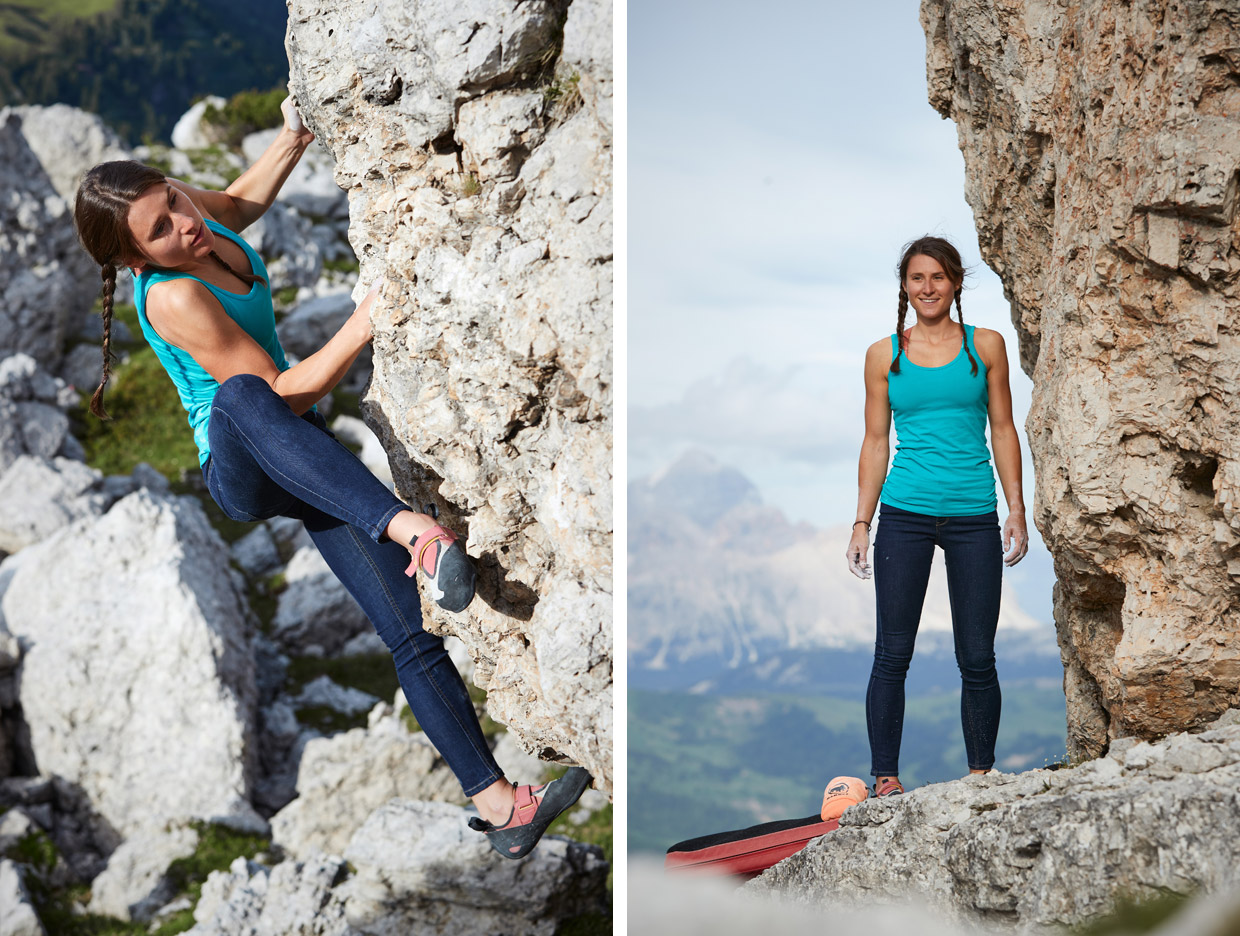
Staying true to their customers and products, BAM jeans are flexible, comfortable, stylish, and made for adventure. Thanks to a small amount of elastane, they are made to stretch and move – which BAM promoted through their launching images of the jeans on a pair of outdoor rock climbers, seamlessly moving on the wall with harnesses fitted over the jeans.
‘We’ve brought an element of performance to a product that didn’t previously have that, and to me, that’s exciting,’ David says. ‘Conventional jeans aren’t good for the planet. So when we decided to make jeans we knew we had to do it differently. We wanted sustainable jeans that could be fully recycled. We wanted them to be supersoft. And we wanted them to be made for action. There were no jeans like this on the market and it took us three years to create them. Here’s how BAM jeans are different.’
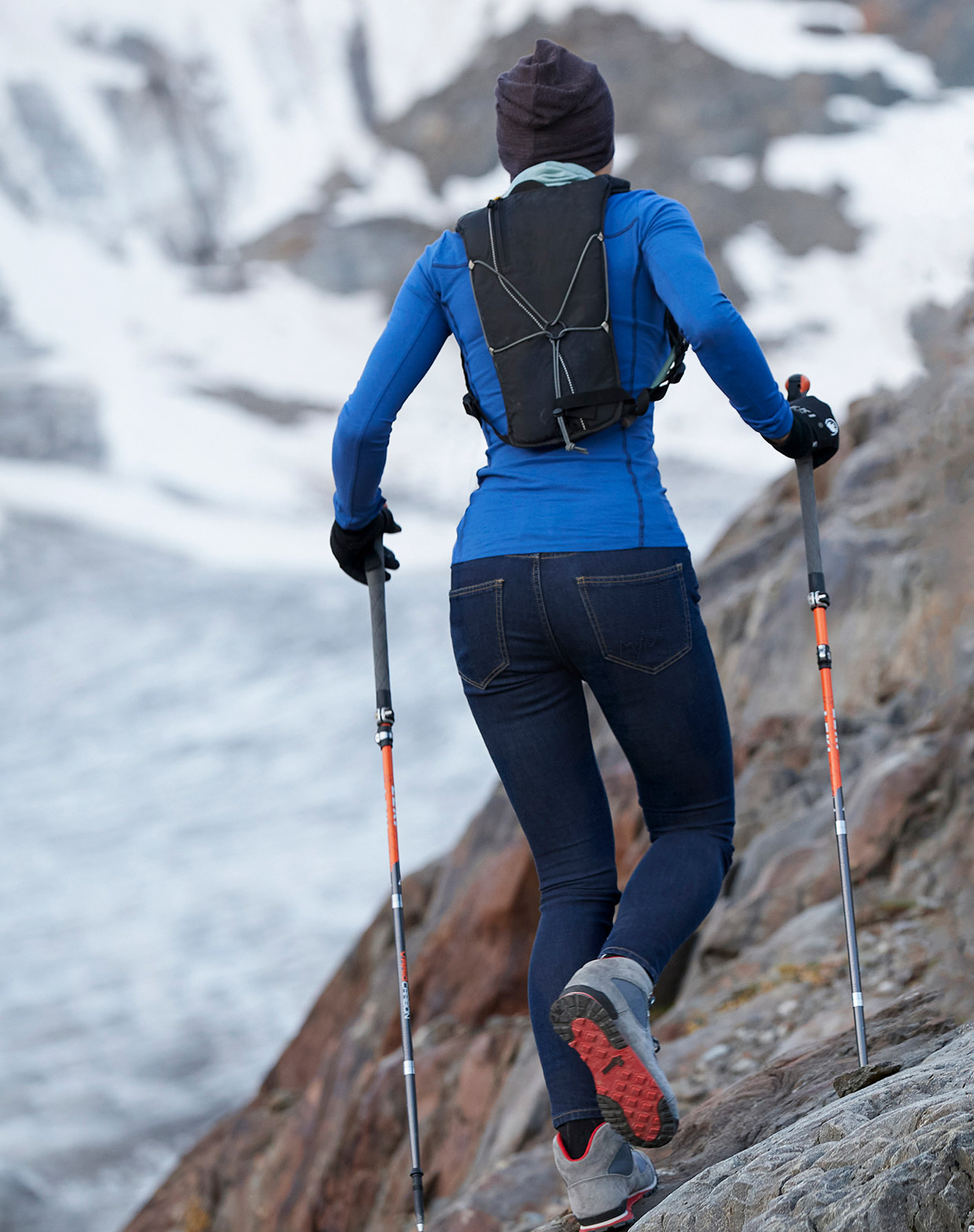
As a long-time endurance adventurer and dedicated fan of comfortable synthetic fabrics for outdoor pursuits, I was admittedly nervous about heading into the mountains wearing denim. Although most of my fears were about the optics of it – ‘unprepared woman heads into Canadian wilderness in a pair of jeans’ – I also wondered how it could possibly be comfortable. The past two decades of the fashion industry’s take on women’s jeans have solidified my impression that they are the least comfortable – and most movement-restricting – legwear a girl can find. So I started with a short hike, so if I got into trouble I could just go home quickly and change into something else.
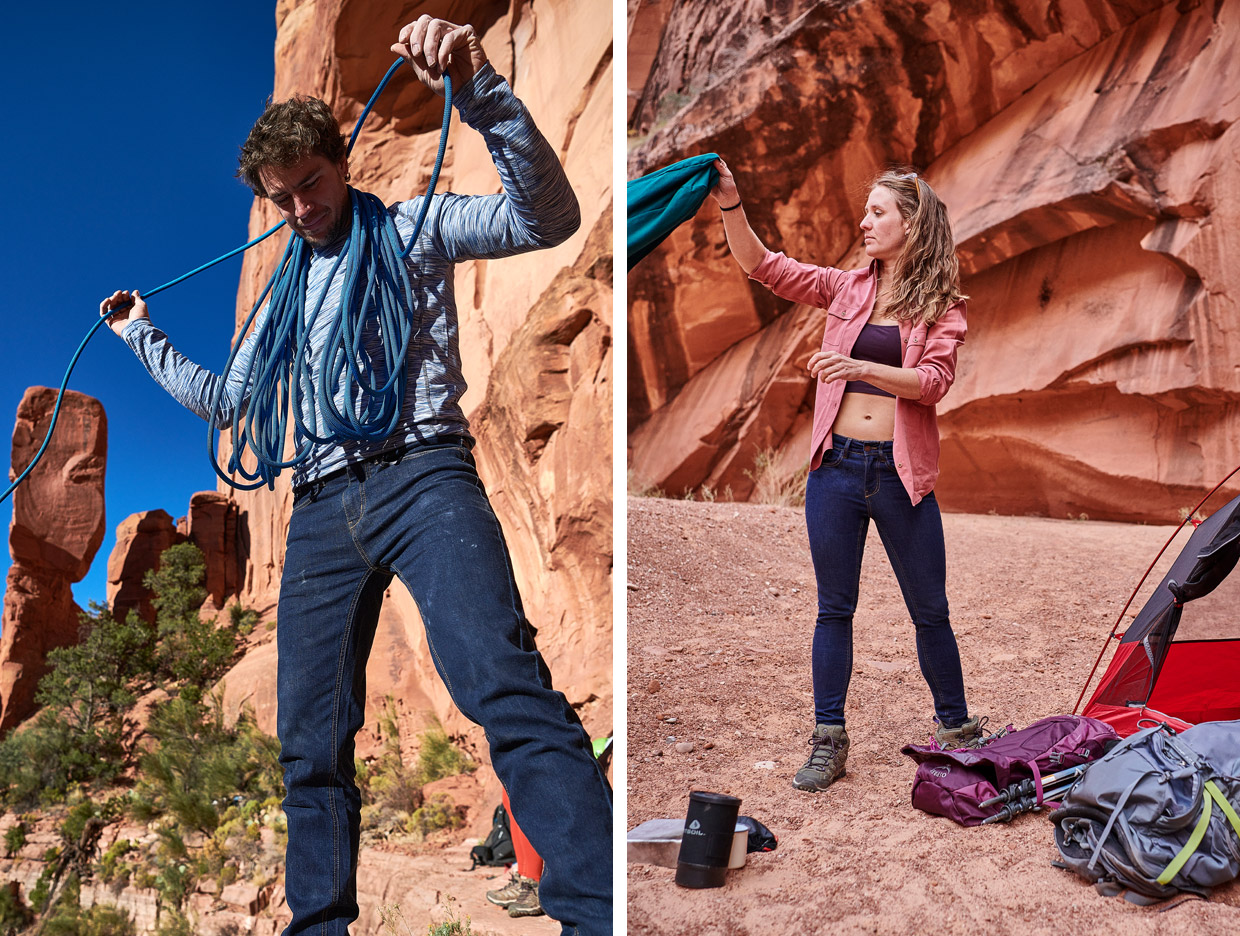
Over the course of a month with the jeans, my opinion on denim changed completely. I could cycle into town with them, go on hikes that had decent amounts of scrambling and technical trail features, and just hang out at home or work – all as comfortably as I am used to in my lockdown look of yoga tights or sweats. And let’s face it, jeans are pretty dressed up for most of us these days.
The pockets are ample and functional (rare for women’s jeans), and the high waist stays in place. I was truly impressed by the stretch, which was just as good as a pair of tights. The classic blue colour – not using any bleaches – held up in the wash and, despite my best efforts, my jeans still look as good as new.
While leisurewear is becoming more active, and activewear is becoming more attractive, products like this meet the needs of a growing number of people who live active lifestyles and are interested in how their goods are manufactured.
‘Sustainability doesn’t end at manufacturing; it’s the product’s entire lifetime, and that’s the part that a lot of brands don’t measure,’ Dave says, adding that the length of time a person owns and wears their products is an important measurement. Durability along with a timeless look will ensure that these jeans fulfil that end of the promise. While new brands utilising innovative fabrics, better manufacturing processes, and sustainable business models offer a strong sign that the apparel industry is improving, Dave mentions that it is entirely in the public’s hands. ‘Consumers have the ultimate power – if they use it.’
For more information on BAM 73 Zero Denim, visit bambooclothing.co.uk/bamboo-denim-jeans and find them on Instagram @bamboo_clothing
Written by Jenny Tough // @jennytough. Produced with support from BAM.