Riding The Waves
Gear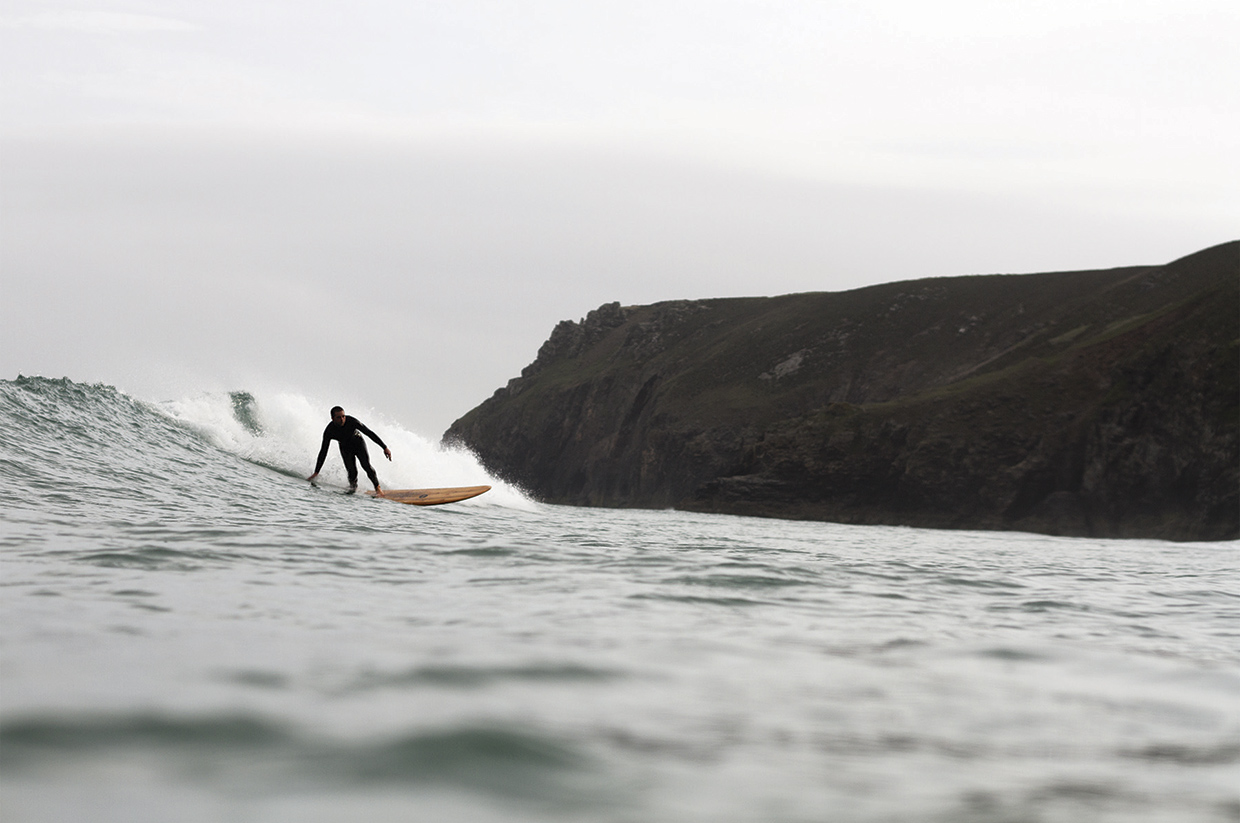
An interview with Otter Surfboards founder, James Otter, about marrying his passion for surfing and woodwork to make surfboards for people and the planet.
James Otter is a TEDx speaker, Do Book author, and founder of Otter Surfboards: a family-owned workshop nestled in a small village in Cornwall, handcrafting custom wooden surfboards since 2008. We chat to James about why he wants to get people out of their heads and making things with their hands.
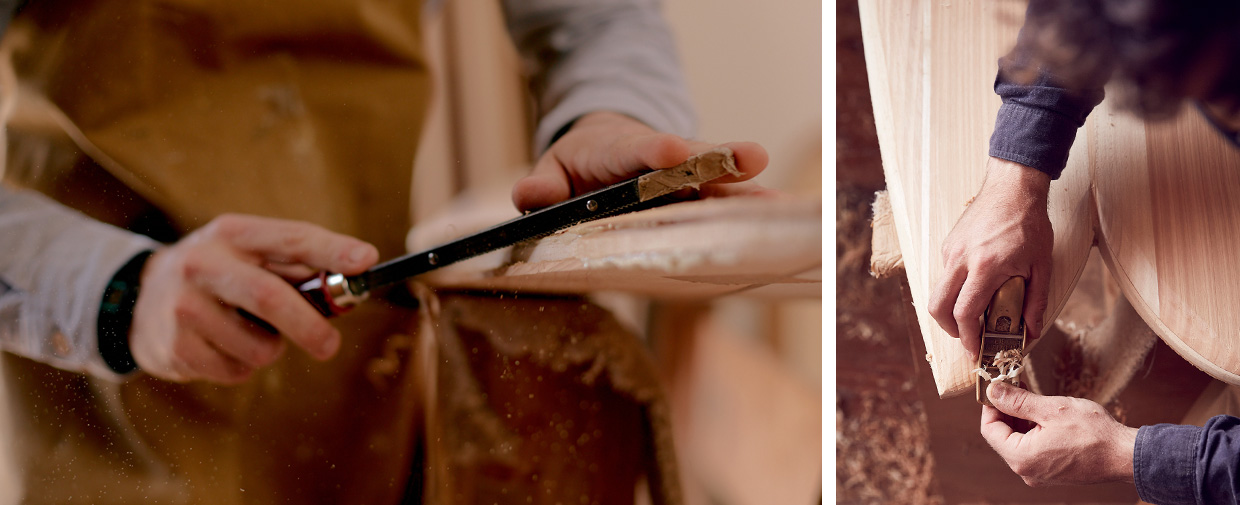
James Otter feels like a kid again as he wades out to sea with a wooden surfboard he just finished making by hand. ‘There’s a feeling of nervousness, coupled with – and often overridden by – a giddy excitement, because you get to see pieces of wood evolve over 100 hours into this beautiful object designed for the ocean,’ he explains. ‘When you finish shaping the board, all you want is to go surfing, to see how it glides in the water and feels under your feet.’
James has been going against the grain to carve out a life he loves from a young age. His dad, Andrew, always told him to ‘stick to what you enjoy and you will end up doing something you love’. In 2010 he founded Otter Surfboards, making handcrafted wooden surfboards. ‘It still doesn’t feel like a job for me,’ he says. ‘I’m marrying two passions – surfing and woodwork – so they are two things I would be doing anyway. And I get to do it while surrounded by friends and family who work here. It’s ridiculous.’
The family-owned business includes James’s childhood best friend, Ally Bernstone, who helps out with just about everything in the workshop. Chris Wootton originally joined the team on a work placement after university and never left. Liz Otter, James’s better half, has worn many hats over the years and now looks after their son, William, and daughter, Olivia, while studying for her master’s in Art Therapy. James’s mum, Trudy, works on accounts, and his dad, Andrew, helps to navigate the business through changing seas. Their dog, Buddy, supervises from a sunny corner in the workshop.

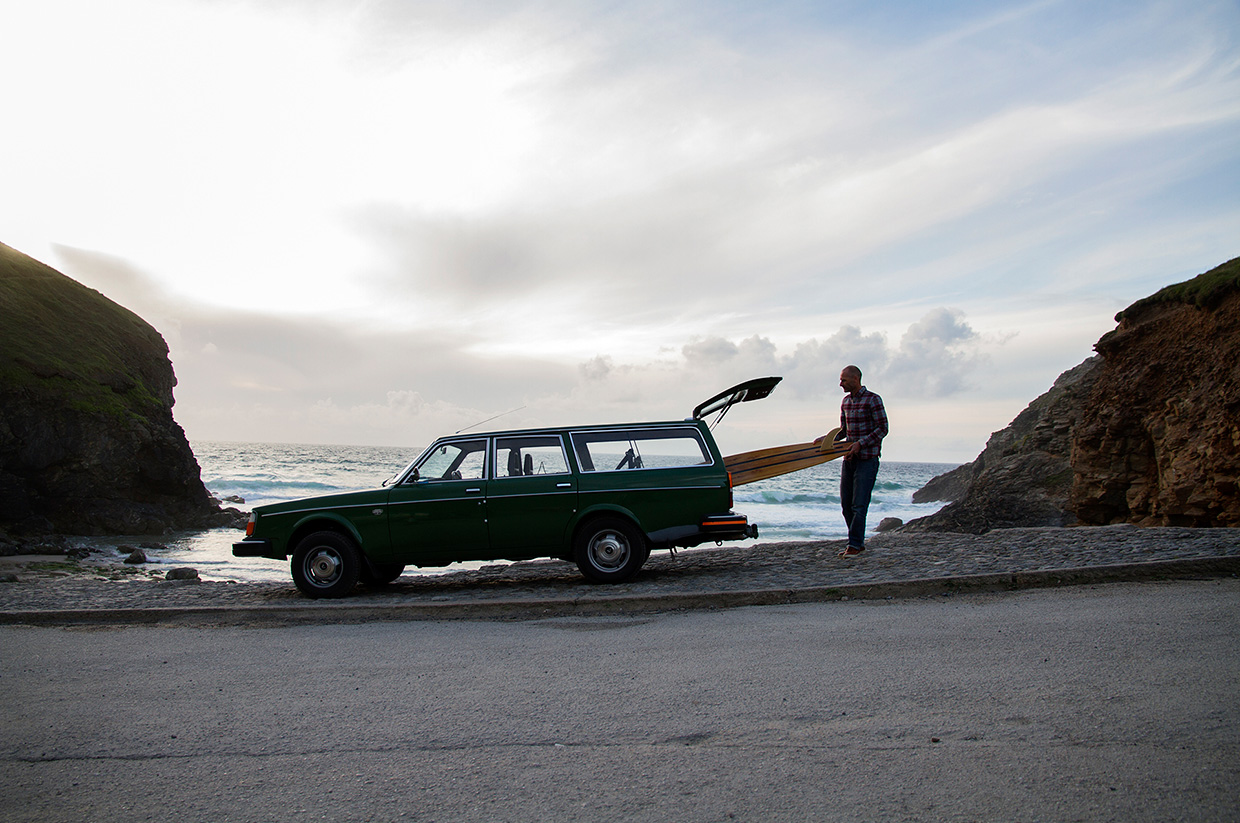
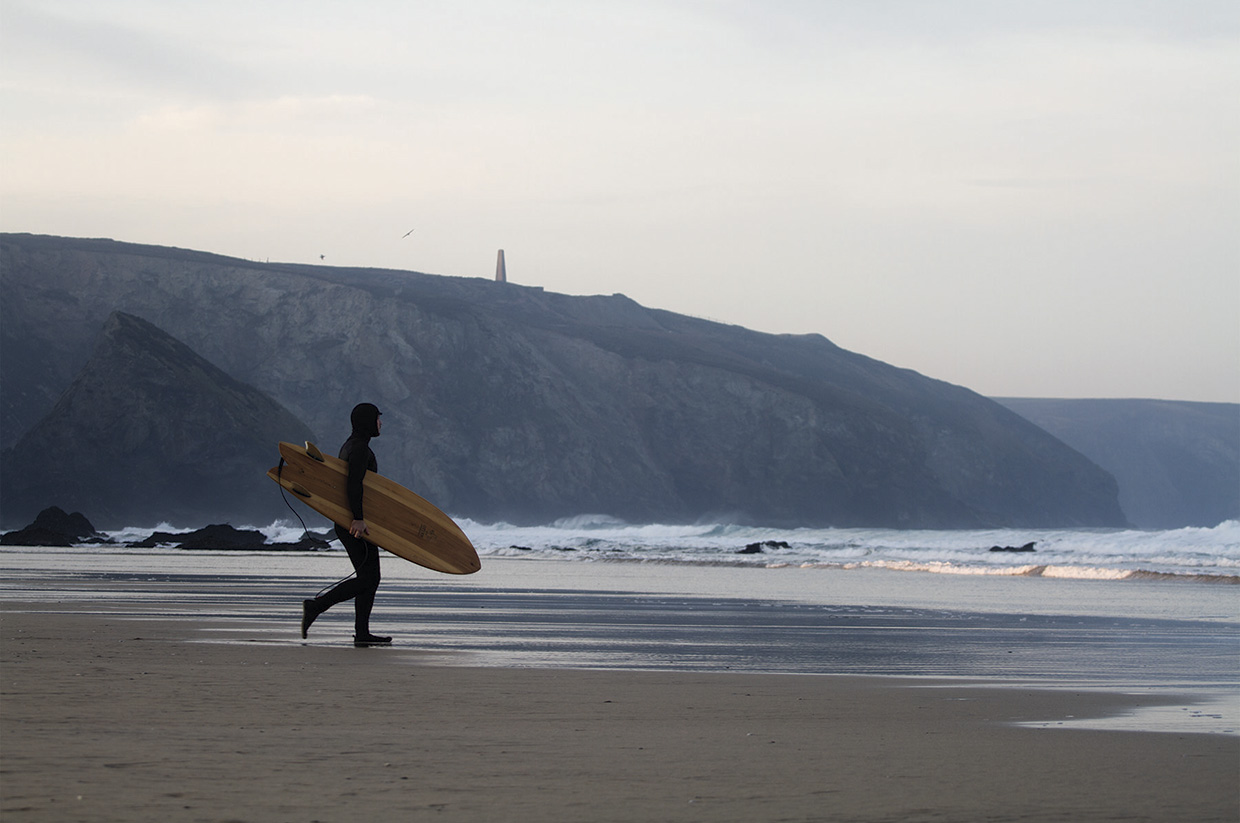
What’s it like to work with his nearest and dearest? ‘It’s cool. Every Monday, we get together on the beach and go for a surf before work,’ he says. The workshop is nestled in Porthtowan – a small village a stone’s throw from the beach in Cornwall. ‘Because the coast is on our doorstep, it’s easy to go weeks without surfing if the conditions aren’t right. So it made us think, “Why don’t we get together every Monday morning regardless of the weather?” There are so many benefits to just getting in the ocean and we always feel better when we get out.’ James is usually first out of the water, as he drops his son at pre-school. ‘I find myself skipping back to the workshop knowing I’m going to see Chris and Ally again. It’s cool to still have that level of excitement 12 years on.’
James has always been excited about making things. His creativity was nurtured by the people closest to him throughout his childhood. ‘I grew up in the Chilterns submerged in woodland. I remember hoarding sticks while walking the dog, picking dried mud off my knees, and escaping into the hills on my bike. So it seems natural to have always been drawn to wood.’
James experimented with other materials, like metal and clay, while studying furniture-making and design at Plymouth University, but he always came back to wood. ‘There’s just something special about it. The depth of opportunity for learning is vast when it comes to woodwork. You’re always testing, twisting, and trying new things out.’ After picking up the ‘Wood Issue’ of The Surfer’s Path in the summer between terms, he returned to his final year with an idea. ‘I wanted to finish the degree having made one or two wooden surfboards, but my tutors said it wouldn’t fit the marking criteria.’ So he went ahead and made the boards anyway – using the same techniques to make a series of furniture as well, ‘just to get good grades’.
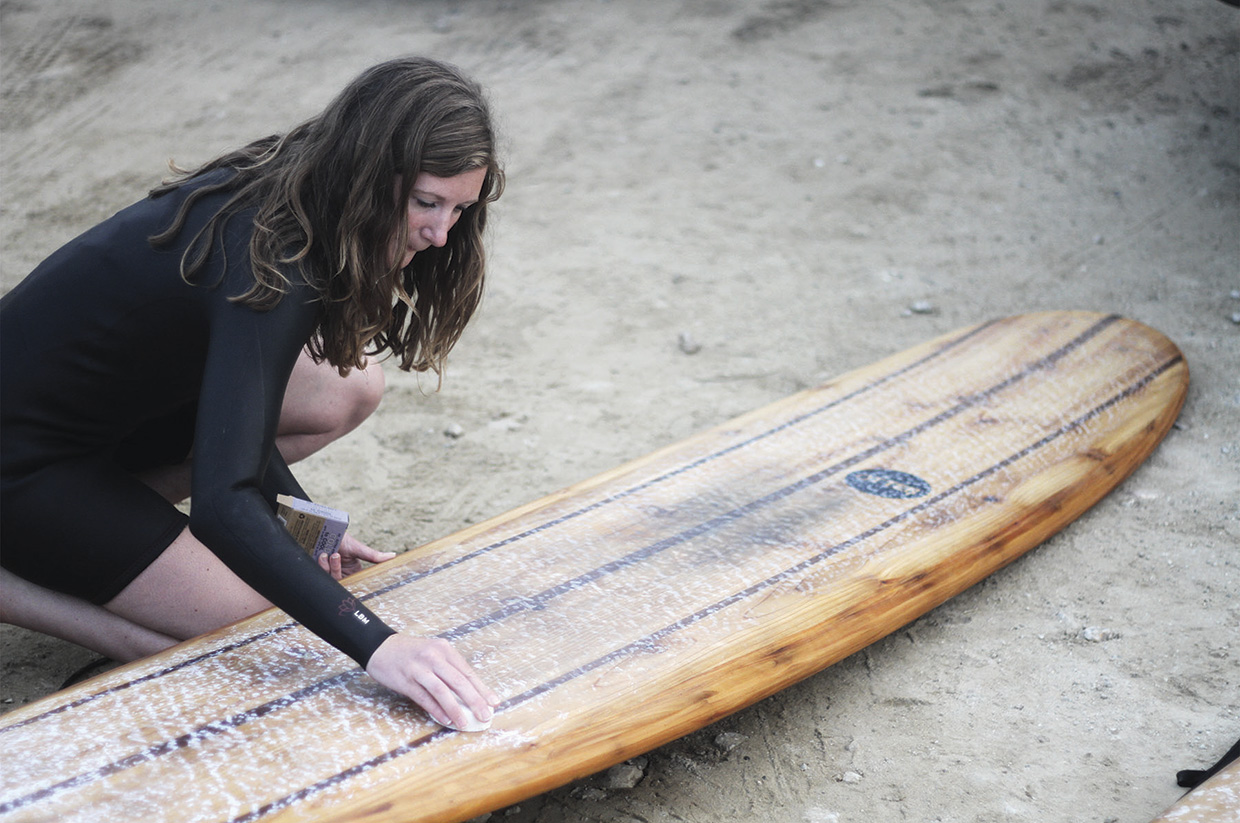

Making surfboards out of wood isn’t new – people from all over the world have been riding waves on wooden surfboards for thousands of years. But they fell out of fashion in the 1950s, when polyester foam – a non-biodegradable material that is cheap and easy to shape – began to be used instead to meet demand. ‘The main features of a surfboard are that it needs to be lightweight and robust. But wood is heavier than foam. So we use a construction technique called skin-on-frame, which allows us to bring the boards much closer to the weight of a foam board.’
This hollow skin-on-frame construction technique, which can be compared with the skeleton of a fish, was a technique first pioneered by surfboard designer Tom Blake in the 1930s. ‘When hollowed out, I would argue wood is the only natural material that is suitable for making surfboards,’ James says. Once the woodwork is finished, it is laminated with bio-epoxy resin and fiberglass cloth. ‘This is the part of our process with the largest environmental impact, so we use the least amount of the lowest-impact materials that will last the longest time possible.’ They take the boards to a local craftsman, Paul Fluin. ‘He’s the best surfboard laminator in the country.’
James’s interest in wood goes all the way back to understanding the trees themselves, the way they grow, and the factors that form defects or features. Guided by curiosity, he looked into the species that grew in the south-west and would be suitable for making a surfboard – western red cedar was both commercially viable and available. Through his research, he found Nick, who runs the Stourhead Western Estate, a woodland in Wiltshire.
Nick’s approach to forestry management is unique. ‘He mixes deciduous and non-deciduous trees in the same woodland, so that when you pull a tree out, there is another one ready to fill its place.’ Having a rich, biodiverse woodland also means that Nick doesn’t have to replant as often as in a mono-crop woodland. ‘A woodland of this size would normally require 12,000 to 15,000 trees to be planted every year. But Nick plants around 2,000 because of the natural regeneration. He’s hoping to get to a stage where he doesn’t have to plant anything at all.’

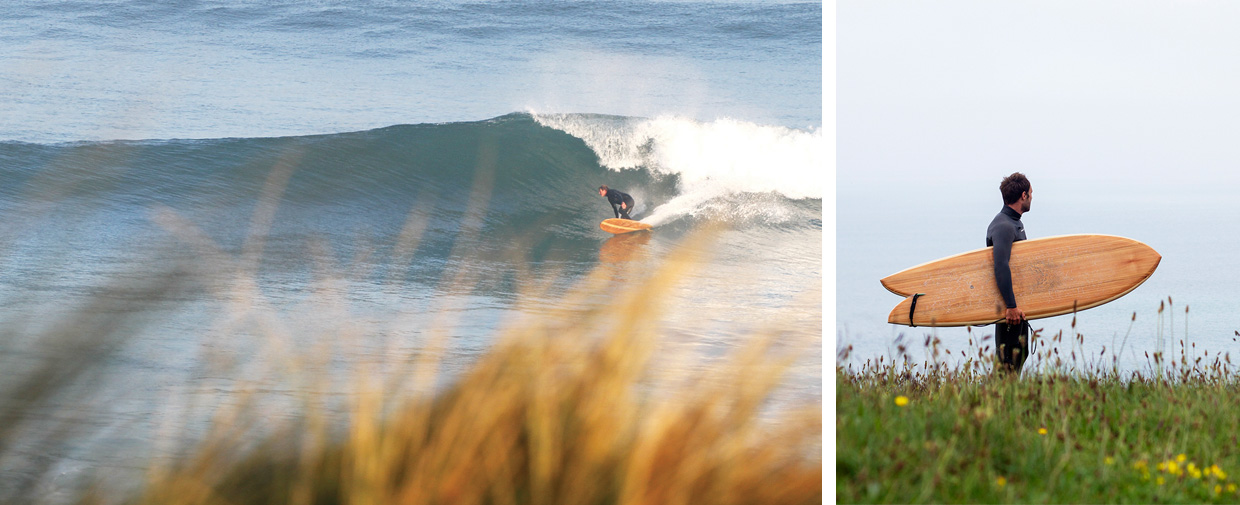
All Otter Surfboard wood is certified by the Forest Stewardship Council. ‘Having that stamp means the process adheres to their recommendations on how timber should be treated. The best way to find out if the wood is sustainable, though, is to see it for yourself. For me, that was a big part that I enjoyed. To pinpoint – oh, that tree has stood there for 30 years. That’s pretty cool.’ He describes himself as a steward of the land – a legacy left by his grandad, who passed away in 2010. A farmer and loving man, he was deeply committed to the environment and his animals. ‘We’re here for a fleeting moment compared to the land, so it’s our job to look after the land for future generations.’
James now wants to pass on everything he knows to other people. He’s done a TEDx talk and written a Do Book titled Do Make, The Power Of Your Own Two Hands, an inspirational pocket guide about making wooden surfboards. Otter Surfboards also deliver immersive workshop experiences where they teach people how to make their own wooden surfboard, paddleboard, bellyboard, or hand plane.
‘We want to get people out of their heads and making things with their hands. A lot of people end up sharing very personal things here, which is really special. It gives people an opportunity to stop, reflect, and breathe. Some people come to the workshop thinking they won’t be able to do it. But they end the week with a physical object which undeniably shows that they can.’
James’s Do Book, Do Make, The Power Of Your Own Two Hands, is available here: thedobook.co
Written by Harriet Osborne // @harrietosborne
Photography courtesy of Otter Surfboards // ottersurfboards.co.uk // @ottersurfboards