Something About the Ocean
Field Journal Explore Inspiration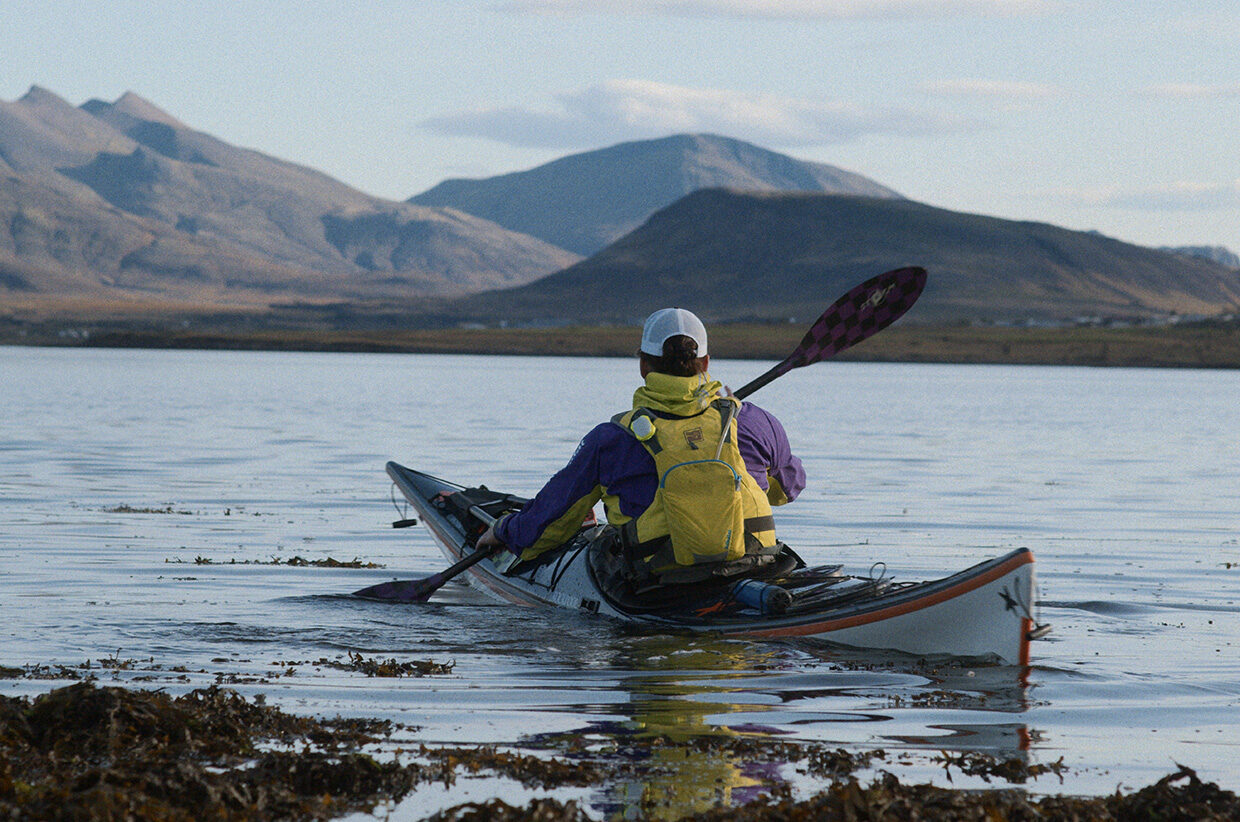
In Conversation with Veiga Grétarsdóttir
Photography Courtesy of Patagonia
Veiga Grétarsdóttir is a sea kayaker, guide, and passionate environmentalist. She discovered her deep connection with the ocean in 2018, on a pioneering circumnavigation of Iceland – 2,000km against the current. Since then, she has spent her time cleaning up Iceland’s coastlines and campaigning for nature. Her recent activism shines a light on the growing environmental impact caused by the open-net pen salmon farming industry on her home country. Here she talks about shifting perspectives, her hopes for a more sustainable future, and why living more simply should be a goal for us all.
Sidetracked: What is it about sea kayaking that appeals to you so much, and how did you first get into it?
Veiga: I first started paddling in 2003 and fell in love with the sport right away. I had always liked nature, and as I got more into paddling, I realised I could go out for a long trip with just my tent. What I find fascinating is that it’s like a meditation. You’re alone, so close to nature, sitting so low on the water; you see the land with a different point of view, and you are able to get so close to all the wildlife, the seals, birds, whales. It’s like I’m going to another world. And there’s just something about the ocean – so much power.
And you’ve been paddling ever since?
I was paddling up to 2010. But I’d met my wife the year before, and we had two kids. Although we were still skiing and camping and things, I couldn’t do everything – so I stopped paddling. But I went back to the sport in 2016 after I came out, finished my gender reassignment, and got divorced. In 2017 I got fully into the sport.

You’ve undertaken some extreme kayaking challenges, including circumnavigating Iceland, and now attempting to paddle the entire Scandinavian coastline. What inspires these attempts?
In the kayak centre in my home town, Ísafjörður, is a hand-made kayak from Greenland up on the shelf with 14 names written on it. This is our guestbook, and to be able to write your name on this guestbook, you must have paddled around Iceland.
After seeing this, I knew I wanted to do a big expedition, but never had the courage. I started thinking about it in 2017. It took me a couple of months just to make the decision to do it. I was in Greenland in the autumn, guiding on a sailing boat, and the captain said, ‘You know, Veiga, you have been going against the current your whole life. So, you should paddle this against the current.’
After some discussion, I thought, OK, I will do it. I’ll go against the current.
You became the first person to circumnavigate Iceland anticlockwise, against the prevailing current, in 2019. What impact did that journey have on your life?
It had a huge impact. My life has never been as simple as in those three months. It took me 103 days. Just me, my kayak, and my tent. The only things I had to think about were paddling, sleeping, eating, and checking the weather forecast. I realised that I liked the minimalist lifestyle.
Also, before this trip, I always thought that Iceland was a clean and beautiful country, but I discovered that the whole south coast was just full of trash – and this made me so sad. I never thought about environmental issues before. For example, my ex-wife was always dividing the trash for recycling… The plastic here and paper there… I hated it. But when I came back from the trip I started going out on my kayak just to pick up trash.
What motivated you to become involved in the campaign against open-net pen salmon farming?
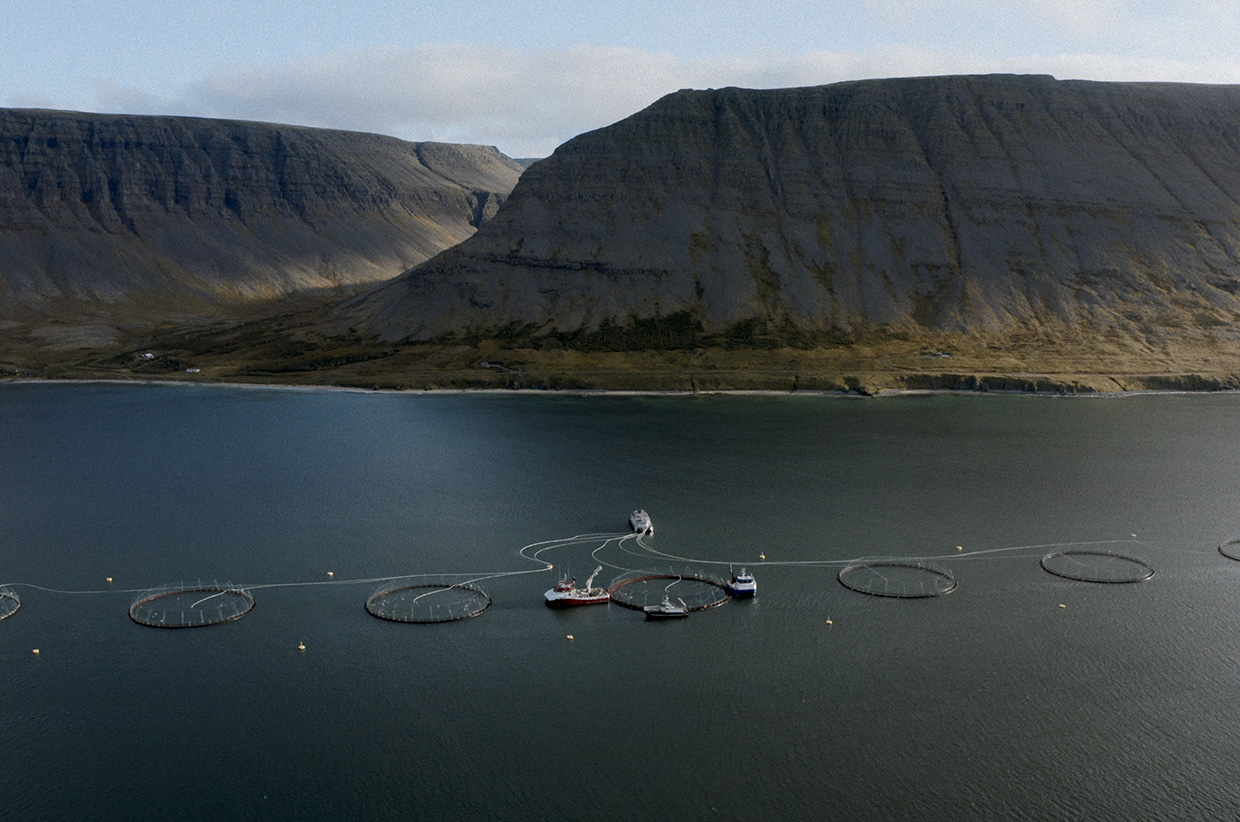
I was out on my kayak picking up trash one day and I saw there was a dead bird in the net over one of the pens. I had often seen these salmon pens in my home town, but I never really thought about them. The net over the pens is to protect the fish from birds.
I decided to take a look, but when I looked into the pen I saw some really bad-looking fish. I was not expecting this because I had always been told this is such an environmentally friendly way to farm fish.
I decided to take a look at other farms. And it was always the same story. Almost everywhere. Lots of unhealthy and dead fish.
Is the salmon farming generally popular amongst local communities?
The economic effect on local communities has been really good. It’s not only the jobs at the salmon farms; they need plumbers, they need electricians. All kinds of other companies benefit from salmon farming. There’s a lot of work, and that’s good for the community, but for nature it’s a disaster.
I talked to one farmer who told me about an eider duck nesting on his land. Over the last couple of years the bird has been getting slimmer, it’s had fewer eggs, and I think this is because of fish farms and the pesticides. All the small animals are dying. Also, the sea floor is not good – it doesn’t look healthy. Waste accumulates from the farmed salmon. They also pour poison directly into the pens to kill off the sea lice. The louse is a natural part of the ocean’s ecosystem, but in these pens it thrives.
There are often escapes, too. The farmed salmon have been bred to be easier to farm, quicker to grow. If they breed with the wild salmon it destroys the gene pool – this is why wild salmon in Norway are under threat. And so much plastic pollution from the salmon farms goes into the ocean.
What do you think is the right way forward for both the communities and the environment?
I would like it to keep being good for the community, but in a different way. So, I would say, they must adopt land-based salmon farming. If we cannot do that, then look into the possibility of farming the fish in a closed system, not open sea pens. My hope is that they will ban these pens, but I don’t think they will do it. I think they will just make some stricter regulations.
Has there been much progress since you’ve been involved in the campaign?
It’s difficult to progress, but it has been going in the right direction. When I started this, about 30 per cent of the nation were against it. Now it’s up to 70 per cent, but that’s most of the people from Reykjavik, the big city. If you speak up against this in a small community, then you’re against the community, you’re against all progress in this area. People are afraid to speak up. So many people come to me in the store, for example, and just pat me on the shoulder and quietly say, ‘It’s awesome what you’re doing,’ but they never say it publicly.
Have you had any opposition to the work that you’ve been doing?
When I finished my trip around Iceland and the movie about me came out, people were making Facebook posts saying how proud they were of me. When I meet them on the street now, they just look in the other direction. People have deleted me on social media and I have seen many, many nasty comments about me.
Is there anything that you think you can do to change their minds?
It’s quite difficult to change other people. The only thing you can do is change yourself. If people can stop buying salmon that is farmed in the open ocean, that would help. I think the only thing we can do is just to keep on this fight. Keep on sharing posts about the pollution, the animal welfare, the plastic pollution on the sea floor, the pesticides. Show how it affects everything in the environment.

How did you manage to capture all this close-up footage that you have been sharing?
I decided to take a GoPro camera with me on a long selfie stick. At first, it was not difficult for me to access the pens – I just paddled to them, tied my kayak up, and put the camera down. Since then, it’s grown more difficult for me to approach, because the staff know when I’m around. I’ve had emails and phone calls saying that they know I’m in the area, informing me that I’m not welcome closer than 50m to the pens, according to some regulation. So recently I’ve been using a drone more, and photographing from land with a big zoom lens.
What are your plans – and will kayaking continue to play a role in your campaigning?
My plan was to paddle the whole coastline of Scandinavia. I went to Norway last year and I had to quit after 1,000km because of bites from the flies. I plan to go back next year to finish at least Norway. I’m also working on a podcast and two documentary episodes with one filmmaker in Iceland. One will be about Iceland, one about Norway. In this episode, we’re going to talk about kayaking, the nature and environment, the plastic pollution and fish farming.
I’m also planning to sell all my furniture, stop renting my apartment, and just live in the van full time. If it doesn’t fit in the van, I’ll just sell it!
What are your hopes about the future of Iceland and the salmon farming situation?
My hope is that they’ll just stop – or at least take it on land. In my opinion, we don’t need it. We are producing too much food on this planet anyway and throwing so much away. We don’t need it at all. My hope is that people could just slow down. We are so greedy. Everybody’s on autopilot, you know? Go to work, buy stuff, do that, buy more clothes, a bigger TV, a bigger car… I think we could all do with just slowing down a little bit.
To find out more about the impact of open-net pen salmon farming, watch Veiga in Patagonia’s Laxaþjóð – A Salmon Nation here.
And you can follow Veiga on Instagram @veigagretarsdottir