Nature of St Helena
Destinations Explore Photo: Mathias Falcone
A Destination Guide to St Helena
Written by Daniel Neilson // Photography Courtesy of St Helena
More than 500 species of flora and fauna are found nowhere else but St Helena, in an ecosystem that could only arise from such a remote island.
How does nature evolve on one of the most remote islands on the planet? For an island that measures just 121km², the flora and fauna of St Helena are remarkable in their diversity. Perhaps it’s not surprising; this is a subtropical island in the South Atlantic Ocean, halfway between Brazil and southern Africa. It’s fertile, rich with diverse terrains, and replete with ecosystems. Much of the flora and fauna is found nowhere else. To visit St Helena is to see a living museum of evolution.
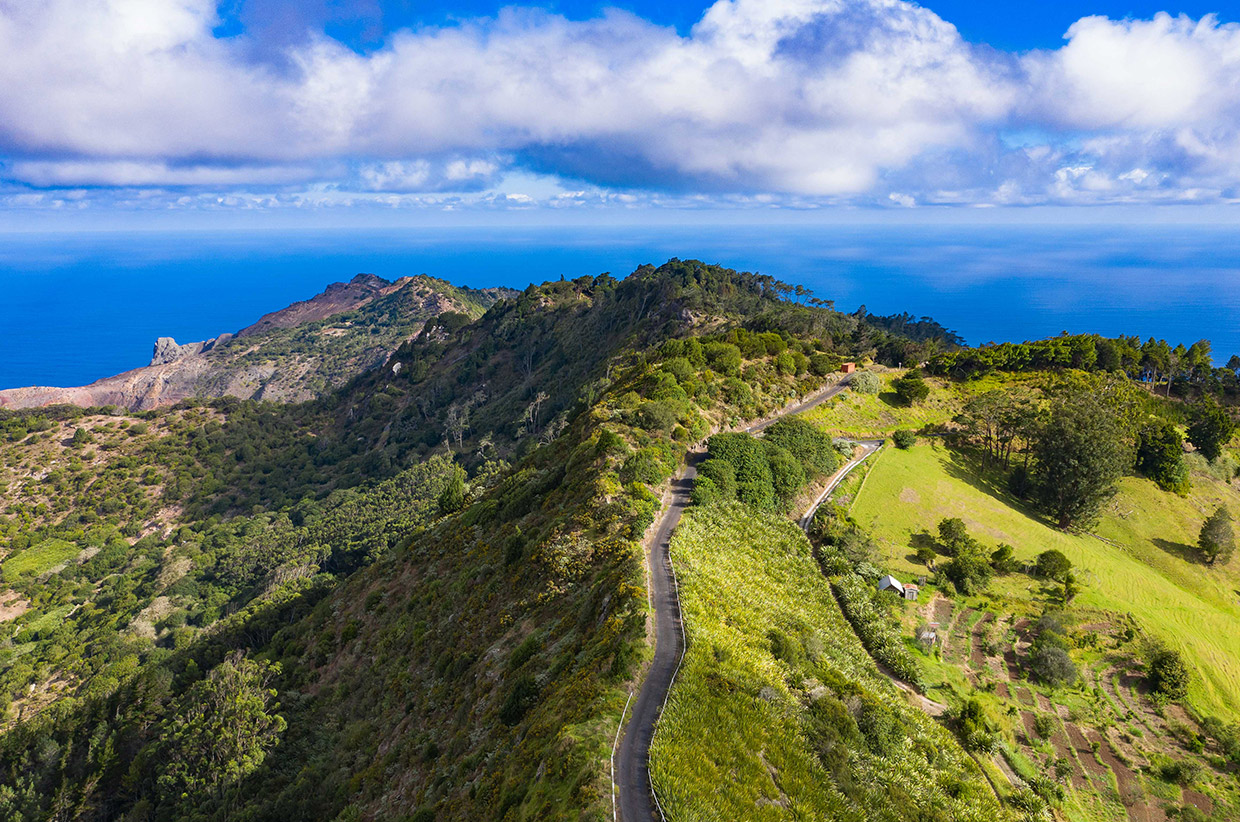
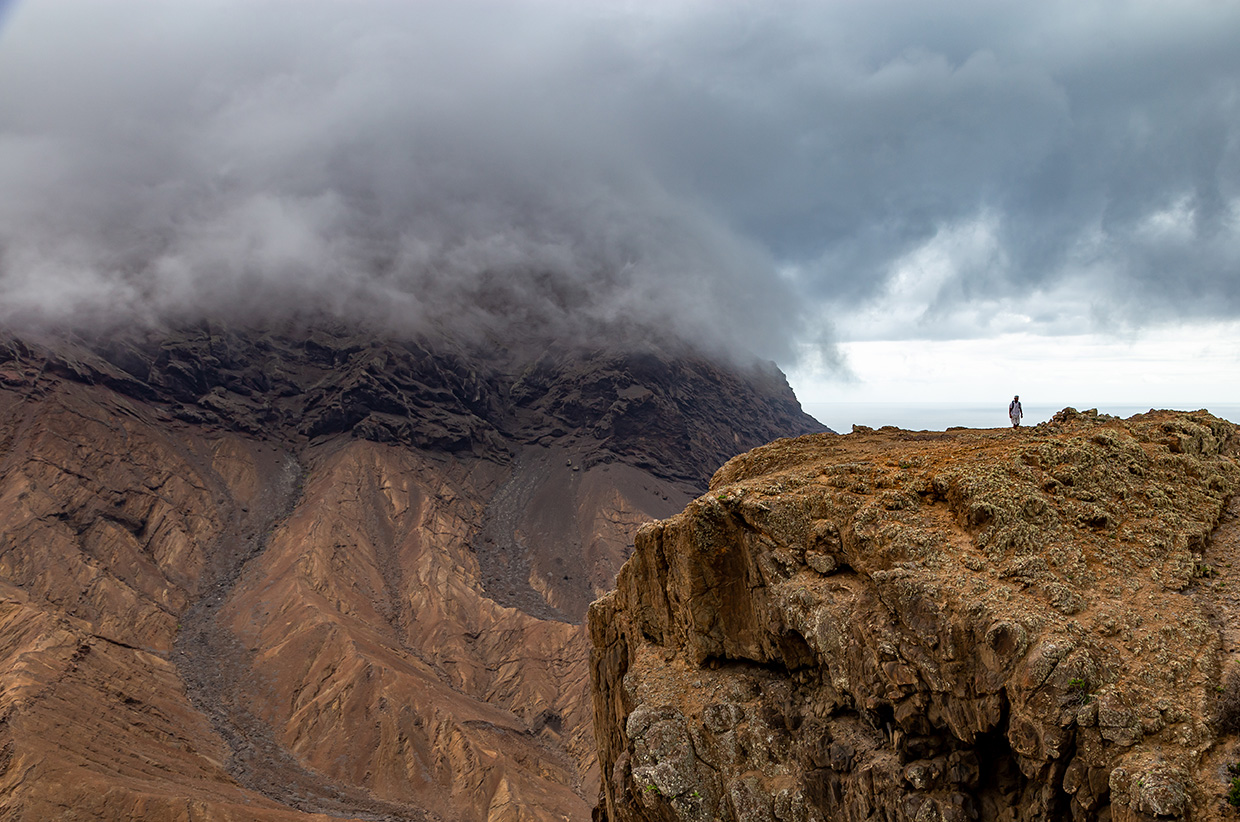
St Helena is a product of violent volcanic action under what is known as the St Helena hotspot, where breccia and basalt lava flow and spew into the ocean. This island was formed 14 to 11 million years ago. Just take a look at the Barn, a geological feature on top of a coastal hill, where you’ll see younger lavas falling over older rocks. It is the volcanic tumult that defines the aspect of St Helena. Its steep central forests fall down onto pasturelands and deep ravines. They, in turn, cascade onto rocky shorelines. This rugged, unpredictable topography has shaped St Helena’s biological world.

Only on St Helena
Around 500 species of flora and fauna found on the island are endemic. It’s an exceptionally high rate. These species arrived, thousands or even millions of years ago, on the wind or in bird droppings. Then, isolated by thousands of miles of ocean and nurtured by the island’s unique ecosystem, became something else. Take the cabbage tree (Pladaroxylon leucadendron), one of the island’s most iconic and unusual endemic plants. It gets its name from the soft, cabbage-like leaves clustered at the crown. It is endangered, but conservation efforts have seen it replanted throughout the island’s cloud forests.
The St Helena ebony (Trochetiopsis ebenus), St Helena’s national flower, is a shrub with delicate, ivory-white flowers. Once thought to be extinct, it was rediscovered clinging to a cliff face in the 1980s. Botanists abseiled down to rescue it, and today several thousand can be seen in the island’s endemic plant nurseries and restored habitats, but it is still critically endangered.
The St Helena olive (Nesiota elliptica), however, didn’t make it. The last cultivated specimen died in 2003 despite the best efforts of conservationists. The small size of the island is a reminder of how man can affect an environment. In 1502, when the Portuguese first landed, the slow destruction started – and with something as innocuous as goats. When the English East India Company settled here permanently in 1659, they introduced more mammals and vegetation, unbalancing millennia of life.
A large reforestation project – the Millennium Forest – in the north-east of the island has been developed since 2000 in an effort to rebuild the pre-colonial Great Wood. In particular, more than 10,000 endemic gumwoods (Commidendrum robustum) have been planted at the Millennium Forest to date. Visitors can plant a gumwood and receive name recognition at the forest.
The skies above St Helena
The wirebird captures the spirit of St Helena. This plover (Charadrius sanctaehelenae), named for its spindly legs, is the island’s national bird and appears on the St Helena flag. It is the island’s only remaining endemic land bird, with numbers now stable thanks to community-led conservation. The Saint Helena National Trust offers wirebird tours as part of the project to restore the wirebird population. The tour is best enjoyed during peak nesting season between December and January.
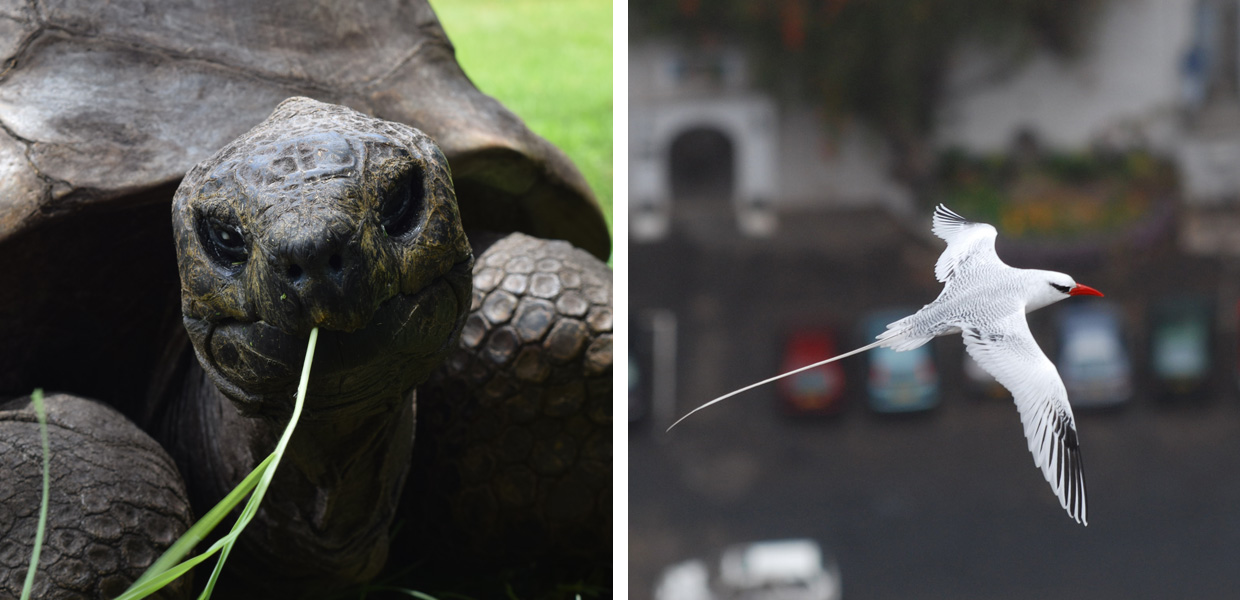
St Helena and its offshore islands, is also a home to nine species of seabird, including masked boobies and red-billed tropicbirds. The frigatebird, with its ballooning red throat, can be seen on the rocky outcrops of Sperry Island and Egg Island.
On the earth
But St Helena’s greatest biodiversity is underfoot, with more than 200 species of endemic invertebrates, an astonishing number given the size of the island. These include the St Helena giant ground beetle, the spiky yellow woodlouse, and the blushing snail, so named for the pink flush on its delicate shell. Some insects here evolved without predators and are entirely wingless.
New species are being found all the time, including, in 2023, the mole spider (Molearachne sanctaehelenae) – which, uniquely, builds ‘mole hills’ unlike any other spider. Also discovered is the Mount Vesey wolf spider (Hogna veseyensis), which lives by a single waterfall. There are also three, rather brilliantly, named after Saint Helenian scientists: the Liza pirate spider (Ero lizae), the Natasha pirate spider (Ero natashae) and the Daryl wolf spider (Dolocosa joshuai).
Nor can we forget St Helena’s most famous resident, Jonathan the tortoise, who holds the Guinness World Record for being the oldest living land animal. Jonathan is a Seychelles giant tortoise and one of the few surviving in the world today. He arrived on St Helena in 1882, the same year Charles Darwin died, and now resides in the gardens of Plantation House, the home of the island’s governor.
A biodiverse future
St Helena’s size and remoteness have contributed to both its biological problems and successes. Rats and cats wreaked havoc on the plant and birdlife, as did invasive flora, but today, its isolation allows a controlled restoration of the environment. There are no motorways or rapid housing development. Instead it’s a sanctuary for these species, on the land and below the ocean surface.
Exploring St Helena along its 24 accessible Post Box Walks is the best way to gain access to the most beautiful landscapes on the island and the nature that lives there. These guided walks – each with a wooden ‘post box’ containing a visitor log and ink stamp to record your trip – weave through the plains, coastlines and open grasslands. These trails are a testament to the resilience of St Helena’s nature and the conservation efforts of the ‘Saints’ who make the island their home.
For more information on visiting St Helena, visit sthelenatourism.com.
8-days from £2,745 per person with Far and Wild Travel
@danieljneilson // @st.helena.tourism