Everest // Kenton Cool
Field Journal Explore Inspiration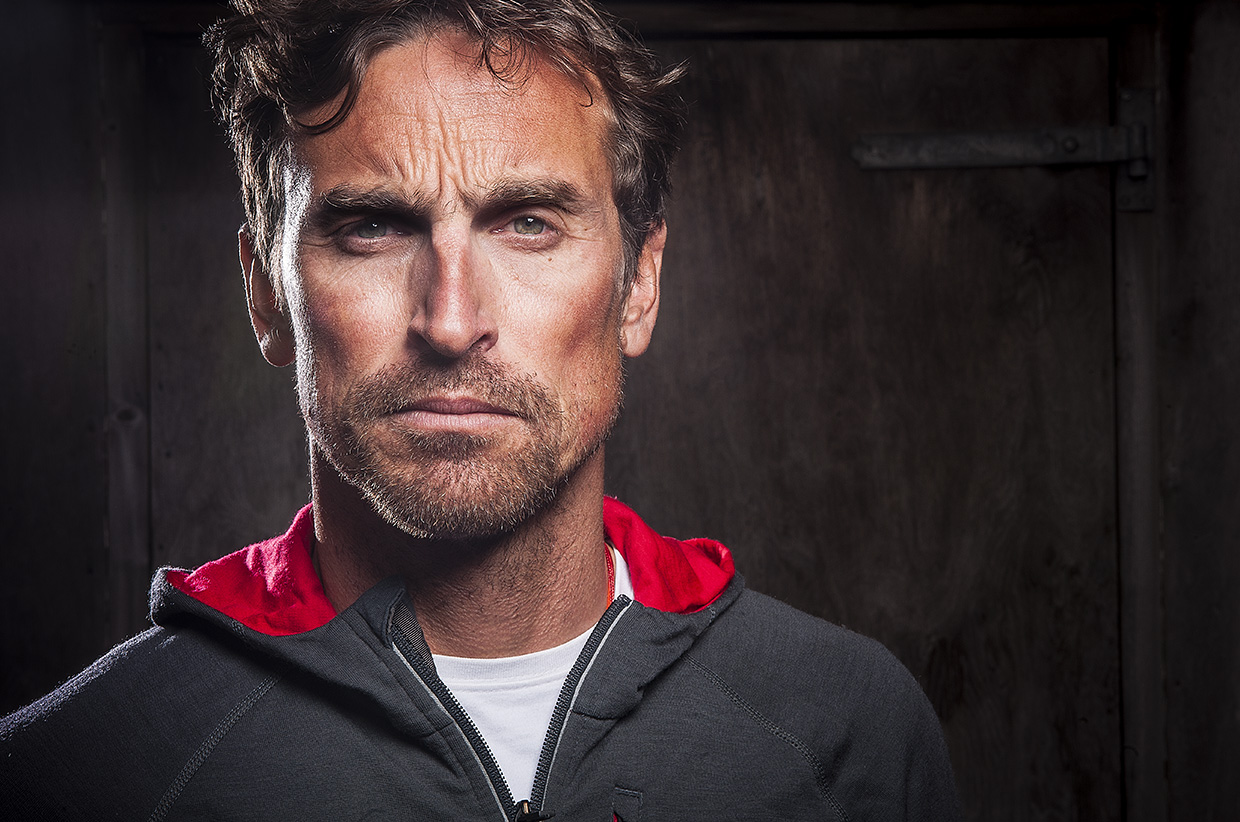 Photo: Martin Hartley
In Conversation with Kenton Cool ahead of his 20th Everest Expedition
Written by Jenny Tough
The first thing Kenton Cool tells me is that Everest probably isn’t as crowded as I think it is. It’s a disarming opening.
I’d come prepared with my questions and challenges about the viral summit queue photographs, the over-the-top base camps, and the creeping suspicion that Everest has somehow transformed from mountain into spectacle, attracting the wrong climbers there for the wrong reasons. I openly admit my own bias – the culture of ‘conquering’ the world’s tallest mountain has never sat well with me. But Cool, relaxed and articulate, somewhere between deeply philosophical and wonderfully irreverent, dismantles that narrative almost immediately, with the easy authority of someone who knows the place better than, most likely, anyone I’ve ever met.
‘Everest gets a bad rap for crowds,’ he says. ‘But it is a really big mountain, and it can generally absorb crowds very, very well.’ Every few years, he explains, particular weather systems compress summit bids into unusually narrow windows. That’s when the infamous photographs emerge: climbers clipped into fixed ropes, stretching across the high mountain in impossible human chains, the scale of the scene making it look both absurd and apocalyptic. The images ricochet around the internet. The story writes itself. ‘Of course the press love that,’ he says with a shrug. ‘It’s like, “Everest is overcrowded. It’s dirty. It’s an Instagrammer influencer box-ticking exercise.”’ He rolls his eyes as he dismisses the media portrayals.
Cool is preparing for his 20th Everest expedition when we speak (spoiler alert: he successfully summited on 22nd May 2026). There is no fanfare in the way he talks about it; no chest-beating, no dramatic pause to let the number land. Just the practical calm of someone who is, essentially, packing for another season at the office. Which, in a very real sense, is exactly what he is doing. ‘I’m a fully qualified IFMGA guide,’ he says, ‘but my niche is Everest. Everest is the one job every year that I know is going to happen. I know when it is. I can schedule around it.’ That predictability, he explains, matters a great deal in a profession built almost entirely around uncertainty. Mountain guides live season to season, weather window to weather window. He laughs about friends who became better climbers once they got nine-to-five jobs, because suddenly they could train consistently and actually plan their weekends. ‘I’m a mountain guy,’ he says. ‘We don’t really have a schedule.’
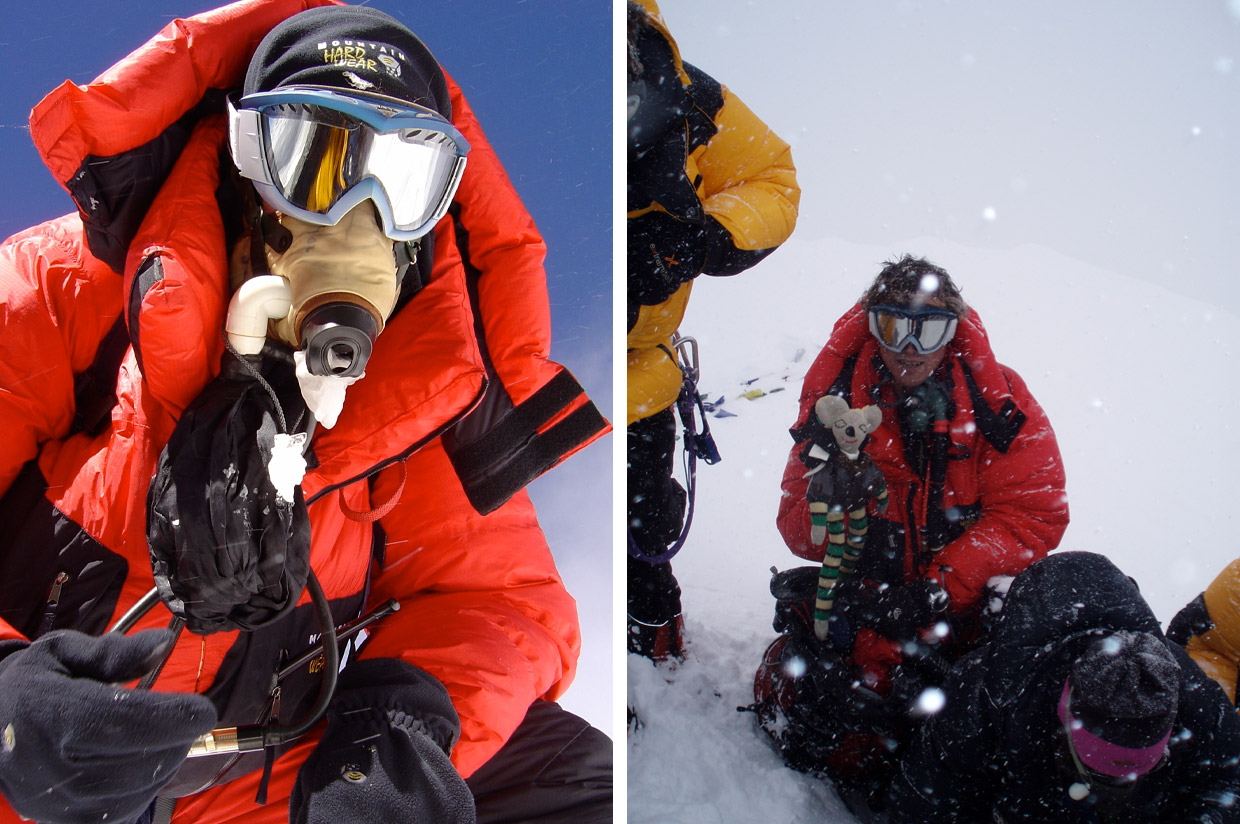
But the reasons he returns to Everest are not purely financial. Far from it. ‘I love travelling to Nepal. I love being with my Sherpa friends. I love the food. I love the culture. And I do love the mountain.’ He pauses for a moment, anticipating the obvious follow-up. ‘And I know everybody says, “Yeah, but you’ve done it 20 times. Aren’t you bored of it?” But it’s different every time.’ There is a warmth to the way Cool talks about expedition life that cuts through all the noise surrounding Everest, all the think pieces and the hot takes and the annual reckoning over whether the mountain has lost its soul. He loves base camp. He loves the rhythm of climbing rotations and shared meals and long evenings spent in thin air, watching the mountain change in the light. He especially loves being present for someone else’s dream: that particular, unrepeatable moment when a client returns through the Icefall having summited and cannot quite believe what they have just done. ‘You’re part of that,’ he says simply. ‘It’s fabulous. So heartwarming.’ He describes the almost sacred pleasure of finally removing your boots after a successful summit push: the first cup of tea, the weight lifting from your feet, the strange suspended feeling of it all being over. ‘This could be any expedition, to be honest. It’s just marvellous.’ And then: ‘The view from Everest is just great. That’s the view from my office.’
***
It is easy, he says, to criticise Everest from afar. But ask people who have actually stood on that mountain, who have spent weeks moving through its altitude and its cold and its beauty, and the answers are often very different from what the discourse suggests. Cool himself talks about the journey to Everest with something close to reverence; the whole arc of it beyond the climb. He admits freely that he doesn’t do cities, but that he loves Kathmandu anyway, loves its hustle and its density and even the particular quality of its pollution. He describes it not with distaste but as part of the sensory transition into the Himalaya: the haze clearing as you fly out of the valley, the air sharpening, the mountains appearing on the horizon like something being slowly remembered. ‘The whole journey of Everest is remarkable,’ he says. ‘You’re in the footsteps of history.’
History matters deeply to Cool, and he references the early Everest expeditions constantly throughout our conversation; not to glorify a colonial past or to indulge in nostalgia, but to remind people that commercialism and Everest have to an extent always been intertwined, long before the advent of Instagram. Although early attempts had more to do with nationalism and colonialism, Cool claims that the relationship between money and mountains has always been woven into Everest’s history. ‘I think it’s a little unfair when people say the romance has been lost,’ he says. ‘Mont Blanc is commercial. The Matterhorn is commercial. If you don’t like commercialism, pick another mountain. And there are plenty of other mountains. You can spend a lifetime climbing in the Alps and never touch a commercial peak. You can spend more than a lifetime in the Himalaya and never touch a commercial mountain.’ The issue, he suggests, is not that Everest exists as a commercial mountain. The issue is the lens through which the media chooses to frame it.
Cool has largely stopped consuming mainstream news altogether. ‘Covid was the final straw for me,’ he says. ‘The reporting was so alarmist, so biased, so badly researched.’ He laughs, though not entirely cheerfully, as he lists the headlines we are fed daily: wars, disasters, political outrage, environmental collapse. ‘Media feeds on anxiety,’ he says. ‘That’s what gets attention.’ And Everest, naturally, provides excellent raw material: the queues, the rubbish, the spectacle of wealthy foreigners climbing in one of the world’s poorest countries. The story is always there to be written, and it tends to crowd out a more complicated truth: that Nepal depends heavily on tourism revenue, that climbers and trekkers employ Sherpas, cooks, porters, yak herders, drivers, hotel workers, and local guides, that expedition money filters through entire communities in ways that are genuinely significant. ‘The Sherpas are beginning to rise through the caste system through their financial opportunities,’ he says. ‘And a lot of that comes from trekking and climbing.’
This perspective becomes especially sharp when the conversation turns to environmental criticism. Yes, he says, Everest has had pollution problems. Yes, the South Col can still be grim in places. But he pushes back against the idea that cleaning up Everest should be treated as a pressing global priority, or that the mountain’s environmental reputation defines it entirely. ‘People say we should invest hundreds of thousands cleaning up Everest,’ he says. ‘And I’m like, OK, but what if that money went into child malnutrition programmes in Kathmandu instead? Fresh water, education, food: these are bigger priorities.’ He isn’t dismissing environmental responsibility, but he is arguing for scale and perspective, for a sense of proportion about where outrage is directed and why. And contrary to popular belief, he insists the mountain is cleaner than it used to be. He visited Everest Base Camp out of season for the first time recently, and was genuinely taken aback. ‘I could not believe how clean it was,’ he says. ‘I had to look for rubbish.’ The famous trail to base camp, once nicknamed the pink paper trail for its covering of discarded toilet paper, is dramatically cleaner than it was even a decade ago. ‘It’s cleaner than the lanes where I live in the Cotswolds,’ he says with a laugh.
Then there are the Sherpas, about whom Cool speaks with evident pride and affection. He lights up when talking about Dorje Geljen, his longtime climbing partner, who is on track to reach his 26th Everest summit this season: a number that would make him one of the most prolific summiteers in the mountain’s history. Dorje spends his winters in Austria working in mountain restaurants and has recently learned to ski. Cool describes him not as support staff, not as background to his own story, but as a world-class mountain athlete in his own right. ‘He’s a superstar. So strong.’ And yet Cool is also willing to wrestle openly with the ethics of guiding culture in its less flattering moments: the entitlement that sometimes arrives at base camp alongside the money, the expectations that can morph into something dehumanising. He mentions seeing a Sherpa carrying a client’s make-up kit. ‘That really upset me,’ he says. ‘If it means that much to you, carry it yourself.’ There are things, he says, he would simply never ask a Sherpa to do. ‘I’d never ask someone to carry my boots. That just feels derogatory.’ The future of Everest, he believes, will involve more Nepali-led companies and more local leadership: a shift that, he thinks, is already underway.
He also hopes the age of gimmicky records is fading: the relentless pursuit of firsts defined by ever more absurd subcategories, what he calls, laughing, ‘the first left-handed person from wherever wearing pink trousers.’ He cites Kilian Jornet’s argument that mountains are not appropriate places for records because conditions are never equal and the comparisons are therefore meaningless. ‘What matters is the human story.’ That line hangs in the air for a moment, and I find myself thinking that it is, in a way, the thread running through everything he has said: through his defence of commercialism, his frustration with the media, his pride in Dorje, his love of base camp, and his 20th expedition packing list sitting somewhere just out of frame.

Ultimately, despite all the debates that swirl around Everest – the ethics, the commerce, the sustainability questions, the social media circus – Cool always circles back to something deeply and stubbornly personal. People climb mountains for reasons that belong entirely to them. ‘There is no purpose in climbing Everest,’ he says eventually. ‘Everybody’s got their own reasons.’ Some go because it is the highest point on Earth and that fact alone contains a kind of magnetism that is almost impossible to explain to someone who doesn’t feel it. Some because they’ve dreamt about it since childhood, a dream so old it feels structural, part of how they understand themselves. Some for transformation. Some for attention. Some, perhaps, for reasons they haven’t fully articulated even to themselves. ‘And it’s not our place to judge,’ he says.
He talks about George Mallory and the famous phrase: ‘because it’s there’. He acknowledges that Mallory may or may not have actually said it, that the attribution is uncertain and the moment possibly apocryphal. But the sentiment, he thinks, points toward something real: a belief that humans need ambition, need the forward pull of something not yet done. ‘We need goals,’ he says. ‘We need vision. We need direction.’ Mountains offer that in a form that is immediate and physical and honest. You either get there or you don’t, and the mountain doesn’t care who you are. And unlike many worlds, mountaineering remains remarkably open. There are no membership requirements, no need to be nominated and seconded into some exclusive club – although it’s true that a substantial degree of financial privilege is required. ‘You can just turn up and do it,’ he says, and there is something almost fierce in the pleasure he takes in that. Despite permits and logistics and costs that can be genuinely prohibitive, the spirit of climbing still feels fundamentally anarchic to him. ‘The mountains are open to everybody.’
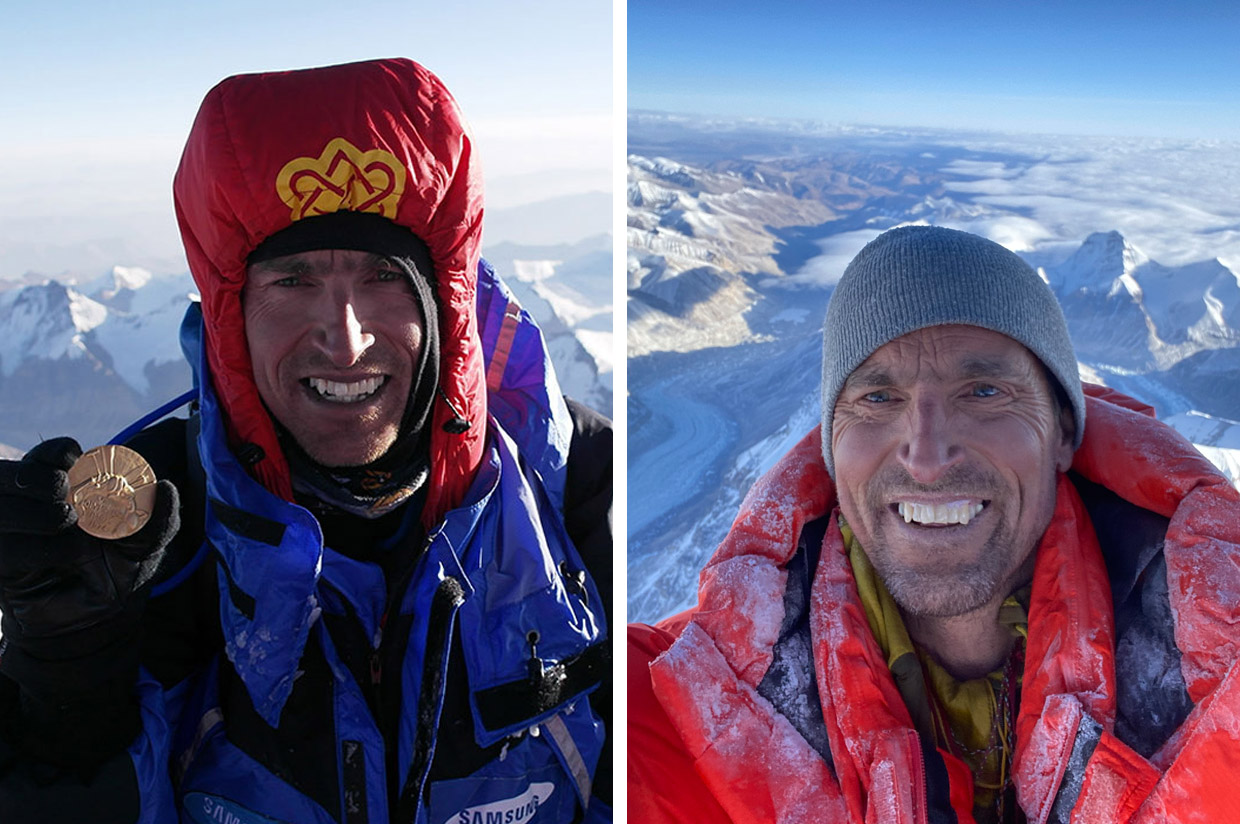
Kenton Cool successfully completed his 20th ascent of Everest on May 22nd, 2026, becoming the first non-Nepali climber to have ascended Everest 20 times.
Words: Jenny Tough // @jennytough
Featuring: Kenton Cool // @kentoncool