Shock and Beauty
Field Journal Explore Inspiration
In Conversation with Mandy Barker
Written by Alex Roddie // Photography by Mandy Barker
‘I couldn’t just create an image for art’s sake. I want it to be underpinned by reality through science.’
Mandy Barker is an award-winning photographic artist whose work over the last 16 years involving marine plastic debris has received global recognition. She works with scientists to raise awareness about plastic pollution in the world’s oceans, and has participated in joint research and artistic expeditions to some very remote places. These voyages have resulted in a body of work that combines ethereal beauty with visceral shock when you realise what it actually pictures. In this conversation, our editor Alex Roddie chats with Mandy Barker about creating change through art, the disturbing reality of pollution in remote places, and the future of expedition photography.


Alex Roddie: I was intrigued to read that you aim to engage people through an emotional response by combining initial aesthetic attraction with a subsequent message of awareness. There’s a duality at play here: beauty and horror, both ideally leading to action. When you’re out in the field, navigating the physical hardships of an expedition, often at sea, how do you balance the artist looking for compositions with the activist documenting a crisis?
Mandy Barker: Thinking of Lord Howe Island, I accompanied scientists from Adrift Lab Science who have been studying the flesh-footed shearwater – a marine bird that’s been in decline over several decades as a result of ingested plastic. That was a particularly difficult project. To see a bird cut open and scientists take plastic pieces out of the stomach – it’s a really hard thing to think that you’ve got to make images to represent what’s going on, this horror you’re witnessing. But you’ve got to be true to the research being done.
It can be quite difficult to absorb what’s going on, then think about how you’re going to approach that and the end result you want to deliver to the viewer.
Has your approach changed over the years, or have you stayed consistent since day one?
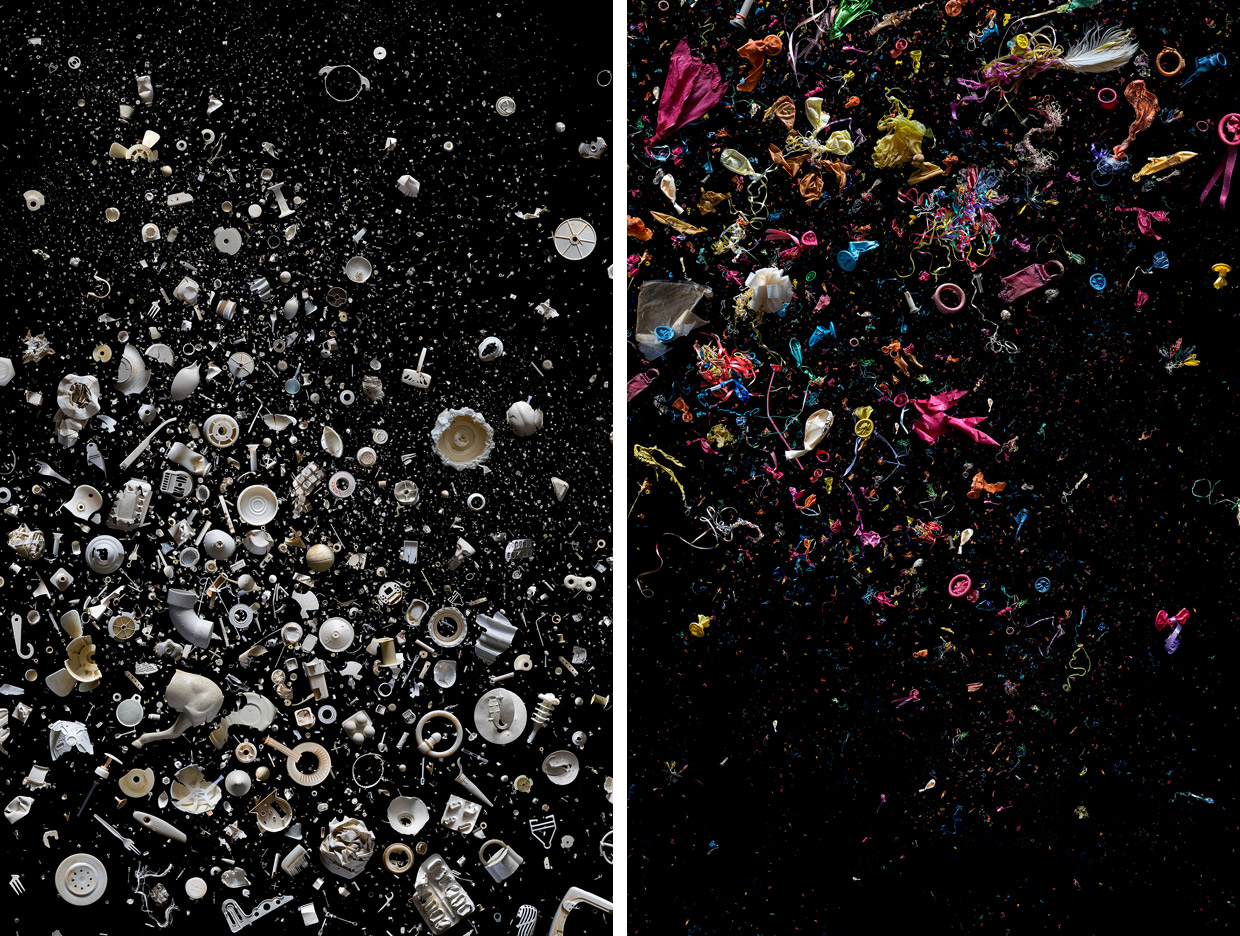
The underlying observation about my work is that it’s aesthetically attractive. When I started photographing plastic, I photographed it in a documentary way, as it was found on the shoreline, and people weren’t really interested; they see litter and rubbish all over the place, so they just kind of switched off. I realised that was the reason to create something different – something that would appeal to people, so they would look at the work, then the text would highlight exactly what they’re looking at. That’s the stab in the back you mentioned: the hard-hitting horror of what you’re actually looking at.
I think this follows throughout all my series in different ways, because I’ve used different techniques: cyanotype printing, analogue photography, digital. I’ve covered lots of different processes, but the underlying theme is to draw the viewer in, and this is through aesthetics.
Moving on to the journeys themselves, to very remote places like Henderson Island, you’re going somewhere that a lot of people would consider wild, yet you find it covered in human debris – perhaps even defined by this debris. How has witnessing this obvious footprint of human-caused degradation in these hard-to-reach places changed your perspective on nature, wildness, and humanity?
Well, Henderson Island is an extremely difficult place to get to. You need permission from the New Zealand Government and the Pitcairn Islanders, and it took over two years for us to get these permissions in place, so it’s not somewhere that anyone can go. And this is 5,000km from the nearest major landmass, right in the middle of the South Pacific Ocean. It takes many, many days to get there. This makes it all the more shocking that you’re in this remote location and finding plastic.
Plastic is washing up from more than 25 different countries. So it’s heartbreaking really, because there are endemic species that live nowhere else in the world, and they’re making nests, surrounding themselves with plastic, trying to brush it away to make a clear area to lay their eggs.
What we’ve done to this planet is shocking and horrific. You do feel this immense guilt when you go there. On an individual basis, you’re burdened with the fact that you’re there and no other people can go there, so there’s quite a lot of pressure to let people know what’s going on. It’s on your shoulders to visually show what you’ve experienced and let the rest of the world know.
Do you see a disconnect between people’s idea of wildness and the reality?
Yes, because when people go on expeditions, they might be going to look for species of animals of plants – it’s quite exciting to see what you can discover. But here you know what you’re going to see, and there isn’t that kind of excitement. It’s really depressing to see how the plastic is affecting the species that you might prefer to be looking at instead.
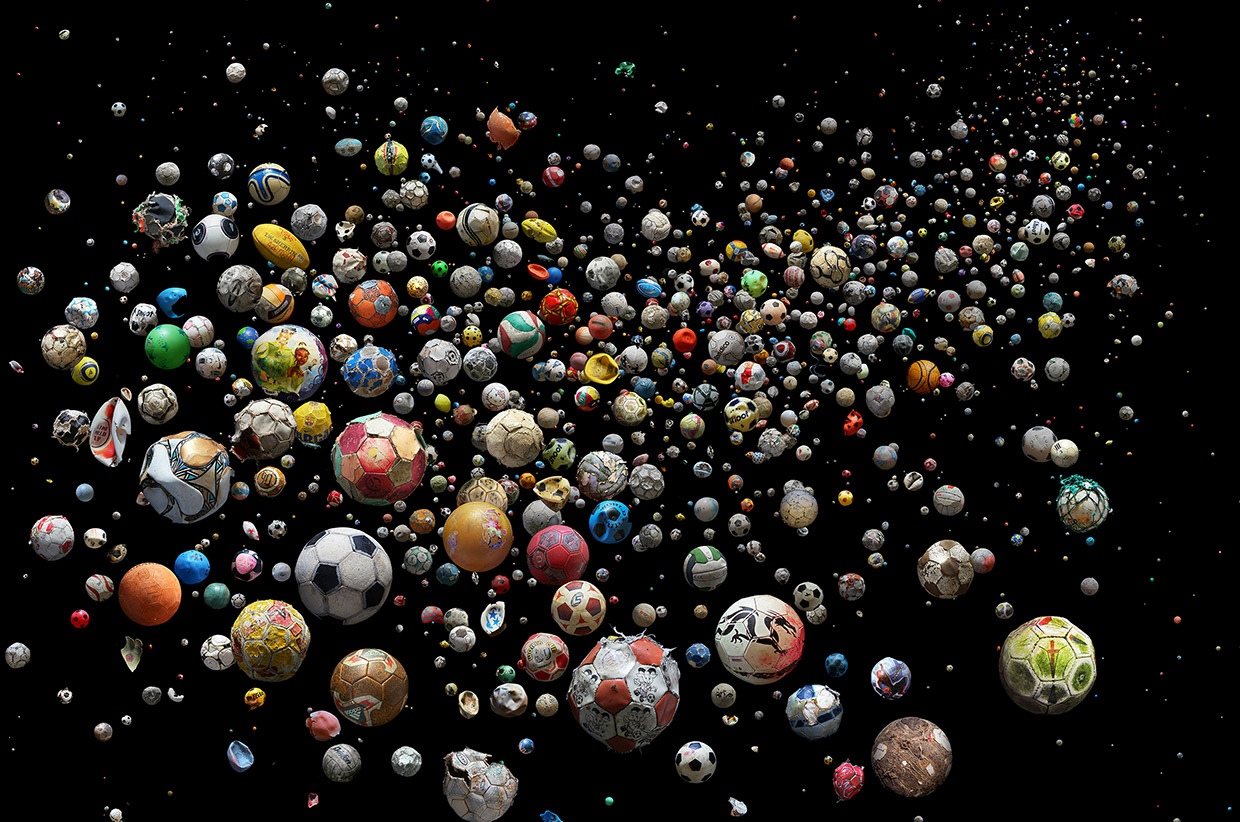
However, you never really know what you’re going to face on the shore. I mean, when we first arrived, the shoreline was littered with literally hundreds of fishing buoys. On the next tide it could bring in a wave of different items, which you hadn’t even imagined would end up on a place like this.

Traditionally exploration was about discovery. We’ve largely moved on from that world now, but I would say your work feels more like a reinterpretation, with exploration ideally leading towards action. So how do you feel the role of exploration has changed since the golden age of discovery 100 or more years ago, more specifically the role of expedition photographers and artists?
I think it’s more important now, because we’ve got a changing world being affected by climate change, all sorts of different environmental issues. Now we have the power to take photographs or film and actually show people what’s happening. If we can pass on what we’ve discovered and the changes that are happening, then hopefully people will be shocked, or at the very least informed, so they might be able to make decisions on a personal level. For instance, if people are going to the shops, then it might make them think twice about buying an item of food in a plastic container. If we can pass on the fact that this sort of packaging is ending up in a remote location and affecting biodiversity, it might make people think twice about what they consume.
What I’m really interested in is the psychological weight of the work you do, because you’re essentially documenting the collapse of the biosphere. When you return, how do you process that emotional experience? Does the journey end when you return or does it continue to develop as you process your images, then exhibit and publish?
It does vary from expedition to expedition, but generally as soon as you see the plastic, that’s when you begin to process and think about what’s happening. You find things you’ve never found before. For example, on Henderson Island there were loads of balls from roll-on deodorant – I never would have believed that is something you’d find on a remote island. So there are always new surprises.
It comes in waves really. It never really leaves, because I’m working on this all the time, but it comes heavily during the expedition and shortly afterwards. It’s always there because I’m always sending images out for publication or exhibitions. So I never get away from it.
The positive side of it is that I get people writing to me saying it’s made them think, or maybe they want to change their habits. Things like that keep me going, counterbalance the depressing side of it, and make me feel like I’m actually doing something. Because if I didn’t feel like I was doing anything and people didn’t respond, then I probably wouldn’t carry on.
Moving on to the impact of your work, you’re looking to create action, influence change. Earlier you mentioned the fact that it can influence individuals and the personal choices they make, but of course we are enmeshed in a system that is incredibly damaging. What changes do you think your work can help create in that overall system, in terms of putting pressure on the sources of that pollution? And, added to that, have you seen any progress being made since you started?
I’ve been inspired by scientific research and the scientists who actually do the work, because I couldn’t just create an image for art’s sake. I want it to be underpinned by reality through science. I believe scientists are leading the way.
For example, I did a project on plankton because plankton was eating microplastics. That was based on research at Plymouth University. So if I can let people know what’s actually happening visually through my work, it’s giving science a visual voice where people might not normally read academic journals. It gets it out into the public arena.
As well as creating images, I do workshops around the world with the younger generation, because plastic is the legacy we’ve left, unfortunately, for them. They go back to their families and they talk about it, and they can engage their elders. It’s the older ones whose habits are harder to change, so if the younger generation can help with that then workshops and images geared to younger people can be positive.
My work’s been shown in parliament for EU Green Week. It’s been presented within government in Italy and Scotland to help change legislation, with the British Council in the Solomon Islands and at International Marine Debris Conferences. It’s difficult to measure the impact, but it’s helped, I believe, in trying to make change; certainly on a public level in terms of collection of plastic, and also to people to sign petitions and write to MPs.
I’m keen to know about your next expedition if there’s anything you can share.
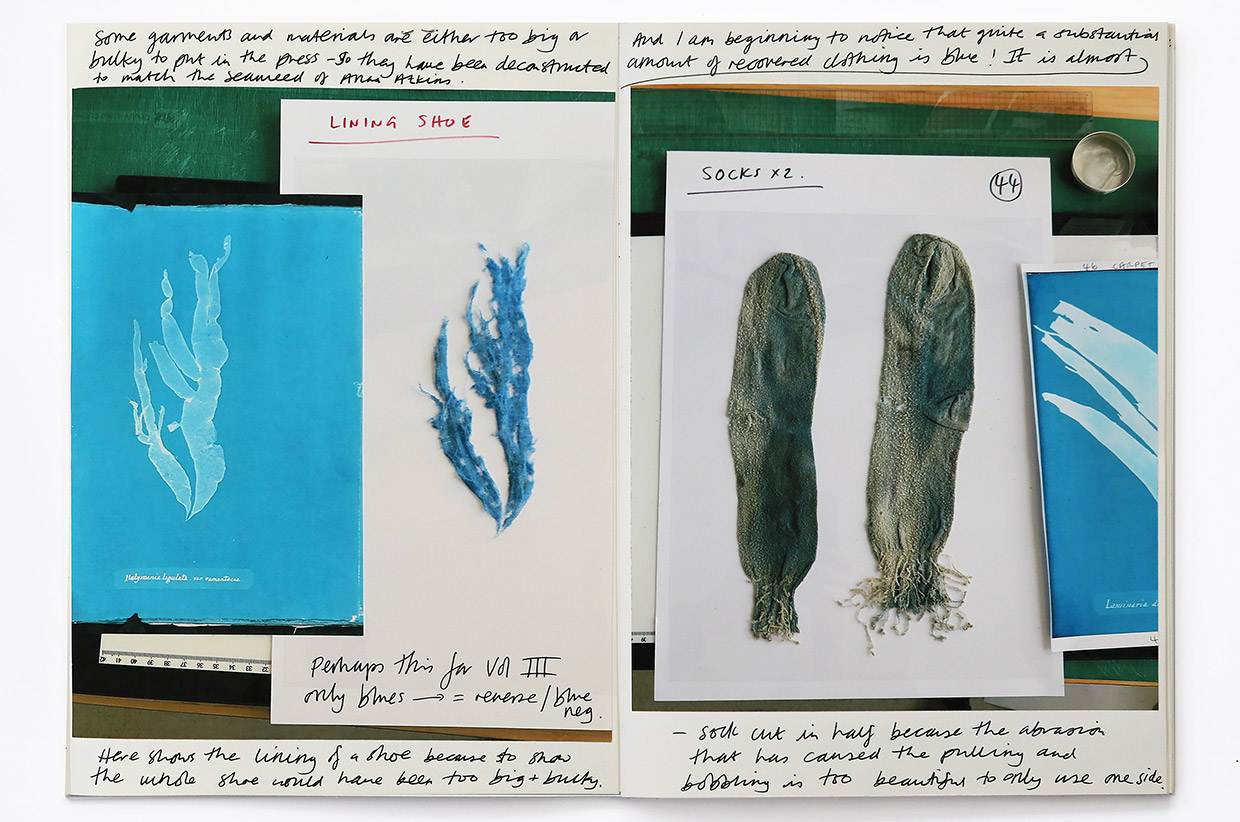
I’m not exactly sure where it will be, but I’ve always got art projects in the pipeline. I do follow the science and it’s interesting to see the new things I would like to highlight. My recent project you mentioned in the beginning, the cyanotypes and the blueprints, that’s based on synthetic clothing and the fast-fashion problem, and the fact that I found all this plastic material in the sea. That was something I didn’t really know about, so I thought that if I didn’t know about it, then there’s a good chance other people didn’t either. That was the reason for that one, so there’ll be a reason for the next.