Unpredictable Skies
Gear Field Journal Explore Gear & Guides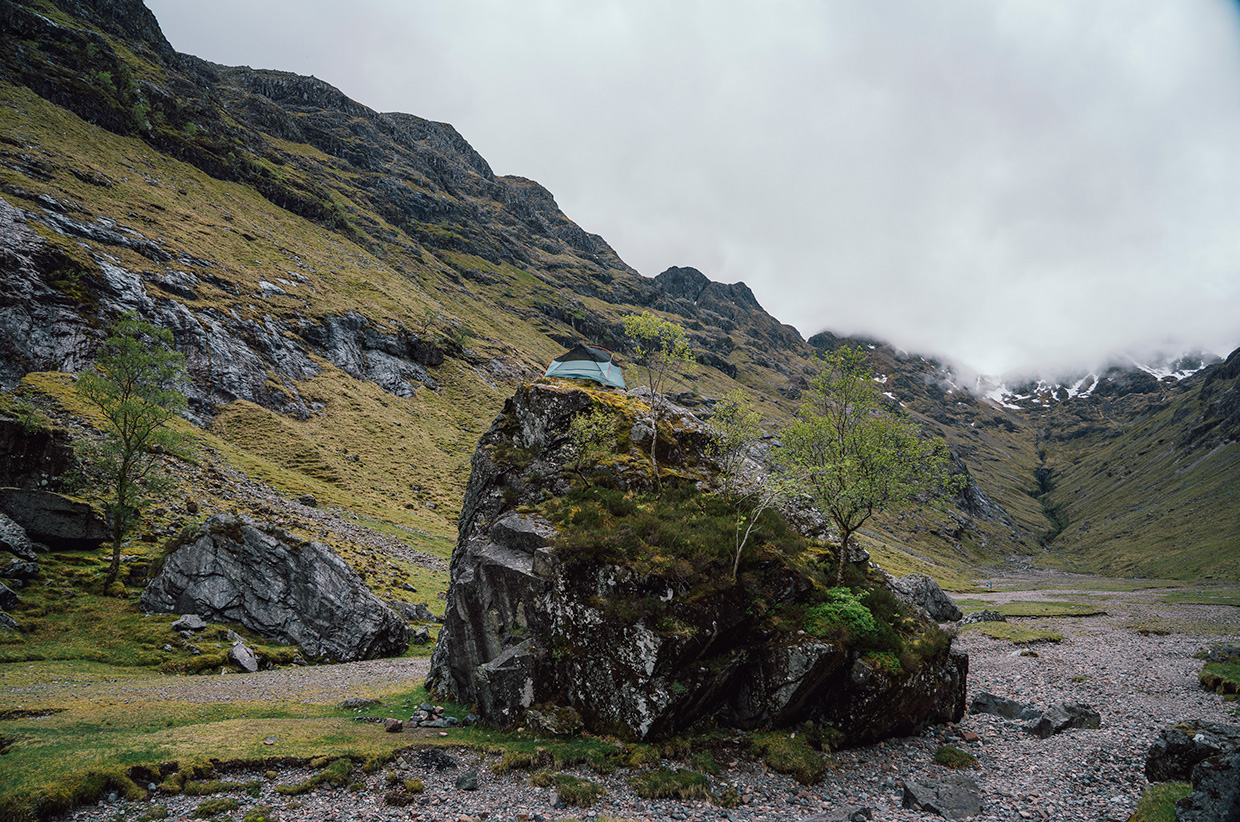
Stories Behind the Gear // MSR Hubba Hubba LT & HD
Written by Daniel Neilson // Photography by John Summerton
Scotland has one of the least predictable weather systems on the planet. Glen Coe in May, then, seemed the perfect location to test the brand new MSR Hubba Hubba LT and HD tents.
Scotland is located at a meteorological crossroads. To the west, you’ve got 41.5 million km2 of the North Atlantic Ocean, and on the other side, over those there mountains and the North Sea, a huge continental landmass. But it’s the air masses that really affect the weather. Scotland is hit by six of them. There’s the Polar Maritime from Greenland and the Arctic Sea, the Arctic maritime from, yep, the Arctic, and the Polar Continental air mass from Central Europe. Rain, often falling as snow and hail in winter, comes from the northern air masses.
Then add in the jet stream – strong winds around six miles above the earth’s surface that dictate high and low pressure – and, on reflection, using the term ‘meteorological crossroads’ is perhaps an understatement. Mountains also significantly affect the local weather. John Mitchell, Senior Operational Meteorologist at the Met Office, wrote: ‘There are many higher mountain ranges in the world, but few have such rapidly changing weather and avalanche conditions.’
What does this mean for the backpacker in the Scottish mountains? First, an obsession with weather forecasts: the constant refreshing of MWIS and the Met Office’s mountain weather forecast. Preparation with the right clothing and equipment is also essential.
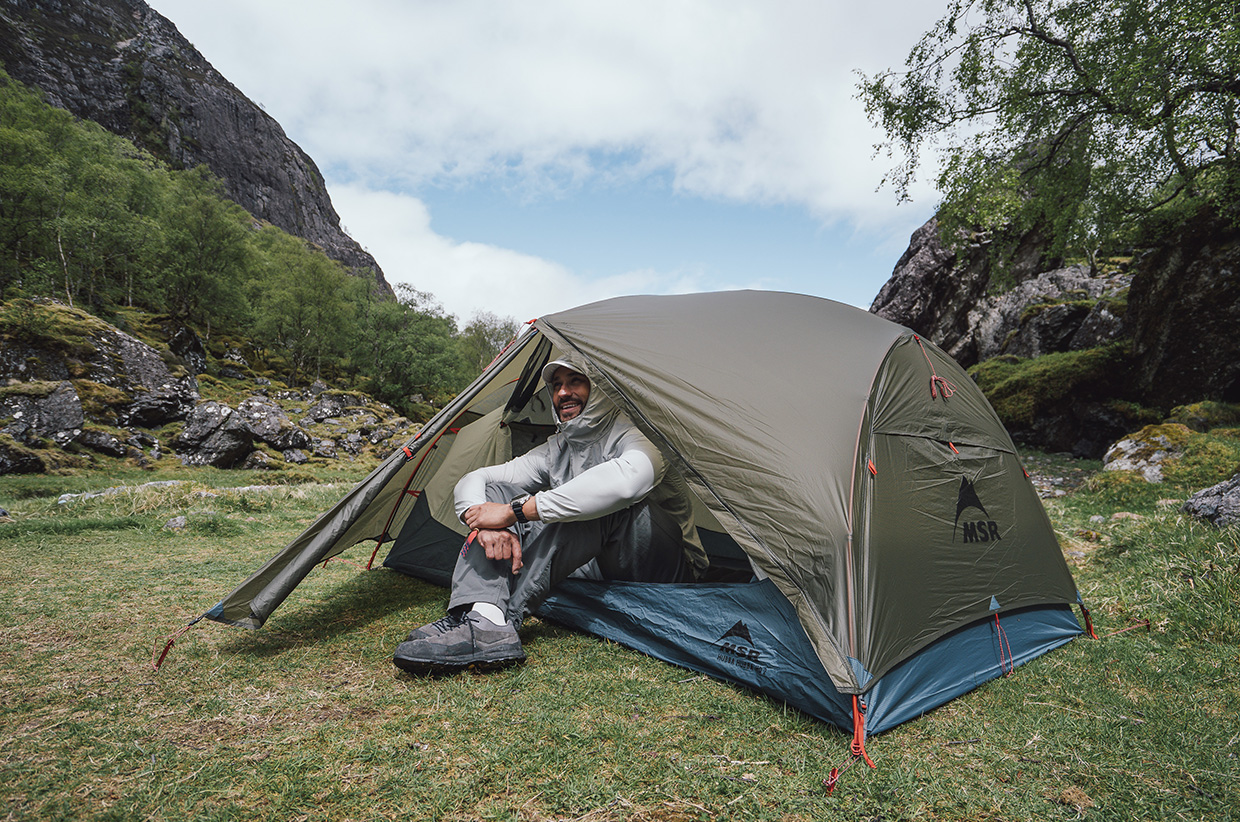
Introducing the Hubba Hubba LT and HD
When we put up our Hubba Hubba tents high in Glen Coe, we frankly didn’t know whether the winds we were fighting against were anabatic or katabatic flows – although researching it now, they were clearly anabatic – nor what the weather was doing other than ‘buffeting gusts’. We did know it was a bit wet, a lot windy, and very wild. Perfect conditions, then, to test a tent.
Between the three of us, we had two tents from MSR. These are new versions of a tent you likely already know: the unforgettably named and best-selling Hubba Hubba. In fact, John still regularly uses one from at least 10 years ago. The first Hubba Hubba was released in 2004, just as technology was leading to lighter poles and materials, and aimed at thru-hikers and backpackers. With the Hubba Hubba, MSR (Mountain Safety Research), designed the tent with two pole-connecting hubs* (*dawns on writer why it’s potentially called Hubba Hubba) over each end of a rectangular tent, rather than one hub in the middle. This means a lot more living space, two doors. The one-person version was called Hubba, and the two-person the Hubba Hubba. They quickly became favourites of thru-hikers along the Appalachian and Pacific Crest trails. If you want to know more, there’s a genuinely interesting here.
Fast-forward to 2026, and you’ll now find two Hubba Hubba tents – the LT and the HD – that are upgrades from the lightweight NX version. Both have more interior space and offer greater stability than the NX. And the LT and HD are the two we have with us in Glen Coe.
It was late in the afternoon when we arrived for our plan to bag a couple of Munros in Glen Coe, spending the night camping in the area. The route was dictated by a short walk to the first night’s camping spot, Coire Gabhail, Corrie of the Bounty, or more popularly named the Lost Valley. The next day, we’d continue up the valley to gain the ridge, turn south-east to Stob Coire Sgreamhach, before an about-turn along the ridge up to Bidean nam Bian, the highest peak, and down via Stob Coire nam Beith. But today, a 4km walk in; just as well given the ‘mixed’ forecast.
The Lost Valley is a flat expanse beneath two of the Glen Coe’s Three Sisters, Beinn Fhada and Geàrr Aonach. It is littered with boulders fallen from these mountains, and a beautiful spot. Centuries ago it was a good place to hide stolen cattle, as the MacDonald clan discovered, but it’s also where many of the clan met their fate fleeing from the Massacre of Glencoe in 1692. But the ghost stories would have to wait. It was time to make camp. But wait… we still had a good while before it got dark. Why not play a bit? In a nod to the once-legendary ‘#youdidnotsleepthere’ Instagram account, we had fun putting our tent in improbable locations. Good for photos, bad for needing a wee in the middle of the night.

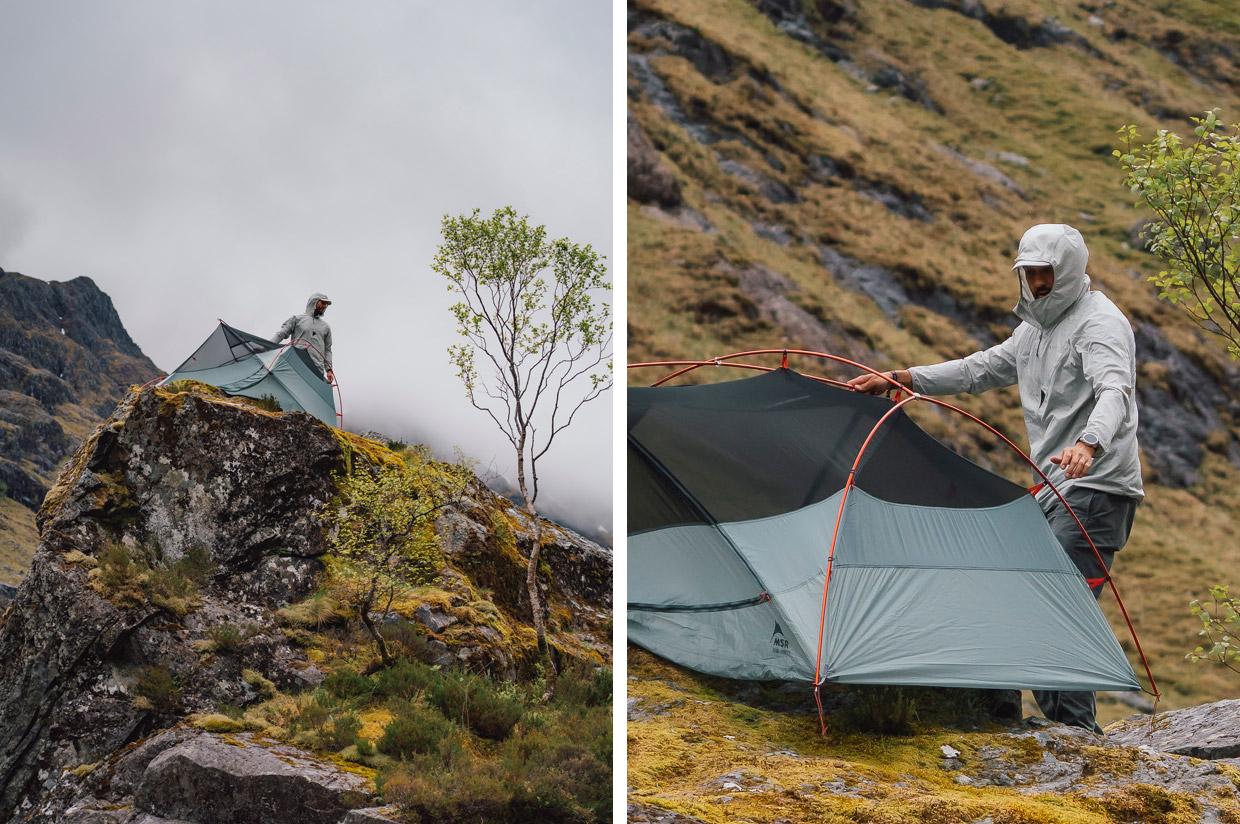
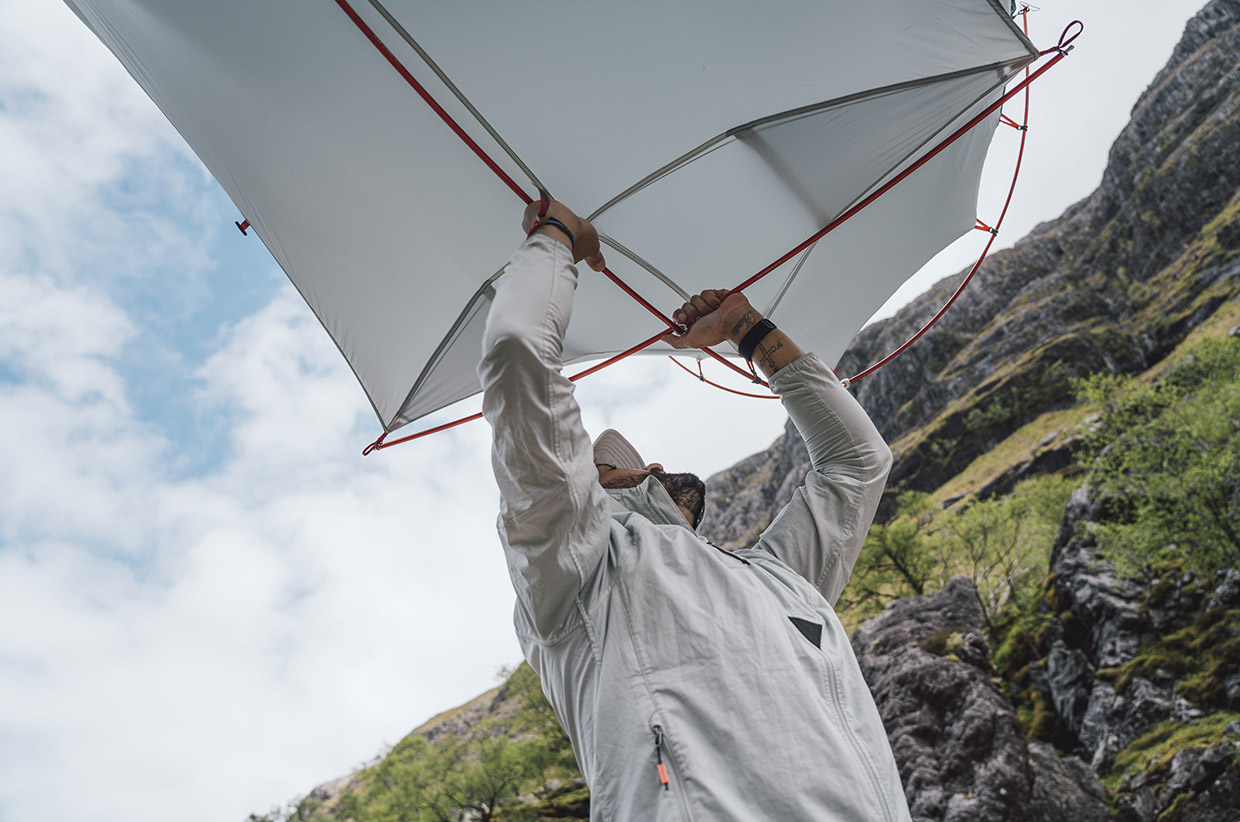
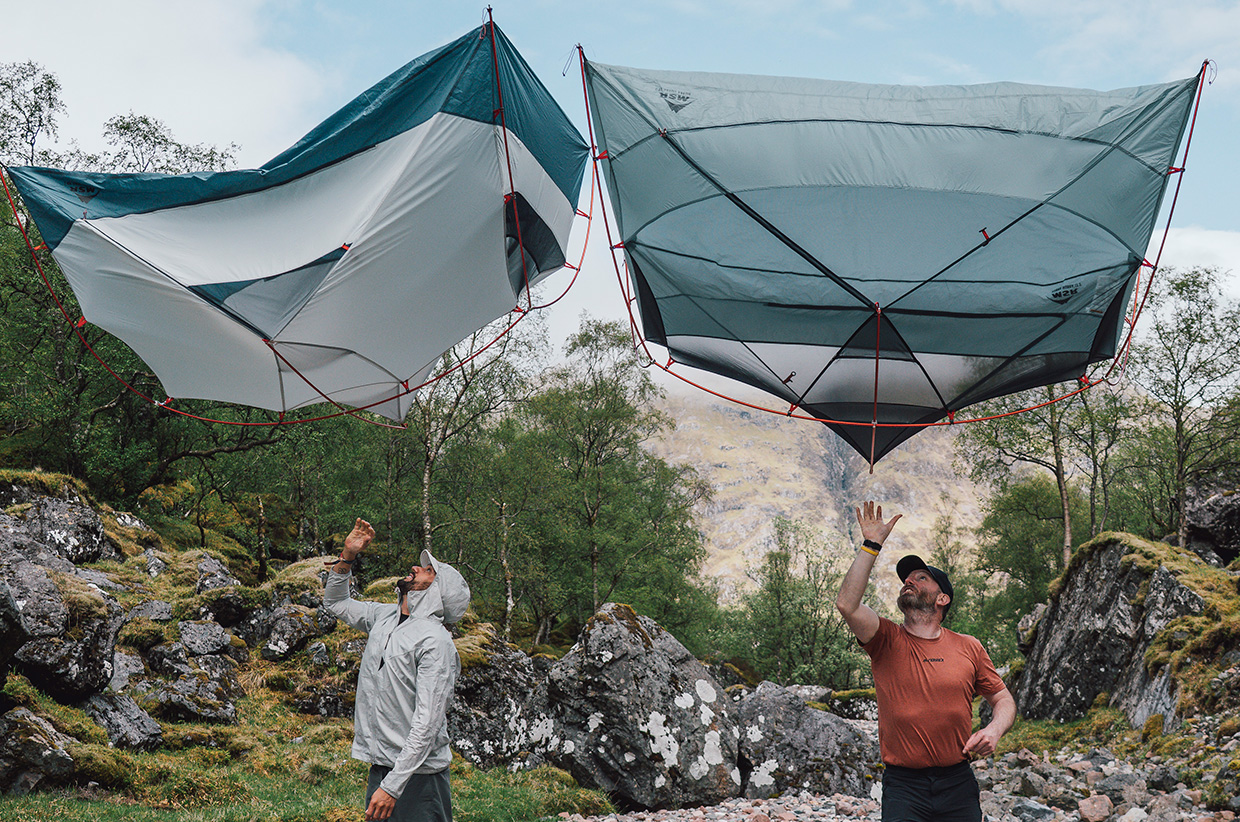
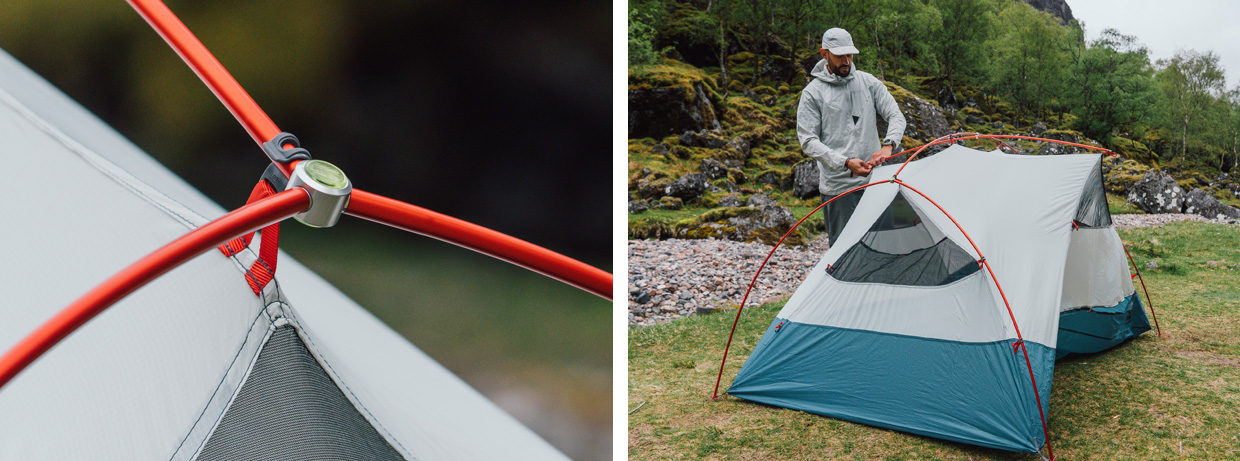
We unpacked the tents from the small sacks and raced to put them up. If you’ve owned one before, you’ll know that they are a doddle to put up, and that hasn’t changed with these two; instead, there’s been an iterative approach to the design. By replacing the Hubba Hubba NX with two models, MSR is aiming to give customers more flexibility. The Hubba Hubba LT is lighter than the NX (1.54kg vs 1.72kg for packed weight) and offers more floor space and slightly more head height (full details below). The HD model is heavier than the older NX (by 8g) but designers have focused on stability, particularly the pole structure and increased protection from the rain. It’s almost like they were considering the Scottish Highlands in May. Both also have more internal features (including pockets and a clothing line) reinforced hardware, and some improved design features such as easier access to the zips.
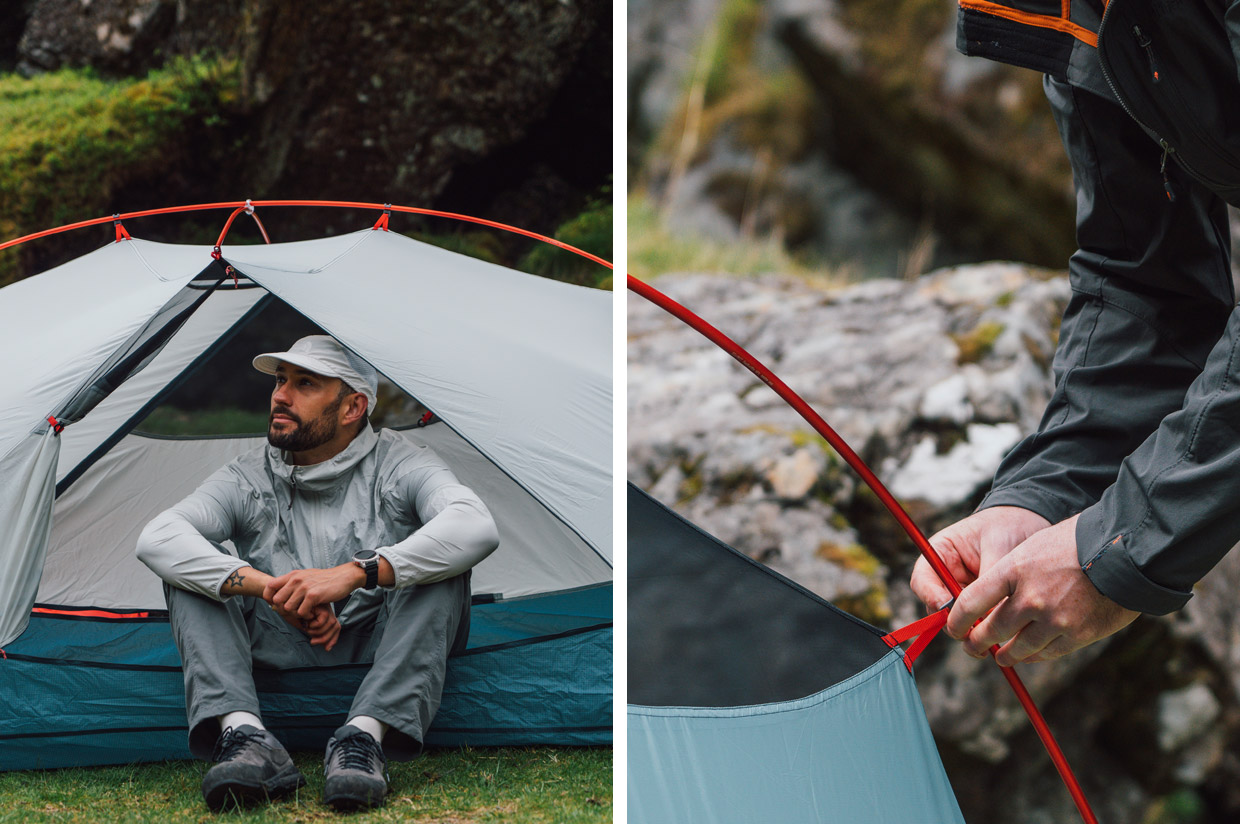
Everything just feels solid with these tents. The poles are lightweight DAC aluminium and feel positive to put up. And they are genuinely fast to erect (Davy won by the way). The included Mini-Groundhog pegs are great too, holding in a wide variety of ground types. Definitely something we appreciated in Scotland, where you never know if it’s going to be rocky or boggy.
There are more than 20 years of development on this tent, and it shows: it all just fits. The LT is more of a summer tent, and most likely designed for warmer US climates. The inner is largely mesh, for example, but the HD has a solid fabric inner that is more protective. Against the wind and side-by-side, the HD did appear slightly sturdier than the LT, although both performed well. But this is clearly the terrain for the MSR Hubba Hubba HD, a three-season tent perfectly suited to these conditions. Inside, there were loads of storage options – we like a tidy tent – and the two doors were easy to open.
During the night, showers fell, the wind picked up and fell again, but the tents remained firm and completely dry. In fact, once up, we barely considered them again… a sign of good gear. Packing down was also quick and effortless. After a coffee, we left the Lost Valley. Clouds flew across the sky. We had no phone reception, but the weather looked OK for now, just very windy. We followed the path steeply up to the ridge. As we did, the views opened up, albeit briefly, and the views south took us aback, as they always do. Above us, on the horizon, north, south, east, west, the weather seemed to be doing something different in each direction. Scotland never lacks drama.


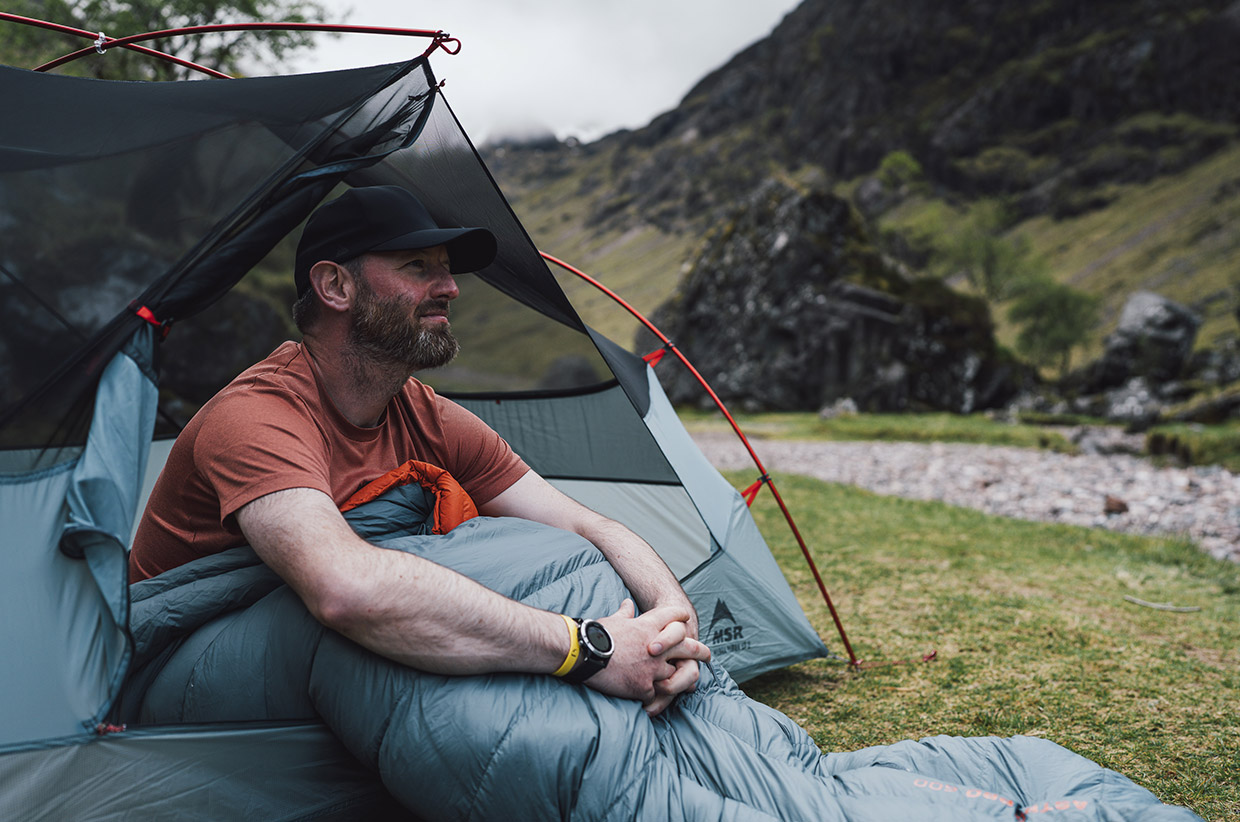
MSR HUBBA HUBBA HD 2-PERSON
Packed weight: 1.80kg
Peak height: 1.02m
Floor area: 2.24m x 1.32m (floor and vestibule: 2.95m x 1.53m)
Rainfly: Solution-dyed 20D ripstop nylon, 3,000mm polyether urethane & PFAS-free silicone
Tent body: Solution-dyed 20D polyester micromesh & solution-dyed 20D ripstop nylon, 6,000mm polyether urethane & PFAS-free DWR
Website: cascadedesigns.com/hubba-hubba-hd-2-person-backpacking-tent
MSR HUBBA HUBBA LT 2-PERSON
Packed weight: 1.54kg
Peak height: 1.02m
Floor area: 2.24m x 1.32m
Rainfly: Solution-dyed 20D ripstop nylon, 1,200mm polyether urethane & PFAS-free silicone
Tent body: Solution-dyed 20D polyester micromesh & solution-dyed 20D ripstop nylon, 1,800mm polyether urethane & PFAS-free DWR
Website: cascadedesigns.com/hubba-hubba-lt-2-person-backpacking-tent-eu
Photography by John Summerton // @johnsummerton
Produced in partnership with MSR // @msr_gear