Words: Gerhard Czerner
Photography: Martin Bissig
How would these fully loaded boats handle in the rapids ahead? Xaver’s expression betrayed his doubts. ‘I don’t think it’s going to be easy,’ he said. I could only agree. But all we could do was try. We climbed into our packrafts, deeply laden with equipment – including mountain bikes – and I tried to visualise the challenges that lay at the crux of our journey two days ahead. Then I dipped my paddle into the water to take the first stroke.
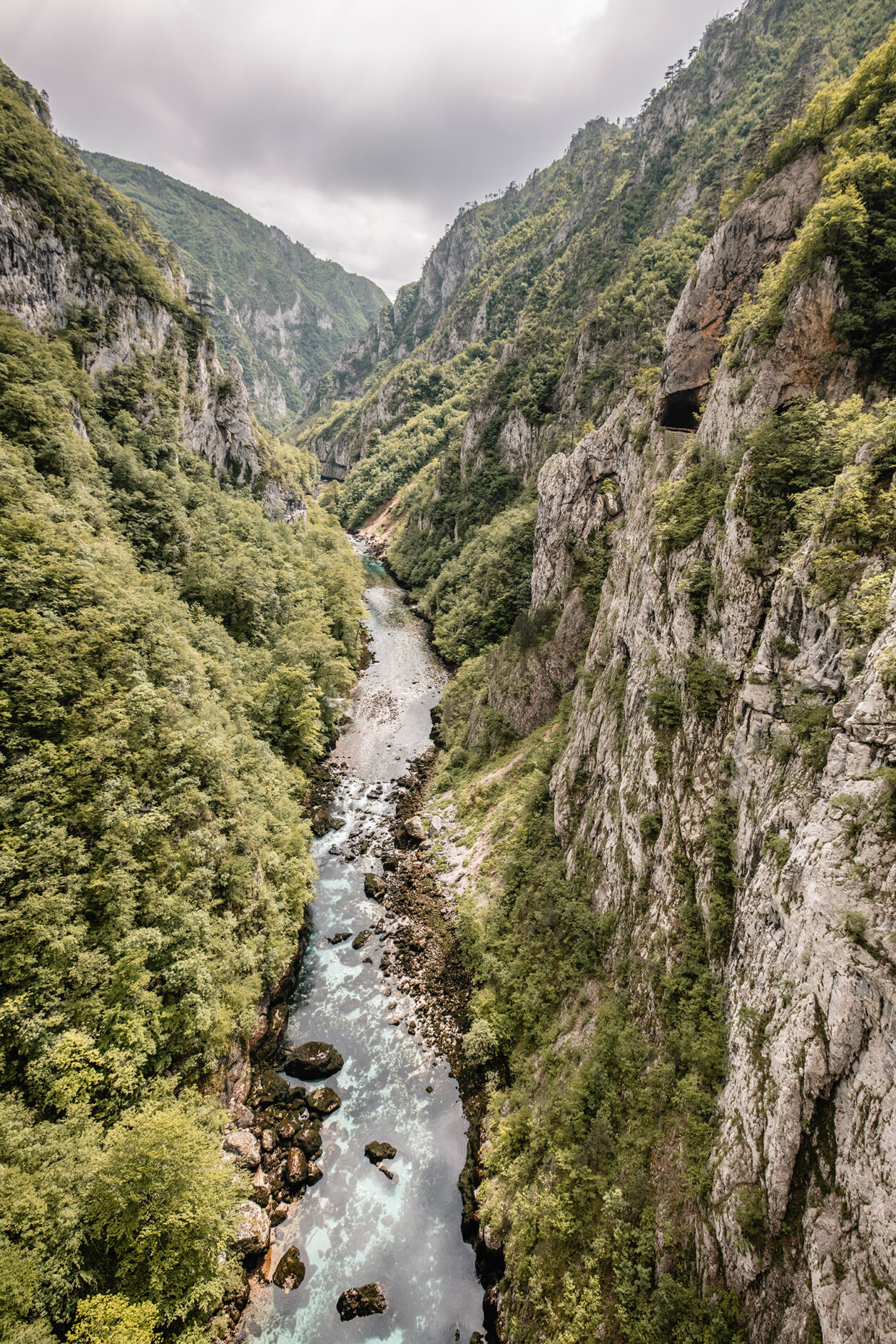
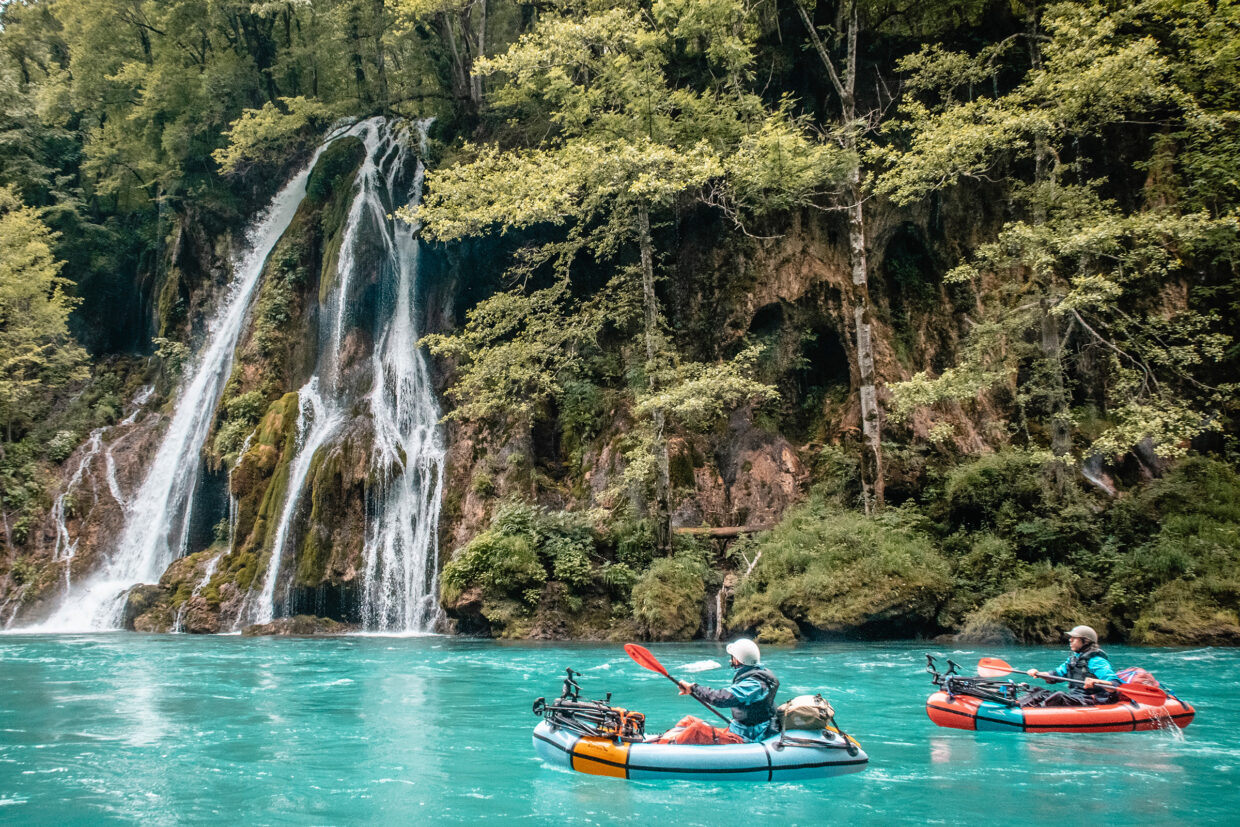
Thanks to its clear waters, Montenegro’s Tara River is often called the Tear of Europe. This blue gem flows through Europe’s deepest canyon, where the river has carved 1,333m down into the limestone. Amongst whitewater enthusiasts Tara is a household name. I’d always wanted to see this natural spectacle, but only after discovering the unique challenges and pleasures of bikerafting – a new sport for me – did Tara come back into my thoughts.
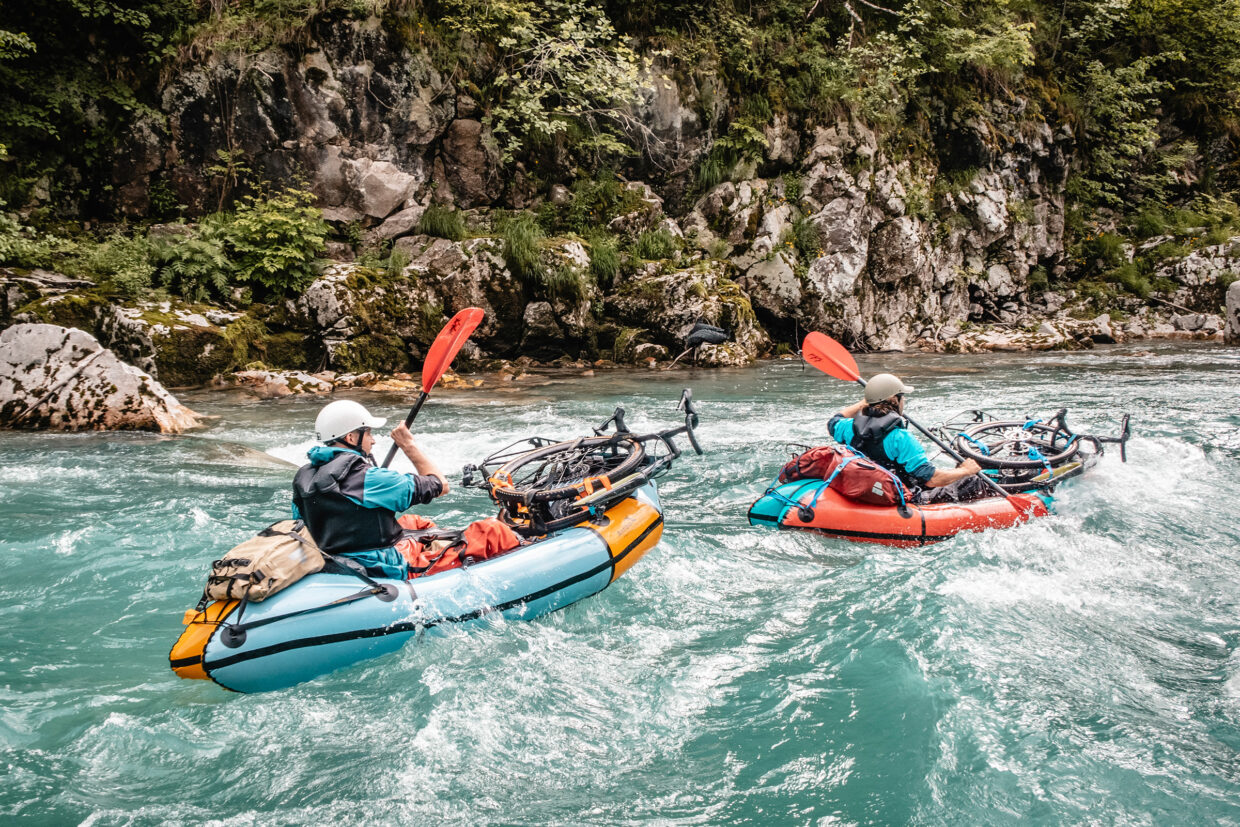
This symbiosis of packrafting and biking captivated me. Packrafts are lightweight rubber boats for one or two people, which can be folded down to an incredibly compact size. This makes them easy to carry on a bike rack or in a backpack. Today, some models of packraft have become sporty whitewater vessels. When bikerafting, you transport the boat, along with necessary whitewater gear, on your bike to the river. Then the bike ends up in the boat. After paddling a stretch of water, you deflate the raft and continue your journey on the bike.
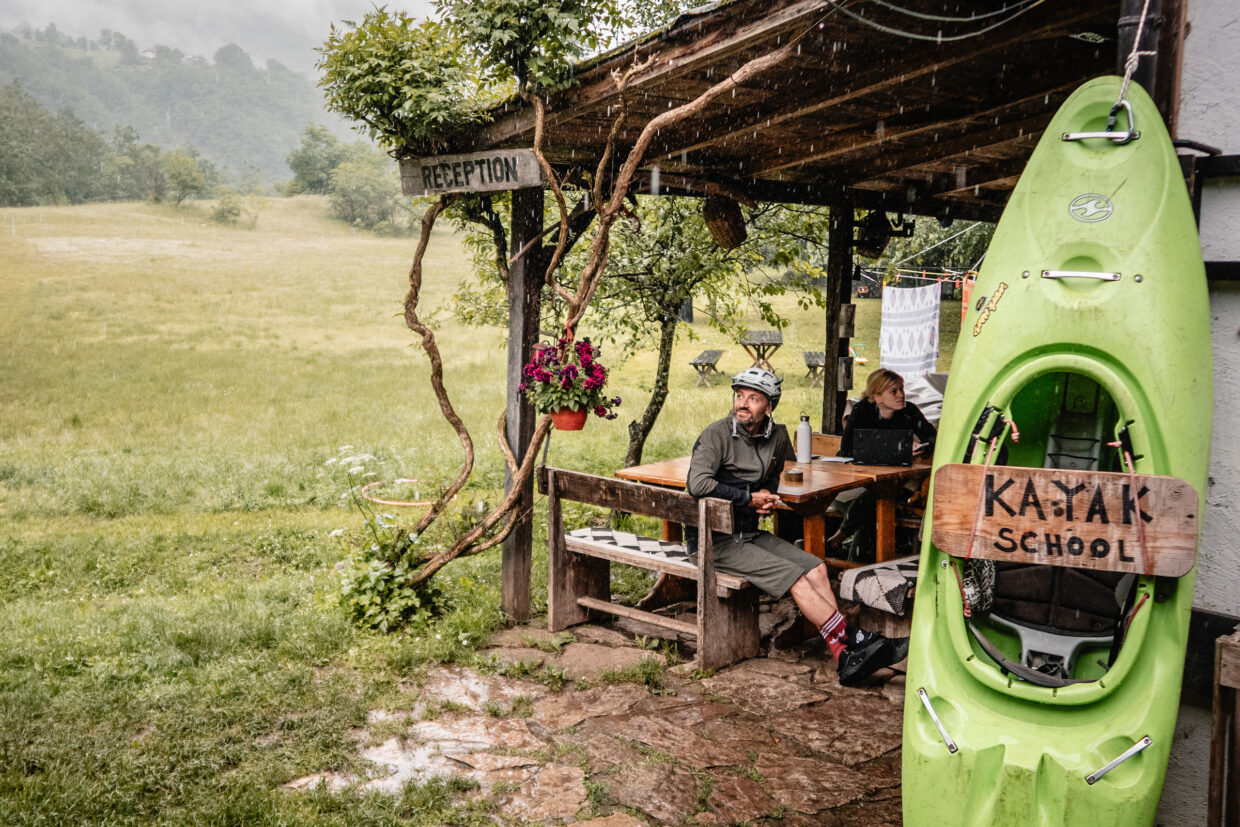
While exploring options, Tara Gorge came to mind. A five-day loop across the beautiful Durmitor National Park, incorporating the Tara Gorge, looked feasible – and I managed to excite Xaver Frieser, an experienced paddler and biker. On arrival in Montenegro, we consulted local kayaker Gigo for advice, and we stood beside the river at Camp Grab, watching the play of the turquoise waves.
‘The water level is perfect,’ Gigo said to us. ‘The last kilometres are sporty, but you guys will manage.’ He was grinning. We weren’t quite so sure.
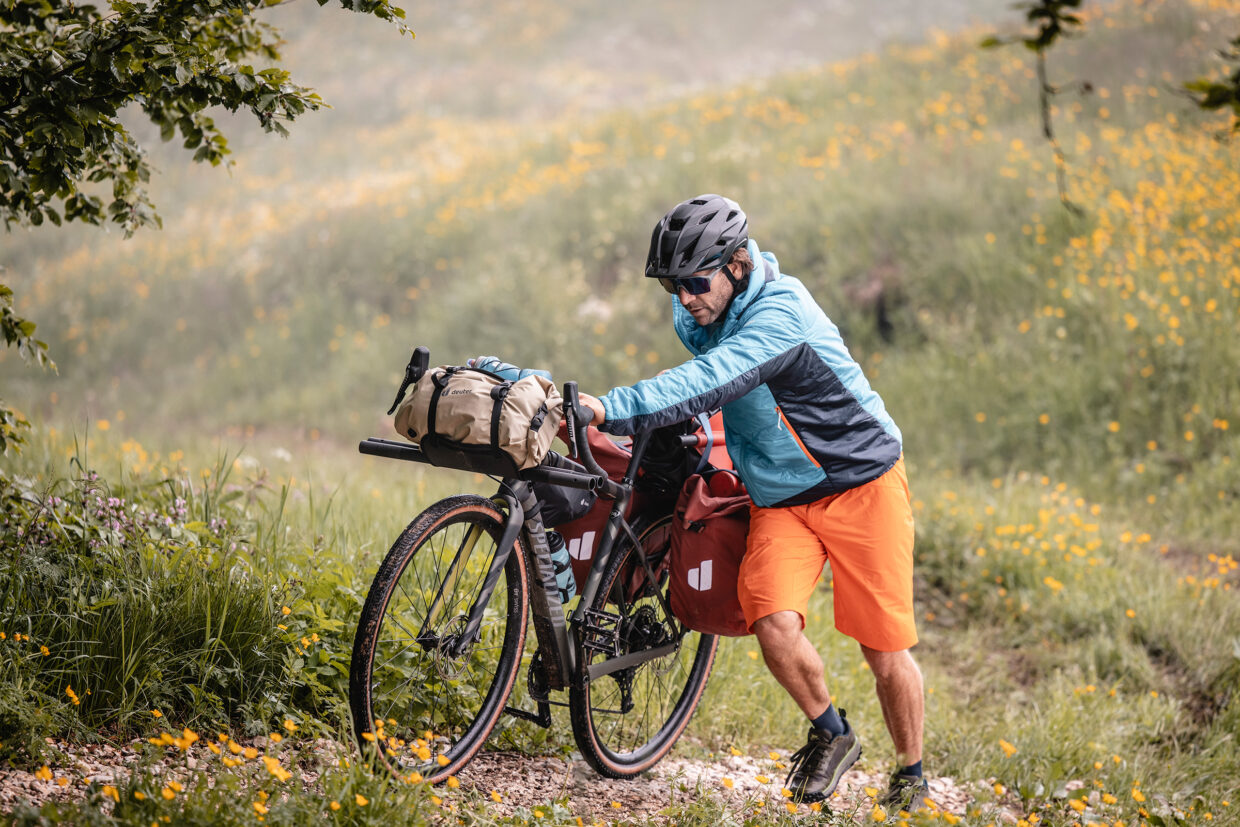
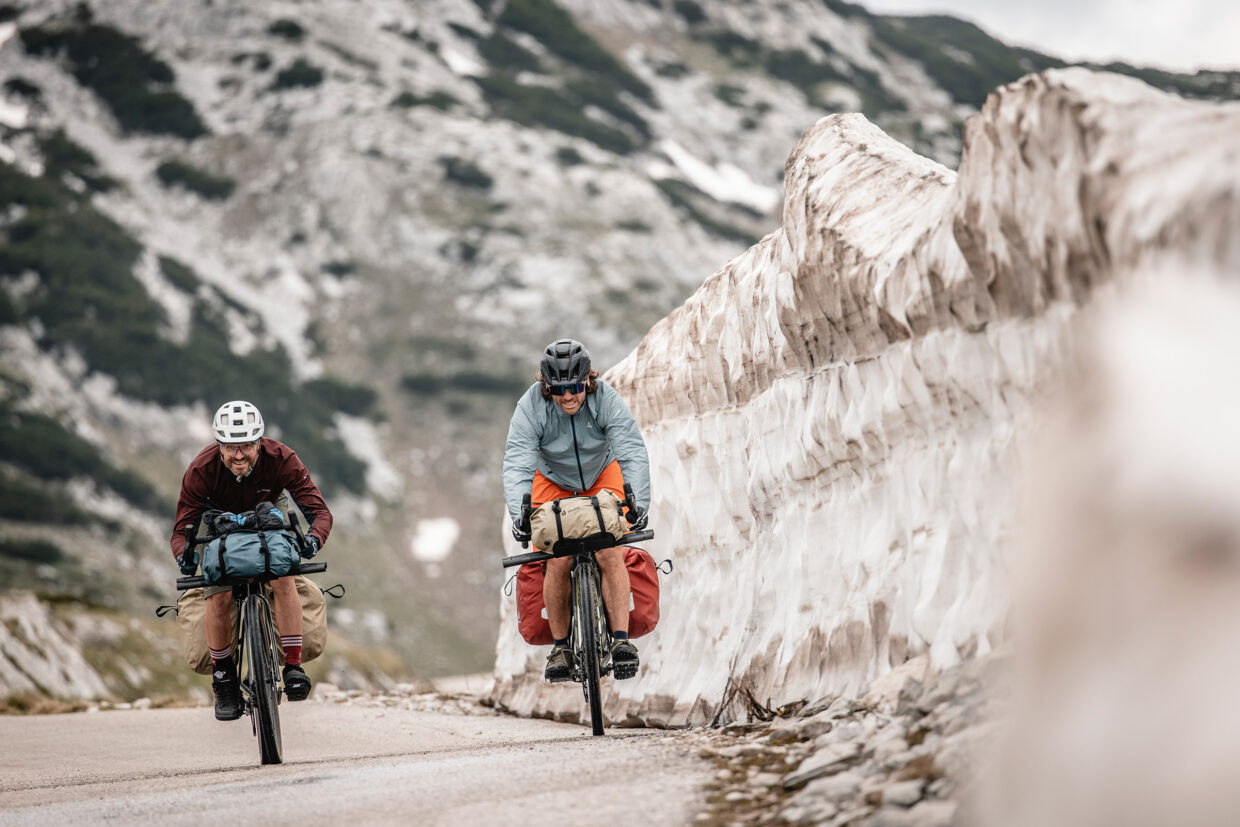
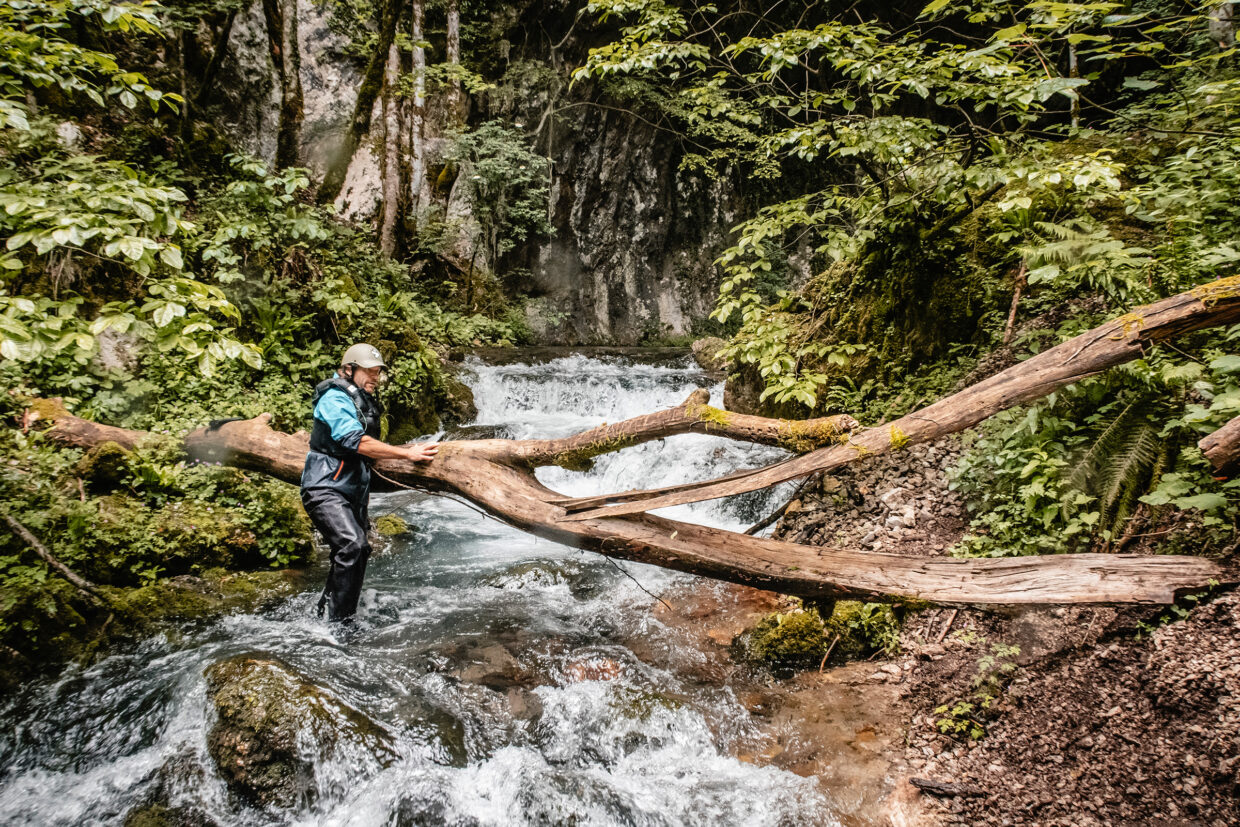
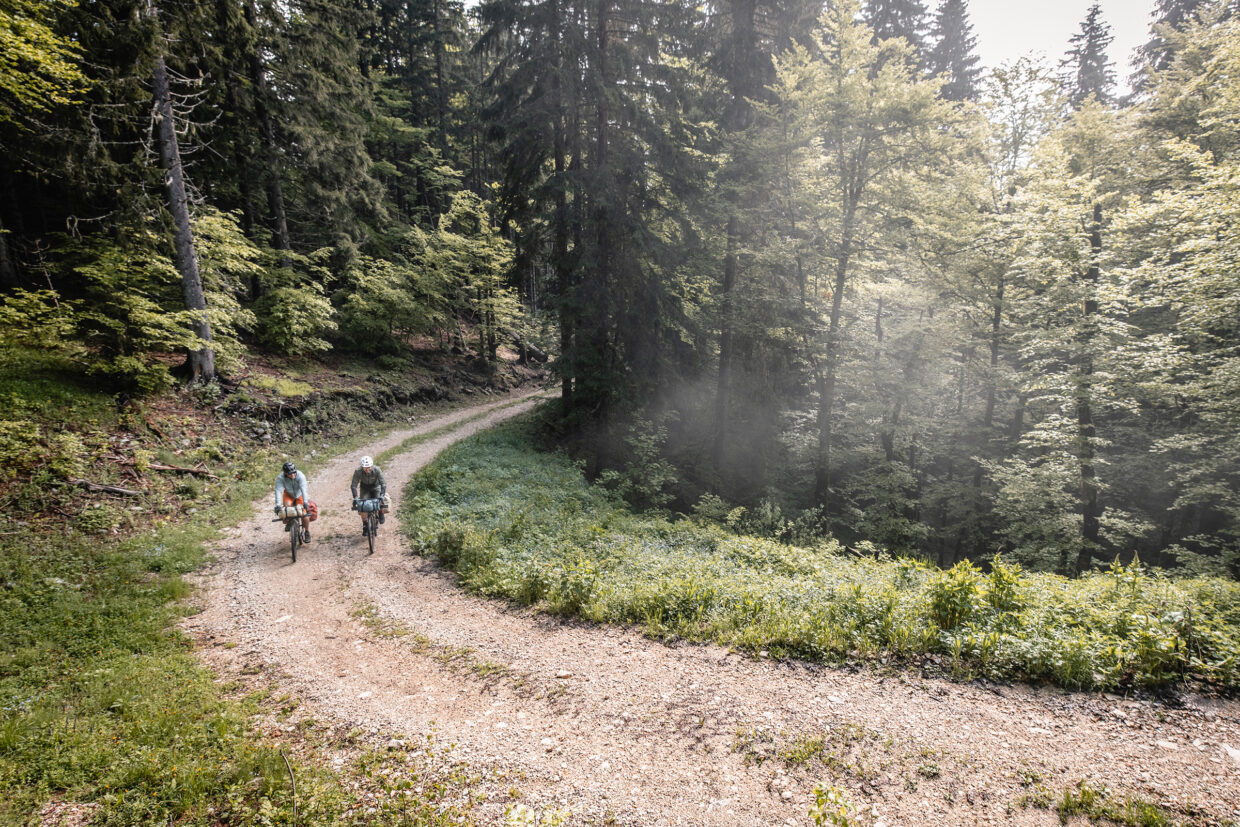
The initial biking part of the trip went smoothly enough, although the heavy bicycles were difficult to manoeuvre on the rough gravel, and occasionally we had to push. Gigo had told us this area was home to many bears – which seemed likely enough given the deserted woods. Montenegro is sparsely populated by European standards. Many of the small villages we passed in the northern Montenegrin highlands looked abandoned.
After entering Durmitor National Park, the trail wound through fragrant flower meadows towards a rugged mountain skyline. The 2,393m Prutaš Peak loomed over us, rising above the deep snow beds from last winter. Our bikes, laden with paddles and boats, seemed out of place.
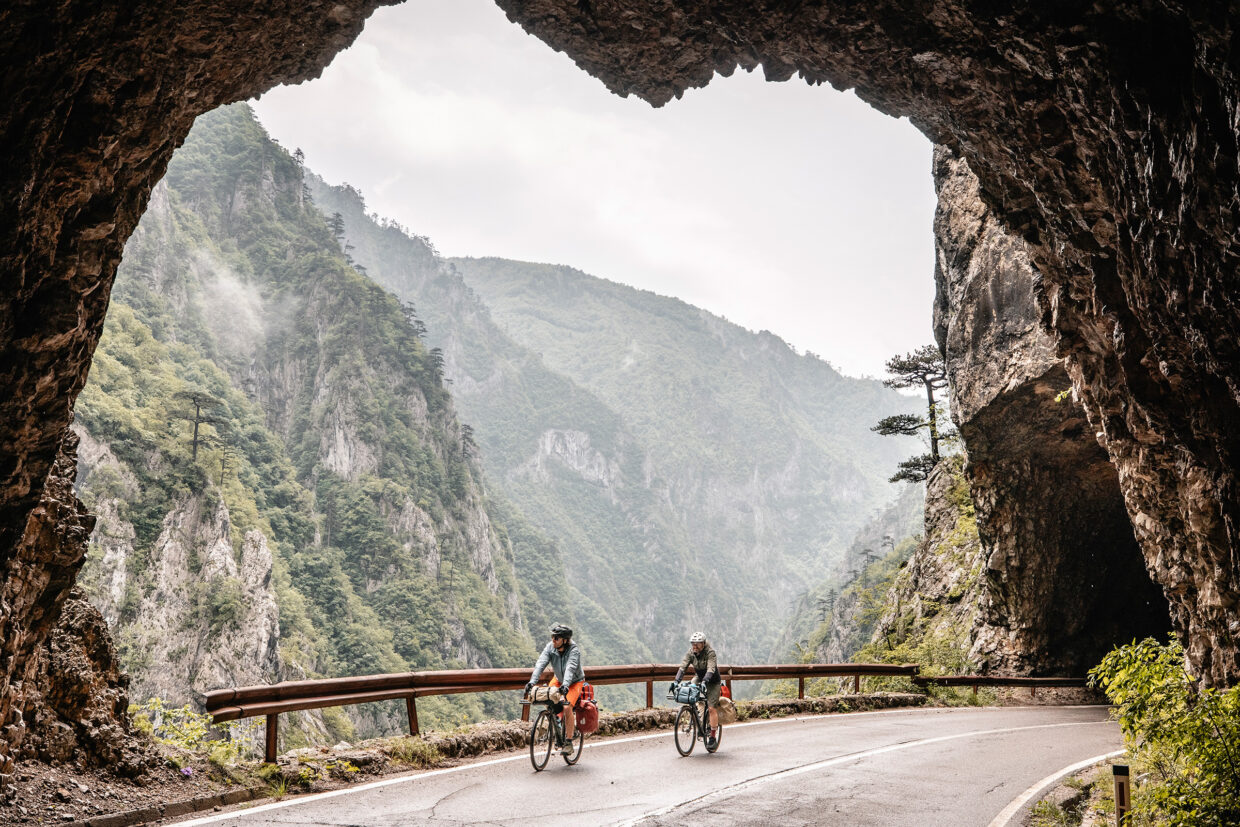
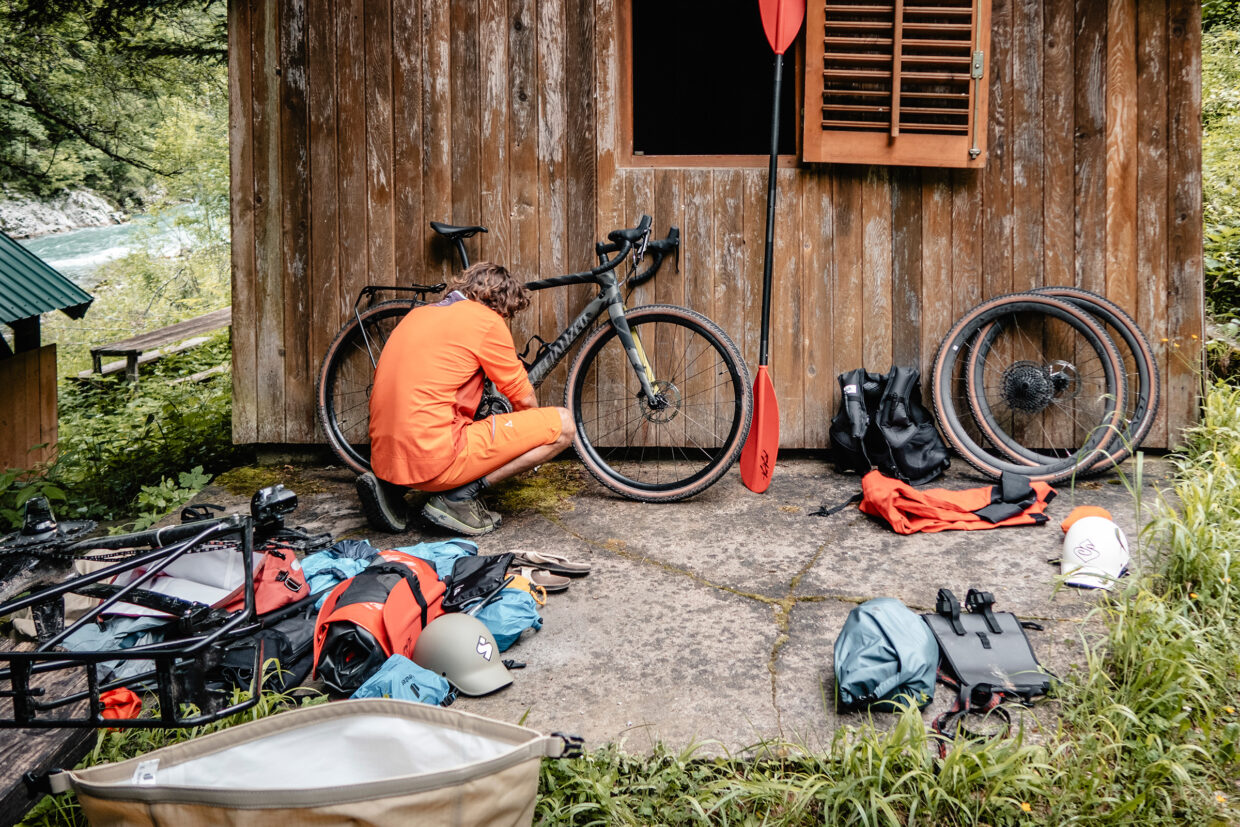
On day two, we raced for 10km down the road, losing 650m in elevation, our bikes wobbling at the high speeds. But we braked only just before the serpentine turns – our excitement for the Tara Gorge was too great to slow down. At the river’s entry point our enthusiasm had the chance to build again as we prepared: inflating boats, unloading panniers, removing wheels, swapping bike shorts for lifejackets.
The Tara isn’t a sluggish river; its rapids go up to Class 3 on a six-point whitewater scale. It was vital that everything be well secured so that nothing could shift or get lost. Although I was excited, I couldn’t help feeling tense at what might lie ahead.
Xaver checked his straps one last time. I assembled my paddle, then we launched the boats into the water. ‘Let’s do this!’
Xaver rose and plunged in the swell, haloed with spray. Then he was gone.
White limestone cliffs hemmed us in on both sides as we got used to the handling of our packrafts. Meanwhile, the roar of the first major rapids drew us towards a constriction in the cliffs where I could see the white foam of waves and rollers.
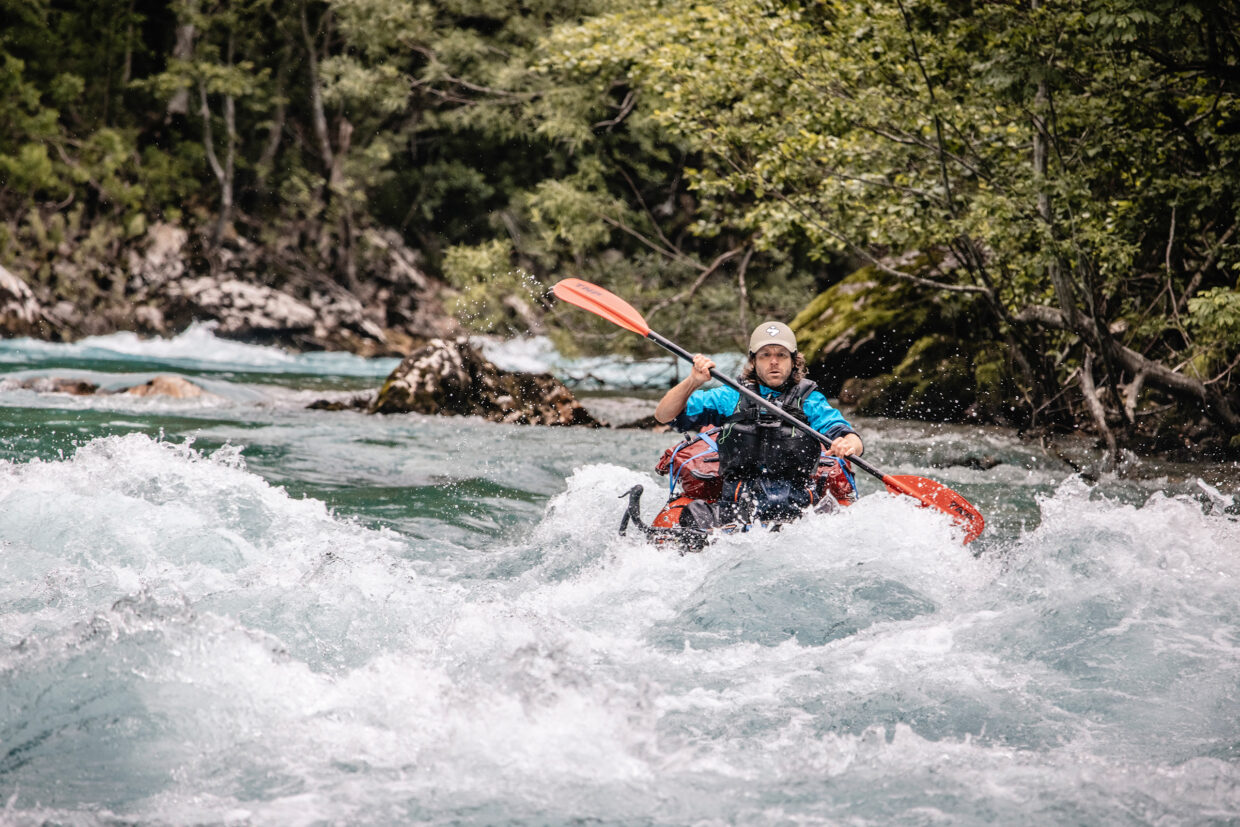
An experienced expedition paddler, Xaver instantly spotted the line. As we entered the whitewater, my packraft proved far more responsive than I expected, remaining stable despite its load and high centre of gravity. I sat in the stern of my boat, the bike in the bow. Our first test had been passed. Back in calmer waters, we both joyfully threw our paddles in the air, the initial tension dissipated. Part of me had still thought of packrafts as toys, but I was impressed at how sporty they’d proven in the whitewater.
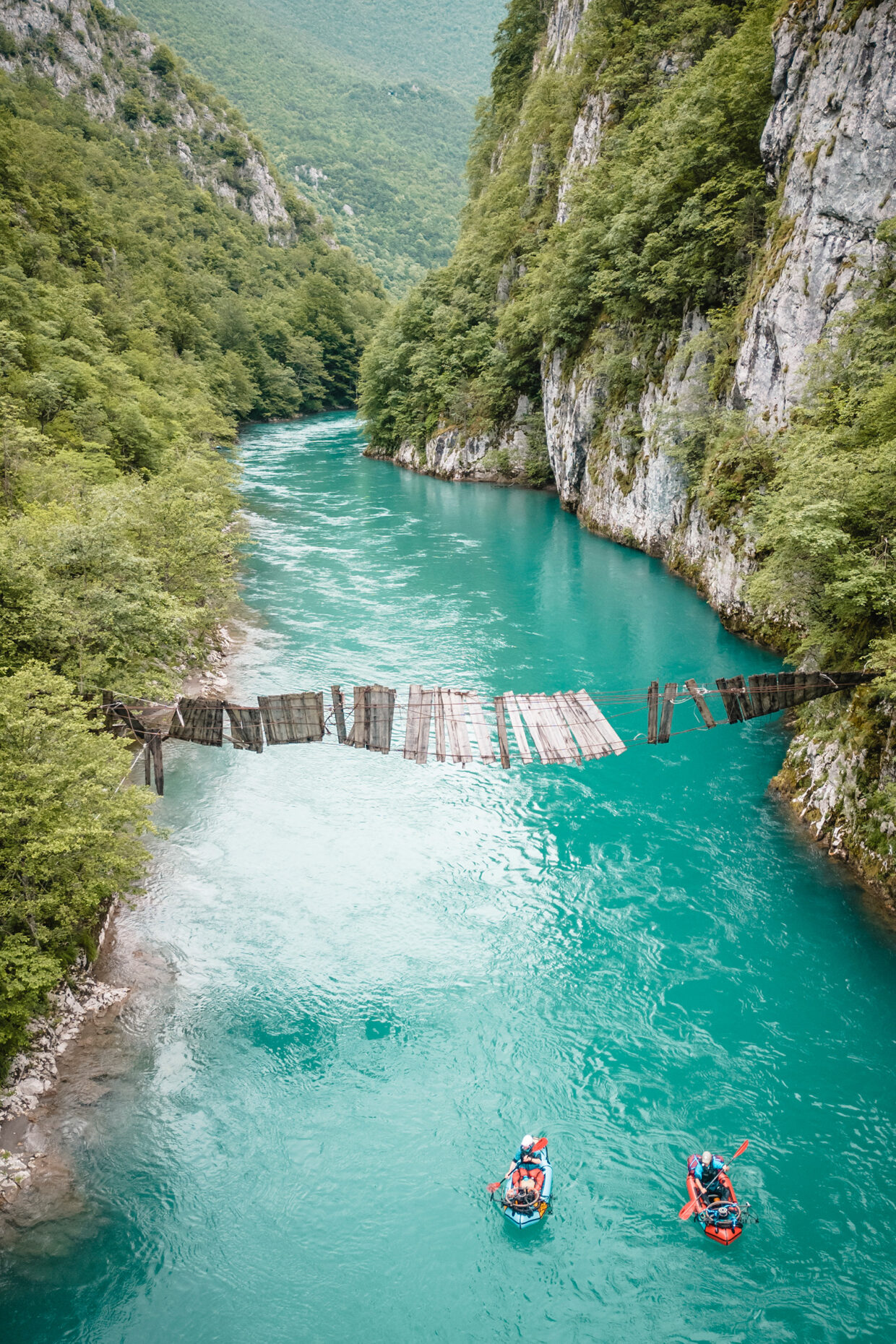
The 78km of river ahead gave us plenty more opportunity to relish the ride. Rapids alternated with calmer sections. Forests crowded up to the gorge’s margins, and the rock walls were draped with thick carpets of moss behind the waterfalls that plunged to greet us.
The final 18km contained 21 challenging rapids – so demanding that it hosted the World Rafting Championships in 2009. The tension rose again as we approached, and we spoke only to discuss our line from the safety of an eddy. ‘Let’s keep a gap between us,’ Xaver said, and off he went, leading the way towards the first rapid. I didn’t have time to overthink it.
The waves were bigger this time – much, much bigger. Xaver rose and plunged in the swell, haloed with spray. Then he was gone. A pulse of adrenaline shot through me before I realised he was hidden in the dip of a wave. A moment later and he reappeared, but then I was in the trough of the wave myself, and he was lost behind the next one just as quickly. I had no time to do anything but act and react.
Towards the end of the adrenaline section, Xaver was powering towards a large wave crest that seemed to tower above him. A side roller hit him when he breached the crest, slamming him two metres to the left. Before I had time to visualise what that might feel like, I found myself at the crest of the same wave, and the same thing happened to me: BAM! I was shoved bodily aside by the immense power of the water. But I remained in control.
Hour after hour, we navigated captivating but demanding rapids. The constant physical and mental effort began to wear me down – I hadn’t paddled this much in a long time. When we finally reached the take-out spot at Camp Grab, back where we’d started days before, we paddled to shore with aching muscles, minds still racing with the split-second decisions we’d been making for so long.
Still full of adrenaline, Xaver and I embraced on the sandy beach. ‘It couldn’t have been much tougher,’ I said, overwhelmed by the last 10km. ‘That was insane.’ Xaver laughed, eyes sparkling, and said, ‘I never thought it would be so… athletic!’
Exhausted but triumphant, we celebrated our successful tour at Camp Grab that evening. I couldn’t quite believe we’d navigated the gorge with boats and bikes. The camp operators told us we were likely the first bikerafters to do it, but whether that was true did not matter to us. It was truly a journey through two different worlds and a unique adventure.
First published in Sidetracked Volume 35
Words: Gerhard Czerner // @gerhardczerner
Photography: Martin Bissig // @martinbissig