Written by Daniel Neilson
Photography courtesy of Benjamin Kellett and Gallet
At 7,000mm, life has a different perspective. At a London launch event for Gallet watches, Sidetracked interviewed Benjamin Kellett about his endurance paragliding adventures, managing risk, and being part of a timekeeping heritage that dates back to the Wright brothers.
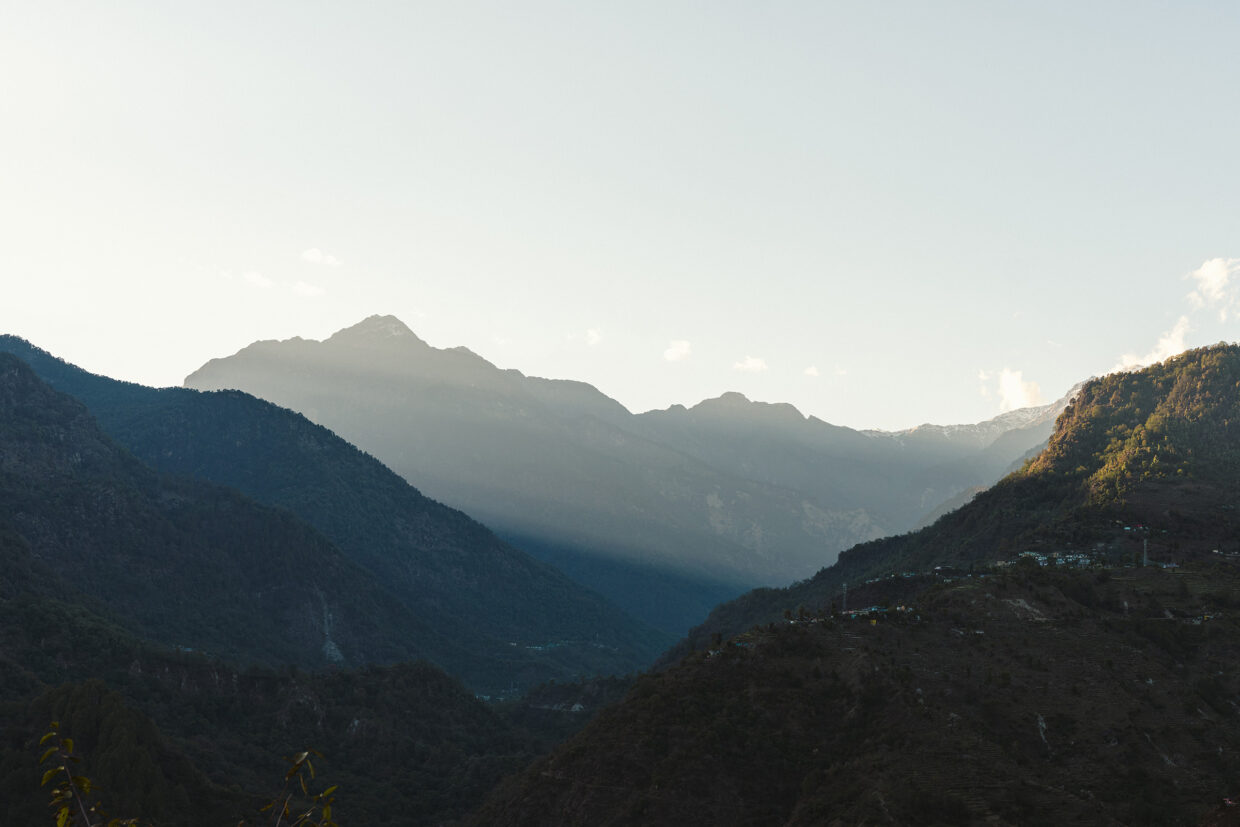
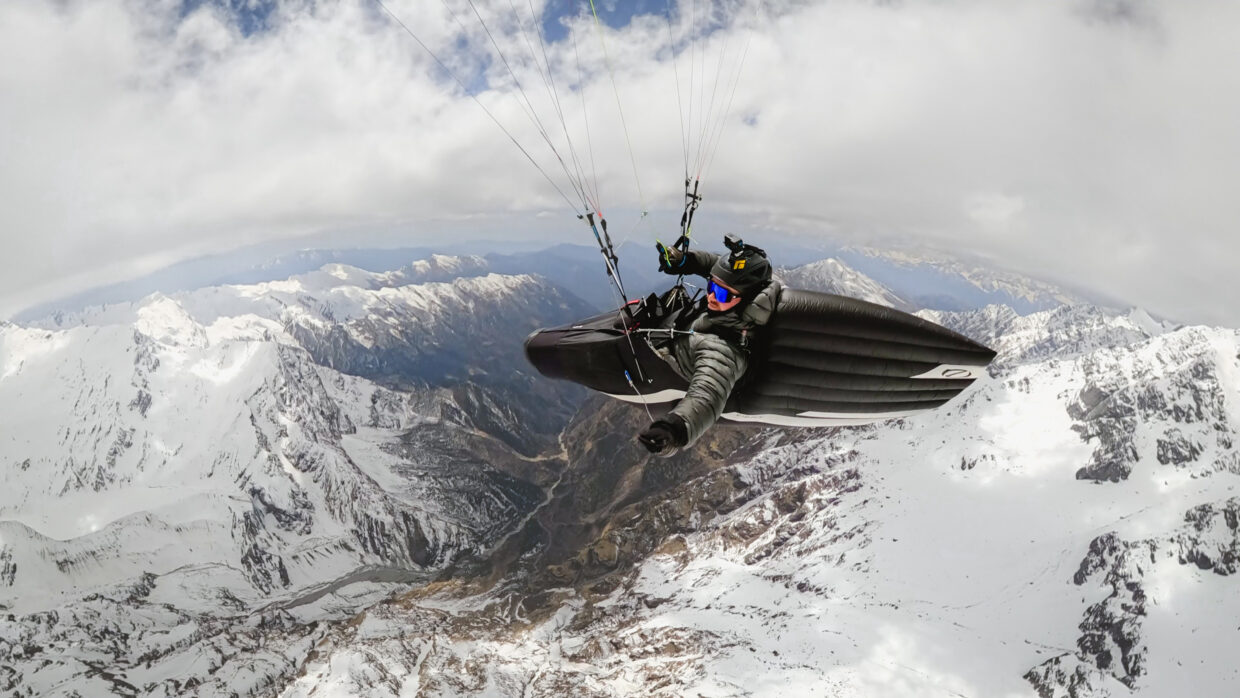
Two Himalayan vultures are circling on the thermals high in the valley that leads up to Nanda Devi, the highest mountain wholly in India at 7,817m. They are huge birds, with wingspans of up to 3m.
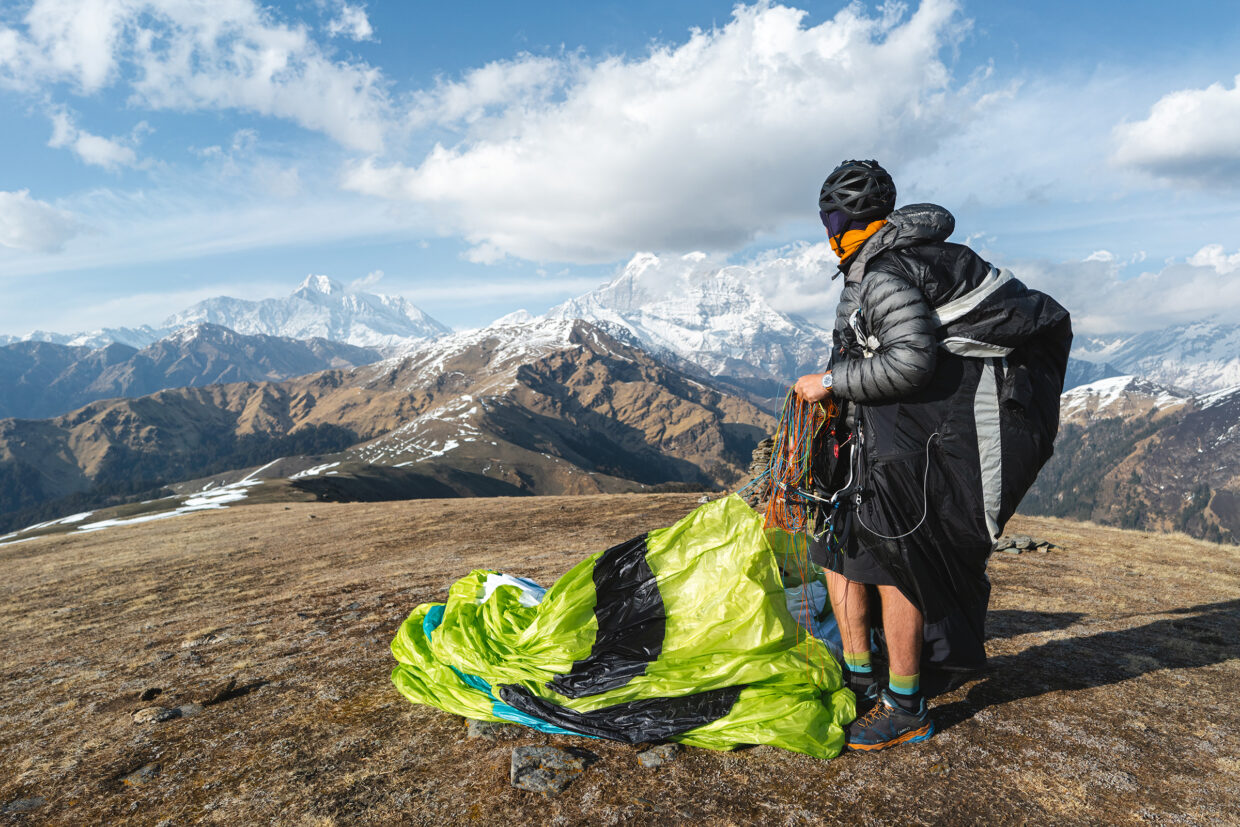
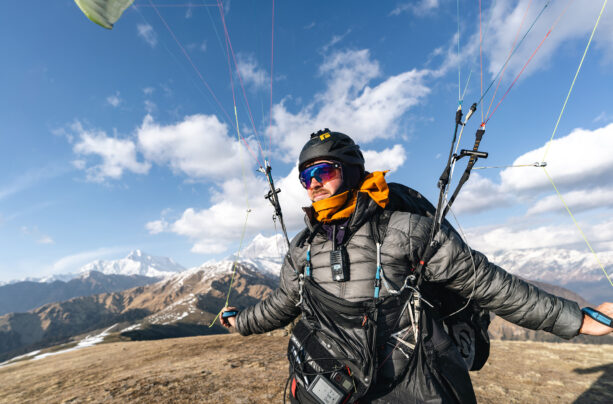
They’re being watched carefully by Benjamin Kellett and his fellow pilot Matt Johnson, who are circling in a similar fashion beneath them with wings made from nylon. Below them is the Nanda Devi Glacier.
‘You can’t see the rising air,’ Benjamin told Sidetracked before a launch event for Gallet Watches. ‘So we work like birds. You can’t see the thermals, but you can see the other pilot climbing. You work together like a team and then you’ve got twice as much opportunity to find something.
‘You’ll see birds working together, and we call it gaggle flying. The vultures do it, and we fly with them a lot in the Himalaya. They’re really helpful to watch, and they’re easy to find with their three-metre wingspans; you can spot them five kilometres away.’
As a paraglider, you’re navigating thermals, riding them like a kayaker would a river, except you can’t see them. ‘The only thing you can’t control is up,’ Benjamin says later, during a live interview with Sidetracked’s Daniel Neilson at the Breitling Townhouse on Regent Street, London.
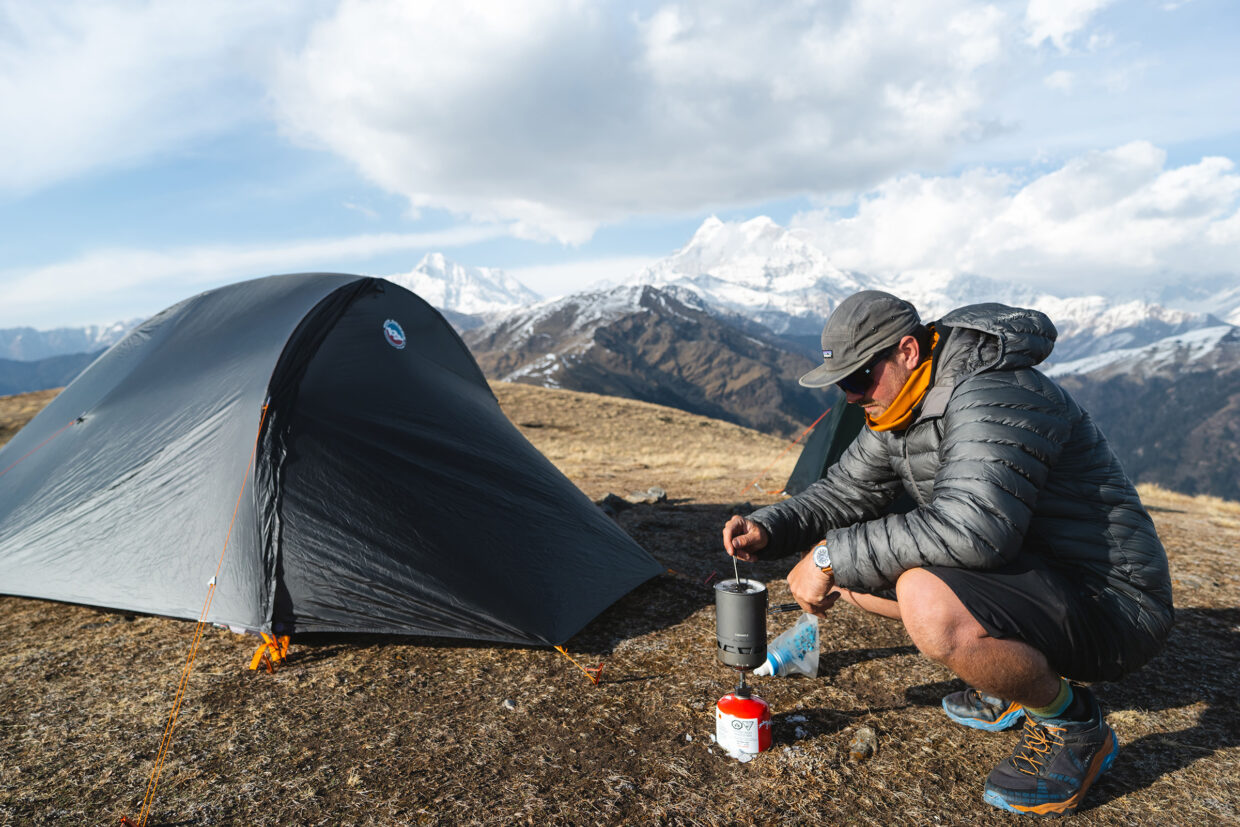
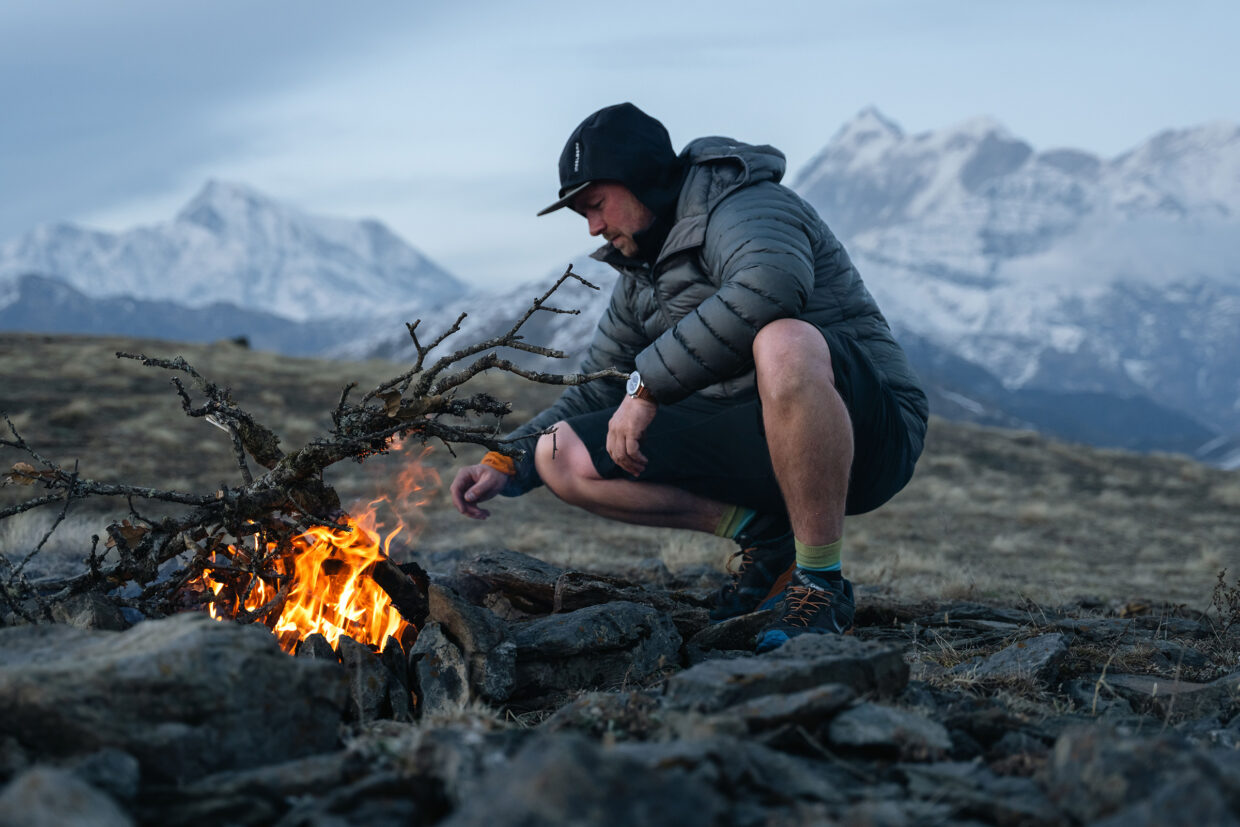
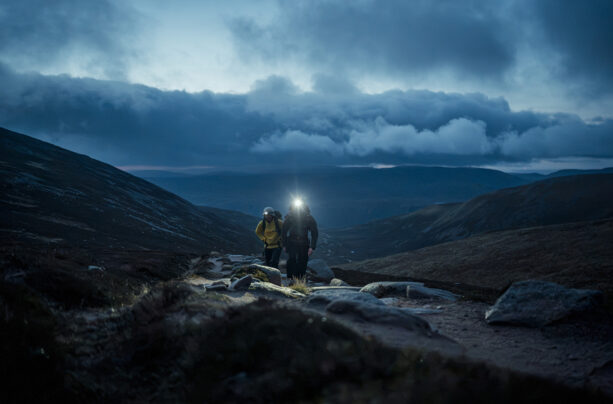
On this, the latest Himalayan expedition, Benjamin flew 1,000km in 15 days, sleeping wherever he decided to land. This is Ben’s MO: multi-day, expedition-style exploration, often to incredibly remote regions inaccessible by road. It’s high-risk and adventurous. ‘My style is more flying in really remote, hard-to-reach places,’ he said. ‘What I’m gambling is walking or sleeping on the side of the mountain for five days.’
In this interview, we speak to Benjamin about his exploration style, mitigating risks, navigating mishaps (some serious) and flying with the spirit of Gallet watches, which were used by the Wright brothers for their own primitive flight.
When Benjamin hit the ground, he knew he’d hurt himself. Enough to realise he couldn’t spend the night on this mountainside on his own. He was in the Southern Alps of New Zealand, and he estimated that the nearest road was two days’ walk away. He stood up gingerly – a good start – and decided he would self-evacuate instead of calling in the rescue helicopter. He could move just enough to get airborne and land somewhere with people.
Once in the air, the pain really set in; the adrenaline was wearing off. He found a road, and got a friend to pick him up. The next day, still sore, he decided to go to hospital. ‘Don’t move!’ the consultant cried as he walked back into the room. ‘You’ve broken your back again.’
‘Again?’ Benjamin wondered, still surprised at the fact he’d broken his back.
‘Yes, there are two more fractures.’
As he relays this story to a group of attendees invited to the launch of Gallet Watches, a brand with a similarly aviation-focused heritage resurrected by Breitling, I ask a question about risk.
‘It seems,’ I posit, ‘a low-odds, high-consequence activity for risk. I am far more likely to injure myself mountain biking, but the worst I’m likely to suffer is a broken collarbone. Dropping out of the sky from 7,000 metres into the remote Himalayas, days away from a road, well, it feels… precarious.’
‘For me, flying is about going to places people haven’t flown to before or rarely get to see. And I think that that is in the spirit of Gallet, so it fits with me really well.’
Although British-born, Benjamin moved to Queenstown, New Zealand, when he was 18 and constantly saw paragliders in the air above him, having a blast. So he turned up at the school and gave it a go. At the end of the day, they said: “Hey, if you come back tomorrow you can fly it off the ski field on your own.” I came back the next day, and I flew off the ski field and was hooked.’
What was it about that first flight? ‘It was the thrill of being off the ground, high, and flying, and the wind on your face, and having the controls.’
After that, the progression is quick. You get licensed, a bit like a driver’s licence; there’s a theoretical exam, and a practical examination, and then you’re free to go. But like a new driver, there’s still so much to learn, and you’re on your own.
‘If you were to plot your risk on a chart, at the beginning it’s quite high, but as soon as you leave school it goes up, because now you’re away from the instructors’ watching eye. They call it intermediate syndrome, because then you start thinking you’re good.’
It’s the low-odds, high-consequence factor we spoke about. ‘That’s exactly what it is. If you were to compare accident rates from skiing and mountain biking to paragliding, way more people are getting injured. However, they’re breaking collarbones and wrists. If you have an accident paragliding, you’re breaking your back or pelvis.’ And that’s exactly what Benjamin did. He was lucky to walk away, but it changed how he approached his expeditions moving forward.
‘It was totally my fault, obviously. I was trying to land in the place that I probably shouldn’t have, and I was actually quite frustrated. I was trying to force the situation. And I ended up stalling the glider at low altitude, too low for it to recover, and then I impacted the ground on my backside.’
It was in the Southern Alps near Tekapo, New Zealand, a couple of days’ walk from a road.
‘That changed me as a pilot and a person. My decision-making, being self-aware, and putting things in perspective. I was forcing a situation that wasn’t possible, which could lead to the risk not being worth the reward. I need to be aware: am I doing this because I’m frustrated? Why am I doing this? What’s the other option?’
‘I was also flying really heavy on the glider because I had lots of equipment, and that changes the characteristics of the glider. There’s a couple of things that lined up, and I think that last straw in the camel’s back was my mental space, and not being self-aware enough to go, “This is stupid. Listen to yourself. Just go and land in the valley. What are you doing? You’re saving yourself a five-hour walk. Who cares?”’
Since then, Benjamin, now 35, has clocked up thousands and thousands of flying hours, and it’s led him to fly more remotely across New Zealand, the Alps, and the Himalaya. His longest flight was 11 hours, and he can cover hundreds of kilometres in a day. ‘Endurance paragliding’ is what he sometimes refers to it as.
I ask about planning. Is he a meticulous planner or free spirit making his camp where his rump rests (hopefully gently)? ‘It very much depends on the objective, and I certainly do both. When I’m flying somewhere like the Himalaya, it’s more exploratory; I’m just out there being a bit of a butterfly.
‘But part of what I enjoy about paragliding is planning and executing a longer flight with more precision. It all requires planning. You need to study the map, look at the aspects of the hill, figure out where you need to be at certain times of the day – for the thermals you want to be on the east face in the morning, south in the middle, west at the end. I have to think about what time it’s going to start working, how much daylight I have during the day, and what my average speed is.’
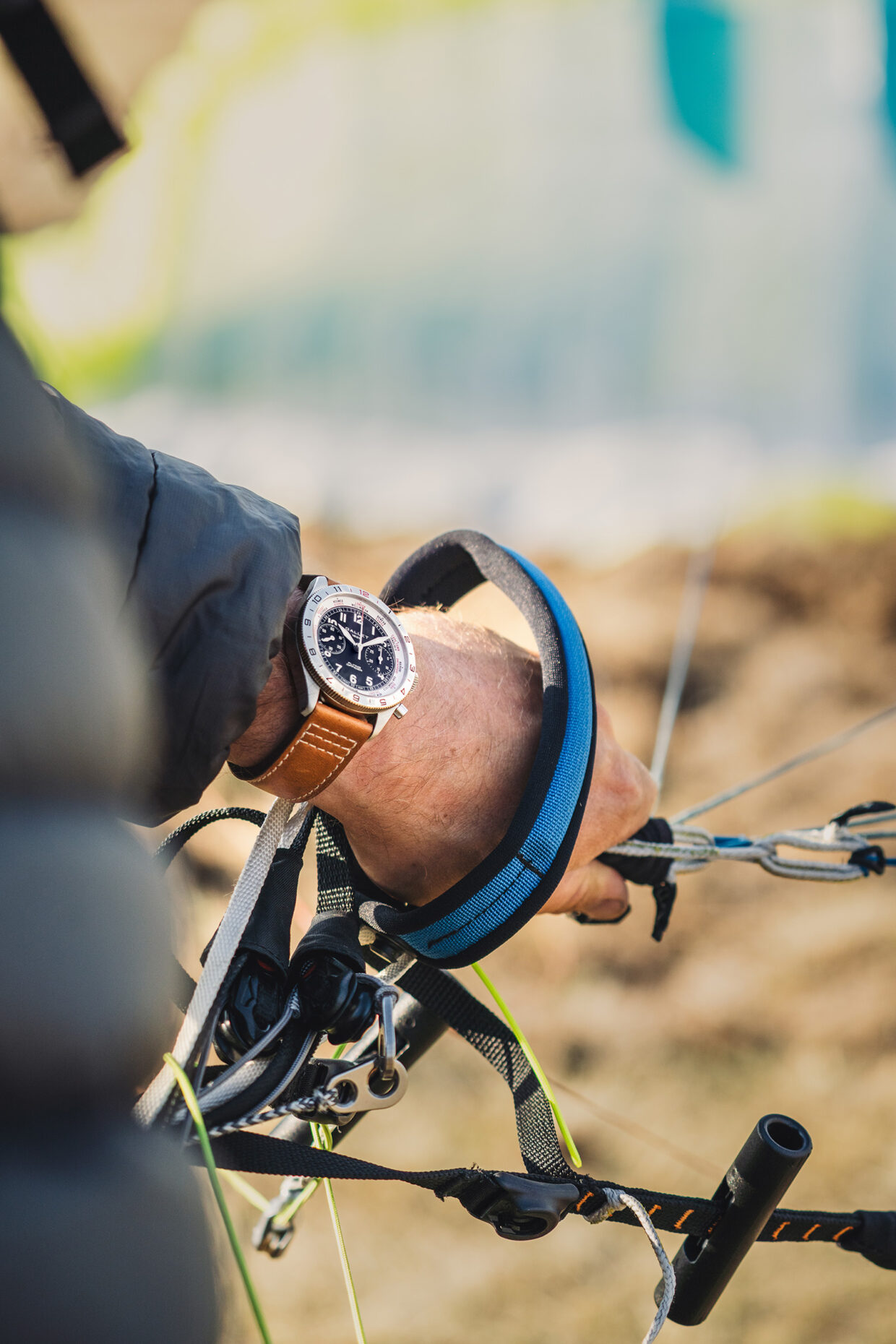
Timekeeping is clearly essential in all flight. Julien Gallet founded the watchmakers in 1826 exactly for this reason. The Swiss company made chronographs for flight, racing, sailing and exploration. In 1903, at Kitty Hawk, USA, the Wright brothers took flight for 59 seconds. They measured it using a Gallet stopwatch called The Sun. In 1939, Gallet released the Flying Officer Chronograph. It is the resurrected version of this watch worn by Benjamin Kellett on his latest Himalayan adventures.
‘It is really cool to be associated with a brand like Gallet, just because it ties in so well with what I do. This idea of wanderlust and exploring and being off the beaten track. And then you also have this tie-in with aviation and the Wright brothers – the most primitive origins of aviation, which paragliding is connected to in some respects. You use the power of the sun and the wind. We don’t have any technical engines.
‘For me, flying is about going to places people haven’t flown to before or rarely get to see. And I think that that is in the spirit of Gallet, so it fits with me really well.’
The aim of the trip to Uttarakhand was exploration and getting as close to Nanda Devi as possible.
‘Our objective was to go up and explore and fly all these different valleys, which we know people have never flown before. Some of them are just incredibly remote and hard to reach.’
Next on this list: Kazakhstan, Tajikistan, the Caucasus Mountains, parts of Australia, and back to New Zealand. But first, back to the Himalaya, the Greater Ranges – the highest mountains on the planet. Chasing thermals, following vultures, wheeling the skies, and the uniquely exploratory nature of aviation based on nothing more than the sun, the wind, and good timing.
For more information about Benjamin, visit benjaminkellett.com and find him on Instagram @benjaminkellett
Produced with Gallet // gallet.com // @galletwatch
Written by Daniel Neilson // @danieljneilson
Photography courtesy of Benjamin Kellett and Gallet