Written by Daniel Neilson
Photography by John Summerton
Produced in Partnership with Altberg
Altberg rose from the ashes of one of Britain’s last shoemakers. Thirty-five years later, this family bootmaker continues to expand while maintaining its craft.
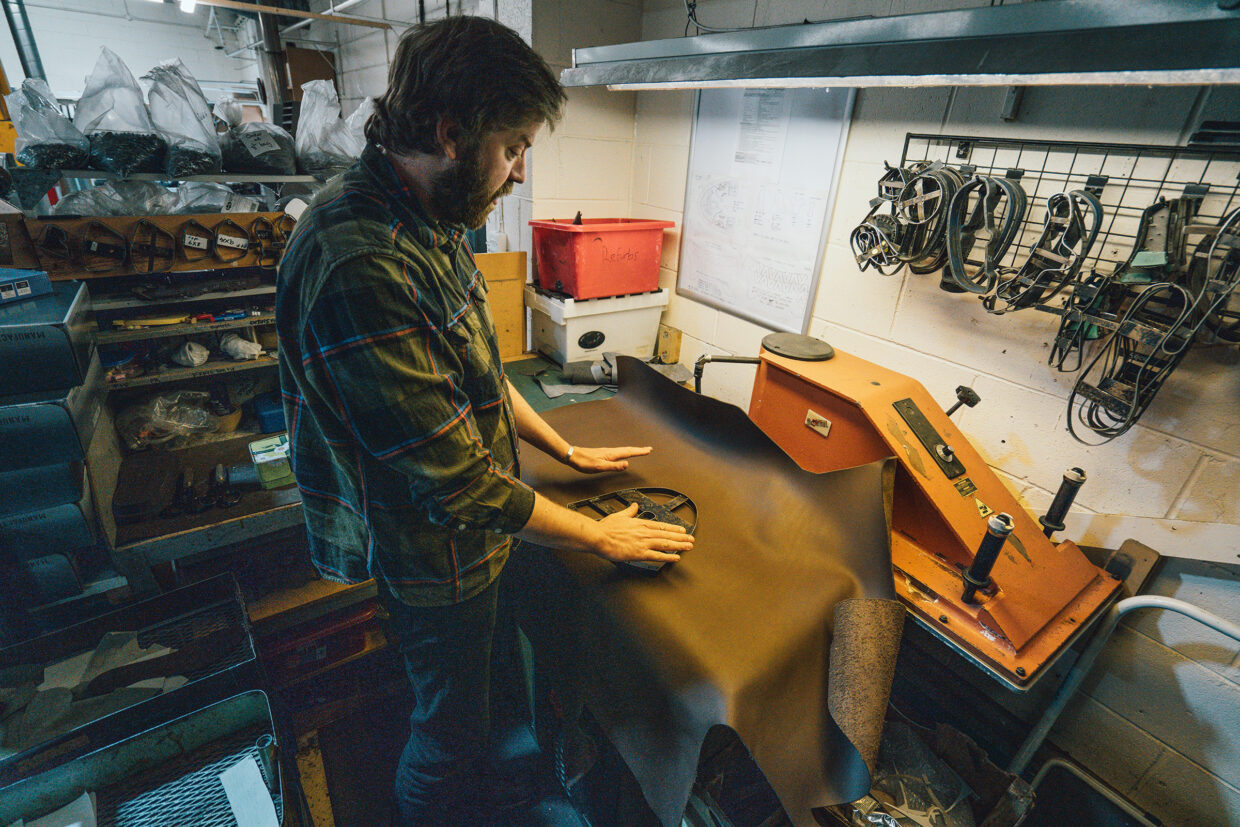
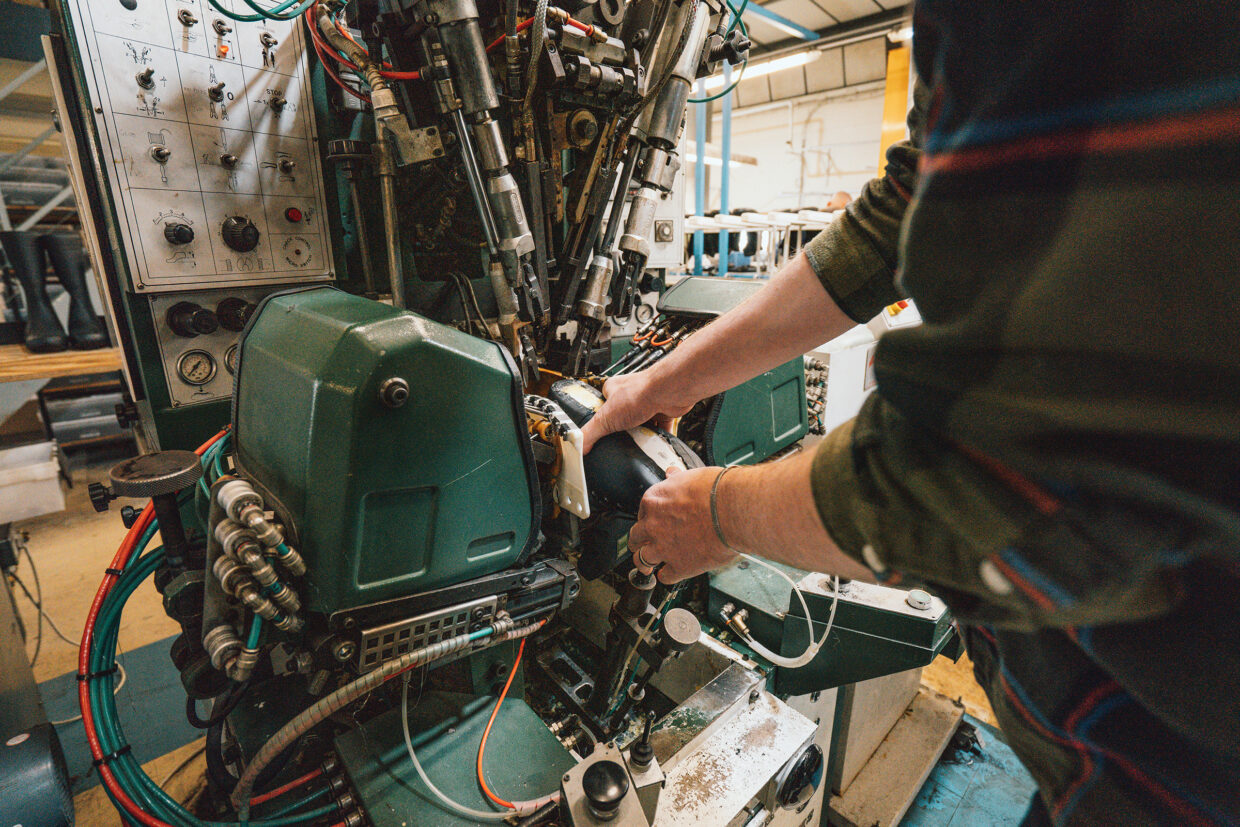
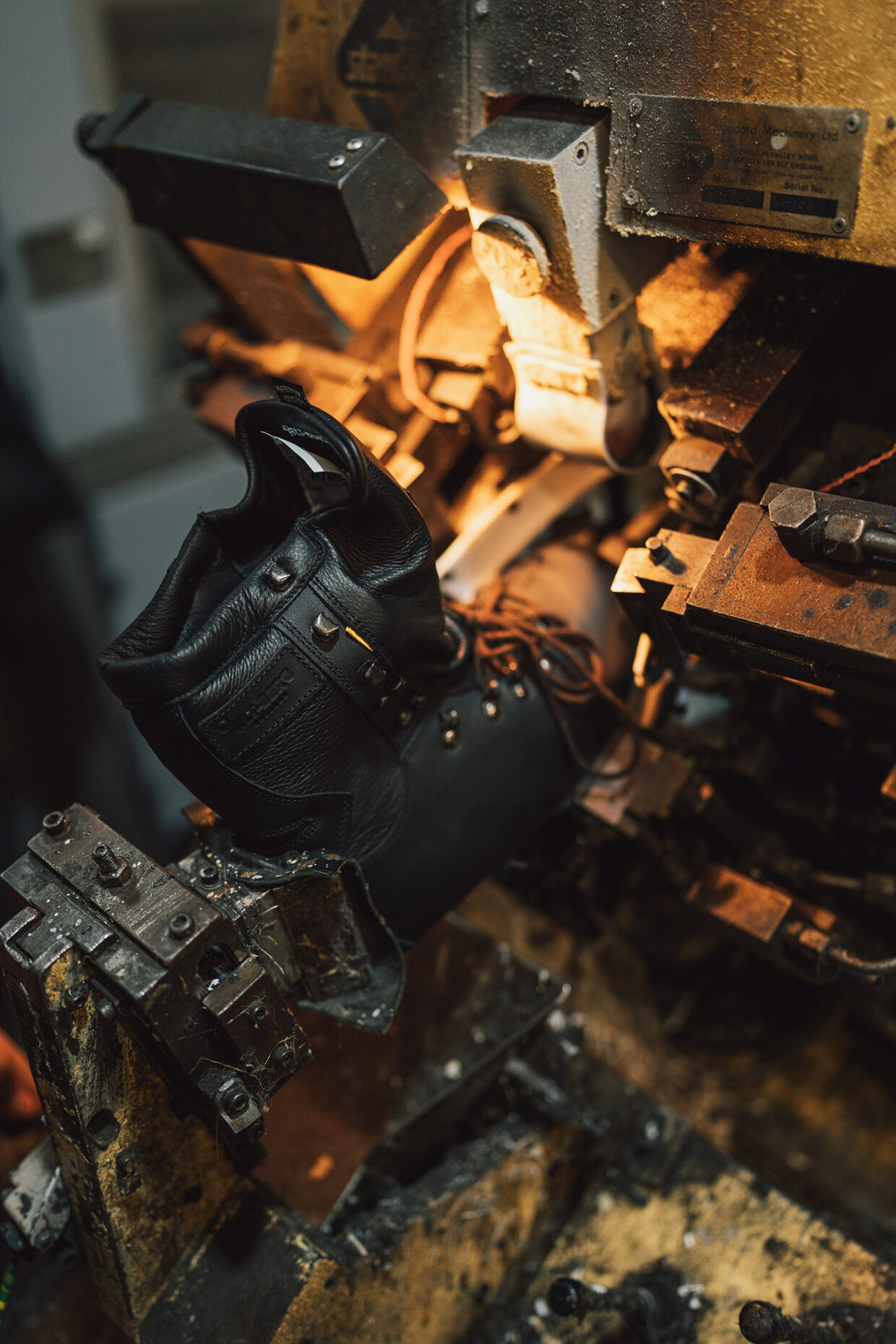
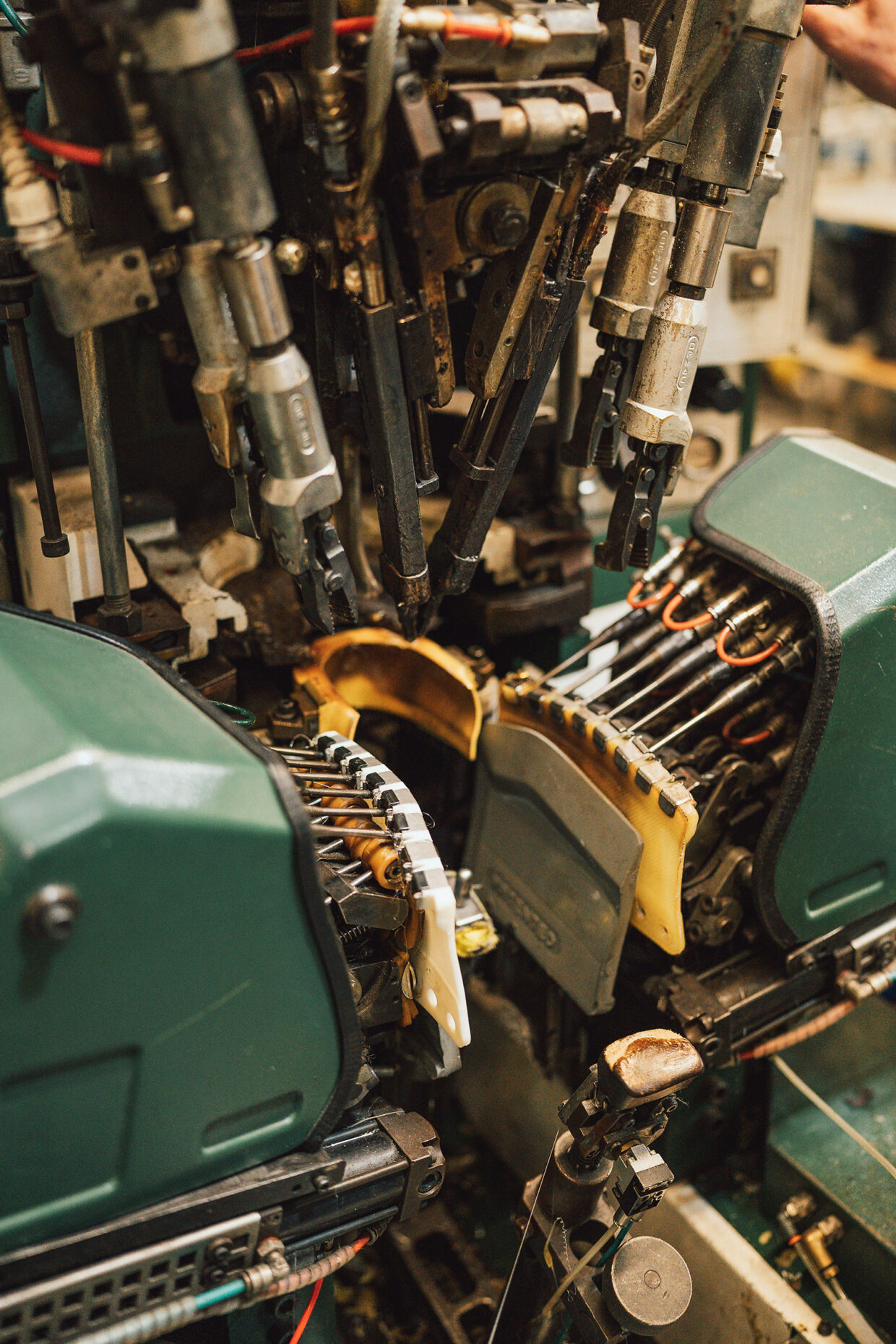
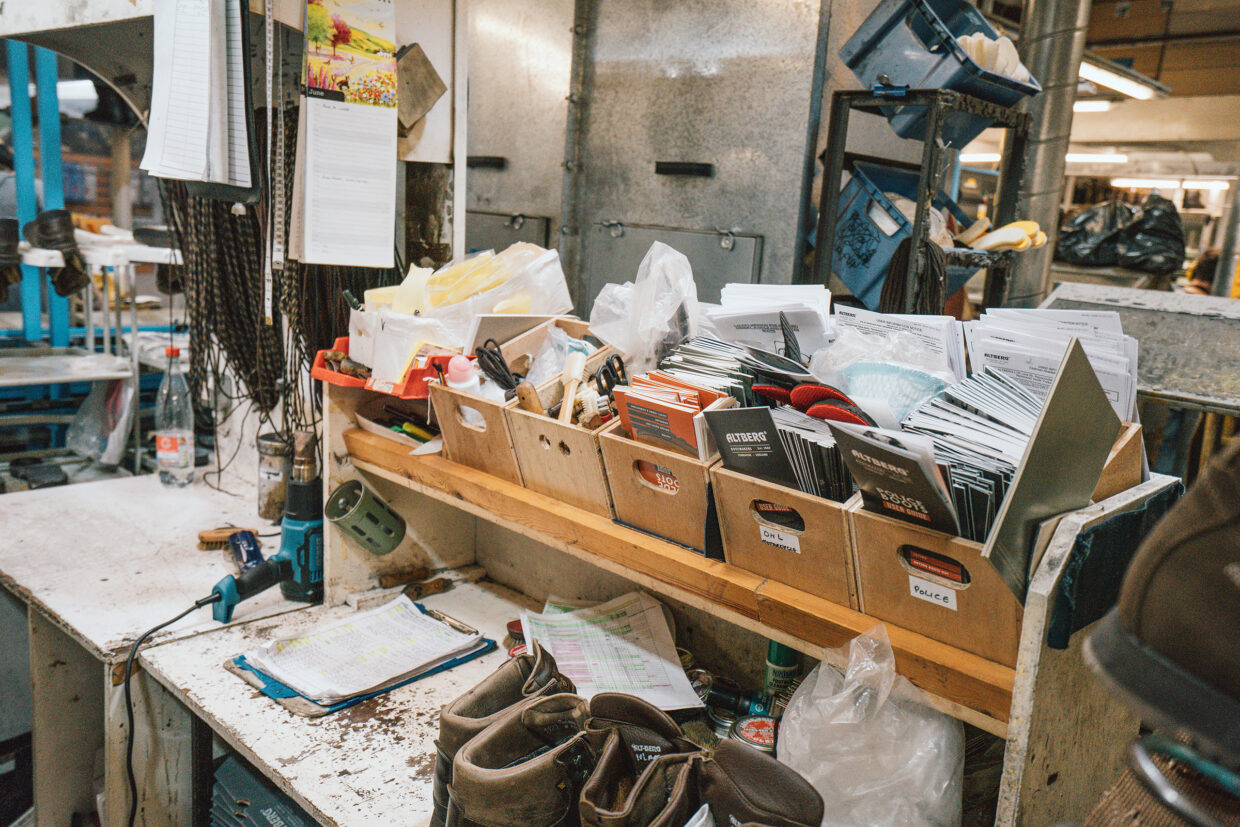
Everything in Altberg’s boot-making factory has a place. Awls, knives, shoemaker tape, threads, and the shaped lasts for different-sized feet. Dozens of tools, each designed for a single function and each utilised to produce the best boot Altberg can. And a boot, of course, is also a tool – one we use to access and enjoy the mountains.
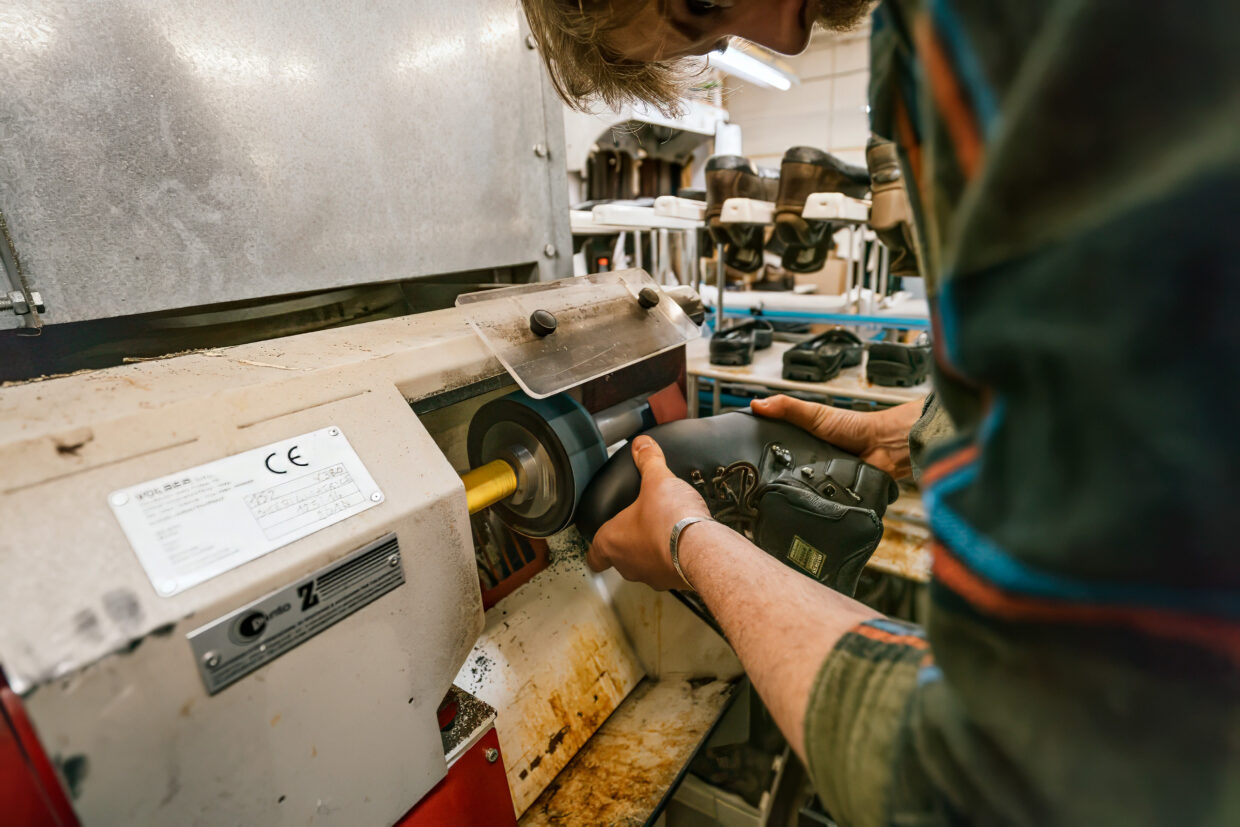
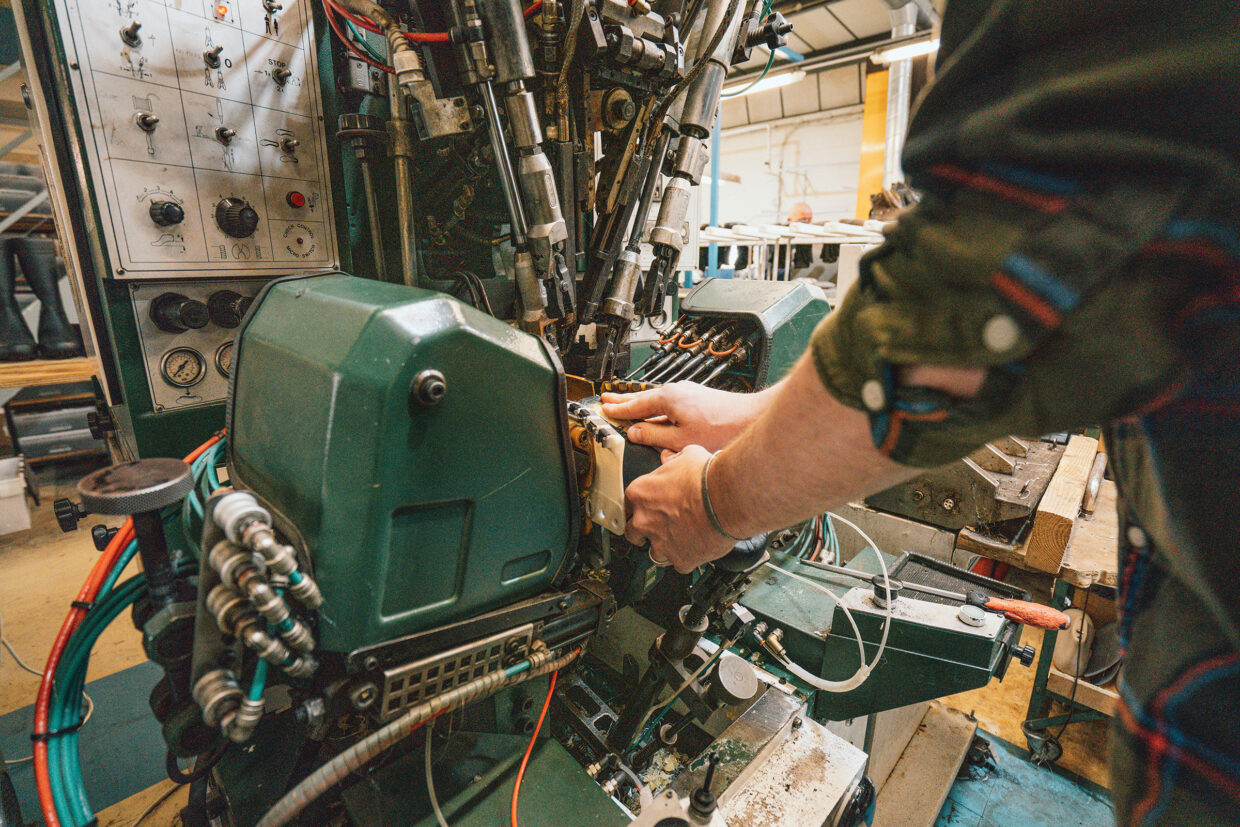
Tools need humans behind them, and demonstrating these skills today is Joe Sheehan, Altberg’s managing director. ‘There’s no other factory I’ve seen that does what we do,’ Joe says, showing us around the factory floor in Richmond, North Yorkshire. ‘It’s the ability to be agile, to offer so many fitting options, and keep those boots going through our repair service.’
We know Altberg, of course, for their high-quality hiking boots which can be personally fitted for you in Richmond, but they’re also available through a limited number of specialist outdoor retailers plus they also make boots for the police, military, and motor bikers. Confidently but without fuss, Altberg has become a world-renowned boot company. The beginnings, however, weren’t as auspicious.
The Fairfield Shoe Factory was opened in 1964 by William Shepherd and quickly became the biggest employer in Richmond. By 1972, it employed more than 300 people, and they were making 25,000 pairs a week. But globalisation meant that in 1989, the Fairfield factory closed its doors for the last time. Months later, Mike Sheehan decided to use his experience to start a new factory making hiking boots. ‘It’s all I knew,’ he said. Mike had started making shoes in his twenties and was taught by William Shepherd himself, so, along with a few people from Fairfield’s, he decided to make more technical footwear. Their business plan was clear: sell a smaller quantity of exceptional quality boots directly to the end user.
Joe Sheehan, Mike’s son, shows us around the facility in Richmond on a warm day in June. ‘That was the dream; there wasn’t any big idea behind it,’ Joe says. Today, 35 years after reopening the factory, this remains Altberg’s business plan, and it is running a hugely successful business that serves many more customers than just mountain walkers. And proudly, they’ve still never employed a salesperson.
Here in Richmond, the bootmakers manufacture short runs of boots and handle boot repairs. Altberg offers several different widths and various lasts, plus custom-made and bespoke footwear to suit lower limb issues or fitting needs. Across in Treviso, Italy, Altberg also has a bigger production facility which Mike and Joe have worked with for more than 20 years.
Joe, like his father, is a natural storyteller. ‘They were in the pub and came up with three names when they started,’ he says. ‘One was the Swale Boot Company – Richmond being in Swaledale – but Swaledale is a breed of sheep. The second was Eco-Verde and the third name was Altberg.
‘They probably looked at a Carlsberg pump and thought, well, “berg” means mountain, and “alt” meant high altitude. It doesn’t actually; it means “old mountain”, but it stuck. There was no real marketing idea behind it.’
As we move through the factory, we learn how everything has its place, everything has its function, its purpose. Having that in the UK, and with a shopfront where people can come for a personal fitting, means that they can offer a unique service.
‘We do five width fittings and various last shapes, and we can custom make boots, adapt them to a certain lower limb need or a particular foot issue. People come from across the country to us specifically for that.’
Joe explains, with a last in hand, that the measurements are just the start of the story. ‘You might like a snug fit, and I might like quite a roomy fit, and the measurements don’t really account for that. They also don’t account for shape; a very flat, wide foot can have the same circumference, in theory, as a boot that’s narrow but deeper.
‘That’s why we can adapt boots here. We can make split sizes, add a lift for a leg length discrepancy, or make an adaptation for someone with tendonitis or a fused ankle.
‘You’re coming to see a factory beyond the shop window; you can actually see the boots being made. That’s pretty unique. When you’re coming to see us, you’re talking to a bootmaking company. And there’s nobody else left in the UK now making the type of boots that we make.’
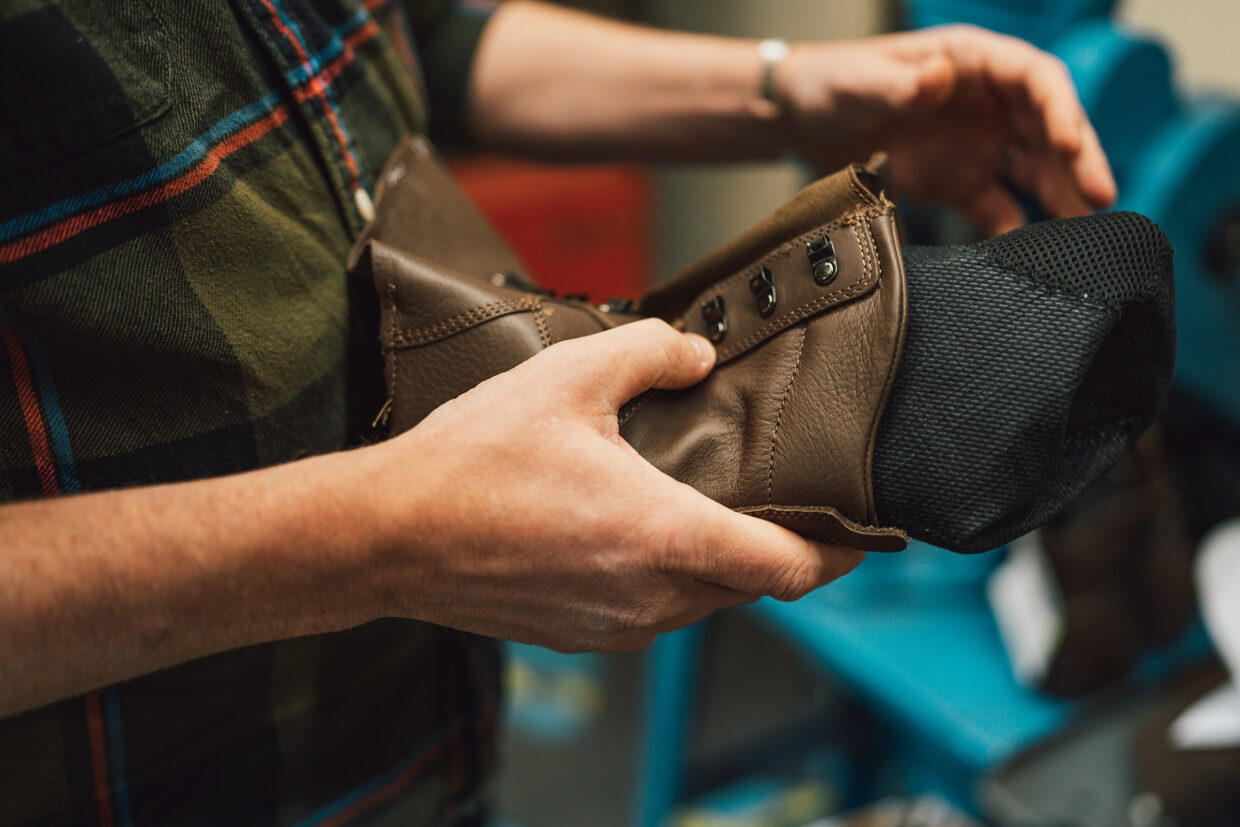
It also means that the bootmaker can be responsive to the needs of the customer. Take the Fremington, Altberg’s classic English leather hiking boot. It looks almost identical to the boot they were making 20 years ago, but, as technology advances, the soles have become better, and the ankle design has continued to evolve.
‘If you’re lucky, you get about eighty per cent right first-time round, and then you spend the next five, six, seven years refining it. It’s an development curve but you’ll never reach a hundred per cent.’
It’s a sentiment echoed by Mike Sheehan, who has said that what drives him is the fact that he’s not made the perfect boot yet. Although he’s less involved in the day-to-day running of the business, the 79-year-old master bootmaker stays on developing products and repairing boots – boots he might have made himself 5, 10, 20 years ago.
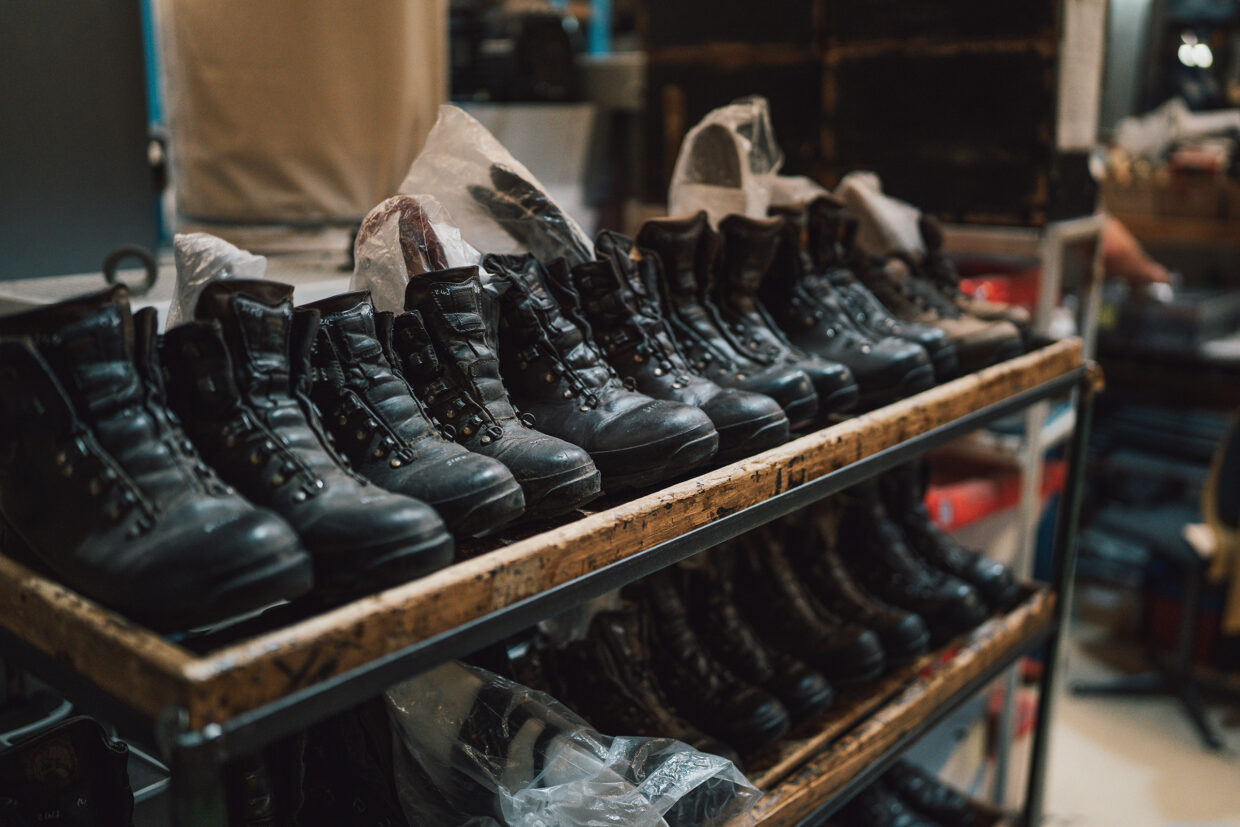
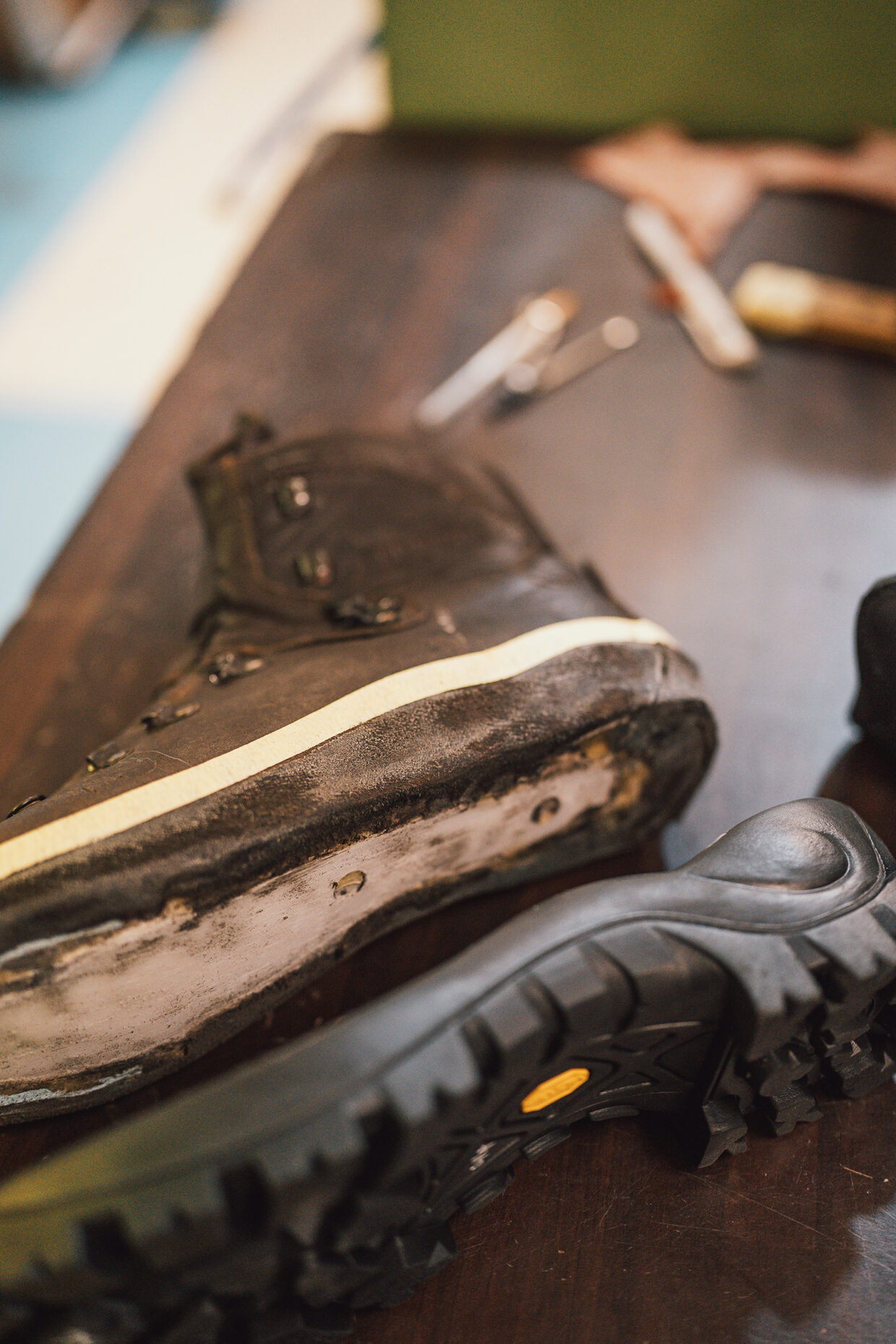
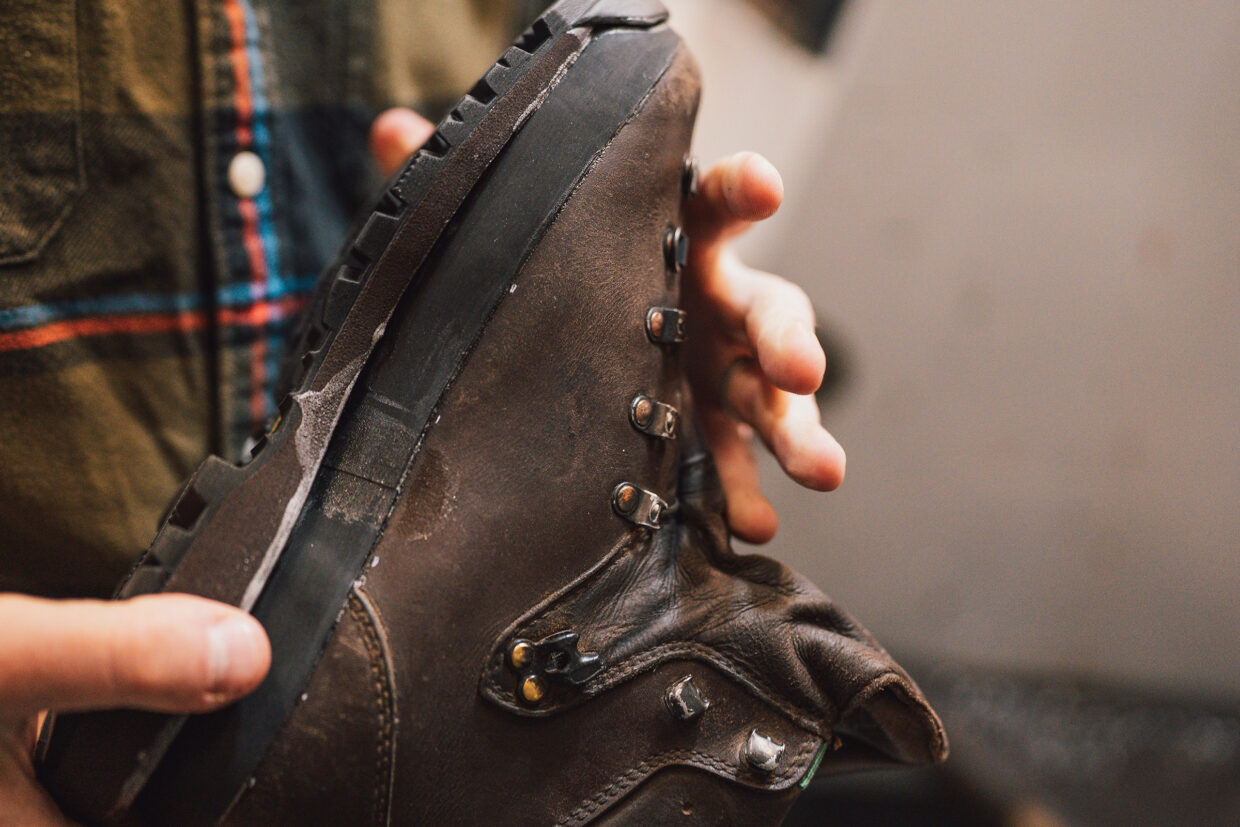
‘The resoling and repair system has been going on pretty much since the outset,’ Joe explains as he shows us boots in for repair. ‘We want to try and make a sustainable product, and if people look after it, why not, rather than spending three hundred pounds on a pair of boots and then chucking them in landfill?’ Joe goes on to say that it’s only when the leather’s absolutely shot, or cracked, that it’s no longer worthwhile.
‘When you grow up in a boot factory, whenever you meet somebody, you automatically check out their feet,’ Joe laughs. ‘The nice thing is, I often seen our footwear out in the world, and it’s always nice when people say good things about them, but none of us here take that for granted. We’ve all worked very hard over the last twenty-five, thirty-five years to build a good reputation.’
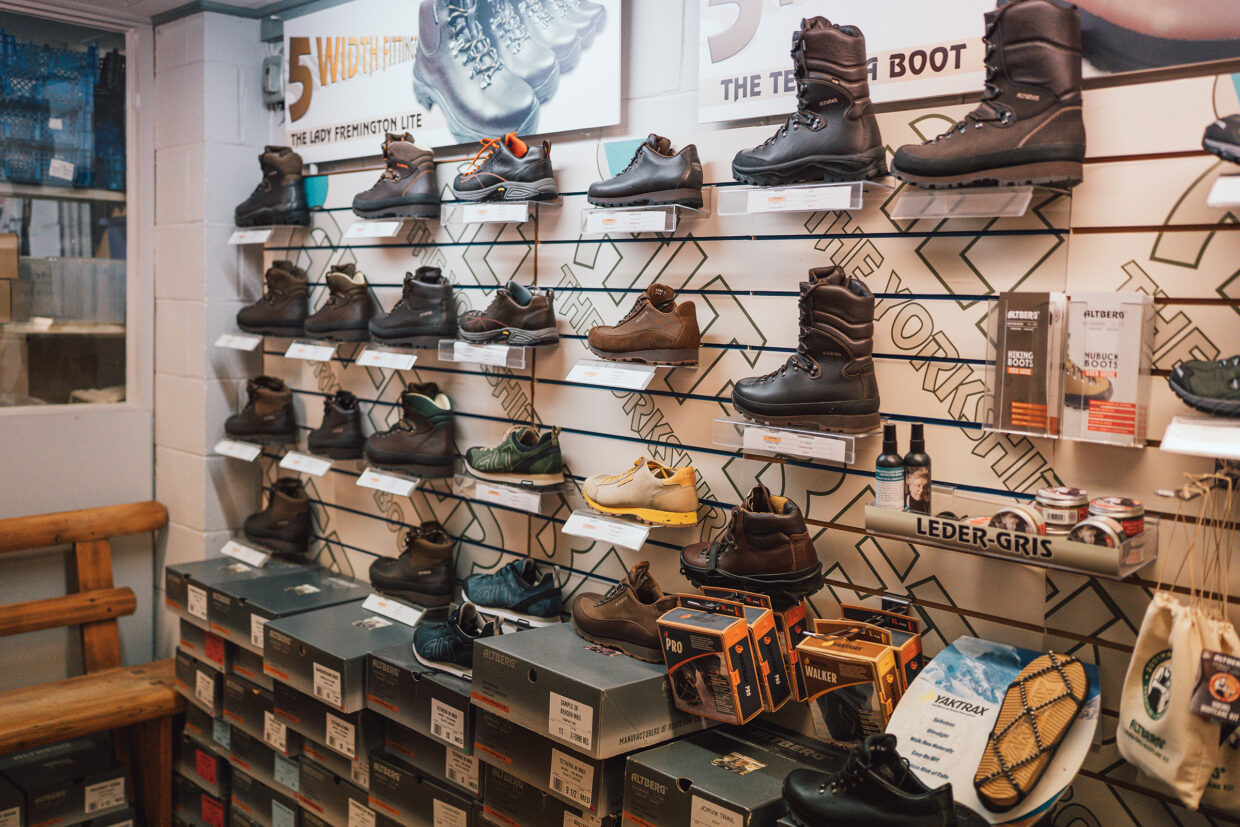
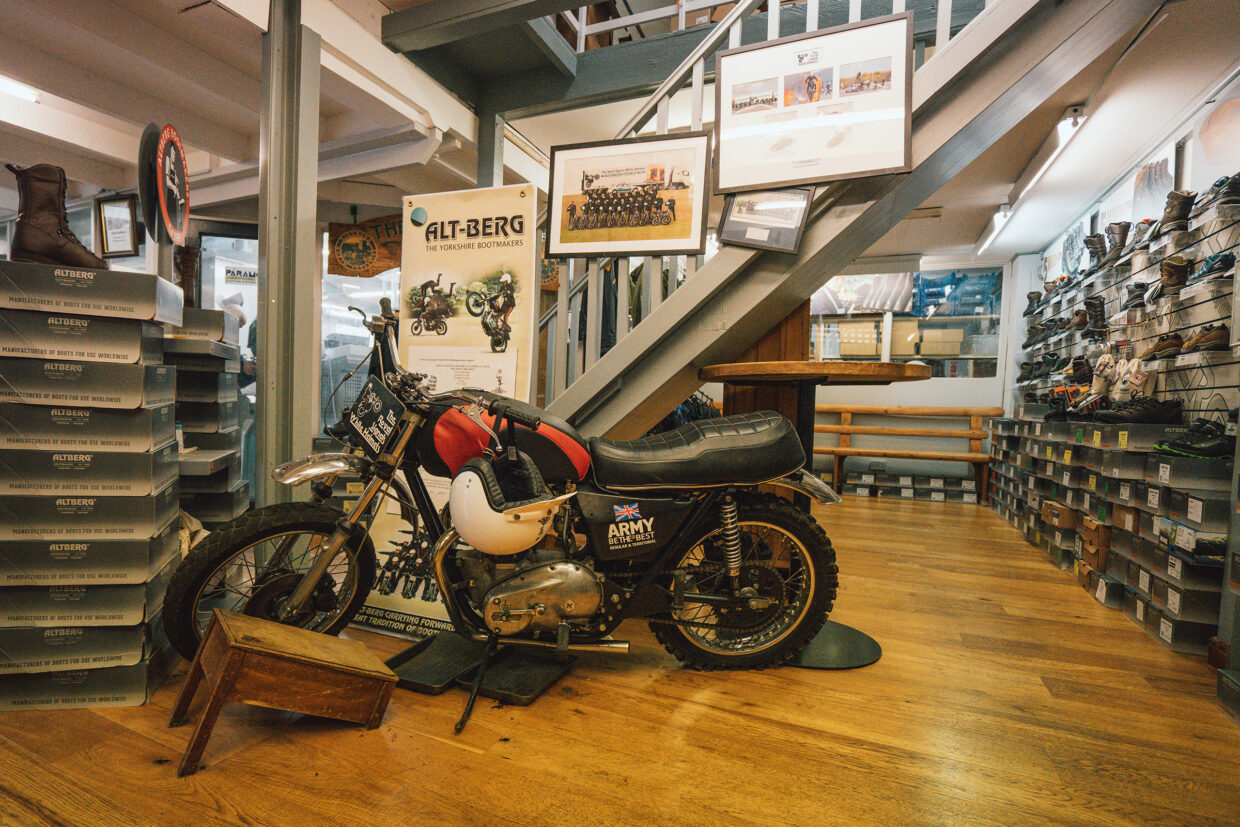
We leave through the small shop. Somewhere between 50 and 100 people travel here each week to get fitted and to speak to the bootmakers. Using the tools I see through the factory, the craftspeople here have made the tools we use to explore the mountains. I take a moment to reflect on how rare this is in 2026: to be fitted, to have boots made for us. It’s something to be celebrated.
When William Shepherd started teaching Mike in the 1930s, he expected that knowledge to be passed on to the next generation. For the most part, that hasn’t happened in Britain, except in this small North Yorkshire town on the banks of the River Swale.
For more information, visit altberg.co.uk
Written by Daneil Nielson // @danieljneilson
Photography by John Summerton // @johnsummerton