Amundsen: Heritage and Harmony
Gear Explore Gear & Guides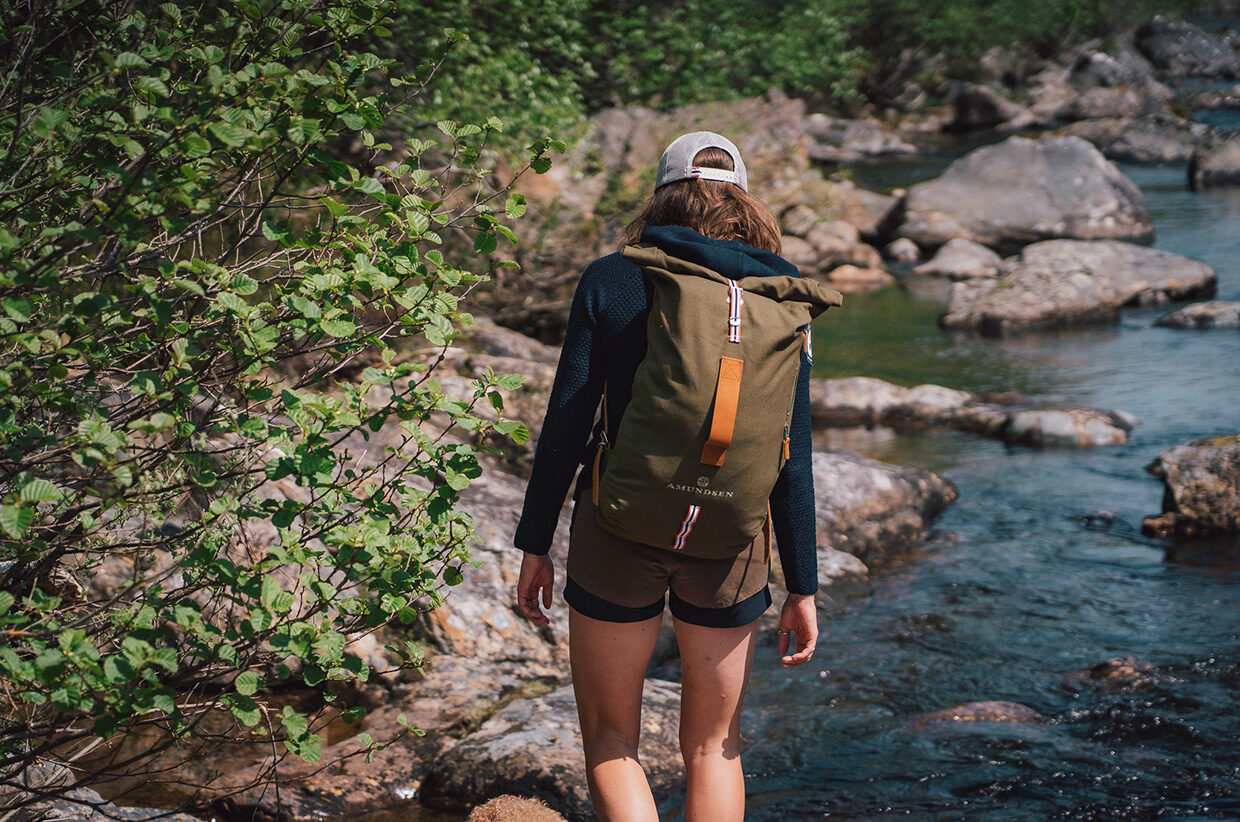
Stories Behind the Gear: Amundsen
Written by Daniel Neilson // Photography by John Summerton
Inspired by his ancestor, Roald Amundsen, Jørgen Amundsen has created a brand of natural and timeless clothing that will stand the test of time. On a slow trip to Glen Affric, we test the blend of old and new that defines Amundsen Sports and reflect on the Norwegian concept of ‘friluftsliv’.
Glen Affric. When you say those words to someone who has been, there’s a knowing nod, a murmur of affirmation. Even in the Highlands, among the great mountains, deep black lochs and native pine woodland, there’s nowhere quite as beautiful in Scotland as Glen Affric. It’s perhaps the combination of Caledonian pinewoods and sharp mountains, winding lochs and open moorland, can be witnessed from almost any viewpoint.
In the skies above Glen Affric, ospreys and golden eagles would surely be circling out of sight, while skitting across the ground are black grouse and capercaillie, hiding, no doubt, from the elusive Scottish wildcat. Otters successfully live in its rivers. No wonder it’s highly protected, with many conservation designations, including a national nature reserve.
We arrived in Glen Affric on a warm late spring day to test gear from Amundsen Sports, a Norwegian brand founded by an ancestor of Roald Amundsen, the Norwegian explorer who led the first team to the South Pole in 1911.
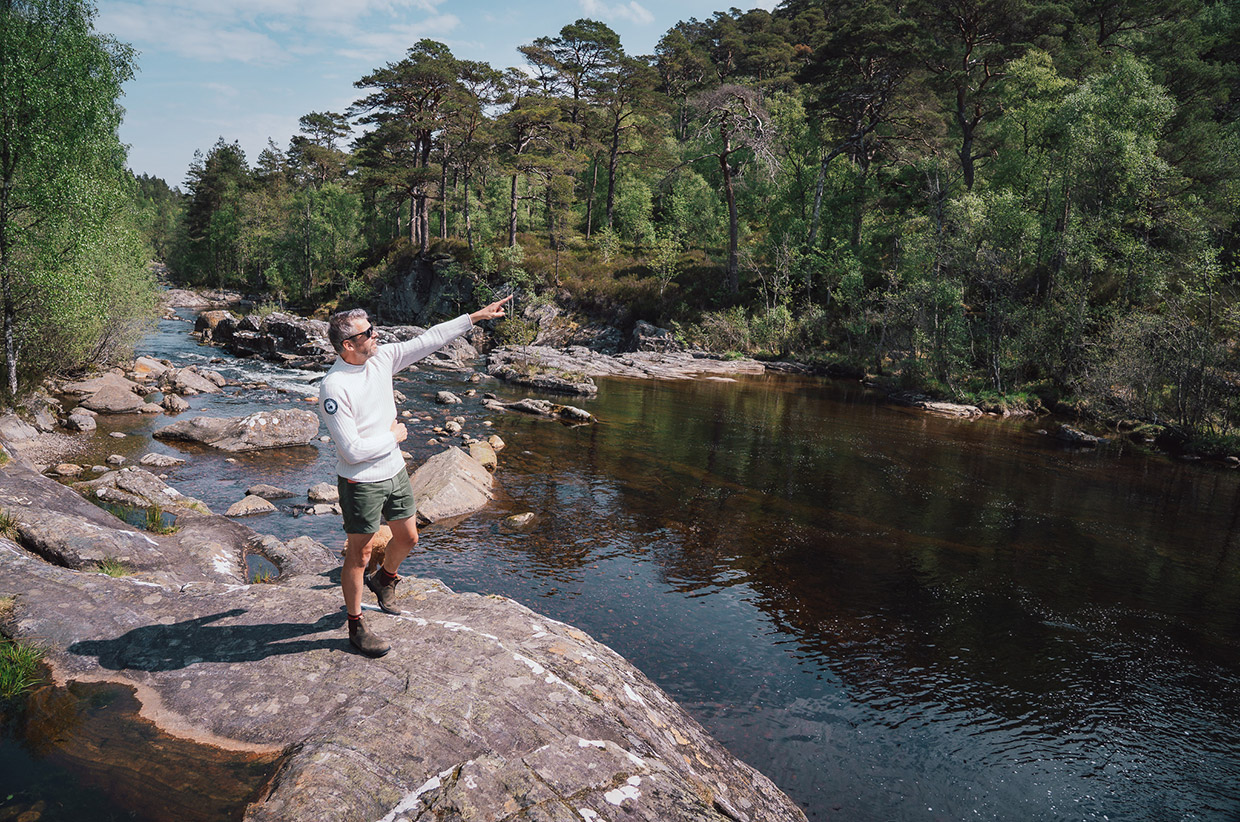
Rather than channelling the extreme nature of polar exploration, we were more in keeping with Amundsen Sports’ ethos of ‘friluftsliv’, which they describe as a ‘state of mind, not an activity, nor a competition’. The nearest English translation of friluftsliv is ‘outdoors’, but that doesn’t quite do it justice. It’s a word imbued with the sense of freedom that being outdoors inspires; it’s about finding new perspectives, understanding, and motivation. It’s about harmony with nature. As we dipped our toes in the run-off below Dog Falls, touched one of the ancient gnarled ‘granny pines’ and felt the lichen below our feet, it was impossible not to feel that freedom, away from the realities of everyday life.
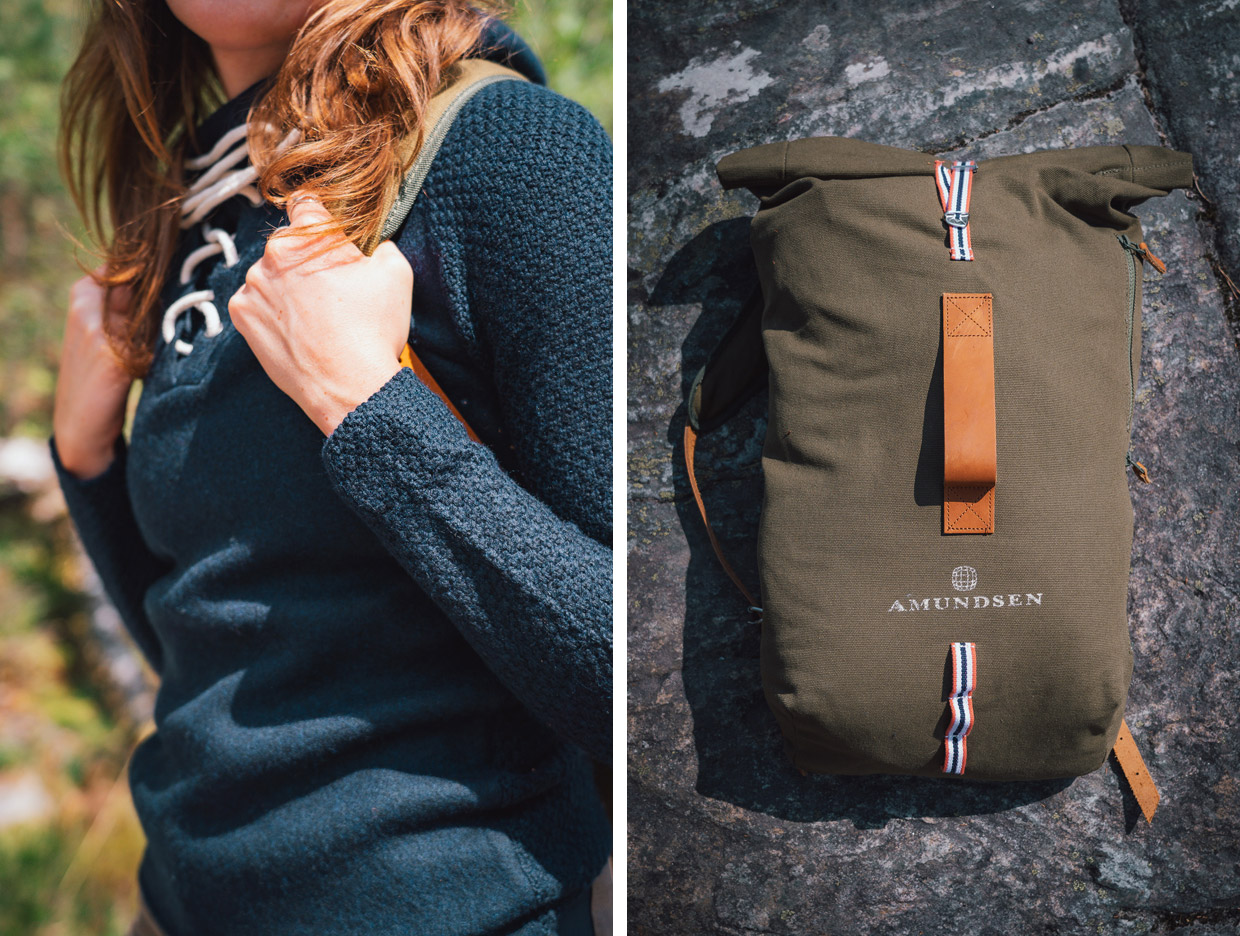
The philosophy of ‘friluftsliv’ chimes with another of Amundsen Sports’ guiding principles, ‘Play Well’. This is gear to enjoy the outdoors with, have fun with, and share with friends. In an interview with the founder, Jørgen, he said: ‘Roald Amundsen has always inspired us on the adventure side of things. Everything we do is about adventure, whether on the product side or the field-testing adventures we go on. It’s always with an adventure spirit. We don’t always want to do the ‘hardest’ trips or the ‘fastest’ trips; it’s more about the experience.’
Amundsen Sports was founded in 2009 by Jørgen Amundsen and his childhood friend Erik Friis with a mission to ‘enhance and simplify the everyday life for outdoor enthusiasts’. This is gear crafted with care from natural wools and waxed cotton, corduroy and down, alongside state-of-the-art materials. The key to its environmental credentials is an often overlooked aspect: these are long-lasting, timeless designs. It’s gear to break in, to earn the patina of age. Across the range, there is the rugged twill of the Adventure Collection, the Safari Linen Shirt, and the Boiled Hoodie Laced, made from 100 per cent merino wool. Then there are the shorts, which, perhaps more than any other garment, sums up Amundsen’s approach to product design. The Field Shorts are made with a stretchy Cordura, an incredibly strong and long-lasting modern fabric, but reinforced with waxed cotton canvas sourced from Halley Stevenson, which since 1864 has been refining waxed cotton in its Scottish mill. Meanwhile, the waxed cotton watch pocket comes from British Millerain, a comparatively young company launched in the late 1880s. This weather-resistant material can be re-waxed.
‘Roald Amundsen went to learn from the Innuits and the traditional people in Norway, the Sami, to see how they used clothing or equipment,’ explains Jørgen. ‘When we make our products, we take a lot of inspiration from the past, with things that have worked for generations, in cold weather, for instance, but mix it with today’s cutting-edge technology.
‘Roald Amundsen was also quite avant-garde with technology, so he was able to mix the traditional with the future. And I think that’s how he succeeded, better than all the competitors. ‘We also took from his philosophy about always doing the smaller expeditions before the big international expeditions.’
We’d classify our Glen Affric trip as on the smaller scale, but everything around us was big: the mountains with eight Munro summits, including Càrn Eige, the highest peak north of Great Glen, as well as Sgùrr nan Ceathreamhnan and Mullach na Dheiragain, both requiring long days and being remote to reach.
The Affric Kintail Way also passes through Glen Affric on its 70km journey between the village of Drumnadrochit and Loch Ness. For us and Lola, the dog, it was to the aptly-named Dog Falls – she was desperate to see it – along the River Affric. The water bubbled over the rocks, towered over by the trees of the Caledonian Forest Reserve, Scots pine, as well as deciduous birch, rowan and aspen.
We walked southwest, along the southern banks of Loch Beinn a’ Mheadhoin, on the Affric Kintail Way, admiring the islets in the water. There are beavers in the water, but we didn’t see them, nor signs.
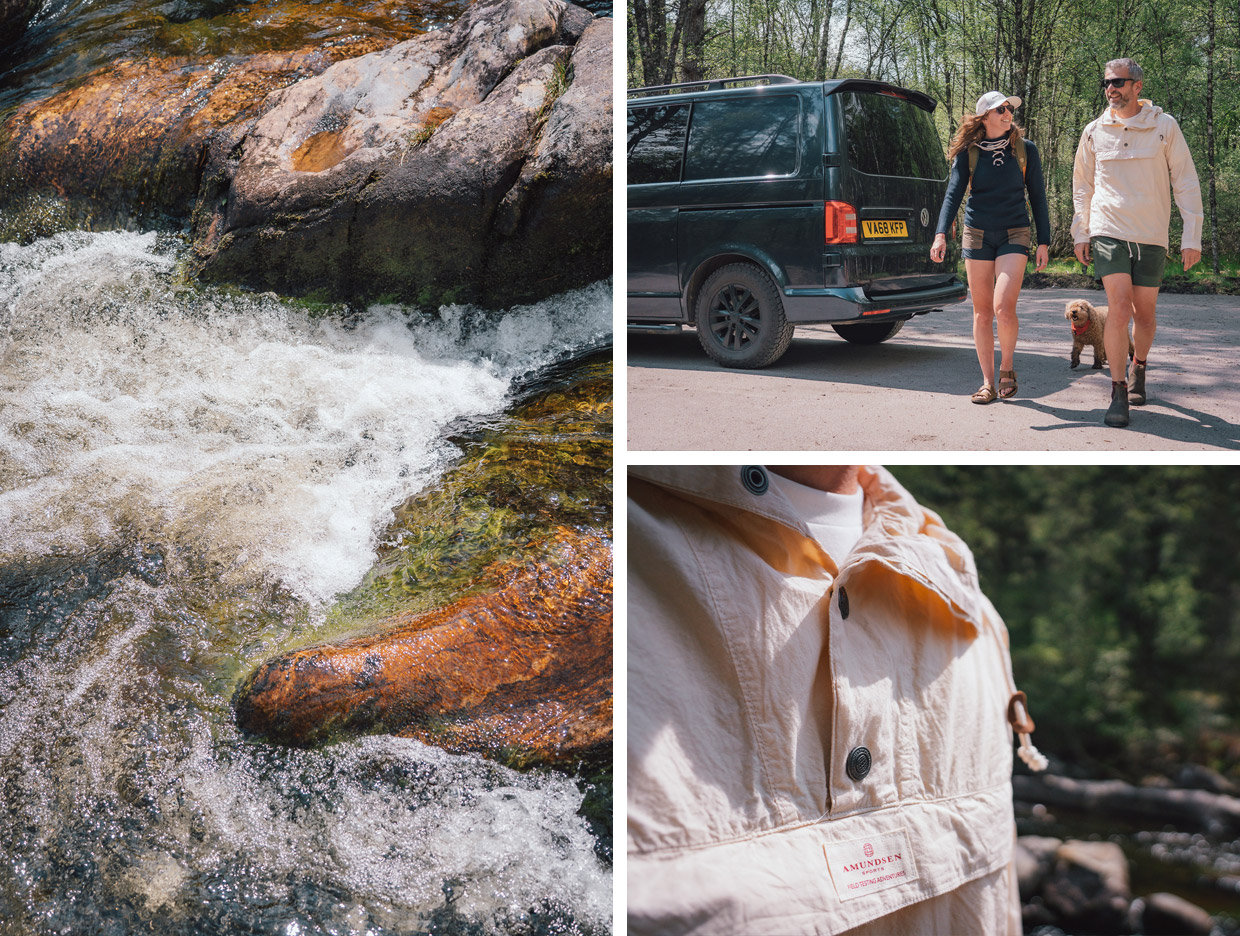
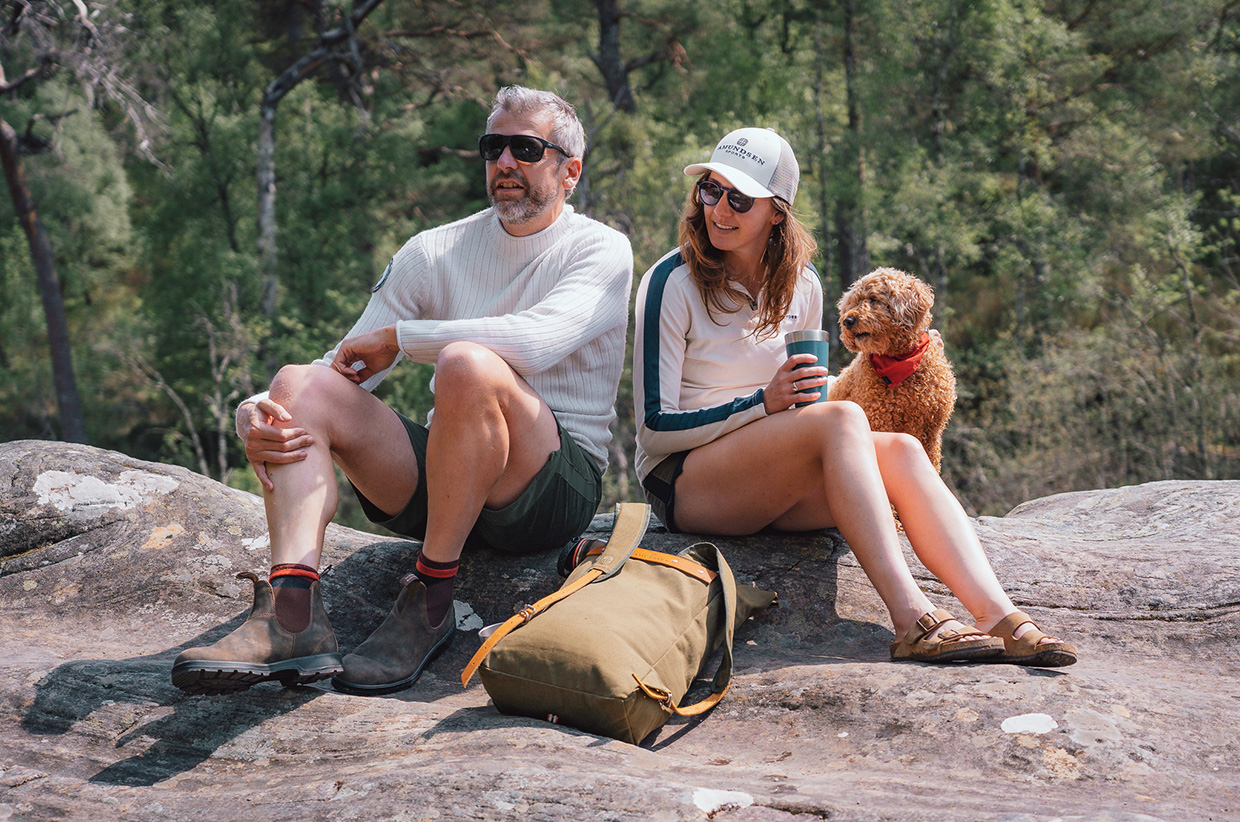
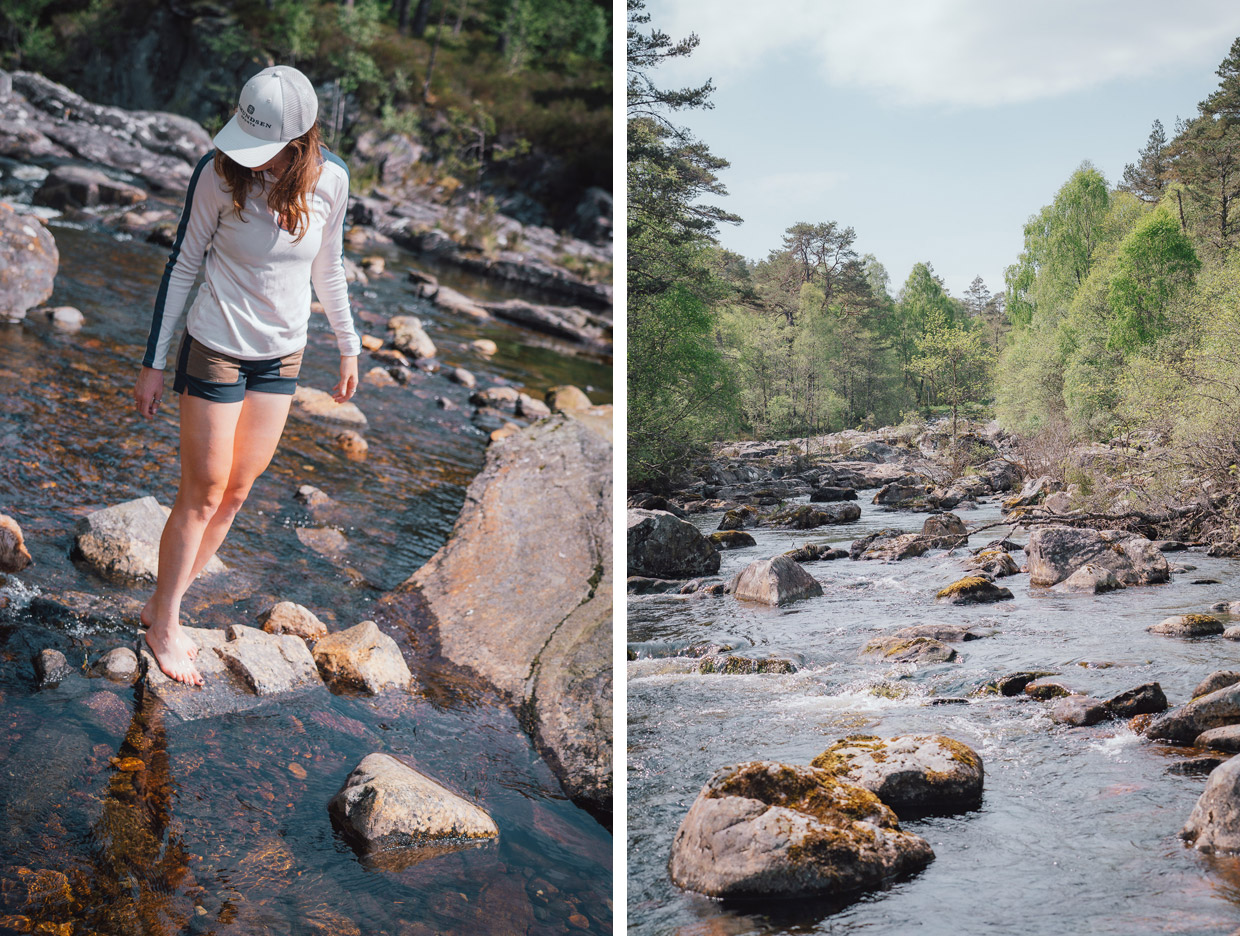
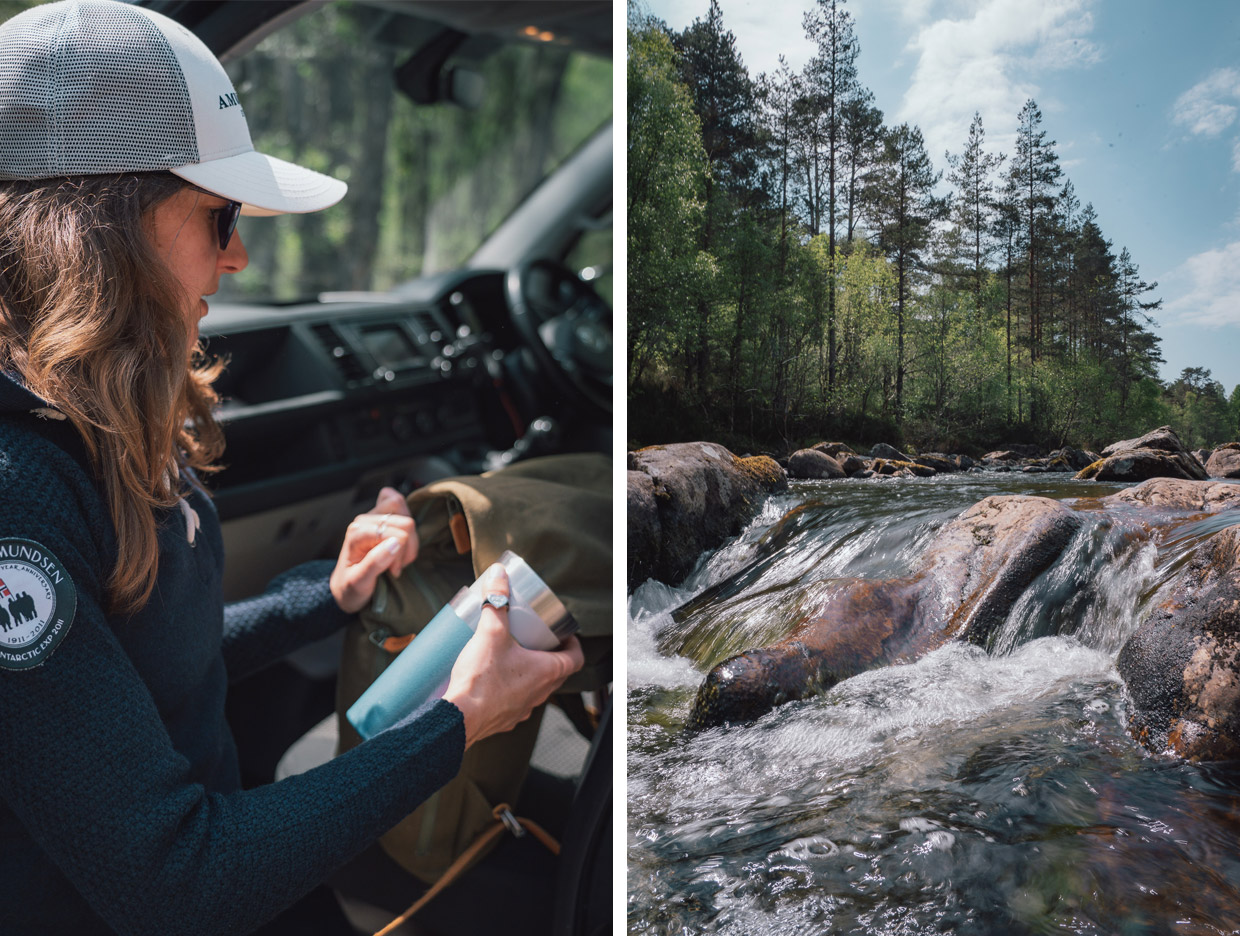
Where the water squeezes through a rocky outcrop at the southern end of the Loch, we stopped in the sun, drank our coffee, and splashed in the water.
We discussed the Amundsen brand, so different from many others on the market. Different in the materials and in the styling. We see corduroy and wool, and we know the provenance. The wool in the pictured Heroes Original Turtle Neck is from free-ranging sheep which graze in the mountains above Hallingdal in eastern Norway. The strong fibres from the hardy sheep offer a weight and tactility to the garment, as well as durability. The Roamer Windbreaker, also pictured, is made from 100 per cent cotton, so rare these days of plastic jackets. Yet it still packs lightly and could withstand the gusts down the glen. There will be no micro-plastics washed down a drain washing this. Even the beautiful Vagabond Day Pack 25l is made from a tough cotton canvas with leather straps. It will last, it can be repaired, it will age well.
‘Our product design process is a little bit different from other companies,’ Jørgen says. ‘The ideas very seldom come from the offices. They mostly come when I’m out in the field or when I find a new material. It never starts with, “We think the market needs that, or we see something else performing well”. We have managed to stay clear of the big trends; we have always gone our own way, and that way we were relevant.’
It is an ethos that may explain the knickerbockers. We’re pretty sure there wasn’t a market crying out for them, but they have become one of Amundsen’s key products. It certainly sets them apart. Again, the corduroy the designers choose for the knickerbockers (and other corduroy products) is produced in France by The Cosserat Company, the oldest corduroy producer in the world, established in 1794.
As we spend a leisurely day in Glen Affric, we start to attune ourselves again to nature. We hear birds over the calming shooosh on the water. Our eyes begin to focus on the nuance of life in this ancient landscape. Dragonflies, we later learn, could have been the rare Brilliant Emerald. We touch the curled wood of the granny pines. Up the glen towards Gleann nan Cìche is the Last Ent of Affric, a Wych elm, thought to be hundreds of years old. Winning Scotland’s Tree of the Year, it was named the Last Ent as a Lord of the Rings reference. It’s thought to be the last surviving tree of an ancient forest. Owls roost in it, providing an ecosystem in itself. And that is perhaps the beauty of Glen Affric and its wide-reaching views. Zoom out, or zoom in, the ecosystem is glaringly, beautifully apparent. Everything is connected. It’s harmony with nature. It’s ‘friluftsliv’.
For more information, visit amundsensports.com
Written by Daniel Neilson // @danieljneilson
Photography by John Summerton // @johnsummerton
Produced in partnership with Amundsen // @amundsensports