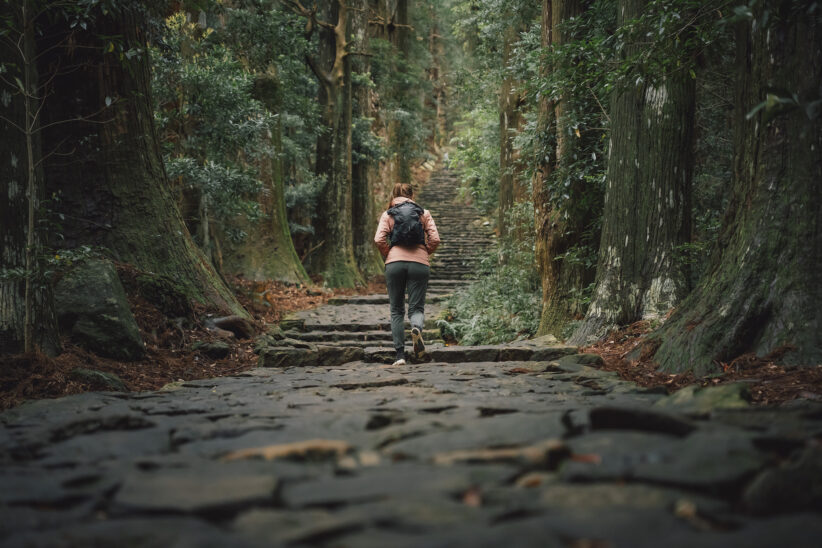
An Introduction to Bikepacking
Survive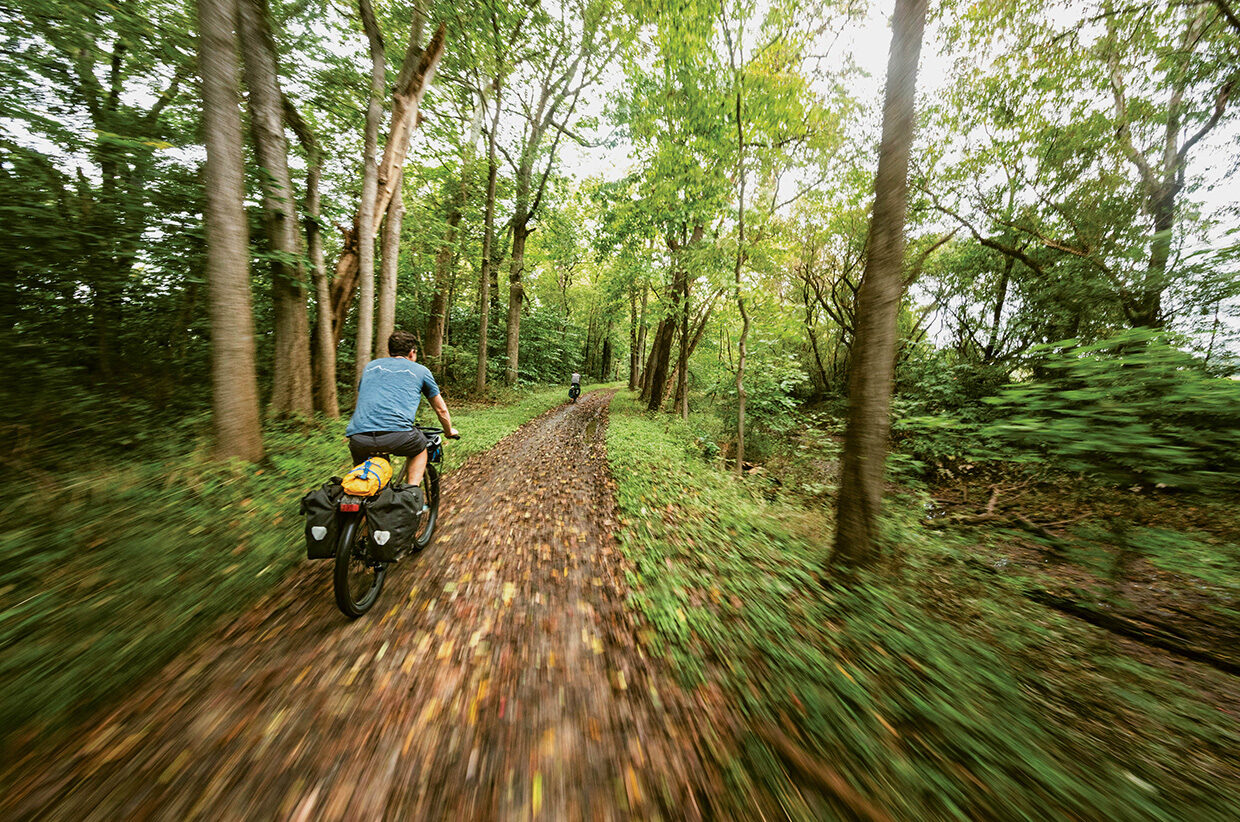
An excerpt from The Camping Life: Inspiration and Ideas for Endless Adventures
Words: Brendan Leonard // Photography: Forest Woodward
Capturing the feeling and aesthetic of sleeping under the stars and peeling back the curtain to show readers how it’s all done, The Camping Life is a new book by Brendan Leonard and Forest Woodward all about the pleasure and the freedom of camping. In this excerpt we take a look at the joys of bikepacking.
Imagine backpacking, either in the hiking-on-trails sense or the traipsing-around-Europe-during-a-gap-year sense, carrying everything you need with you, going slow enough to take in the world around you. Imagine, in addition, that you don’t have to carry everything on your back. And that you can coast.
Bike touring, or bikepacking, as it’s increasingly been called over the past decade, is one of the most fun human-powered methods of travelling. Yes, you have to pedal up hills, but once you’re at the top, you can coast down the other side. And the weight of your gear is never crushing your shoulders and hips – it’s strapped to your bicycle.
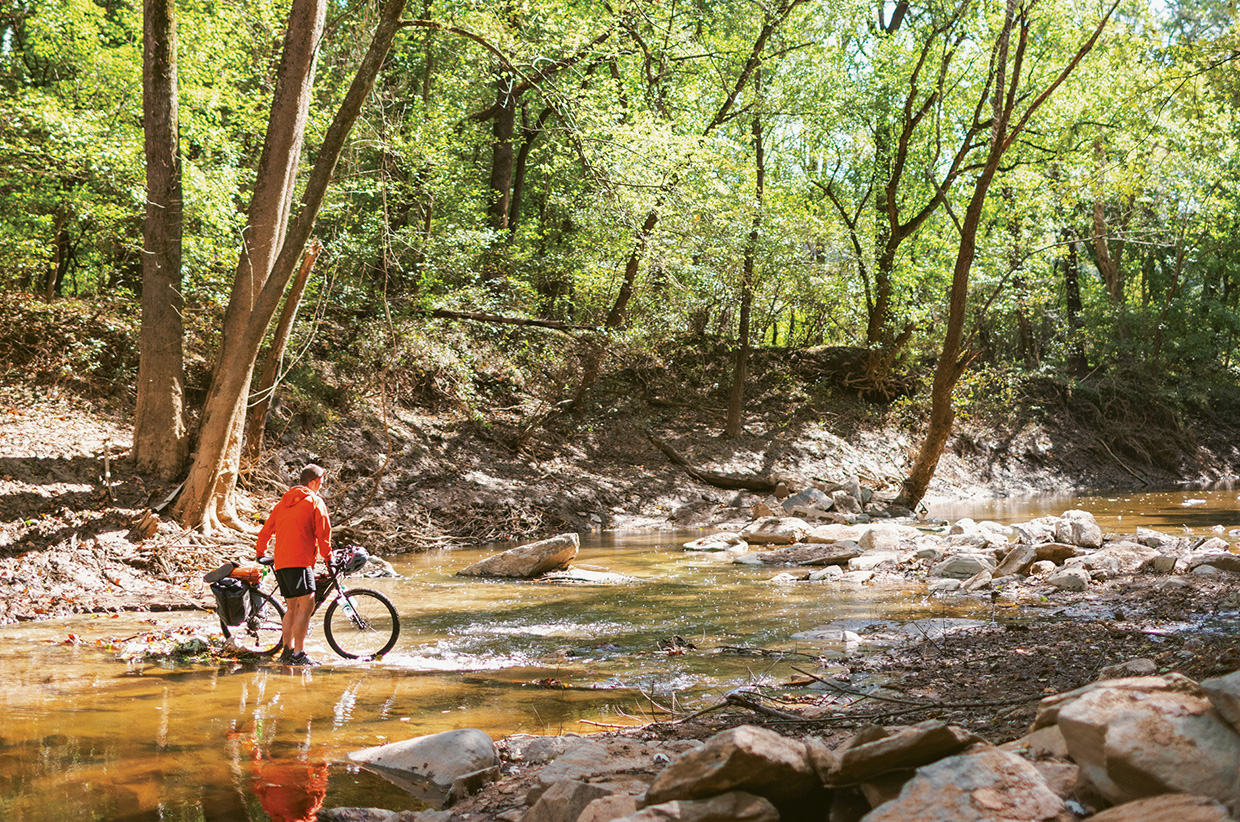
Traditionally, bicycle tourists kept to paved roads, but improvements in off-road bikes and specially made bags for off-road bikes have helped foster a surge in dirt road and trail bikepacking. Both on-road and off-road riding are fun ways to travel – you’re not speeding by scenery in a car, but you’re not walking at a slow pace either.
When you tour on roads, you can alternate nights of camping with nights at hotels or bed-and-breakfasts, creating a semi–‘roughing it’ tour. When you choose dirt roads or trails, you’ll probably do a lot more camping. Either way, any time you want to stop for a snack or a rest, you simply lean your bike up against a tree, a roadside café, or convenience store.
If you’re touring on roads or stopping in towns along your route, you might discover that a fully loaded touring bicycle is a disarming accessory. Total strangers will feel comfortable walking up to you and asking about where you’re headed, how far you ride every day, where you sleep, and how much you eat.
It’s helpful, but not necessary, to have camping experience before you head out on a bike tour. Aside from the bicycling gear, however, no specialised camping gear is needed. Anything you use for backpacking will work on a bike tour, including but not limited to backpacking tents, sleeping bags and sleeping pads, stoves, and cookware.
Any road or trail (outside of designated wilderness) is a bike-tourable route, as long as you are comfortable with the terrain and traffic. That said, lots of trails would be miserable if undertaken on a bicycle, so start your search with trails known for mountain biking, or with jeep roads. In the United States, the Adventure Cycling Association works to establish quality, safe bike-touring routes all over the country, and it publishes the routes on its website at adventurecycling.org.
Popular Destinations
C&O Canal Towpath. This 184.5-mile-long towpath, originally built in the mid-1800s for mules to tow boats on the Chesapeake and Ohio Canal between Washington, DC, and Cumberland, Maryland, became a national historic park in 1971 and has been a favourite of cyclists ever since. The path isn’t paved – it’s a crushed-rock and clay surface – but it’s almost completely flat, and there are campsites approximately every five miles along the way. Touring cyclists can do trips of varying lengths on the towpath, from quick overnights to traverses of the entire trail.
TransAmerica Trail. Originally developed for Bikecentennial ’76 to celebrate America’s 200th anniversary in 1976, the TransAm is probably the United States’ most famous cross-country road-cycling route, covering 4,223 miles from Astoria, Oregon, to Yorktown, Virginia, and passing through Yellowstone and Grand Teton National Parks on its way through 10 states.
Great Divide Mountain Bike Route. One of the most famous bike routes designed by the Adventure Cycling Association, this route parallels the Continental Divide, starting in Jasper, Alberta, ending in Antelope Wells, New Mexico, and covering 3,083 miles on mostly dirt roads with a small amount of single track. The route runs through several towns, allowing ample opportunities to shower and resupply.
White Rim Trail. A 100–mile mountain bike ride on jeep roads through the slickrock desert in Canyonlands National Park near Moab in Utah, this popular tour is usually split up over three or four days, with cyclists spending nights at established campsites along the White Rim, a band of cliffs 1,000ft above the Colorado and Green Rivers. Most cyclists do this route with vehicle support – that is, a friend drives a high-clearance, four-wheel-drive vehicle with all the camping gear, food, and water behind the cyclists, who only carry what they need to ride 25 to 35 miles each day.
Pacific Coast Route. A route from Vancouver, British Columbia, to San Diego, California, the 1,848-mile Pacific Coast Route puts the ocean at your left, or your right, for almost your entire trip. The route can be done in one monthlong (or two-monthlong) stint of riding 40 to 60 miles per day, but it can also conveniently be split into manageable chunks between cities – Vancouver to Portland, Portland to San Francisco, San Francisco to San Diego.
Nordic Countries. Norway, Sweden, and Finland all have some version of allemansrätten, or ‘the right to roam’, which means you can camp on any land as long as it’s 150m from a building (i.e., someone’s house). This, and the scenery, make these countries fairly ideal bike-touring destinations—especially Norway’s Lofoten Islands.

Gear
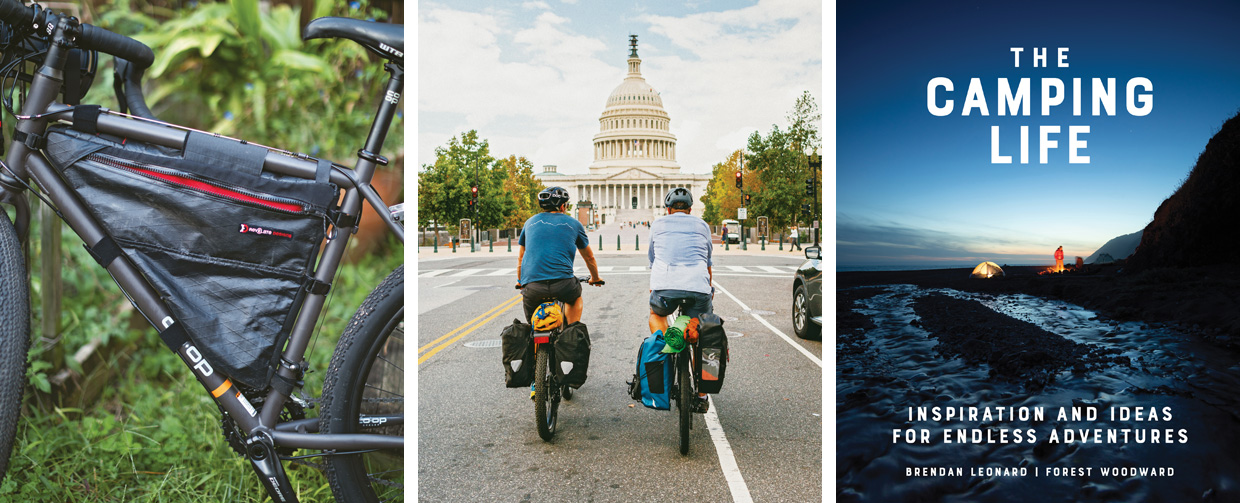
Bike bags. Panniers, the saddlebag-type bags you find on road-touring bikes, are usually waterproof and have enough room for almost anything you need to take on a bike tour (within reason). They require special racks on the front and back of a bike but, once secured, are a stable way to carry gear. Frame bags, more commonly used on dirt-road and trail touring and attach directly to the bike frame instead of pannier racks, require more thought when packing, since they’re generally less spacious and more odd-shaped. But once you get the hang of packing your stuff in them, you’ll be happy to have your gear strapped to your bike and not to your back.
Touring bicycle. For paved-road tours, lots of different bikes will work, depending on how you want to carry your gear. Unlike mountain bikes and road bikes, touring bikes do not need to be especially expensive (or even new) and are still often made of steel, a strong and stiff frame material that’s less common in high-end mountain and road bikes built for speed and performance. Select a stable, tough bike. You can be less conscious about bike weight, since you’re strapping 20 to 30lbs of gear and food to it every time you ride. If you want to use panniers, your bike will need braze-ons or mounts for bike racks on the front and back of the bike. If you want to use frame bags, you’ll be able to strap them to almost any bike.
Water bottles or hydration backpack. You’ll need to hydrate, and the method you use depends on how you rig bags to your bike. If you have panniers, you can use water bottles in cages mounted on your bike frame or a hydration backpack. But if you have frame bags, they might take up the space on the bike frame where water bottles are usually mounted, so you’ll have to find another spot for your water bottles or wear a hydration backpack.
Bike helmet. The type of helmet is up to the individual rider, but almost all helmets offer better protection for your brain than your skull alone.
Bike repair kit and extra tubes. The biggest showstopper on a bike tour can be a broken bike part. Thankfully, with a recently tuned-up bike, you shouldn’t have any problems. Flat tires, however, can put a hitch in a day of cycling, so if you’re going on a bike tour, it’s a good idea to get a pair of puncture-resistant tires installed on your bike before you go, and to carry a patch kit, pump, and extra tube (and the know-how to fix a flat tire). A few basic bike repair tools such as a light pedal wrench, a rag and chain cleaner/lube, and a multitool with Allen wrenches, a spoke wrench, a chain tool, and several screwdriver bits can be helpful as well. Even if nothing goes wrong with your bike, it’s nice to have a multitool to make small adjustments and tighten bike parts during your ride.
An excerpt from The Camping Life: Inspiration and Ideas for Endless Adventures by Brendan Leonard and Forest Woodward (Artisan Books). Copyright © 2021.
From roughing it in the Mojave Desert without a tent to glamping in a cosy cabin in the Adirondacks, camping for pleasure is undeniably more popular than ever before. And all the while, the definition of camping is being refined and expanded to include a plethora of experiences. The Camping Life, richly illustrated with stunning photography, is for both armchair campers and those ready to rough it, and shows that there are many ways to explore the outdoors.
Brendan Leonard: @semi_rad // semi-rad.com
Forest Woodward: @forestwoodward // forestwoodward.com