Beyond the Visible
Explore Inspiration
In Conversation with Alice Sainsbury
Written by Alex Roddie // Photography by Beth Chambers & Kat Bennett
‘Looking at the spectrum, the intersections, is where the work lies. It’s important now more than ever that we take the risk to get curious about other people’s experiences in the world.’
Adaptive design and sustainability specialist Alice Sainsbury has been living with disabilities since 2015. In a wide-reaching conversation, our editor Alex Roddie chats with Alice about the impact of her disabilities, changing the narrative in adventure, a return to embodied experience, the role of spirituality and pilgrimage, and how the gear industry is failing to cater for people with disabilities.
Alex Roddie: Hi Alice! Please could you introduce yourself? Who are you, what are the disabilities you live with, and how do they affect your day-to-day life as well as your adventures?
Alice Sainsbury: I’ve been working in the sports and outdoor industry as a designer, primarily focusing on sustainability, for a long time. In 2015 I ended up paralysed on my left side with a condition called Transverse Myelitis. On a daily basis, one of my biggest issues is fatigue. I deal with nausea, heart issues, orthostatic issues – going from sitting or lying down to standing. I pass out quite a lot, and I get a lot of hemiplegic migraines. I have to pace my day very, very slowly in order to function.
My work has pivoted because of this experience. Now I work as an accessibility design leader in the industry, but also as an executive producer because I think changing narratives and bringing in nuances are so important. We’re in such a culture of come on, push through, challenge yourself! But actually the more you do that, the sicker you get.
Has this changed your perspective on the stories we tell about the things that we do in the great outdoors?
There is such a dualistic way of seeing mind and body. We may have moved away from conquering the landscape and environment, but we are very much still in this attitude of having to conquer our bodies, push through. And that’s indicative of the capitalist culture we’re in. For me, part of changing the narrative is bringing us back to our humanness, into our bodies.
It’s the same conversation that we see with climate change. So many of us don’t seem to have made the connection yet; planetary health and human health are interconnected, and the way we treat our bodies is indicative of the way that we move through the rest of the natural world – and our place in the ecosystem.
We are only temporarily non-disabled. There’s a binary thinking: there are able-bodied people and then there are people with disability and chronic illness. Actually, it’s a spectrum of being human.
I’ve had conversations with top-line media channels where they’re like, oh no, our presenters have to be visibly disabled. That takes away from the nuance of what people are actually living with, because 80 per cent of disabilities are hidden.
We are all living longer. Now it’s our more mature adventurers out there dealing with things like hip replacements, knee replacements, needing different treatments – perhaps colostomy and ileostomy bags, perhaps dealing with dexterity issues, perhaps neurological issues.
Within disability is this idea of overcoming, somehow being an inspiration, which again comes back to the ideology that if you can physically be more productive in society then you have more worth. You can see it feeding into all areas of how we connect with our bodies, the way we view ourselves and everyone else.
I think bringing in these different narratives and nuances holds up a mirror to the rest of society and the way we view ourselves.
Going back to your earlier point about the fact that these things exist on a spectrum, I have been having some health niggles lately. It turns out that I have a combination of mild carpal tunnel syndrome and Raynaud syndrome. Raynaud is very common amongst people who go into the mountains, and if your hands are freezing cold and you can’t feel your hands, you’re not gripping an ice axe, you’re not belaying safely. Maybe more stories of things like this, at that low end of the spectrum, would start moving the needle.
It’s interesting that you say the low end of the spectrum, because what we do within adaptive design translates into universal design eventually. Velcro is always a good example – something that was developed by NASA, used in the military, but then used in assistive technology before it entered the outdoor industry. Again, it comes back to the spectrum of being human and the embodiment of our bodies. Realising they’re not perfect, we’re all going to come up against certain issues at some point, and why are we not more empathetic towards ourselves?
Do you suppose there’s something about the fact that so many of us live substantially online lives, which is a very disembodied sphere of existence? If we’re sitting at our computer for hours working, we can almost forget our body exists. Do you think that feeds into it?
Completely! Look at the schooling system. Children need physical stimulation in order to develop, right? Then look at the fact that we have been environmentally mismatched since the Industrial Revolution – less than 200 years. We’ve very quickly tried to evolve into this environmental mismatch where we’re not in our bodies, we’re not moving around – we’re not having an embodied existence.
For so long the conversation has been about what does nature give us? What does it give our mental health? For me, that is such a transactional relationship: language that doesn’t actually see us or our place in the ecosystem. It’s so far removed.
When you start to look at the deeper work going on in that area, you realise just how important it is for us to completely change our behaviour in the way that we view ourselves and our bodies and nature – to include it as part of the ecosystem.
In that regard adventure plays a critical role, doesn’t it? You’re embodied, you’re using all your senses. I’m a great believer in the fact that multi-day experiences really put you into that frame even more immersively. It follows that storytelling about these experiences, the narratives we share, can shape how people think of them – and maybe therefore create large-scale change.
Many studies show that the longer you’re outside, the longer you’re immersed in the elements, your heart rate variability comes down, your blood pressure comes down, your immunity level goes up, because of all the different chemical interactions that are happening. We’ve evolved to be outside, not inside. It’s something that many of us feel on an instinctual level, but what’s interesting now is seeing the science catching up.
I had a brilliant conversation with Satish Kumar and he said the most revolutionary thing we can do is to garden, to have hands in the soil! It’s the immersion that’s important, whether your adventure involves going into the garden and having a snooze under some trees or taking a slower, more adapted approach to moving through the land, or even conservation work. And though we tend to veer away from the spiritual aspect, it’s all part of it.
I’m interested in what pilgrimage means to you, and also spirituality in the context of movement outside.
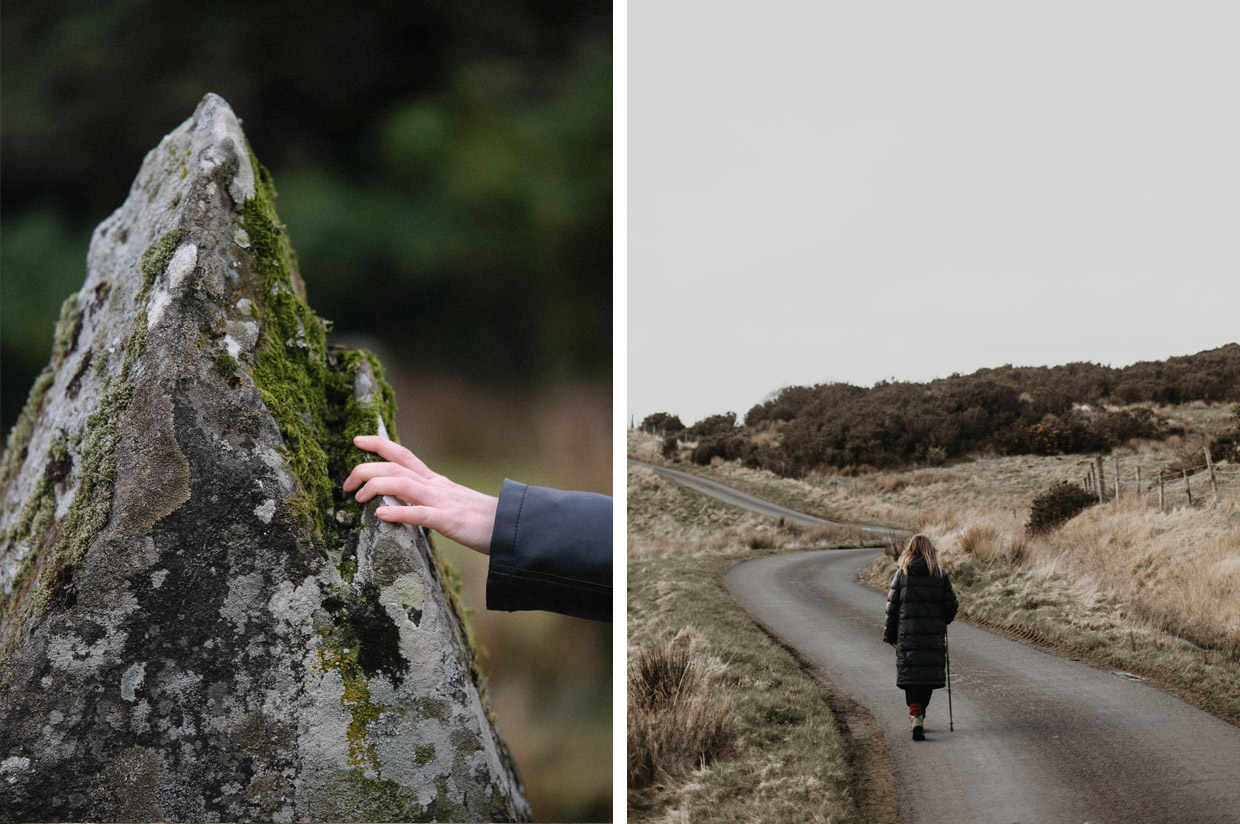
For me, there is no religious context to why I do pilgrimages. What a pilgrimage gives me is space and allowing things to just be.
On A-to-B multi-day hikes, we’re often challenging ourselves to get to this point by this time. What’s beautiful about pilgrimages is that you let go of that – you take it at the pace the day provides. It brings you back to a much slower pace of life.
We get so fearful of the unknown. For me, this was a huge part of recovery – dealing with the unknown of what my body was going to do. It would give me such anxiety about leaving the house. But on a pilgrimage, you’re just meandering through the land and being open to any experience. You start to find this very strange trust in the unknown because all these strange coincidences seem to happen.
They do, don’t they? There’s even a phrase: the trail provides. It’s almost this sense of mythic destiny sometimes, even when things aren’t going so well.
Completely. That’s where the spiritual aspect comes in. I think you tap into your more basic instinct and intuition of what you want to do and where to go. It starts to provide a lot more trust in yourself, in the world and everything around you. Letting everything go, letting everything just flow.
Whenever I’m feeling slightly lost in life I will take on a pilgrimage, and each one provides something different.
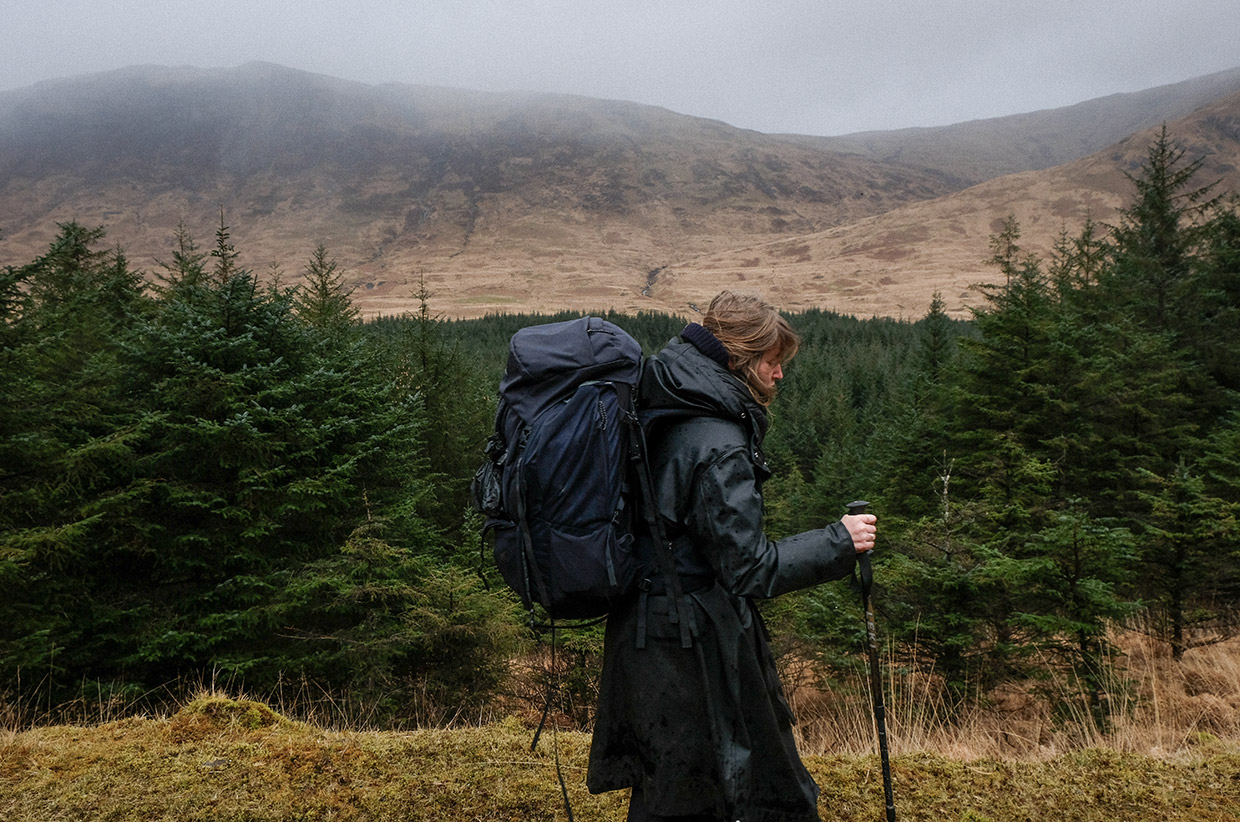
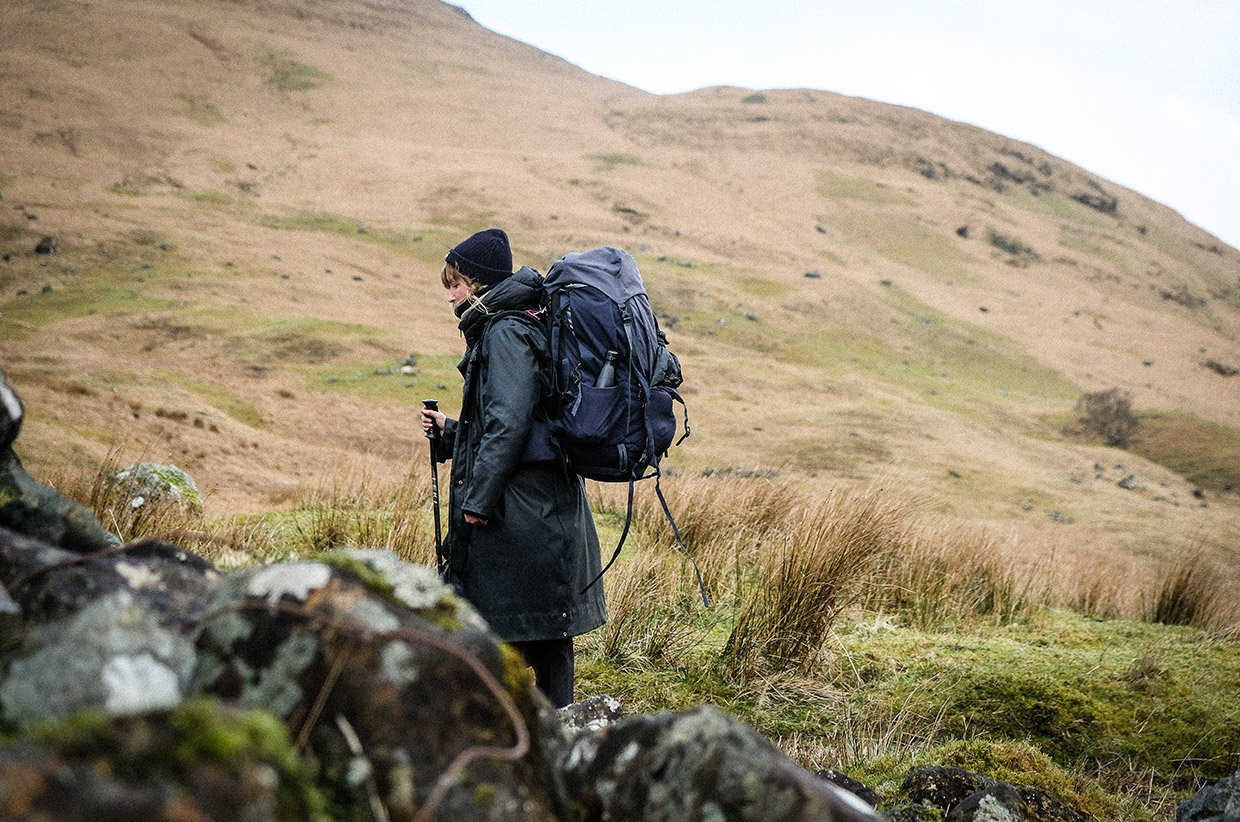
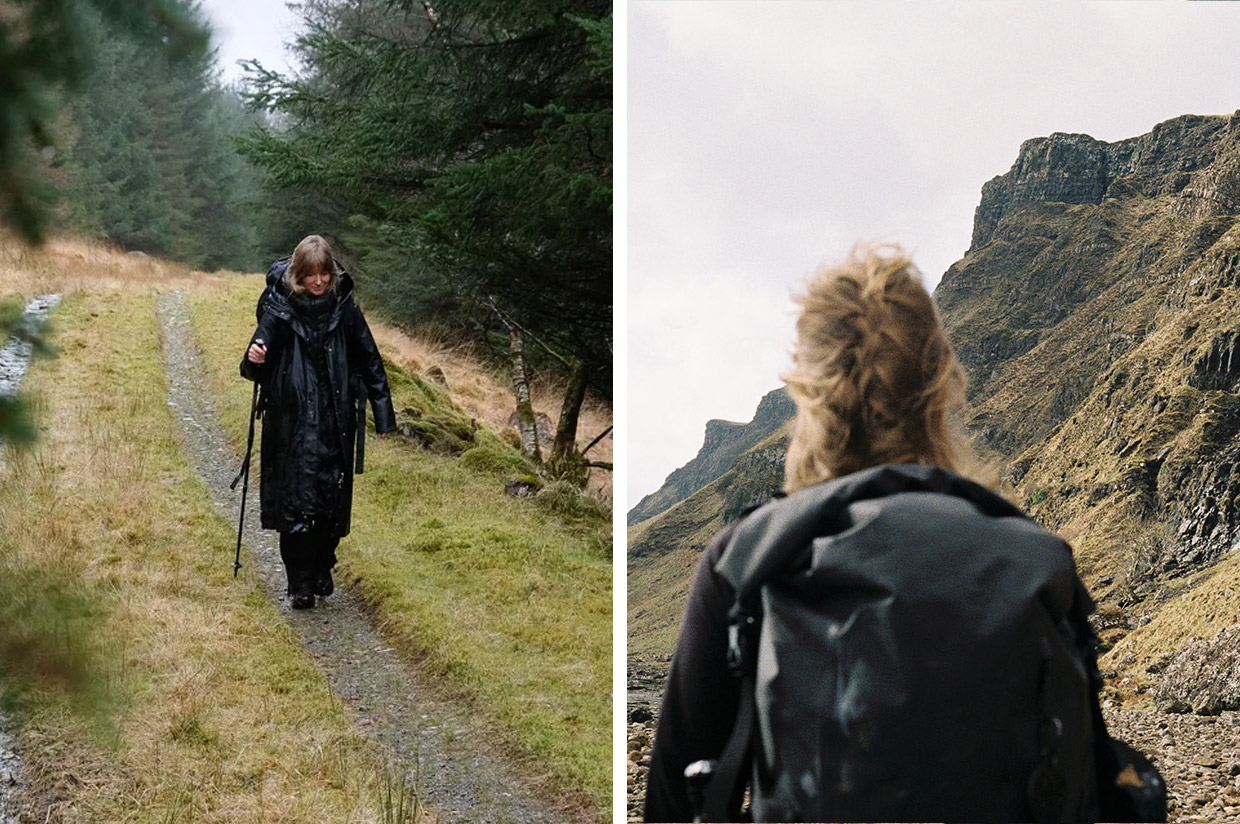
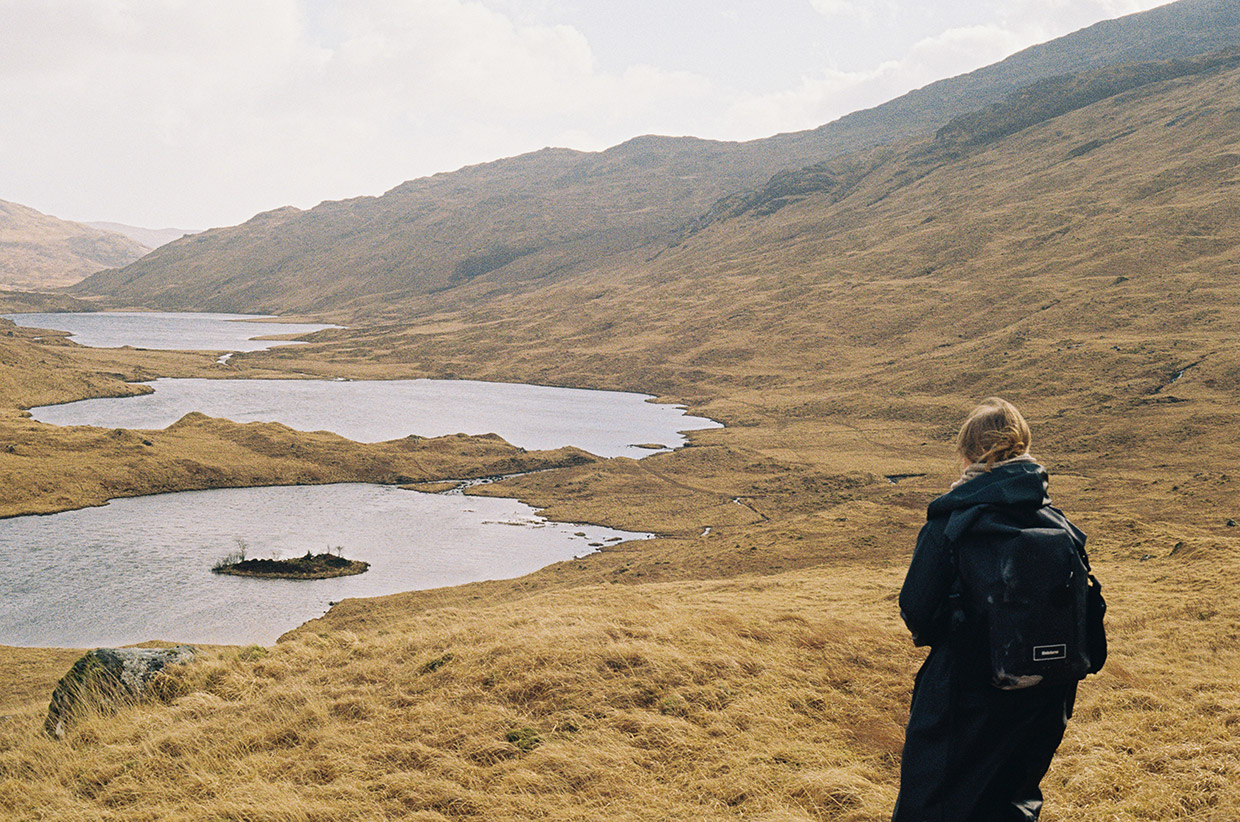
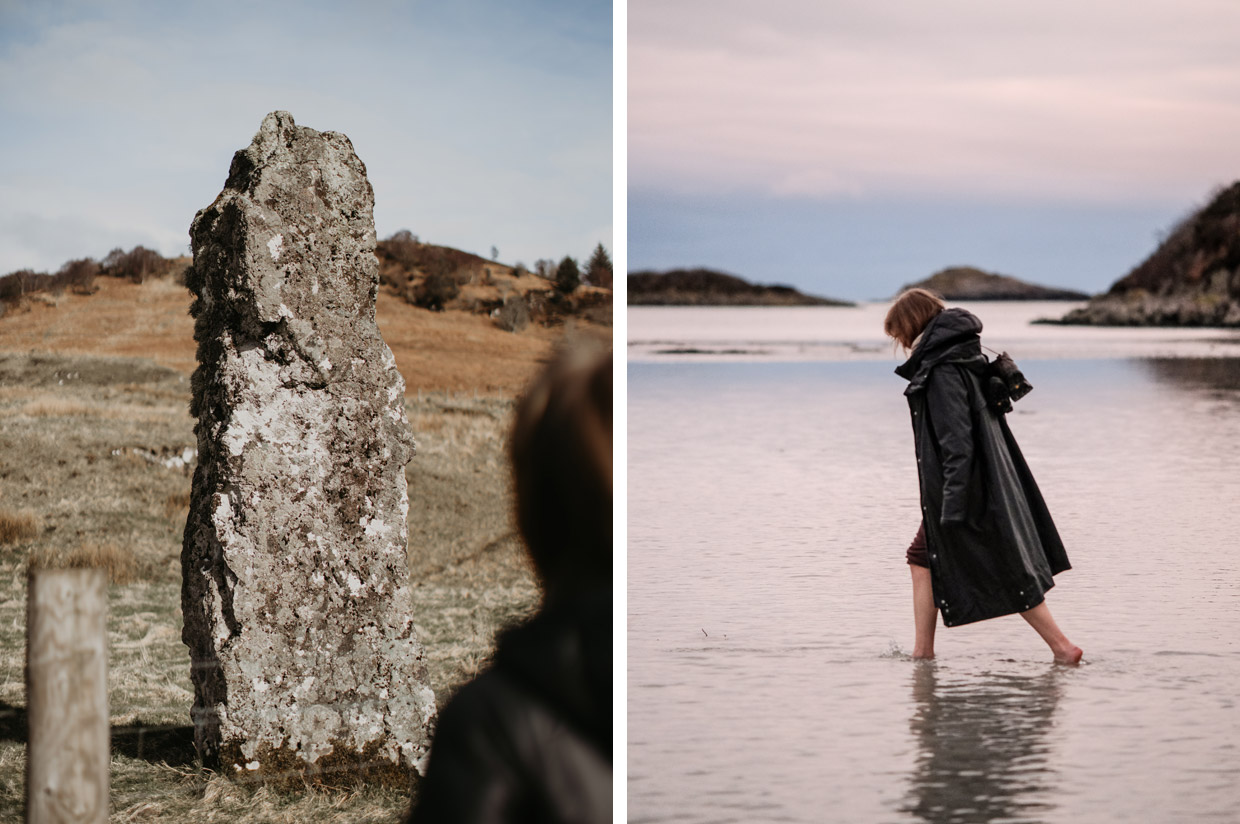
My second pilgrimage was up in Mull and Iona. I had been in a very male-dominated space of work, and I’d just been through a disability discrimination case as well. So I started to walk St Columba’s Way with an amazing mountain leader, friend and photographer. After a really difficult trek through bog, with it getting dark, Kat decided we had to turn back and go to a pub. We were absolutely drenched; there was no way we could camp that night. The landlady said, ‘Girls, I need to show you the real history of St Columba.’
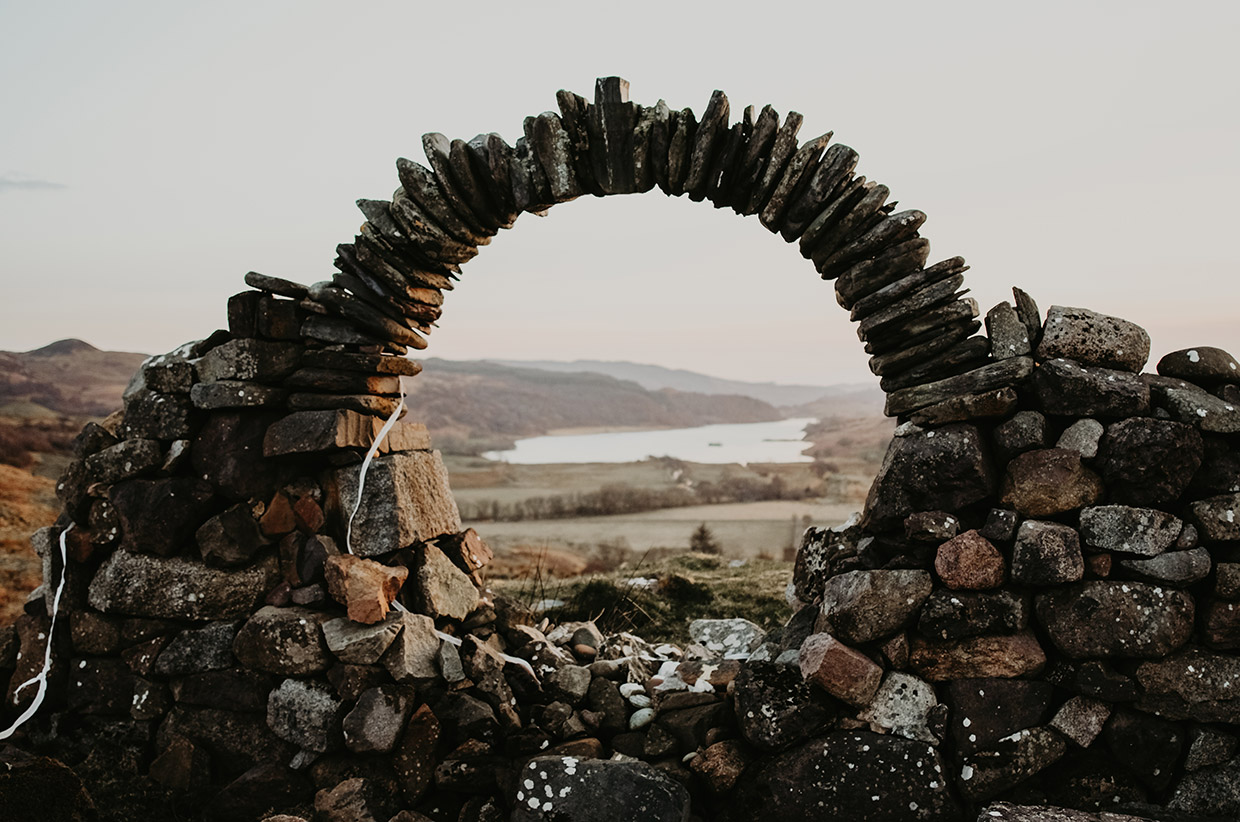
We then started to go on this trail of women – druidesses, nuns, and caretakers of the land – who were removed and written out of history. It was a very cathartic trip for us to do. It brought up a conversation about eco-feminism, and needing that kind of energy within the conservation and activism world.
As women we’ve always been taught that anger is not a virtuous emotion, but to allow that anger to come up on this walk was an embodied experience. Pilgrimage allows space and time for embodiment to surface, for you to be able to process it.

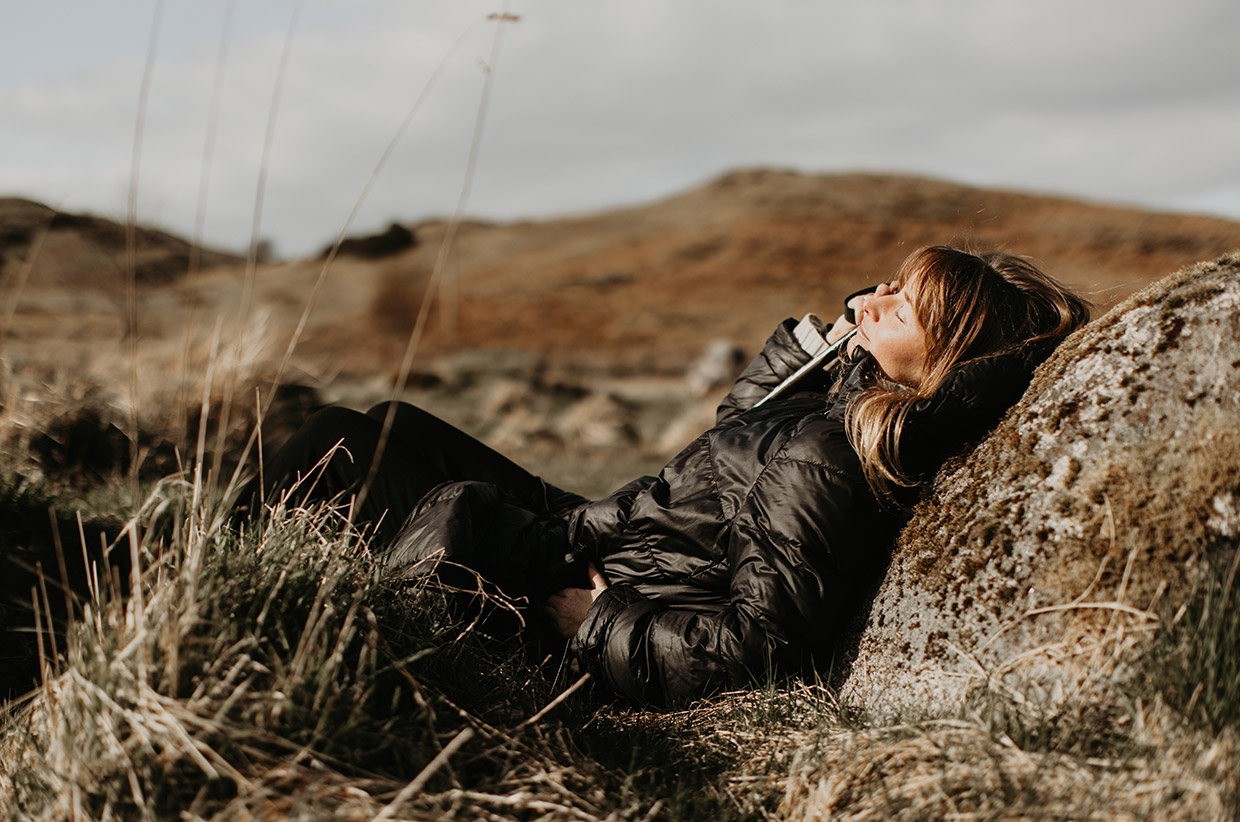
We’ve all seen in recent years how the outdoor industry is failing women. If the industry can’t even provide for 50 per cent of the population, what if any progress are they making on equipment for people with disabilities?
When I entered the industry 20 years ago, in surfing, women were over-sexualised, and sustainability was not being discussed properly. My work has always been around design justice. I could see the environmental damage that clothing was doing, and I could see that women weren’t being catered to.
When you think about the innovation and money that’s going into things, it’s been about going faster and lighter. You don’t need this stuff to go for a run, to go outside. I see a real lack of innovation in the industry altogether.
We’ve got an economic system that has become stuck, needing exponential growth and profit. When you’re stuck in a system that only wants profit, it doesn’t have the time, space, and money to innovate. So unfortunately, progress isn’t happening. We’ve been designing for one size fits all – one type of standard body, which doesn’t work for most people.
How can a more sustainable outdoor industry help support adaptive design, and vice versa?
There is no such thing as a green solution when we’re in an exponential growth economy. There’s no circularity without degrowth – it’s as simple as that.
The clothing we have now often won’t last, but all sorts of little adjustments and regulations could be put in that would allow us to repair garments and keep them in use for longer. We can also adapt garments that already exist, and that’s where the work we’re doing with UN [ PARA ] LD has come about, because everyone has different needs.
The thinking on long-term repair systems is that we need modular garment design, and to have standardised elements that allow us to repair and adapt. UN [ PARA ] LD has come about through working with Reaction Collective – a group of people who see that we can’t do what we need within the way the system is set up. We’re saying, OK, let’s bring the whole of the para-alpine community together, let’s figure out what people actually need with their clothing. How can we provide modular systems for people, how can we work with smaller manufacturers and repair houses, train them to be able to create adaptations?
Moving back to storytelling, what would you say to outdoors media – how can we help change this world? The reality is that we’re all dependent on money that comes from gear brands – it both sustains and constrains us. What are our responsibilities as you see them?
First of all I think story needs to become more nuanced. We see the same narratives over and over again, and it’s about looking at things more holistically. One of the most important things for media to do now is not stick with binary storytelling – it needs to be more holistic.
I would love to see industry money going into publications like yourselves to be able to host more in-person events – the one you did in 2024 [Elements] was brilliant. To be able to host more events, to bring community together more, and to go out into those slightly more risky nuanced areas. I would love to see the money go straight into building more legitimacy, more authenticity and innovation in narrative.
We often have a very binary view of disability – you’ve got to be in a wheelchair, it’s got to be visible. Looking at the spectrum, the intersections, is where the work lies. It’s important now more than ever that we take the risk to get curious about other people’s experiences in the world.
Learn more about UN [ PARA ] LD: @un_para_ld // adaptive-as-standard.com/unparald
Written by Alex Roddie // alexroddie.com
Featuring Alice Sainsbury // @alicesainsbury.co // alicesainsbury.co
Photography by Beth Chambers and Kat Bennett // @katbennettphoto