Collecting Stories
Gear Field Journal Explore Gear & Guides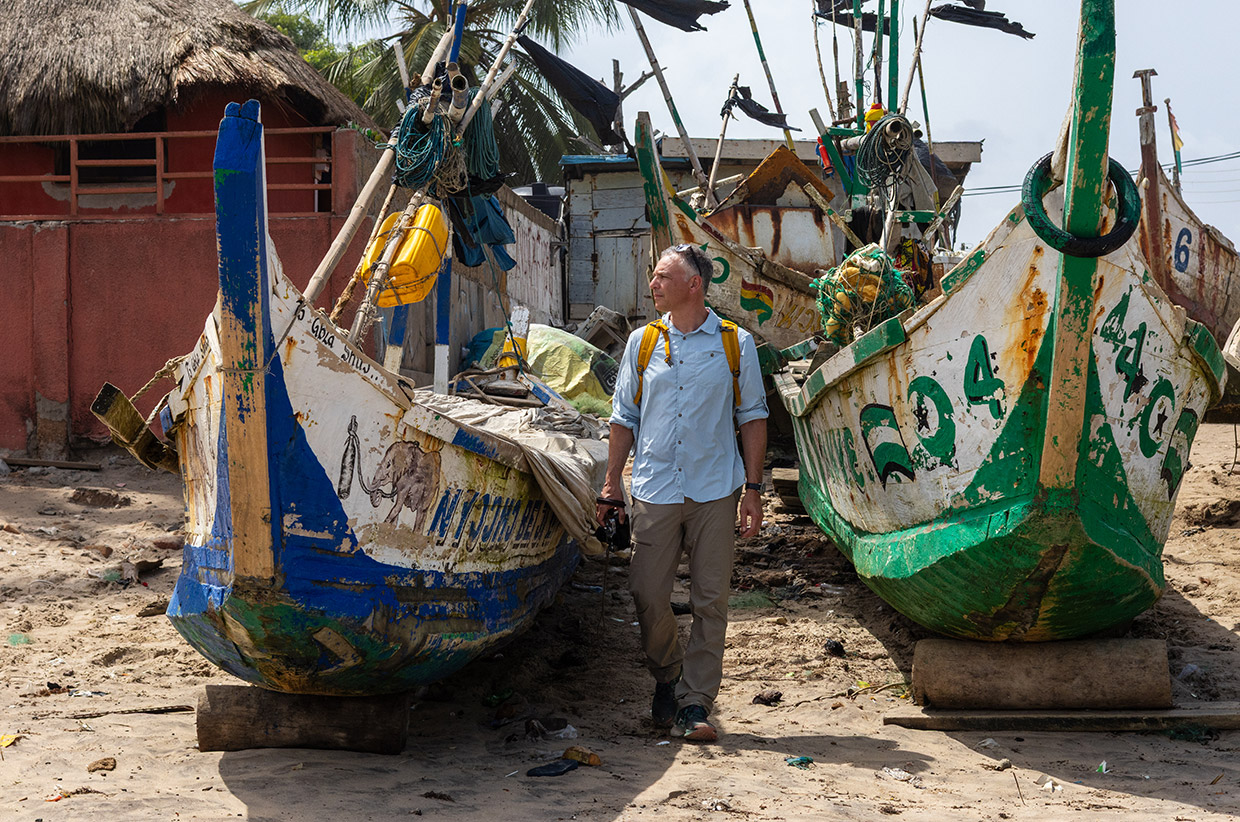
Stories Behind the Gear // Craghoppers
Written by Daniel Neilson
Photography by Mark Roberts & Daniel Neilson
Catapults, boiled eggs hastily peeled before the lights turn green, business books. Sachets of water, peanuts sold in old Coca Cola bottles, cold drinks sold from a huge bucket full of ice balanced on the head of a woman. Goats, too, are sold on the roadside, unaware their final fate is to be slaughtered at ceremonies.
This is the commerce of the roads of Accra, Ghana’s capital city. As the lights turn red, the sellers surround the cars, occasional beggars too, some of them young children. Every stoplight is an opportunity for a sale, a chance to earn a couple of Cedi. Then, as the lights turn green, most go back to the side of the road, replenish stock and share a joke.
Our car, lacking in air con and suspension, thuds through the city. From the radio in the taxi, a pastor is enthusiastically preaching to his flock through a distorted microphone. In my experience, taxis in Accra either have an evangelical radio station playing or, my preference, traditional highlife music. Now there’s an Uber Comfort preference for the next release.
We race tro tros, the improbably full minibuses that serve as a transport service. Goods are strapped to every part of the vehicle. Standing in the open door, a lad calls out the names of destinations and more people pile in.
I’m heading out of the city west, where I’d heard of a pleasant spot where fisherman land their catch from colourfully-painted boats. I’m the editor of a guidebook to Ghana, and thought it would make a nice story and maybe even a cover story. And then onwards to my favourite place in Ghana, Elmina, perhaps the most colourful place on planet earth.
I’ve been coming to Ghana every year for 16 years now, as a travel writer and editor of a guidebook. I know Accra well now, enough to look up friends when II return, and I love it here. The people, the food, the passion. I’ve seen boxing bouts and football games, concerts and art galleries. My days in Ghana are about collecting stories. I meet people, visit galleries and interview artists, go to concerts, find football stars. I visited a new photography gallery – the Dikan Centre and heard about a hot new brewery on the outskirts of the city. It’s hot, busy work, and thoroughly enjoyable.

The country beyond the capital has an irresistible energy of its own. Ghana might be a relatively small country in African terms, but like a dollop of shito – the nation’s potent black chilli sauce – it packs one heck of a kick. After the hugger-mugger of the city, life slows, a little.
We bump our way along the road to Kokrobite Beach, and a backpackers’ joint called Big Millys. It’s situated amid a 36-strong coconut grove and is the kind of place where you kick off your shoes on arrival and don’t put them on again until it’s time to leave – which nobody is ever happy to do.
There is an open-air bar and restaurant under a reed roof where we’ll later enjoy a Ghanaian delicacy of grilled tilapia and banku, gooey balls of slightly fermented maize and cassava doughs used to scoop up some flaky fish and the firey shito. Through a gap in the gate, the breeze from the Gulf of Guinea comes through. I walk out and wonder at the beach scene.
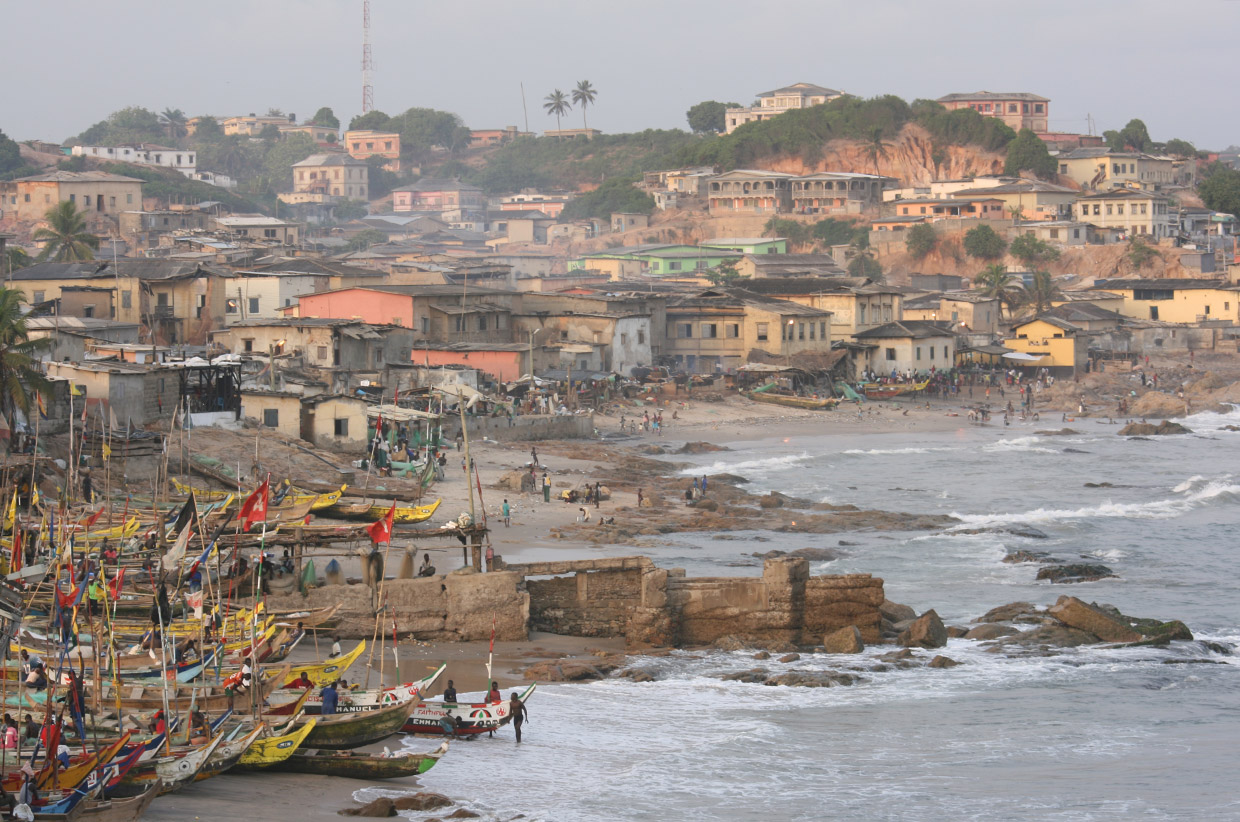
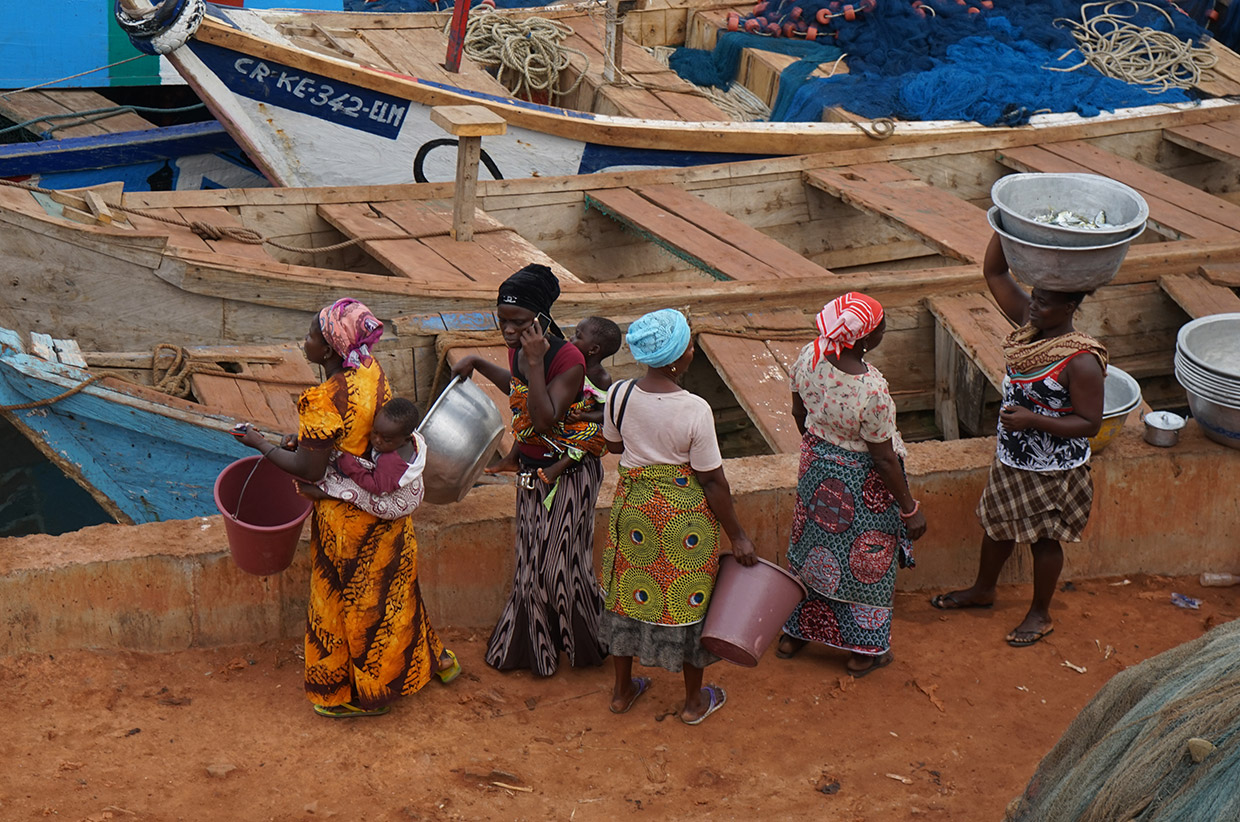
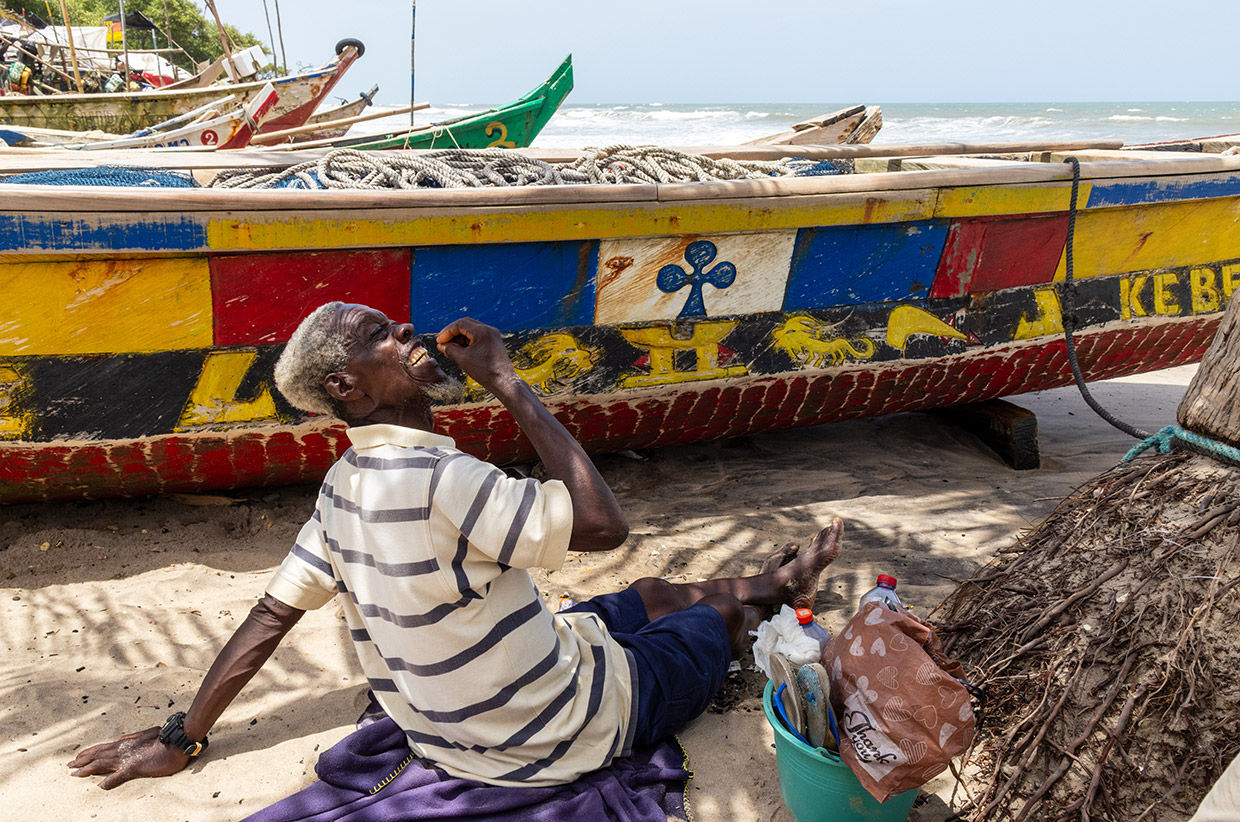
The surf crashes and speeds up the beach, much to the delight of the kids playing in the shallows. Along the sand, under the palm trees leaning into the sea, the fishermen have already hauled up their boats and sent their catch to market. They now sit around, fixing nets and laughing. Traditional Ghanaian boats are usually hand-carved from a single large log of wawa wood. I chat to the the fishermen, learning about their trade. ‘Very rough’, they say of the fishing last night. I’d seen the storm come over Accra the night before and wondered how many of the 250,000 or so fishers would have made it out. The crew of ‘Still Super’ and ‘Mika 7.8’ (that’s Micah 7.8: ‘Do not gloat over me, my enemy! Though I have fallen, I will rise.’) did, however. The fishing industry here supports half a million of Ghana’s 36 million population, and entire coastal communities.
Back along the beach, and a handful of surfers are out. Inside Big Milly’s complex, there is Mr Bright’s Surf School, and I meet Mr Bright himself, Brett Davies, a Cornwall native and now leading surfing tours along the Ghanaian coast. We have a chat and swap WhatsApp numbers. It’s another great story for the guide, as was the interview with the fishers. Plus we’ve got a cover shot. A solid morning’s work.
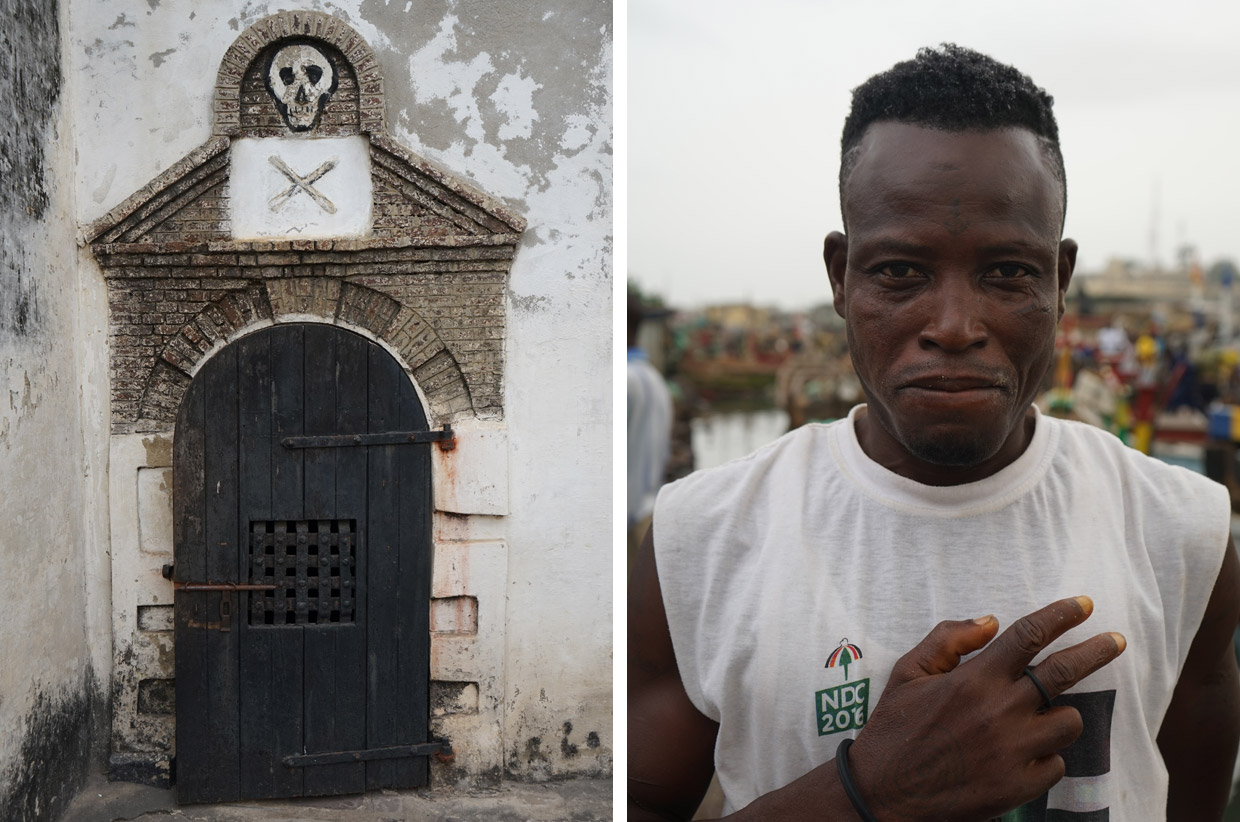
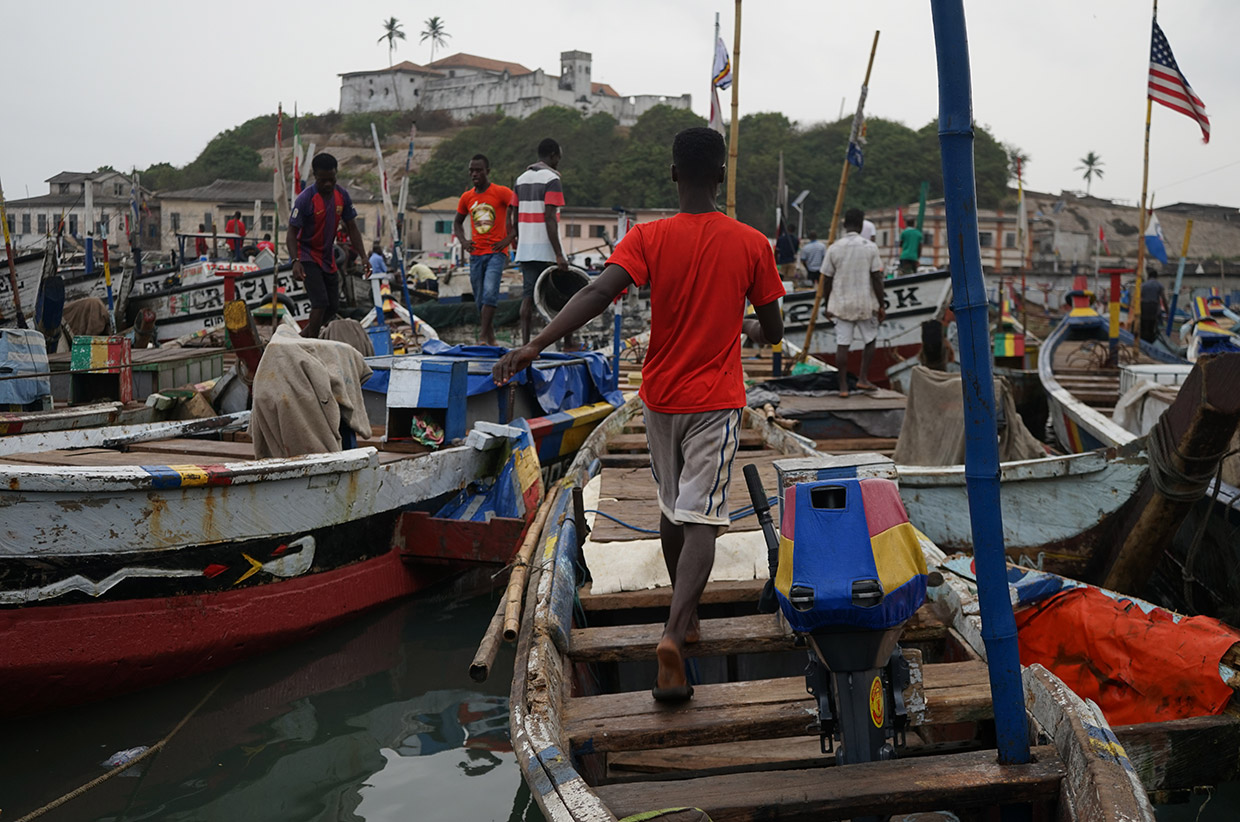
After the lunch of tilapia, it’s time to move on to Elmina to find more stories. Elmina is an easy place to love, to hang out for a couple of days and watch life happen around you. While the town is very much a 21st-century Ghanaian, the colonial past hangs high over the town with a seventeenth-century fort on St Jago Hill. On the sea is Elmina castle, founded in 1482, and now the oldest extant European building in sub-Saharan Africa. It was from here that hundreds of thousands, potentially millions of slaves passed through the ‘Door of No Return’ to be shipped off to the Americas. The majority of them died before reaching their final destination. It’s another story for the guide, the grimmest possible.
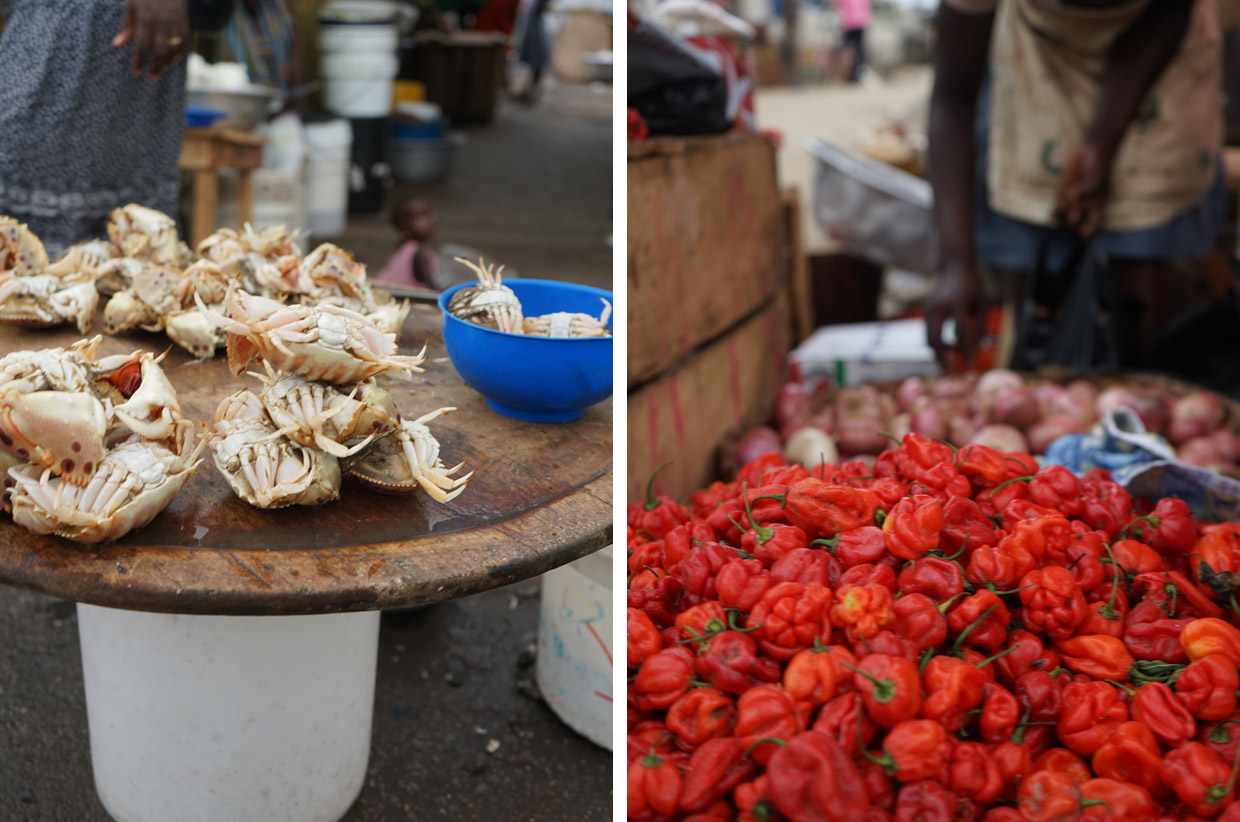
The following morning, I’m awoken by the sound of people, thousands of people congregating on ‘the bridge’ something I learn they do every morning. From here, they count the fishing boats back, an entire town coming out to support the business it relies on. Dozens of boats return, the men often dressed in football shirts, have been working overnight. It’s an overwhelmingly colourful sight. Now it’s time to pass the haul to the women who sort and sell the catch. For a few Cedi, I talk my way into the market. It’s loud, but respectful; everyone knows their role. I talk to fish sellers and fishermen and learn about declining fish stocks and illegal trading with trawlers offshore. Change is coming, they warn. Another story.
The week a year I spend in Ghana, I collect stories like souvenirs. For a guidebook that could be anything: sport, music, culture, economy, tourism, a surf school, a gallery owner, something I hear in a taxi. At the end of the trip, I always collate my notes and pull out the most interesting elements, the ones I’ll write about. Sometimes I’ll find a story that doesn’t belong in the guidebook but needs another home. My stories from West Africa have appeared in The Economist, Time Out, National Geographic Traveller, Sidetracked. As I flick back through my notebook now, I see about a dozen that will turn into some words. Some I’ll follow up on; some I’ll write from interviews I did there. I love travelling to Ghana, it makes my job easy. There’s always someone with a story to tell.

Craghoppers NosiLife Clothing
Ghana is a malarial zone, in fact, most of sub-Saharan Africa is, with the exception of South Africa, and parts of Botswana and Namibia. According to the Department of Health’s TravelHealthPro website, preventing malaria – and other insect-borne diseases – should be about following an ABCD guide: Awareness of the risk, Bite prevention, Chemoprophylaxis (anti-malarials) and Diagnosis. Craghopper’s NosiLife clothing helps with ‘B’, Bite prevention. As well as avoiding being outside at dawn and dusk when mosquitos feed, you should wear longsleeve tops and bottoms. Craghoppers NosiLife adds another, significant, layer of protection. This insect shield clothing lasts the lifetime of the garment and is proven against most biting insects, including pesky mosquitos. The active repellent in NosiLife clothing is Eucalyptus Citriodora Oil, a plant based treatment.
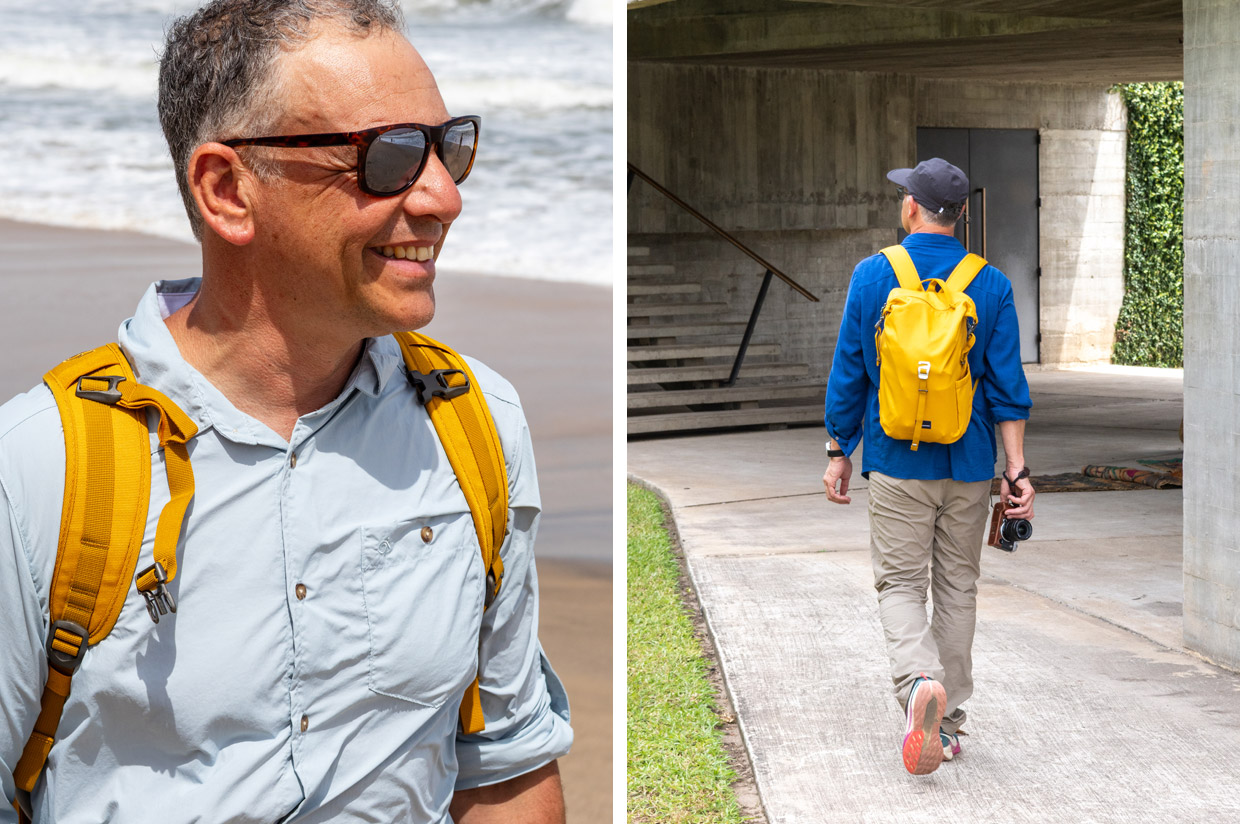
When travelling, especially as a journalist, meeting people and going to evening events, it’s important that the clothing suits the context. Craghoppers has a wide range of NosiLife clothing, including smart shirts, trousers, jackets and T-shrirts, alongside more traditional travel clothing. They also have socks to fend off any ankle critters. I’ve been taking NosiLife gear to West Africa for more than 15 years, and it’s kept me safe. For this trip, I particularly enjoyed the natural feeling Azaden Long Sleeved Shirt made from 85% viscose and 15% linen. I also took the Nuoro Shirt and the NosiLife Pro Trousers III, the latter, like many NosiLife garments, offering UPF 50+ sun-protection, among a wealth of other features. I particularly appreciated the ‘ zip’n’clip security pocket’ with inner credit card RFID. Safe, and secure.
craghoppers.com // @craghoppers
Written by Daniel Neilson // @danieljneilson
Photography by Mark Roberts