In Search of the Bald Eagle
Gear Field Journal Explore Gear & Guides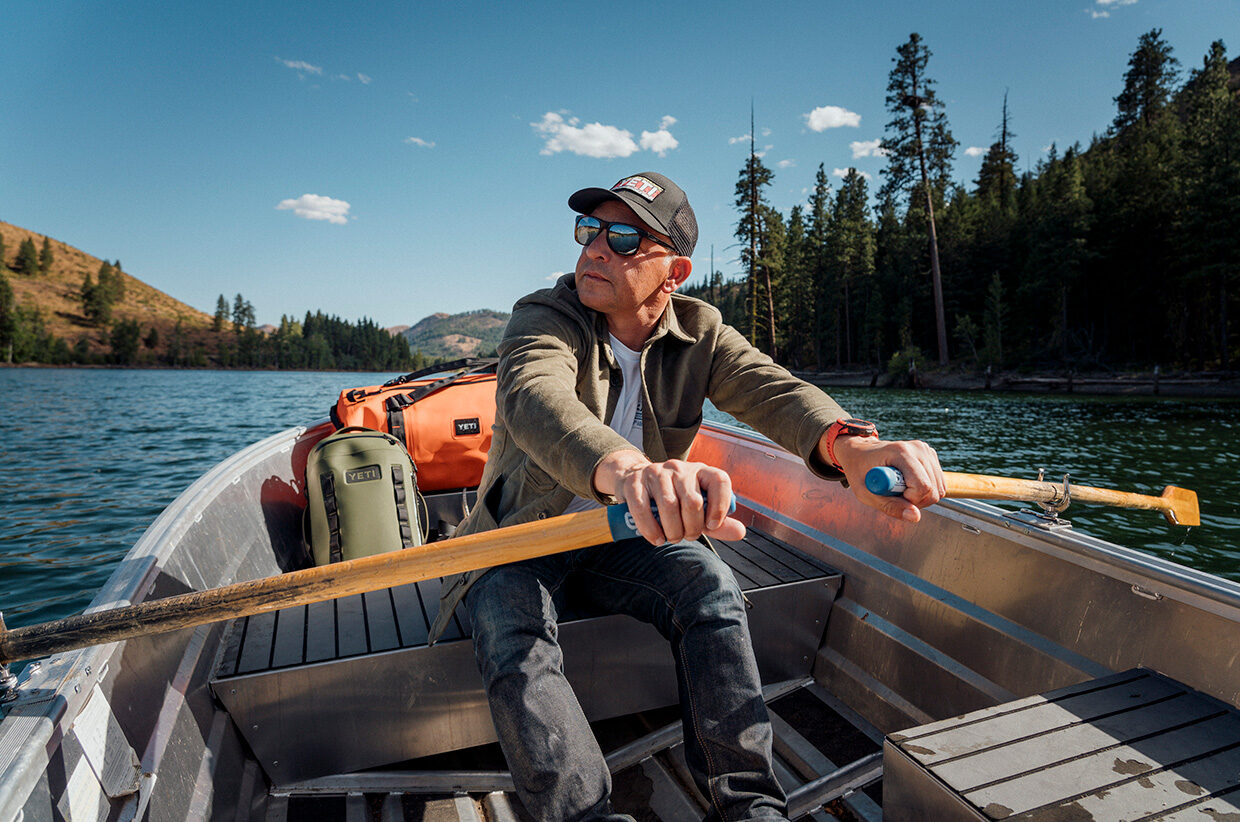
Exploring Washington’s lakes and ridges in search of the bald eagle, with a pack built to endure the journey.
Words: Daniel Neilson // Photography: John Summerton
Produced in Partnership with YETI
The bald eagle has long been politicised and iconised, its image stamped across American identity. But to watch one in its natural home – soaring over the lakes and ridges of Washington State – is to strip away the symbol and meet the bird itself.
The bald eagle is an icon of the United States. It has been politicised, iconised, and the national symbol since 1782, appearing on the presidential seal, the logos of federal agencies, coinage, and postage stamps. In some Native American cultures, the bird and its feathers are sacred, commonly used in rituals and ceremonies.
The bald eagle, of course, has absolutely no idea. This is a bird that lives around 20 years and generally mates for life. In the Pacific Northwest, where we were searching, they live mostly on fish – spawning trout and salmon in summer and autumn, and then shad, carp, and the largescale sucker. They’ll also eat grebes, mallards, and coots, and occasionally, in Washington, even seals.
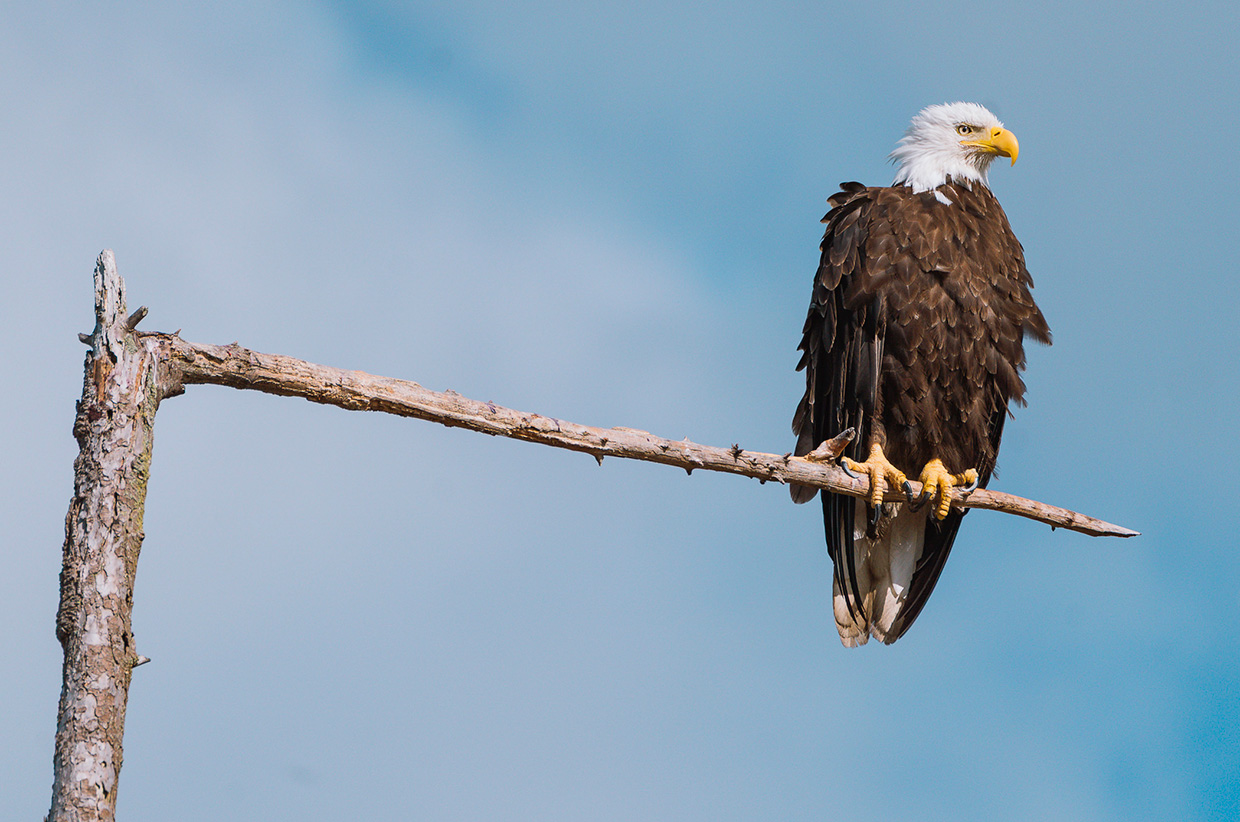
They are predisposed to standing high in trees, looking mightily majestic, often next to their nest – the largest of any bird in North America. These are big birds: up to a metre in body length with a wingspan twice that. We knew there was a strong population in Washington, and we wanted to see one in the wild, not just on a dollar bill. But bald eagles tend to nest in places with minimal human disturbance. In Washington, a state of vast, largely inaccessible wilderness, that’s good news for the eagle. For us, it meant getting intrepid.
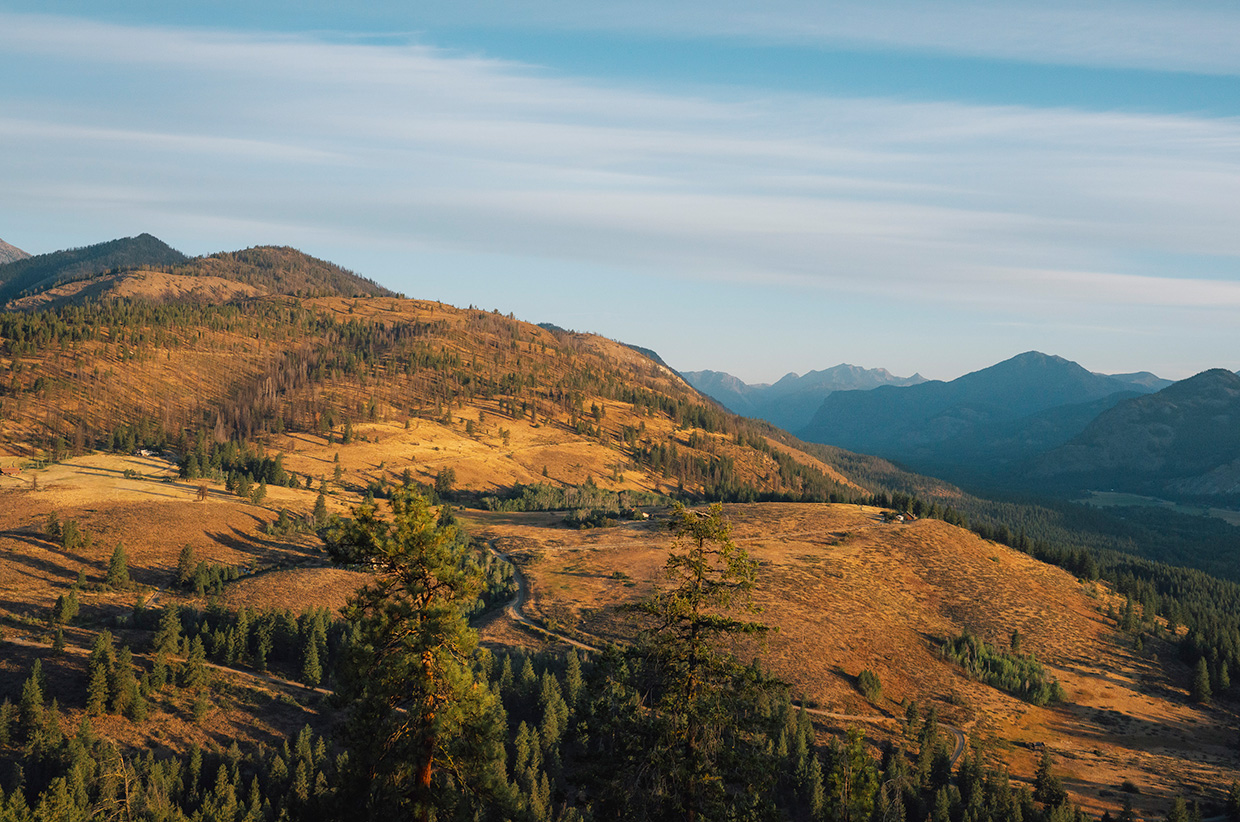
Into the North Cascades
The bald eagle can be found across Washington. Back in the 1980s it was classified as ‘endangered’. By 1995, restrictions on the use of DDT led to it being upgraded to ‘threatened’, and by 2007 it was removed from the list altogether. The last count in 2005 saw 840 occupied nests in the state, and the population has likely increased since. It’s a success story, but the bird is still rare. After all, we were searching across a state larger than Norway and twice the size of Portugal.
We began in the North Cascades National Park, a protected area of some of the highest peaks in the range, which stretches from southern British Columbia to northern California. The range reaches its highest point at Mount Rainier, a volcanic summit in Washington topping out at 4,392m.
With little more expertise than, ‘If I were a bald eagle, where would I live?’, we left the North Cascades Visitor Centre and set off on SR 20, the North Cascades Scenic Highway. The crowds thinned as the mountains opened.
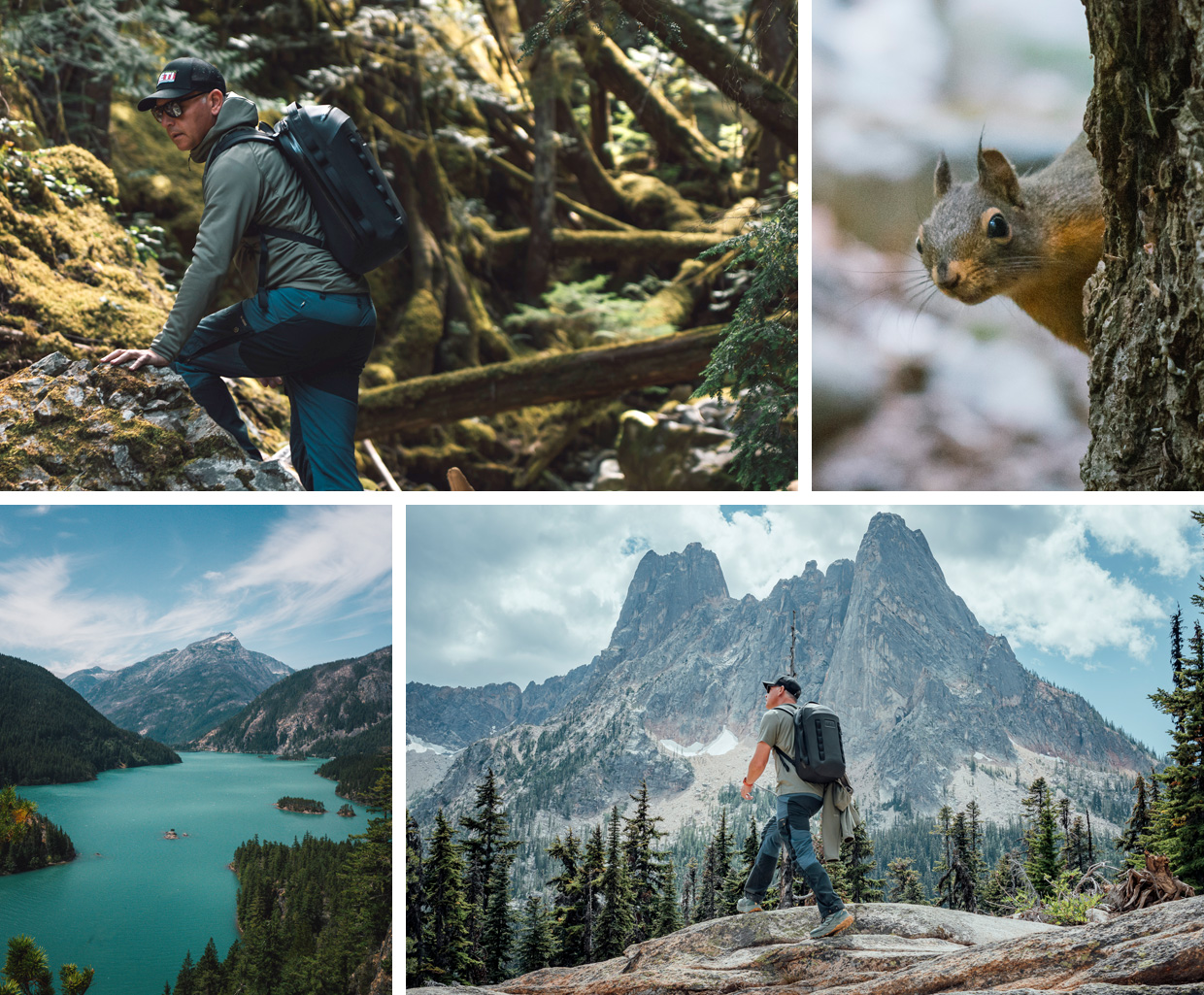
We were stopped again and again by beauty. The scale of these mountains sometimes fuddles the brain. At a trailhead leading high into the hills along a sprightly stream, we began our first foray into the wilderness. The North Cascades are home to a vast population of animals. Mammals with sharp teeth include coyote, bobcat, lynx, cougar, mink, river otter, and black bear, with deer and mountain goats further down the food chain. Deciding the river was too steep for salmon and therefore not attractive to bald eagles, we turned our attention to the minutiae of the woodland.
At Washington Pass, we walked the rocky ridges where the pines thinned. Swathes of burnt trees coloured the far reaches of the pass, while fresh shoots painted the foreground. Towering above was Liberty Bell Mountain, a group of spires rising to 2,350m. The North Cascades are defined by jagged peaks and deep valleys, the most rugged in the range. Liberty Bell alone has 18 climbing routes, some up to 12 pitches.
Ground squirrels and a flitting marmot were all we saw. It was time to move.
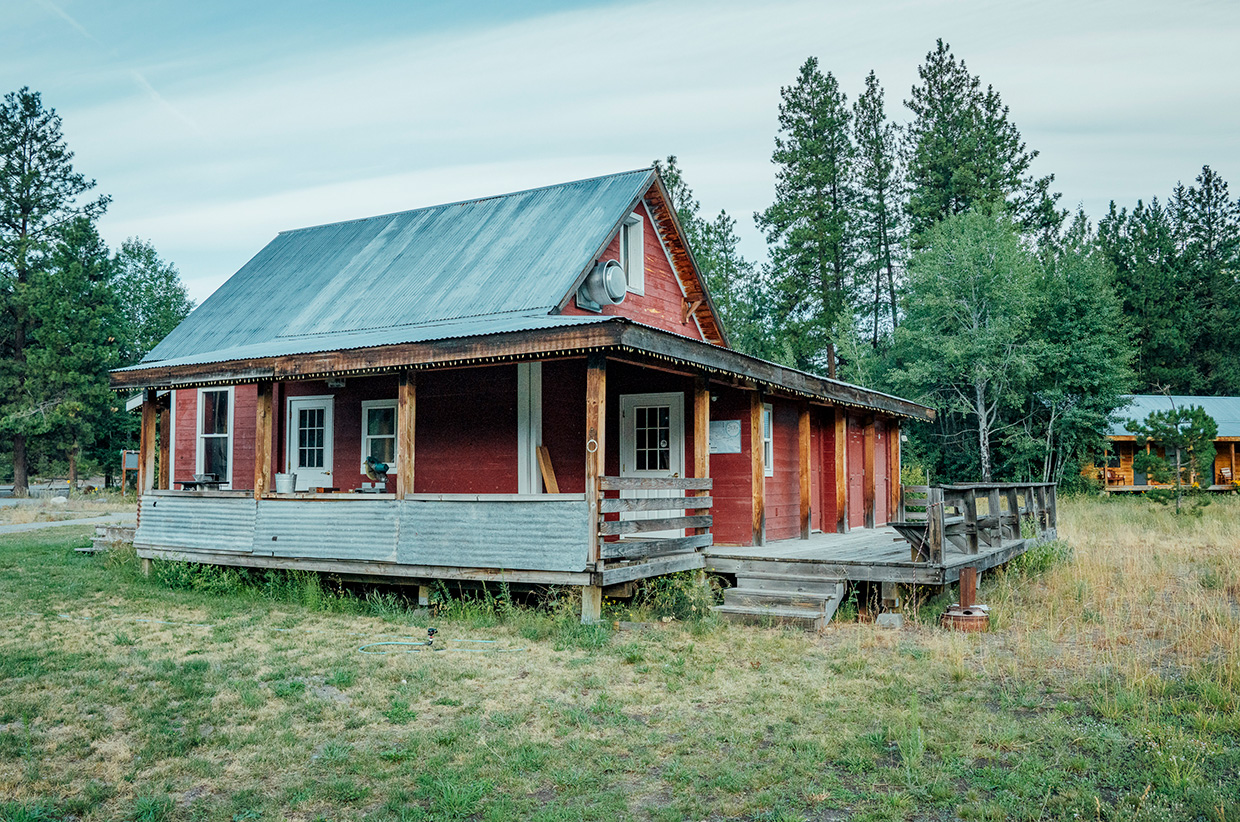
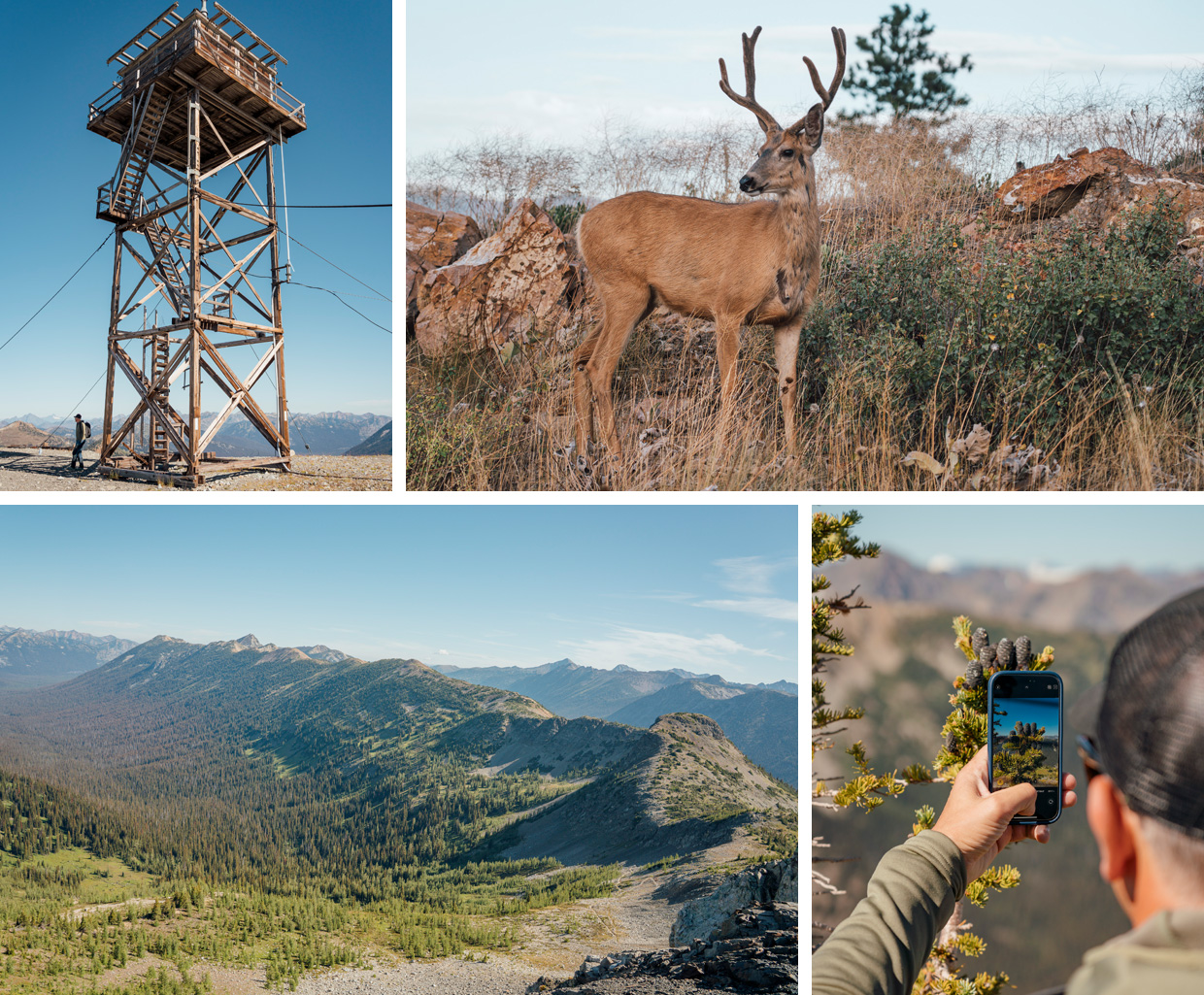
The Wild West
We’d heard rumours of a bald eagle near the Sun Mountain Lodge, where we were staying, close to the frontier town of Winthrop. Built in the foothills of the North Cascades in the Methow River Valley – a tributary of the mighty Columbia – it seemed a promising base.
At reception, we were directed to the lodge outfitter, who rents bikes and arranges horse rides. They sent us down to Patterson Lake, with instructions to ‘speak to Steve’.
Steve was a kindly man who had lived in the area most of his life, with a bone-dry wit and a glint in his eye. ‘There sure is,’ he said when we asked about bald eagles. ‘A couple, with one or two juveniles, at the far south of the lake. Been here for years.’
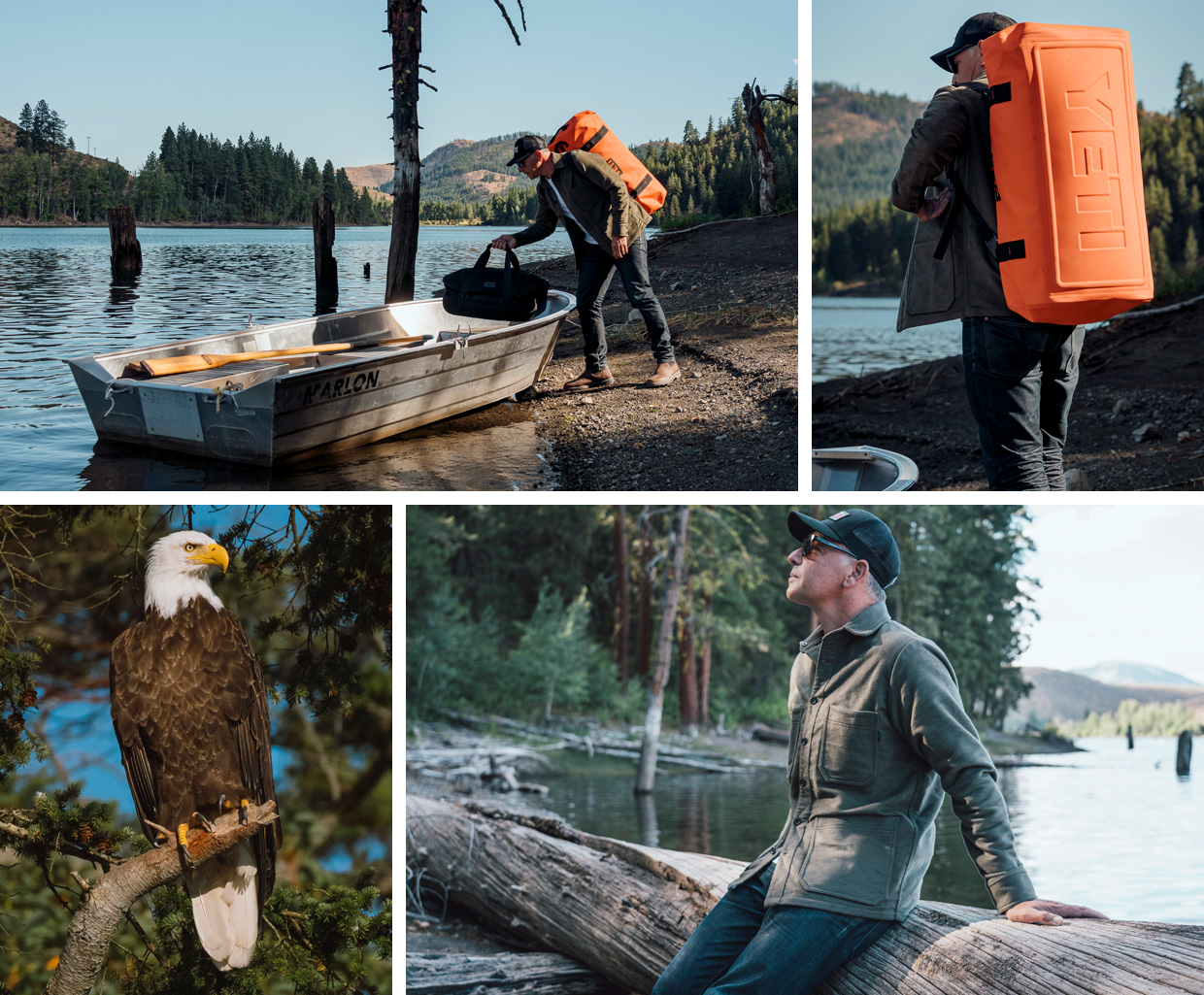
The glare of hot sun was giving way to the clear light of evening. Bald eagles are most active in the late afternoon, and we hoped to see them in flight. We packed for the night: tent, stove, beers, and a bear canister. We threw our bags, camera gear, binoculars, and IPA into an unwieldy steel rowing boat and headed south.
Patterson Lake stretches north to south, its far shore curving out of sight. Pines dropped right to the water’s edge, snow still patching the higher mountains. Fish flickered beneath us. A couple of kids on the dock boasted of catching kokanee, perch, and trout.
Then we spotted it: a bird of prey soaring on thermals high above. A fully grown female here will weigh 4–5kg, with a wingspan of around two metres. Even a kilometre away, we could make out the wing tips spread like fingers.
We rowed hard, hoping it would descend to the nest. Bald eagles lay eggs around February; by June, the young are fledging. It was a juvenile we saw first, soaring awkwardly but already powerful. We followed it back to the nest – a vast lattice of branches, the largest of any bird in North America. The one we saw was perhaps two metres across. Nests like these are used for life, rebuilt each year.
I rowed as John lined up the shot. We wanted the classic image: an eagle perched against the setting sun.
The adult we saw was unmistakable. A bright yellow beak, dark brown plumage, and the iconic white head that gives the bird its name – not bald at all, but from the old English ‘balde’, meaning ‘white’. Later, reviewing John’s photos, we noticed the piercing eyes: yellow as the beak, with a black pupil. An eagle can see five times farther than a human.
We moored along a kink in the shoreline with a clear sight of the nest and stayed until the Milky Way arced across the night sky. We drank beer and watched the nest, John capturing the youngster’s precarious landings in the treetops.
Not once did we think of the eagle on the presidential seal or the banknotes in our pockets. We simply watched, mesmerised, for hours – the bald eagle in its rightful home.
Review: YETI Cayo 25L All-Weather Backpack
Price: £250
Website: uk.yeti.com
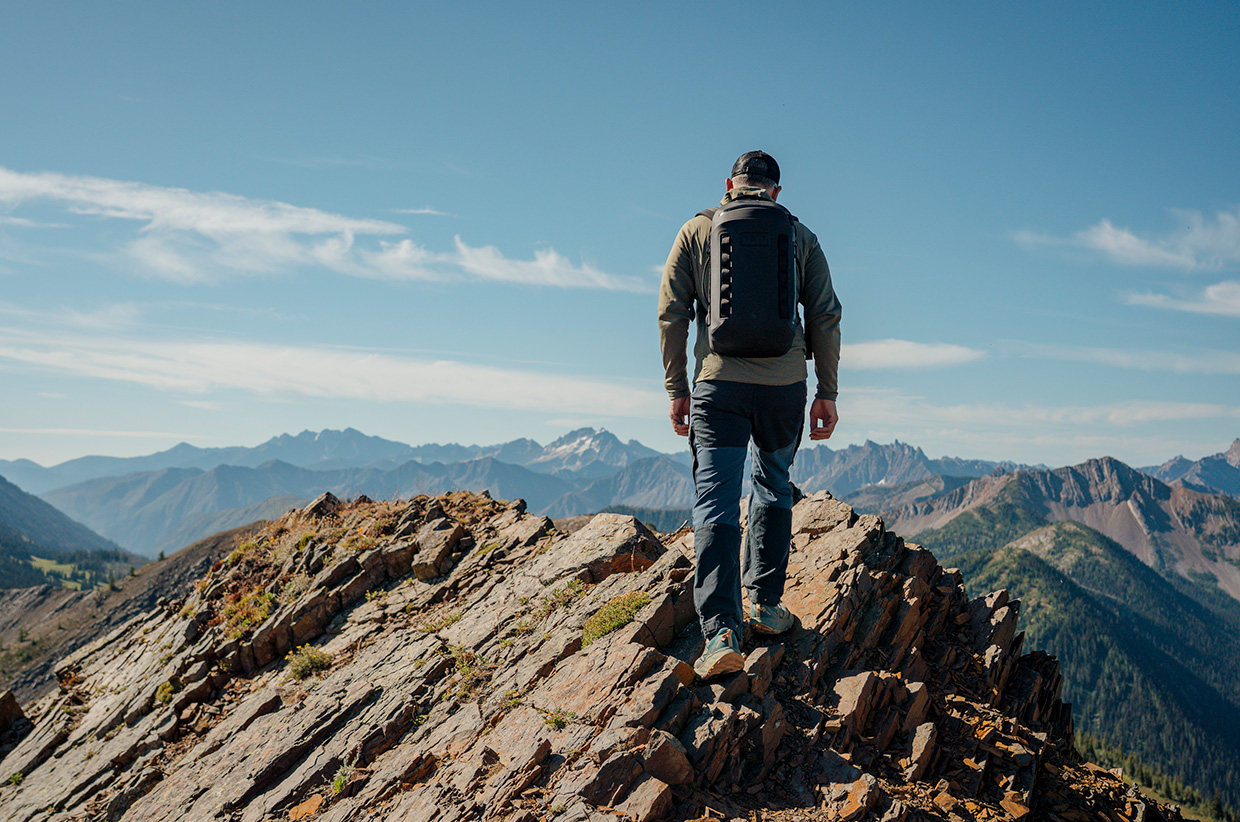
Our constant companion on all of our walks, kayaks, splashy whale-watching trips, BA hand luggage, and rowing boat shenanigans was YETI’s new Cayo Backpack. We were each carrying a 25L version (also available in 15L and 35L sizes) for all our journeys. And on a trip such as this, there is a lot at stake: laptops, camera equipment, binoculars, and, by the end of the week, notebooks filled with essential information, notes, contact details, and a lot of backup disks. In this case, and even on the daily commute, a backpack protects thousands of pounds’ worth of equipment, plus priceless raw creative information. It needs to be durable, protect against the elements, and genuinely helpful.
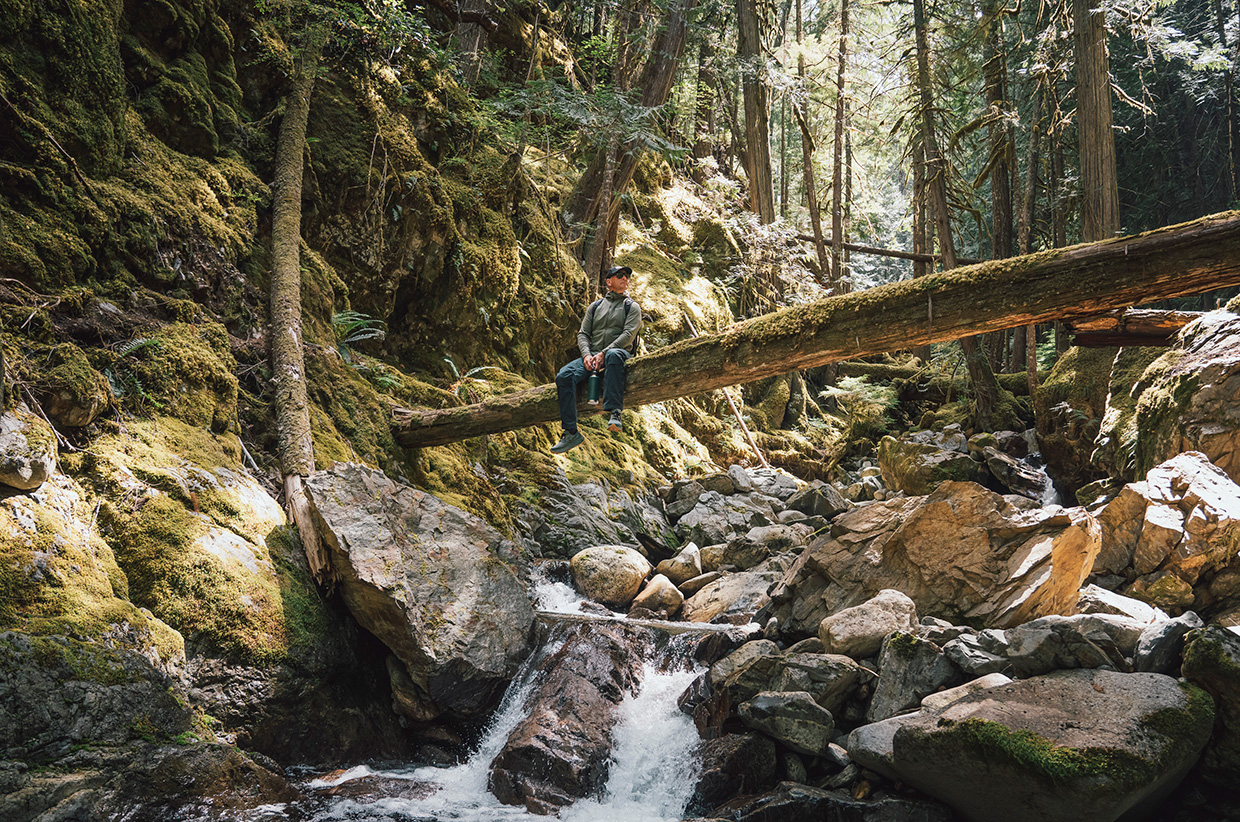
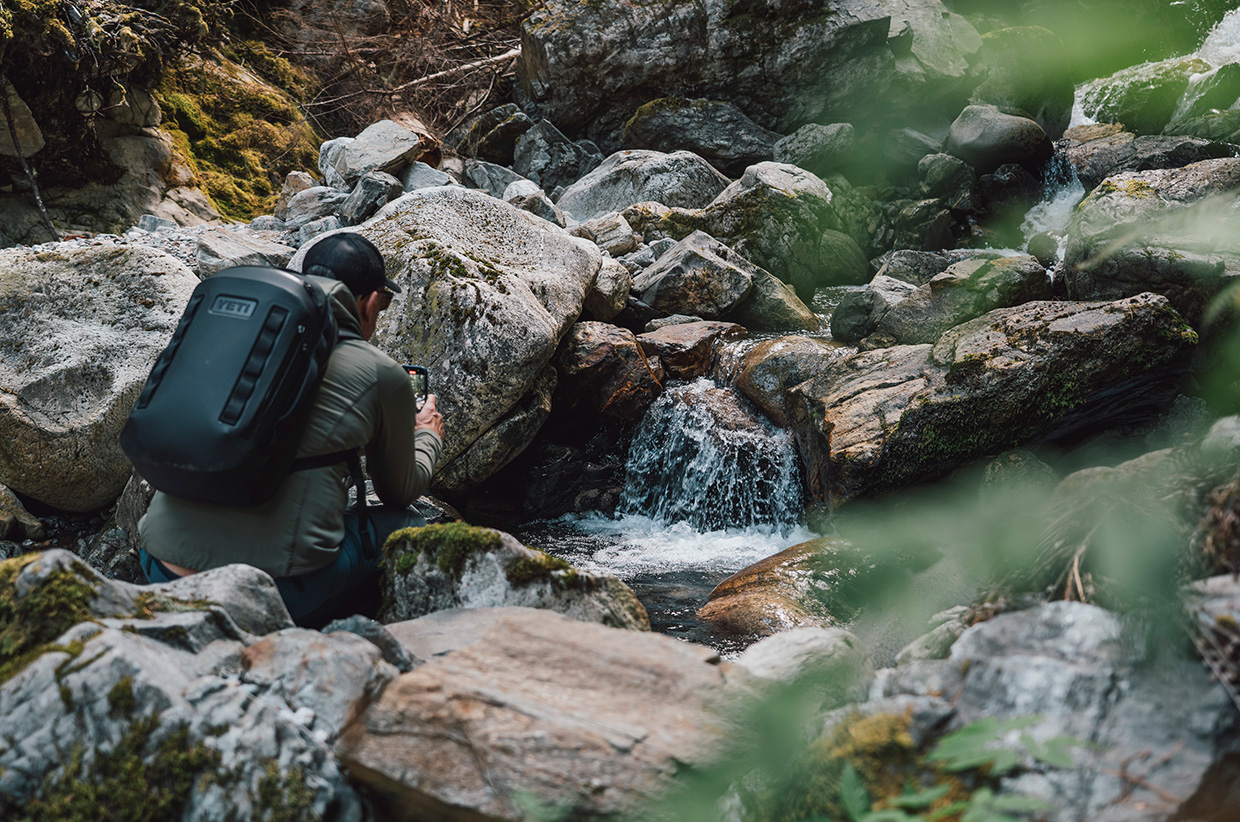
It is immediately apparent that YETI’s Cayo Backpack will be one of the most durable and weather-resistant bags you’ve seen. It is made from a rugged DryHide shell that is waterproof, with welded seams and a PU-coated zip. While YETI point out it’s not fully waterproof (for that, try the Panga 28L Waterproof Backpack), it would need to be pretty well submerged to let water in. We’re confident this will keep off any rain, showers, or, for our photos, even when placed under a stream. (It had my laptop in it, and there wasn’t a hint of water or worry on my face.)
So what of the features? The more time I spent with it, the more I was impressed with the design elements. Simple details, such as handles on the lid at the top and back, allow it to be picked up without swinging. It also stands up on its own – a feature not to be underestimated.
There’s a large side pocket made from water-resistant material, which not only fits a YETI water bottle but also serves as the best place for a wet waterproof jacket. I particularly like the lid pocket, too. It has a weather-resistant zip, and I found it perfect when travelling across borders for essentials – passport, sunglasses, documents, phone – offering easy access when slung off one shoulder. There’s also a security clip.
The main zip opens almost the entire backpack, and inside there’s a mesh sleeve for a hydration bladder (with an opening for the hose on top) or a book. There are also a couple of small pockets inside. On the front are several hitch points for anything you can imagine.
The back panel has a comfortable ‘ComfortComb’ mesh that doesn’t absorb water but offers cushioning and ventilation. The straps are comfortable and have removable sternum and waist straps – particularly useful on the 35L version. It’s a very comfortable carry.
Inevitably, this has replaced any other backpack – whether for a day walk or a meeting in London. And if you’re going anywhere near water, it offers the security and reassurance you need.
FEATURED PRODUCTS
Cayo All Weather Backpack – 25L // View Details »
Waterproof Duffel – 75L // View Details »
Travel Duffel – 60L // View details »
Yonder Water Bottle – 1L // View Details »
Rambler Water Bottle – 1L // View Details »
French Press – 1L // View Details »
Rambler Pour Over // View Details »
Stackable Mug // View Details »
The trip to Washington State was kindly supported by StateofWATourism.com // @stateofwatourism
Written by Daniel Neilson // @danieljneilson
Photography by John Summerton // @johnsummerton
Produced in partnership with YETI // @yetieurope