In the Footsteps of Banryu
Field Journal Explore Inspiration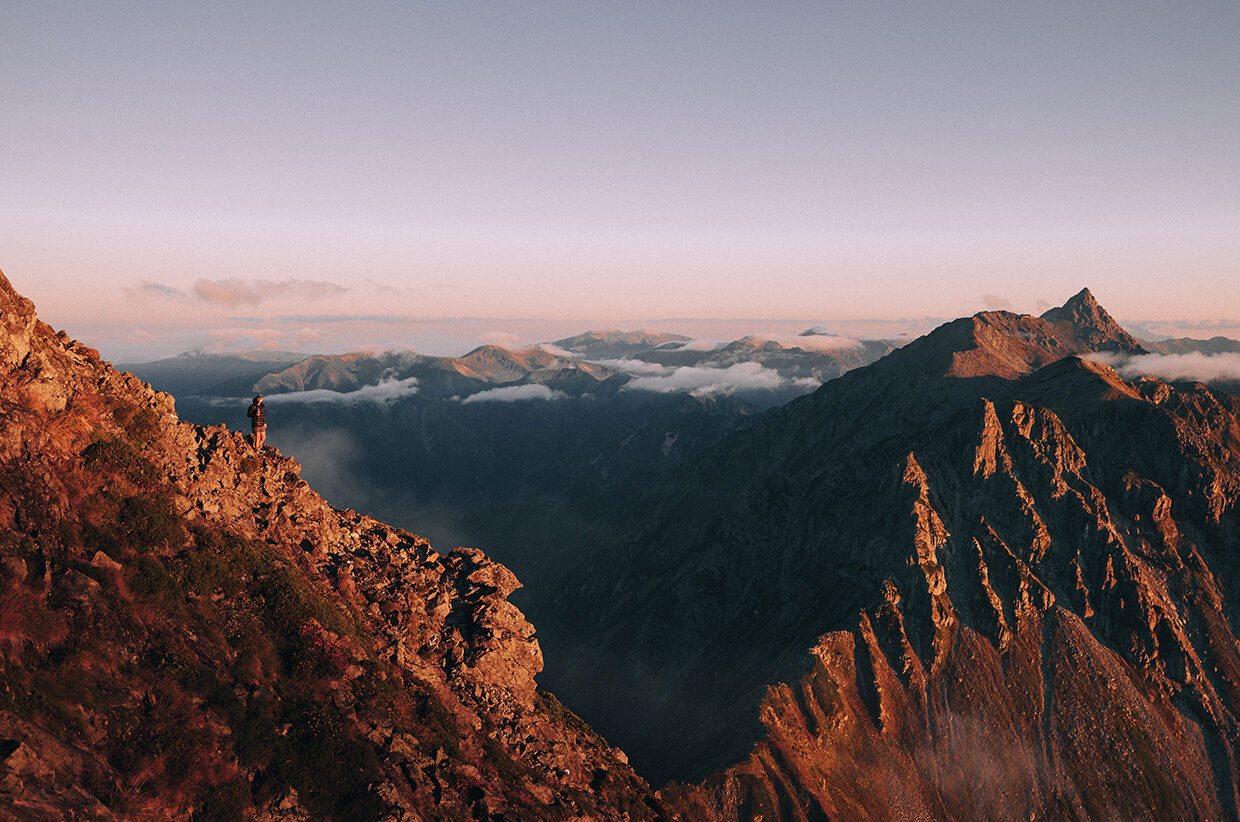
Fastpacking the Kamikochi-Yari-Hotaka Circuit
Written by Amy Marwick // Photography by Jake Baggaley
Fastpacking light and fast across Japan’s most dramatic terrain, a team of English and Japanese athletes attempt the Kamikochi–Yari–Hotaka Circuit – a route of soaring ridges and deep history.
High on the knife-edge ridgelines of Japan’s Northern Alps, where the clouds catch and swirl on toothy 3,000m peaks, a team of English and Japanese athletes set out on a fast-packing adventure. Tracing the Kamikochi-Yari-Hotaka Circuit, they followed routes once trodden by the monk Banryu, the ‘father of Japanese alpinism’.
They began and ended their journey in the mountain town of Kamikochi and finished with a successful FKT (fastest known time) attempt on Mount Yakedake, the only active volcano among the Japanese Alps. Despite limited shared language between them, the team quickly discovered that the rhythm of footfall, the awe of mountains, and the shared grit of long days on tough terrain spoke louder than words.
Producer and photographer Jake Baggaley had wanted to run the Japanese Alps for a while, and a shoot with Rab provided the perfect opportunity. He was joined by Aoi Chan, a Tokyo-based road runner taking on her first high alpine fastpack, and Yusuke Tanaka, a Kamikochi local and trail runner whose knowledge of the mountains bridged cultural gaps. Also on the team were Sam Hill, mountain guide and photographer, and Matt Green, adventure filmmaker and athlete.
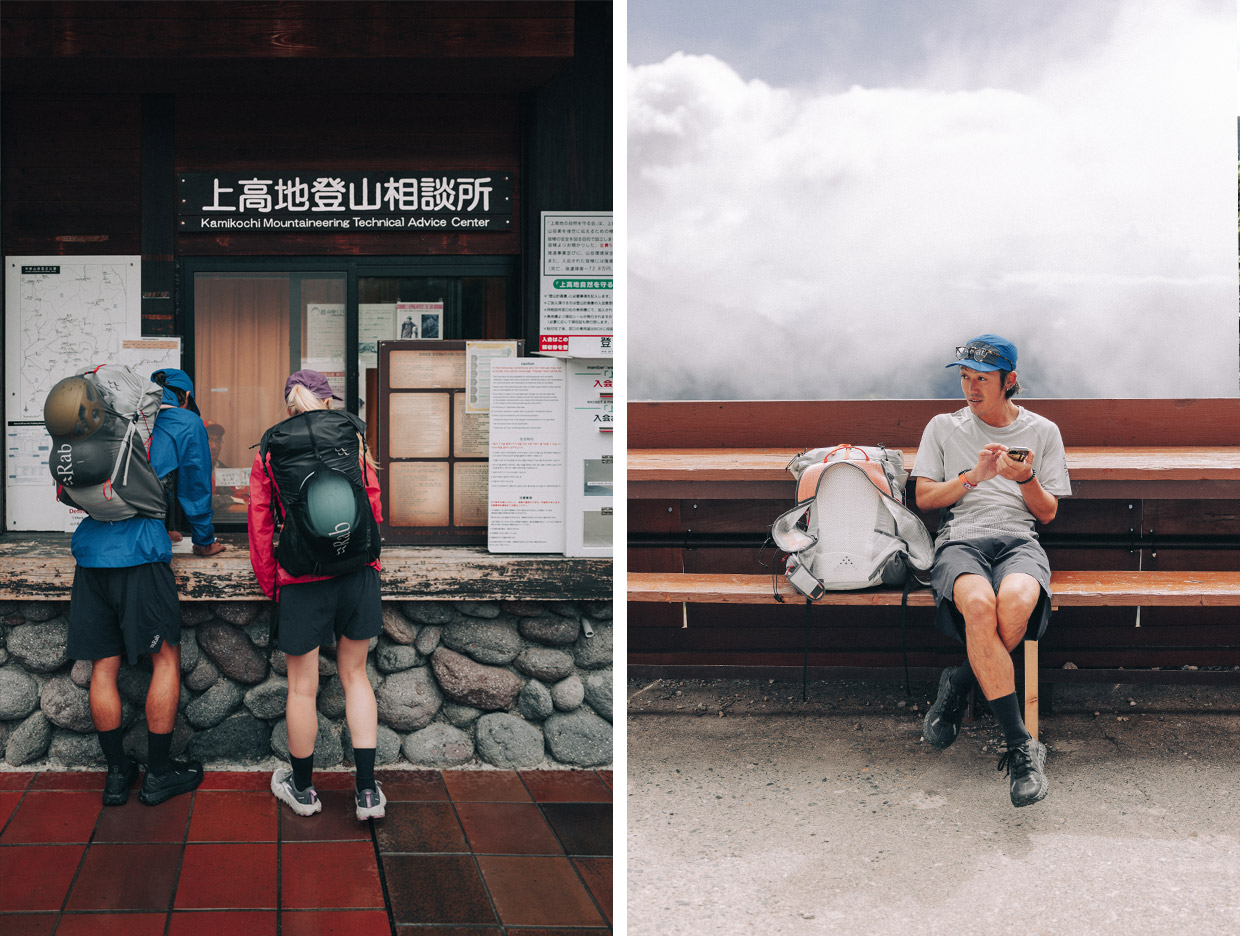
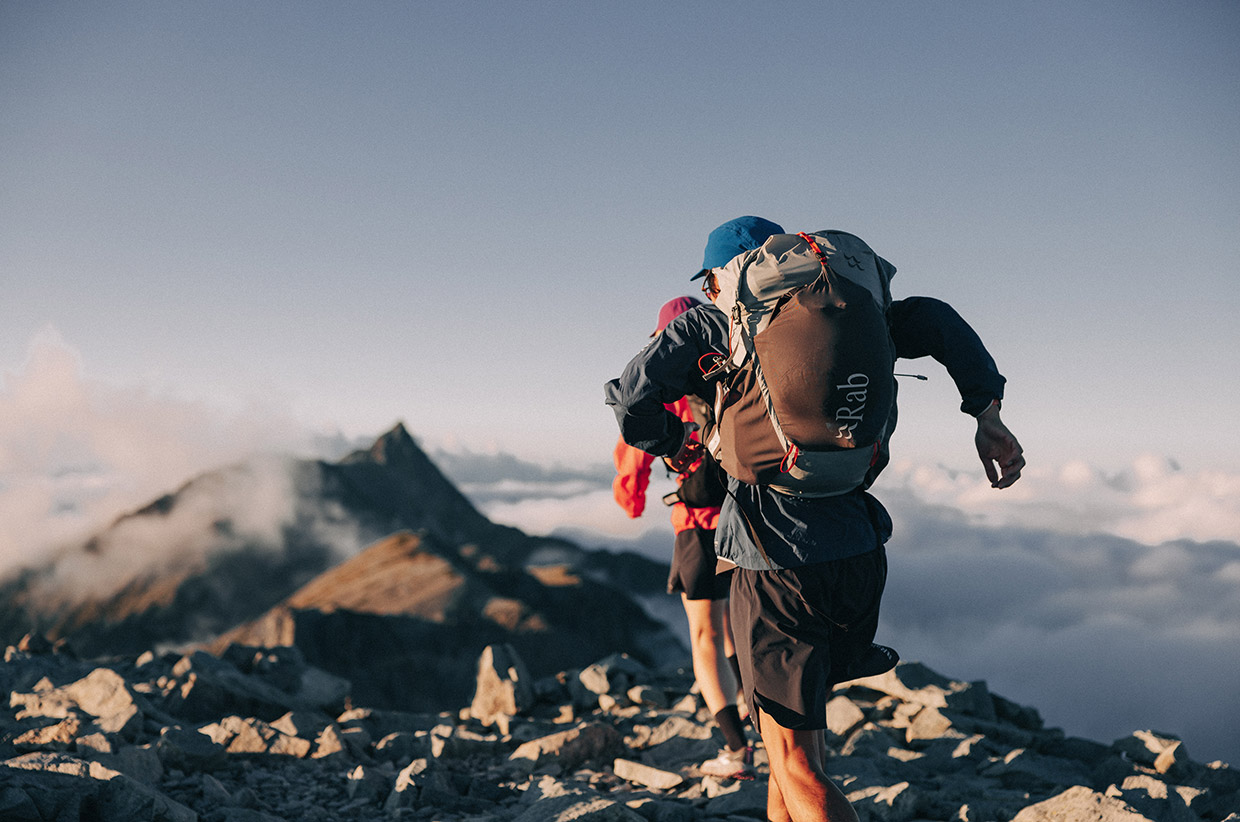
Across 60km and 3,800m of ascent, the team ran, filmed, and photographed – but for Jake, the true goal was cultural exchange, and to capture the joy of sharing a mountain journey.
‘I wanted to learn about Japanese mountain traditions through the athletes we were travelling with and experience the hut culture along the way,’ Jake explained. ‘The Japanese Alps have a great network of mountain huts. It’s a playground for fastpacking.’
Having found that racing in mountain trail and sky races took the fun out of the sport, Jake is now a keen runner ‘just for the love of running’. The narrow ridgelines and technical mountain trails would be the perfect match for his skills, and the FKT would offer each of them an opportunity to embrace their competitive streak.
The Kamikochi valley sits in the Hida Mountains in the Northern Japanese Alps. The team would start their trip from the car-free Kamikochi town (‘the Chamonix of Japan’) which serves as a gateway for hikers and nature lovers exploring the Chubu-Sangaku National Park.
‘The Daikiretto Ridge and the loop that we did is infamous for being this quite tricky scramble,’ said Jake. ‘If you look at it on the map, it’s a beautiful circular route that follows the ridge between two of the highest mountains in Japan – that was what really drew me to it.’
The Daikiretto is a dramatic and exposed section of the ridge connecting Mt. Yarigatake and Mt. Hotaka-dake via a steep, spine-like traverse.
‘It’s not quite the Crib Goch of Japan, I think it’s more technical, but it has that level of infamy.’ With fixed ladders and chains to assist your progress, demanding downclimbing, and sheer 1,000m drops on either side, it’s a route that requires focus and a head for heights.
The team had only five days in Japan to complete the circuit and attempt the VK on Mt Yake-dake. By coincidence, the trip coincided with the Japanese autumn festival, a national holiday that made hut bookings almost impossible. The scheduling mistake became a blessing: their rest day coincided with torrential rain, while their high ridge day opened clear and bright.
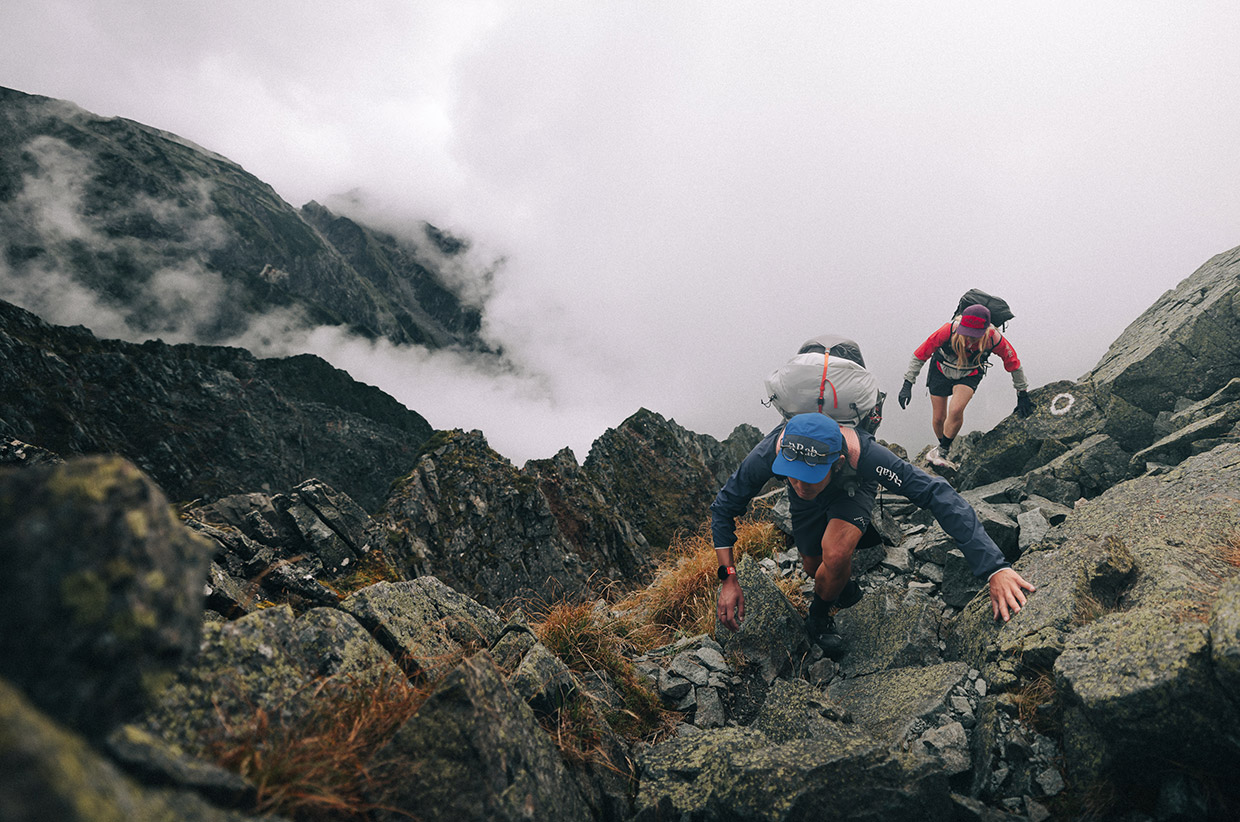

As they made their way around the circuit, Yusuke told them about Banryu, the monk credited with the first ascent of Yarigatake. His motivations were spiritual rather than athletic, but he believed the paradise at the top of the mountain should be accessible to others. He began the construction of the iron chains that still assist climbers today, a project completed just before his death in 1840.
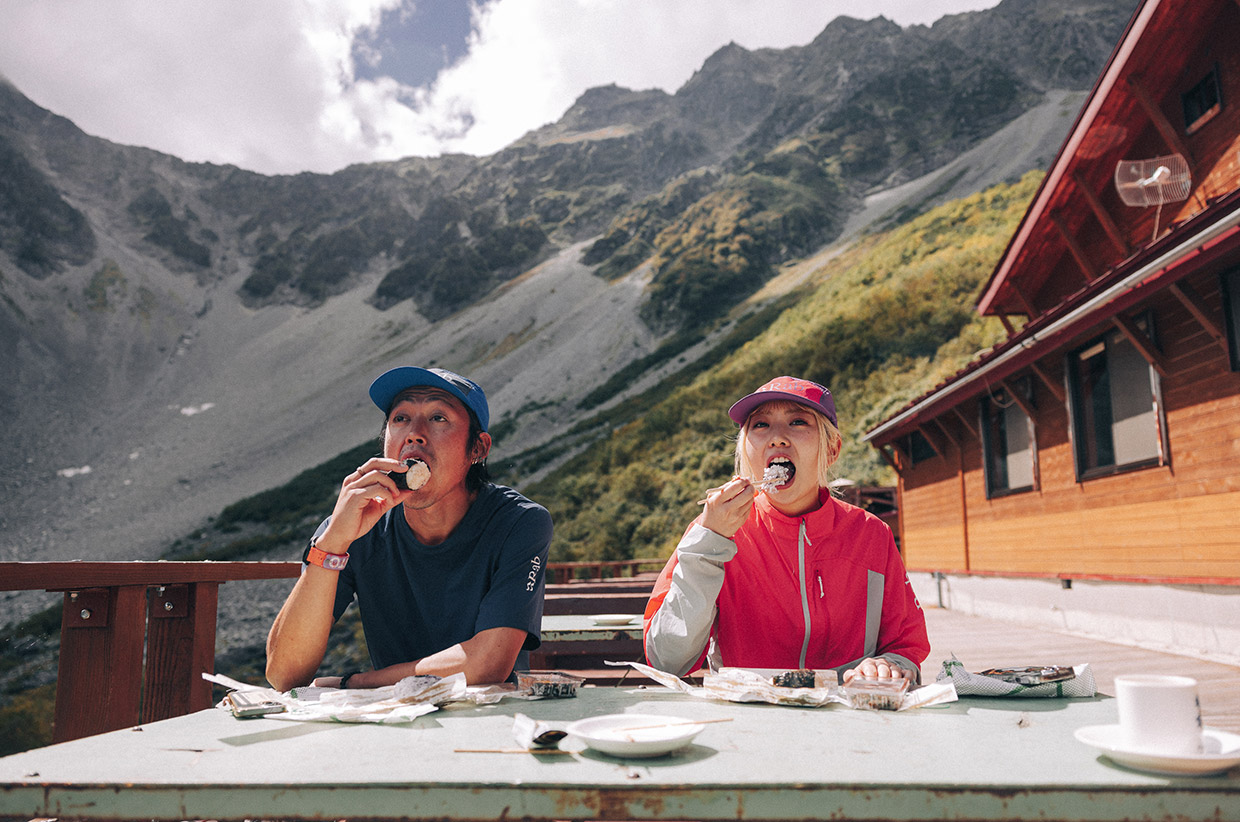
After long days on the trail, the mountain huts became welcome refuges. Sleeping arrangements were simple – futons on wooden platform bunks, not unlike European alpine huts – but what really stood out was the food.
For Jake it was a revelation. ‘Genuinely incredible food. Not even considering the fact that you’re 3,000 metres up.’ Unlike the repetitive, carb-heavy meals typical of French, Swiss and Italian huts, the Japanese served beautifully balanced traditional fare: miso soup, unlimited rice, an array of pickles, and small plates of vegetables, fried fish, or meat.
‘It was one of the highlights of the trip. Food always tastes good when you’ve been out in the mountains all day, but in Japan it felt more like a ritual – sitting down, sharing a meal each night.’
Despite the language barrier, the shared experience of sitting down together after big mountain days created a quiet sense of connection.
The high point of the trip was the summit of Mt. Yarigatake (3,180m) on day three. That evening, they spent the night at the Kitahotaka hut, where the views were spectacular.
‘You could see the route you’ve just come along, and there’s this perfect, impossible-looking pinnacle in the background. It was covered in cloud as the sun was setting, and then it all shifted to reveal the trails.’
The team stood outside, enjoying the moment alongside other hut guests. For Jake, it was exactly the kind of shared mountain joy he’d hoped to capture – although the photographer in him still rushed to grab the shot.


After four days on the trail in a mix of conditions, running, exploring and setting up shots, it was time for the FKT attempt. The VK route up Mt Yake-dake (‘the burning mountain’) leads from thickly forested trails to loose rocky paths, where ladders assist with an airy scramble to the rim of the summit crater.
The plan was simple: the whole team (except for Matt) would set off in stages, with Yusuke leaving last, so they would all summit close together. Matt filmed with his drone at the top, Jake raced to beat them with his camera, and Aoi and Yusuke shattered the existing FKT record – Aoi summiting half an hour faster than she expected.
‘Obviously, we’d just done four big mountain days and so they were both pretty ruined at the top,’ Jake remembered.
As they descended, Jake reflected on whether he’d achieved his goals for the trip.
‘Sharing struggles, climbing up cliffs, feeling tired and elated together – it’s a universal language. I felt very close to everyone by the end, just through the shared experience of this amazing journey.’
Somewhere between steep climbs and late dinners, the language barrier dissolved, replaced by a shared joy for the outdoors. ‘There’s a place for extreme distance and high summits,’ Jake said, ‘but here it was about genuine love and stoke for being outside.’
Photography and production by Jake Baggaley // @jakebaggaley.photographer
With Matt Green // SFM and Sam Hill //
Produced in partnership with Rab // @rab.equipment.uk and Pertex // @pertexfabric