On Hope Peak
Gear Field Journal Explore
A Symbol of Possibility with Ed Jackson
Written by Daniel Neilson // Photography by Toby Roney
Produced in Partnership with Berghaus
In Kyrgyzstan’s Tien Shan mountains, former rugby player Ed Jackson stood on an unclimbed summit. For Ed, once paralysed from the neck down, it symbolised resilience and possibility. It was also a significant moment in his work with Berghaus to redefine who adventure is for through its Extrem range and Adapts programmes.
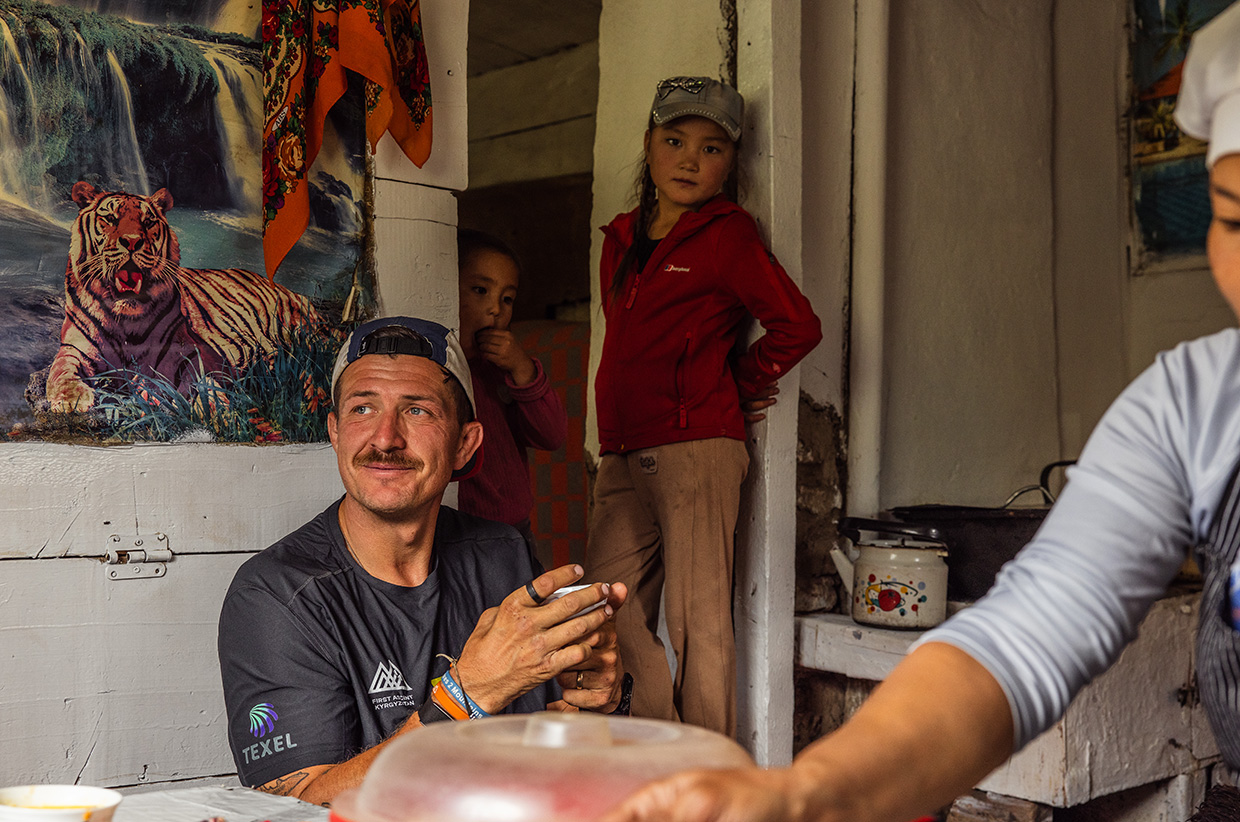
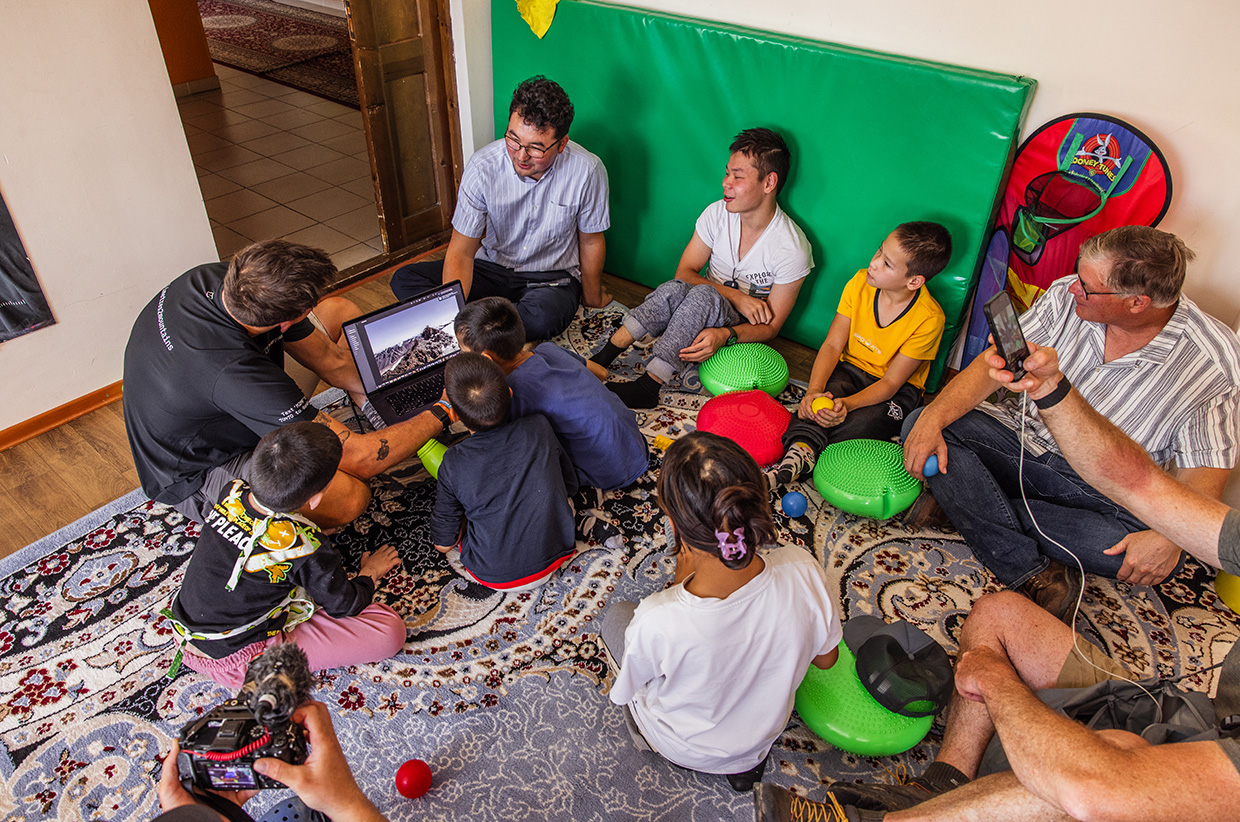
In the foothills of the Tien Shan, Kyrgyzstan, a group of children gathered around a laptop. On the screen was a drone shot of a group of climbers inching their way up an unnamed ridge of ice and granite. Their eyes widened as glaciers and peaks filled the screen. When the footage ended, Ed Jackson asked if they would name the mountain.
For a few moments, no-one spoke, still staring at the screen. Biel, one of the older children in the Belovodsk Orphanage for children with special needs, then shyly uttered a word in Russian: ‘Nadeytsya.’
Kyle from Crosslink Development International (CDI) translated for Biel. ‘Hope,’ he said. ‘It means hope.’ He asked the other children if they agreed. Nods and smiles filled the room. It was decided: Hope Peak.
Ed’s voice quivers a little as he relays this story to Sidetracked. ‘It was perfect. We’d already talked about calling the glacier the Hand of Hope, which has five fingers running from it. So now we’ve got Hope Peak above the Hand of Hope Glacier. It just felt right.’
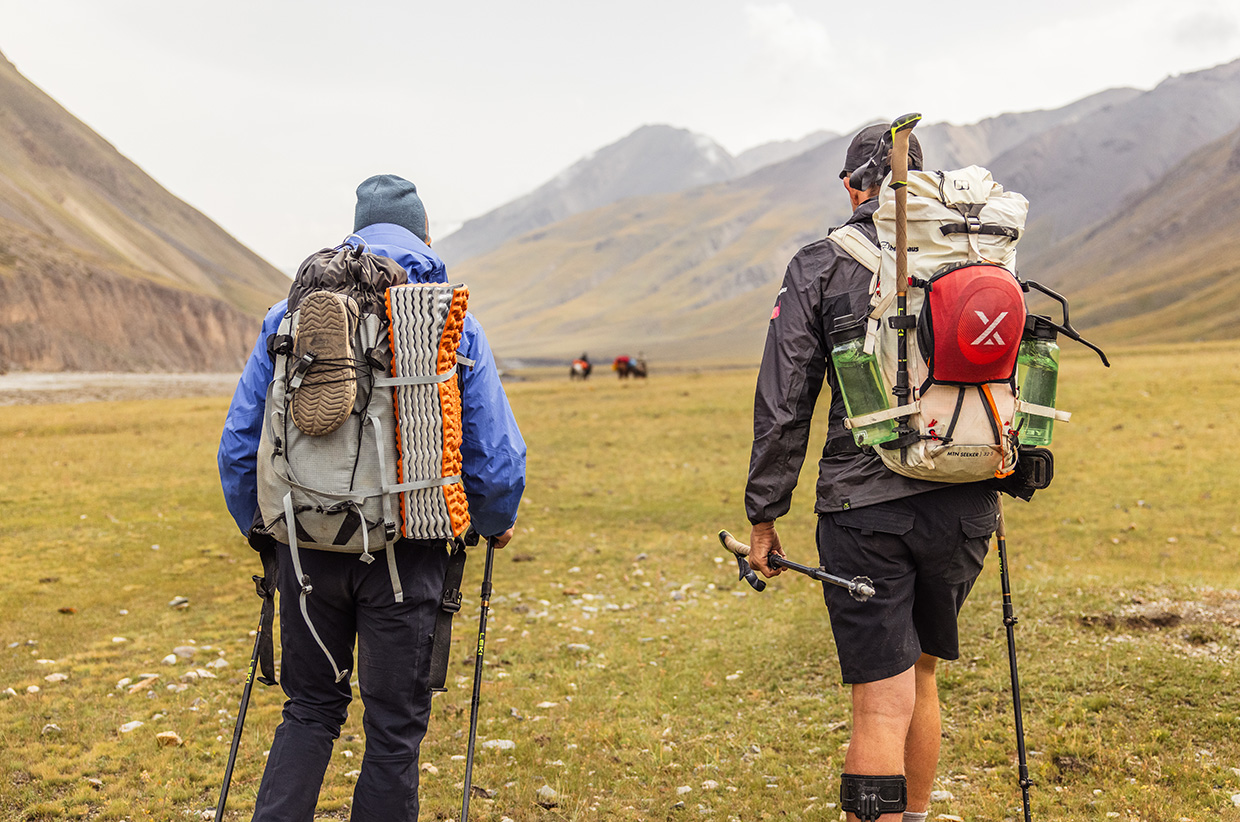
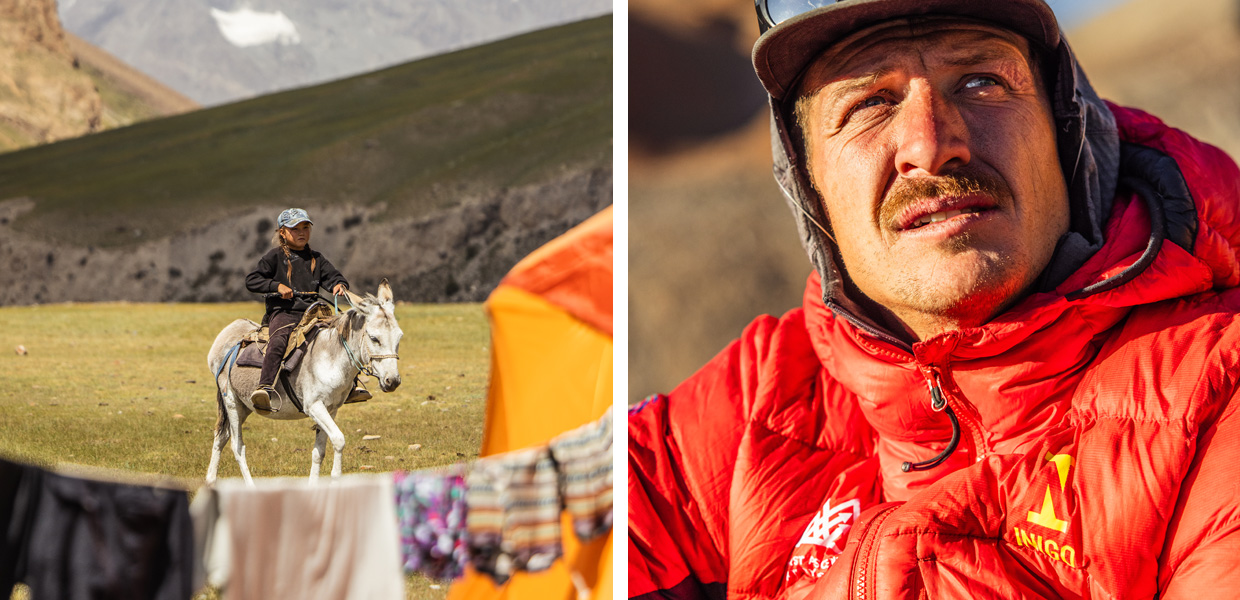
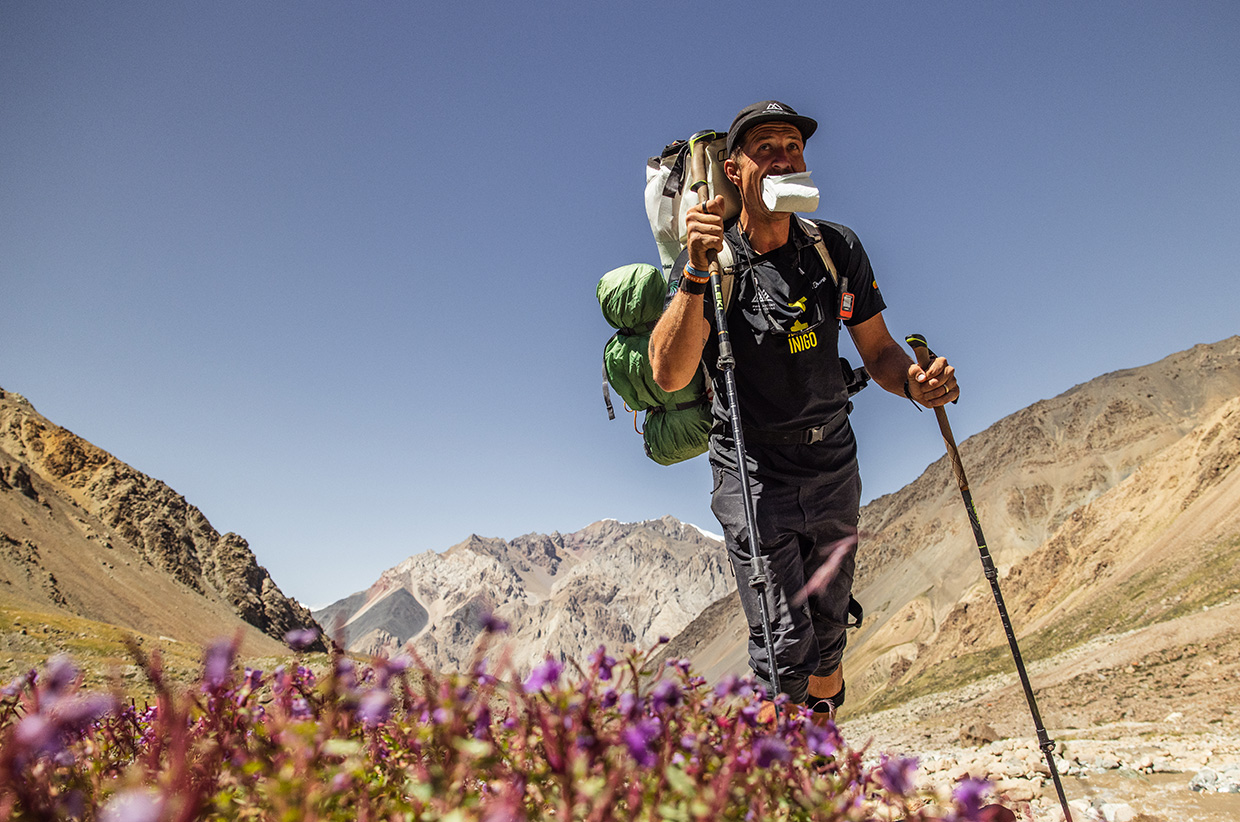
A week earlier, Ed Jackson couldn’t really explain the emotions that flowed through his body as he stood on the then-unnamed peak. ‘I’ve stood on summits before and felt elation, that outpouring of celebration, but this time I just crumpled over and sobbed on a rock. Gratitude surged through me with such force that it left me shaking.
‘Ade [mountain guide Adrian Nelhams] followed, tears streaming down his face as he hauled himself up beside me. He pointed skywards. A golden eagle carved slow arcs above us, wings spread wide, as if blessing the moment.
‘It was a release, a pressure that had been building for a while. The fact that two of our beneficiaries from Millimetres 2 Mountains were there – Will Montrieff, who’s blind, and Hannah Morgan, who can’t use her leg – changed everything.’
And then, it was their work with CDI’s Children at Risk programme and the Belovodsk Orphanage. ‘The relief I felt on the summit was tied to knowing we’d get to share that moment with them, too. That moment with the kids was beautiful, a reminder that this wasn’t just about me climbing a mountain.’
Ed Jackson was a professional rugby player when, in April 2017, he broke his neck in an accident while diving into a pool. It left him completely paralysed from the neck down, and doctors warned him he’d never walk again. Less than a year later, he’d climbed Snowdon. Ed saw hope from the millimetres when he first moved his toe to climbing mountains. With his wife Lois, they founded a charity, Millimetres 2 Mountains Foundation – a support network built on adventure and community, alongside a development programme bolstered by a team of industry-leading experts.
In 2020, Ed climbed Mera Peak in Nepal and was the subject of the documentary The Mountain Within Me. And what now after his expedition in Kyrgyzstan?
In the days that followed the team’s ascent, they stayed in the high valleys, absorbing the stillness. ‘We’d achieved something I never imagined I could, whether I had a disability or not,’ he said. ‘I don’t feel that pressure any more, to prove something to myself or anyone else.’

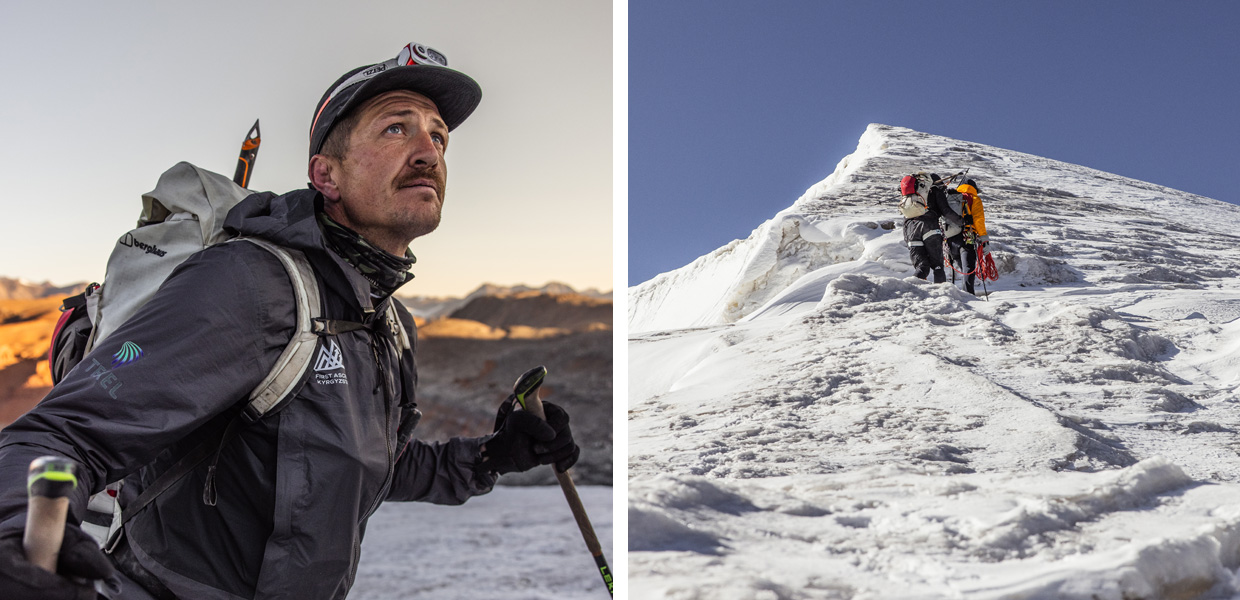
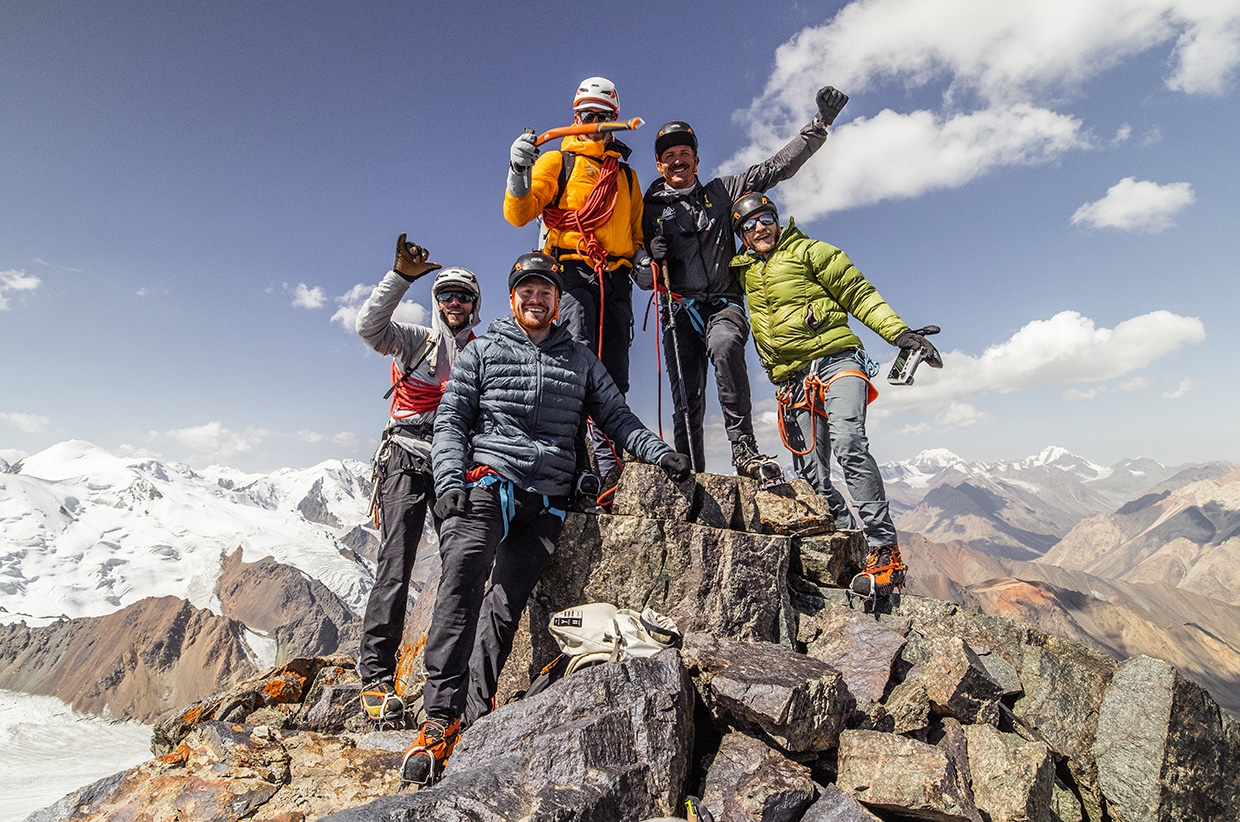
The climb, part of an expedition with his charity Millimetres 2 Mountains, brought together people with various physical challenges: climbers like Hannah Morgan, who lives with nerve damage in one leg and is a para climbing world champion; and Will Montrieff, who is completely blind.
‘This one, more than ever, was a chance to put something down in the history books for the disabled community,’ Ed said. ‘It wasn’t just a personal challenge.’
The project also marked the culmination of another journey built over years of collaboration with Berghaus through their Extrem and Adapts programmes.
‘After my accident, I wrote to loads of brands just looking for some kit for a fundraising trip to Nepal,’ Ed says. ‘Only a couple replied, then I got an email from Kev McFadyen, the CEO of Berghaus at the time, saying, “This sounds great, I’d love to hear more.” There was nothing I could offer them – no profile, no sponsorship angle – just this genuine connection.’</p.
Through that partnership, Berghaus began working closely with Ed to adapt technical gear for his specific needs. ‘My spinal cord injury means poor movement down the left side from hand to foot, lack of sensation on the right, and all the underlying health issues that go with it – temperature regulation, bladder, bowel, all amplified in the mountains. Eventually, it reached the point where the kit could make a real difference.’
Small changes made significant differences: a knee loop to manipulate his left leg through deep snow; extra ventilation to dump heat when his body can’t regulate temperature; full-access zips to help with catheter access or medical equipment.
‘I realised that if an adaptation helped me, it could help other people too. I was getting messages from people saying, “That zip system would help with my insulin injections,” or “That design would make a difference for me.” It opened my eyes.’
Those individual solutions became the foundation of the Berghaus Adapts initiative. ‘We started adapting kit for others through our charity, and now we’ve opened it to the public. Right now, many people are adapting their own kit or staying indoors because it’s too much effort. That’s what we want to change.’
In Sunderland, Berghaus senior designer Kate Ablett and her team were already deep in the details of Extrem – the brand’s highest-performance line, which Ed and other athletes test and use on their expeditions.
‘We’ve been playing in this space for decades,’ Kate says. ‘Extrem is about precision performance, durability, protection, and a product that’s built to excel in the most challenging environments. Our users are pushing boundaries physically and mentally in the harshest conditions, so the kit has to stand up to that. It’s about continually improving the experience, pushing the bar a little higher each time.’
Every garment goes through a rhythm of experimentation, athlete feedback, and revision. ‘We’ve got people such as Leo Houlding and Mick Fowler testing prototypes in the field, mountain guides wearing them daily.’
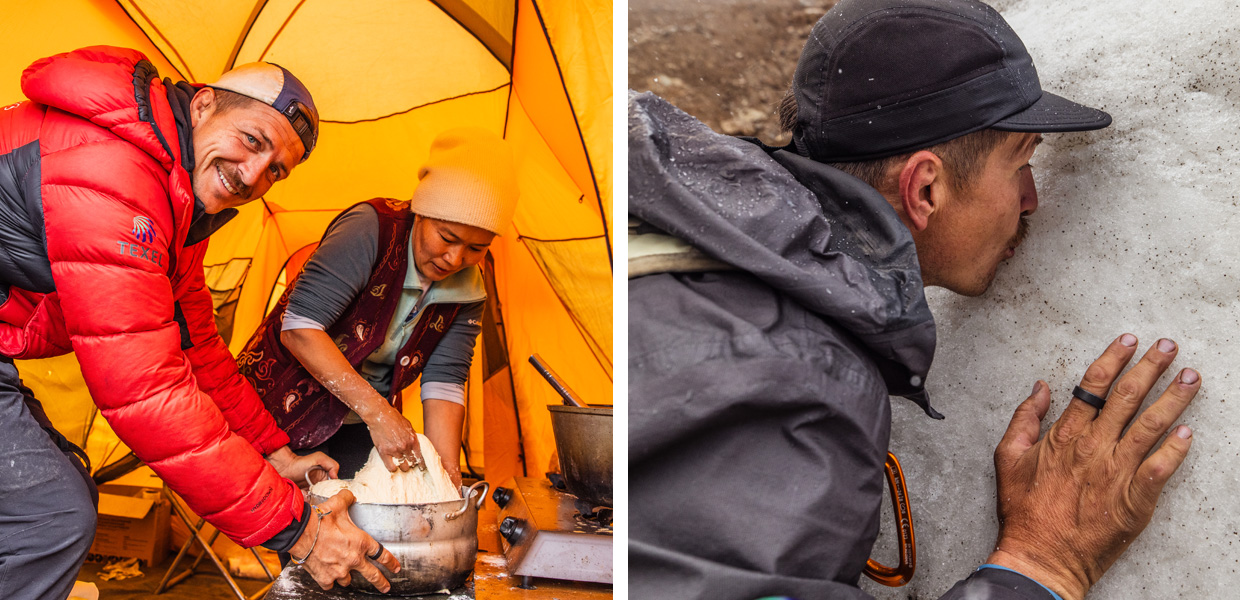
The result is gear such as the MTN Arete Ultra Down Hoody, a jacket built for alpine precision: body-mapped baffles for heat management, Reflect technology that increases warmth by 10 per cent, and Liquid Crystal fabric in high-abrasion areas for durability.
‘Ultimately, with this kind of kit, when it’s not noticed, that’s when we’ve done our job,’ Kate said.
Part of the development process is an in-house sample room where designers can play with new hood shapes, new fabrics, new pocket constructions. It’s also where the Berghaus Adapts programme is primarily developed.
‘Ed has very specific needs,’ Kate explained. ‘He doesn’t sweat from the chest down, so we added extra vents while keeping the jacket fully waterproof. We built loops into his legwear so he can lift his leg, and reinforced high-wear areas for comfort and longevity. They’re complicated products to make in the first place, so adapting them while maintaining performance is a real achievement.’
And what began as one-off modification for an individual athlete has become a broader initiative. Berghaus invited applications from people with various conditions, from spinal injuries to chronic illness, to co-develop and test adapted gear.
‘We talk a lot about encouraging people into the hills,’ Kate added. ‘This is living that mantra. Ed’s the leading figure on it, but we’ve opened it up to a wider group. It’s amazing to see what’s possible.’
Ed believes this is only the beginning and something that goes far beyond the clothing. ‘Seeing a big brand care about accessibility sends a powerful message. Even if someone doesn’t use the gear, they might see someone like them outside and think: Maybe I could do that too.’
Learn more about Ed and Lois’s charity at millimetres2mountains.org // @edjackson8
Discover more about Berghaus Adapts at berghaus.com/adapts.list
See the new Berghaus Extrem products at berghaus.com/extrem
Written by Daniel Neilson // @danieljneilson
Photography by Toby Roney // @tobyroney