Return to the Lost Valley
Gear Field Journal Explore Gear & Guides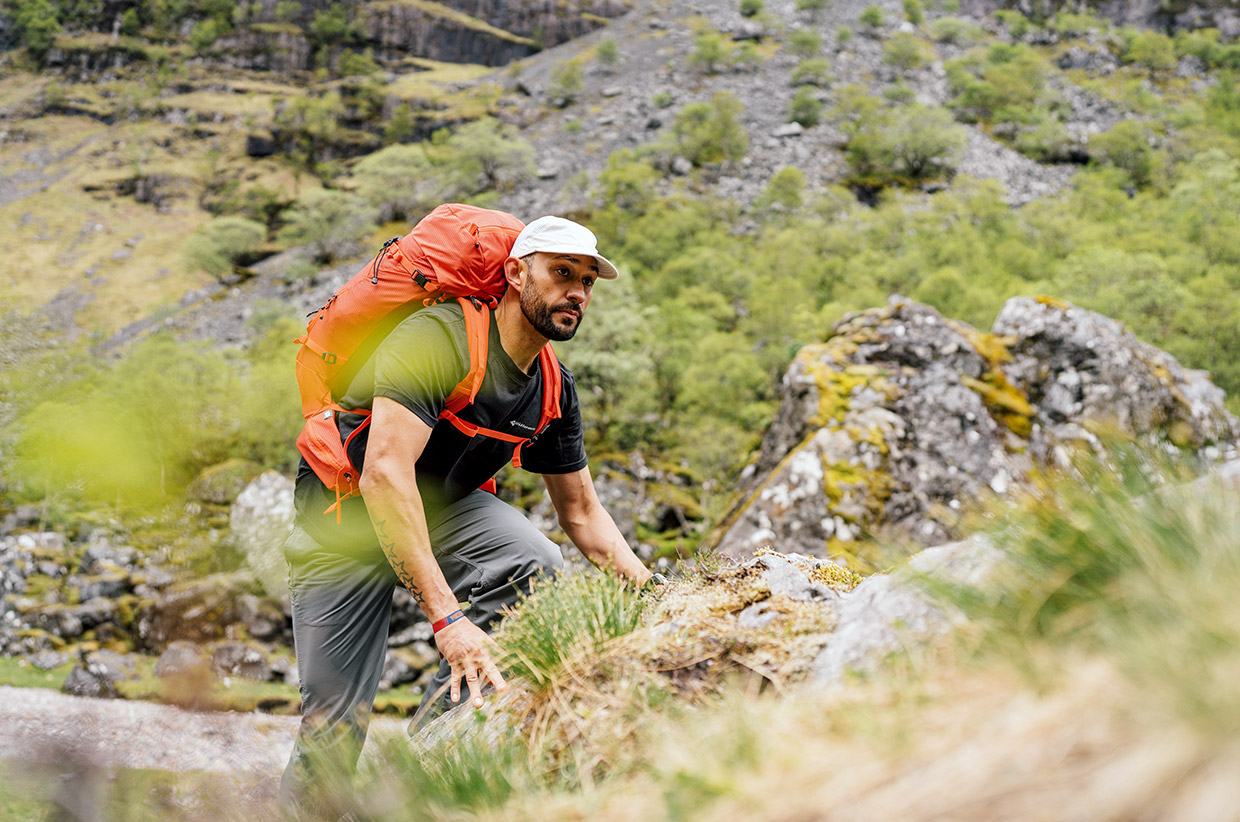
Stories Behind the Gear: deuter
Written by Daniel Neilson // Photography by John Summerton
Produced in partnership with deuter
Buachaille Etive Mòr is a long way from prison. Any prison. By distance and psychologically, they are opposed. Climbing mountains, after all, is a true expression of freedom, and prison, well, is the opposite. That Adam Raja reached the summit of the Buachaille at all could be seen as a miracle, but really, it’s a story of resilience, of belonging, of that obsession only true mountain lovers understand, as well as life in 21st-century Glasgow.
Ten years ago, almost to the day of our trip to Glen Coe, Adam Raja was idly flicking through Instagram. He was in a lecture theatre, not being a very good university student. His eyes rested on a mountain: Buachaille Etive Mòr in Glencoe. ‘I didn’t know Scotland had mountains,’ Adam told Sidetracked. Perhaps surprisingly, given that Adam had spent his entire life in Cumbernauld, Glasgow, just two hours from the Buachaille.
‘The first trip, I just went and looked at the Buachaille. I was like, “I want to climb that”.’ He went home, looked at a route on Walkhighlands, and went back next weekend wearing a pair of cheap walking boots and tracksuit bottoms. He started heading along a path and took a left fork. At some point, it got quite steep, and then there was snow, and then he saw people ahead of him. They were wearing helmets, crampons, and carrying ice axes. These guys are a bit overdressed, he thought to himself, and then immediately fell 10m back down.
Adam now knows they were winter mountaineers, and he had unthinkingly followed them along Curved Ridge, one of the best mountaineering days out in Britain – especially in snow-covered March. Suffering no more than a sprained ankle, he hobbled back down to the car park and booked onto a winter mountaineering course the following weekend. ‘I just became obsessed. I spent every spare minute in the Highlands.’
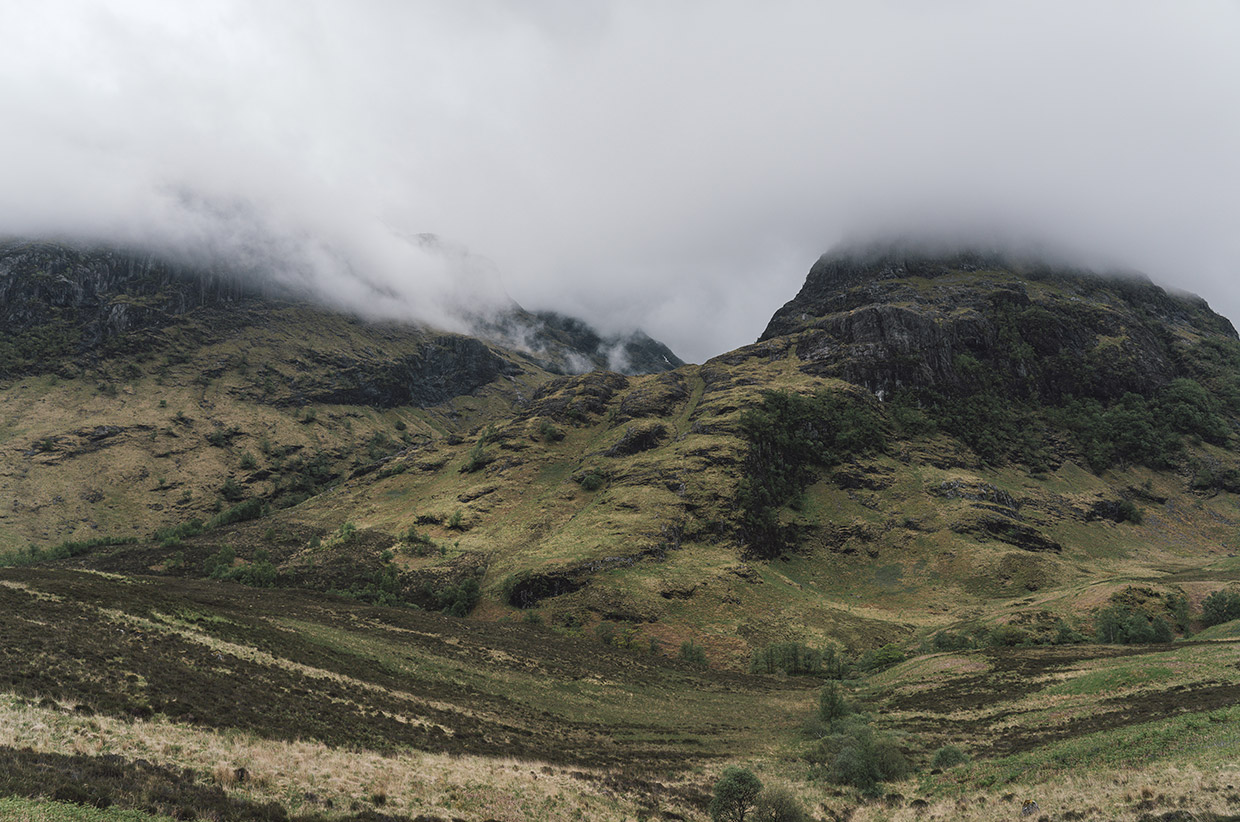
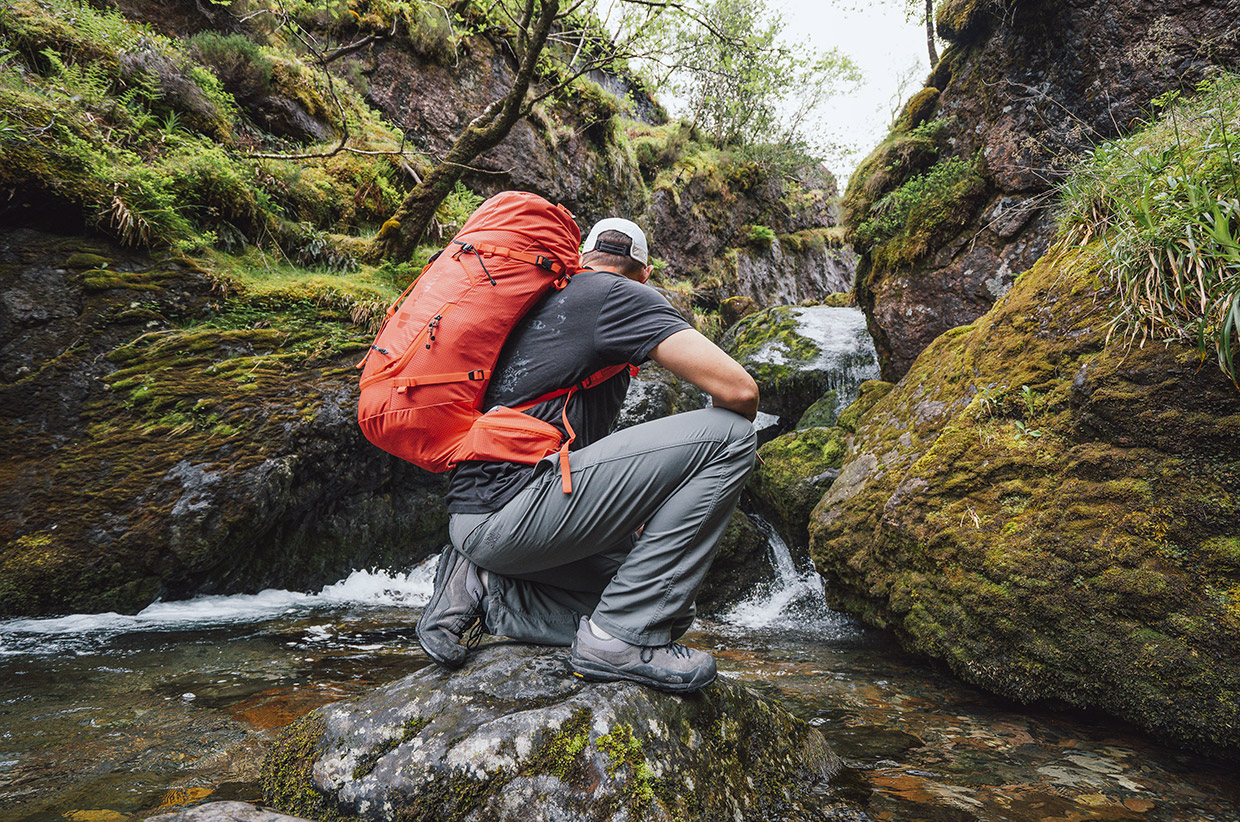
Returning to Glen Coe is always an emotional experience for him. ‘I always feel super emotional and appreciative when I go to Glen Coe, even just driving down that road.
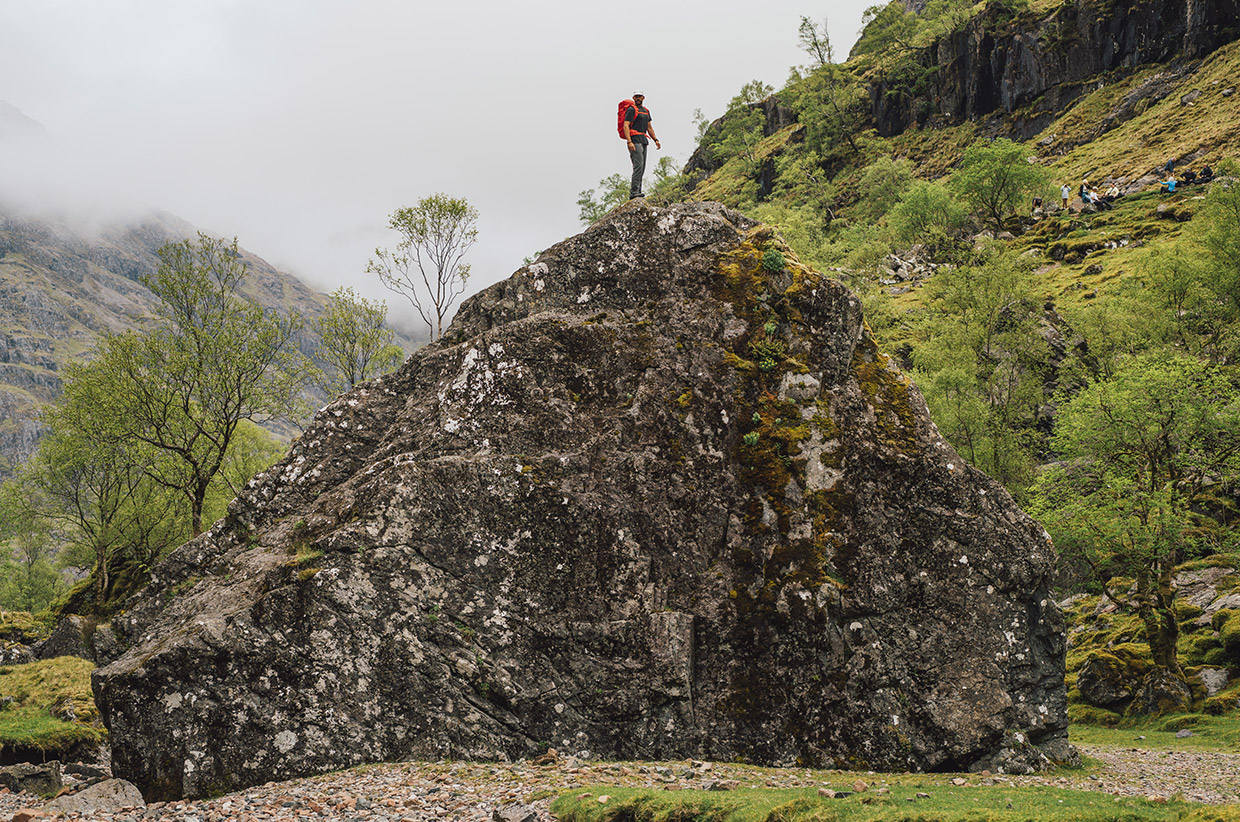
I’m in Glen Coe a lot, but it was just that particular route, up to Coire Gabhail, the Lost Valley, I hadn’t been up for a while.’ It’s a different route to the Curved Ridge scramble he’d first taken up the Buachaille all those years ago, but no less special to him.
For Adam, the first visit to Glen Coe was one of those rare, single moments when life takes a completely different trajectory. Adam was born to a white Scottish mother and a Pakistani father. ‘Growing up, the white kids told me I wasn’t Scottish, so I never felt a connection to Scotland. I always wanted to leave. My dad was an absent alcoholic so I never had the Pakistani community aspect. I didn’t feel any heritage or connection to that heritage but was always told I was different.’
Adam grew up in Cumbernauld just outside Glasgow, and fell into the pervasive gang culture. It was just part of the lifestyle in that area: pointless postcode gangs, and getting into trouble and a lot of fights. ‘The gangs put you in the vicinity of these older criminals, drug dealers, so I ended up being essentially groomed at 13 or 14 and given drugs to sell. In hindsight I view it as a mistake, but at the time it felt like an opportunity because it was so normalised. It was a way to put money in my pocket and not ask my single mum to buy me things she couldn’t.’
Eventually, the police caught up with Adam. He was sentences to three years; an escape, given that he initially faced a potential 10 years. ‘My life would have been very different had that played out,’ Adam says with understatement.
As we chat walking up Glen Coe’s highest peak, Bidean nam Bian, on a claggy May morning years later, the ‘what if’ questions hang in the air. What if he’d got longer? What if he’d never discovered these mountains, idly scrolling Instagram? Prospects on the other side of prison are even bleaker. There are fewer job opportunities and the pull of the gangs is strong, which is why so many people return to crime. But Adam, supported by his mother and grandmother (‘I was terrified of her’), managed to get a place at university in Scotland where tuition is free. And it is there we found him wondering at a photograph of a pleasingly pointy mountain in the Highlands.
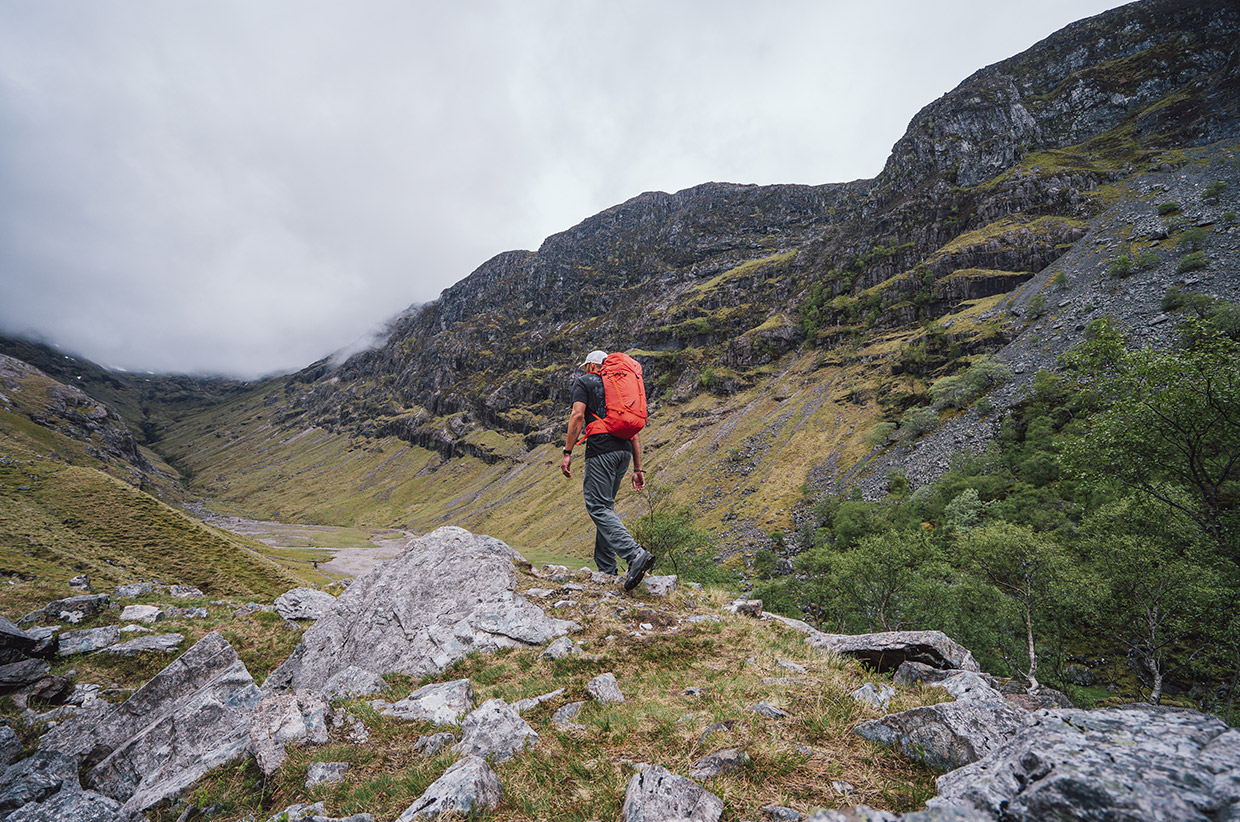
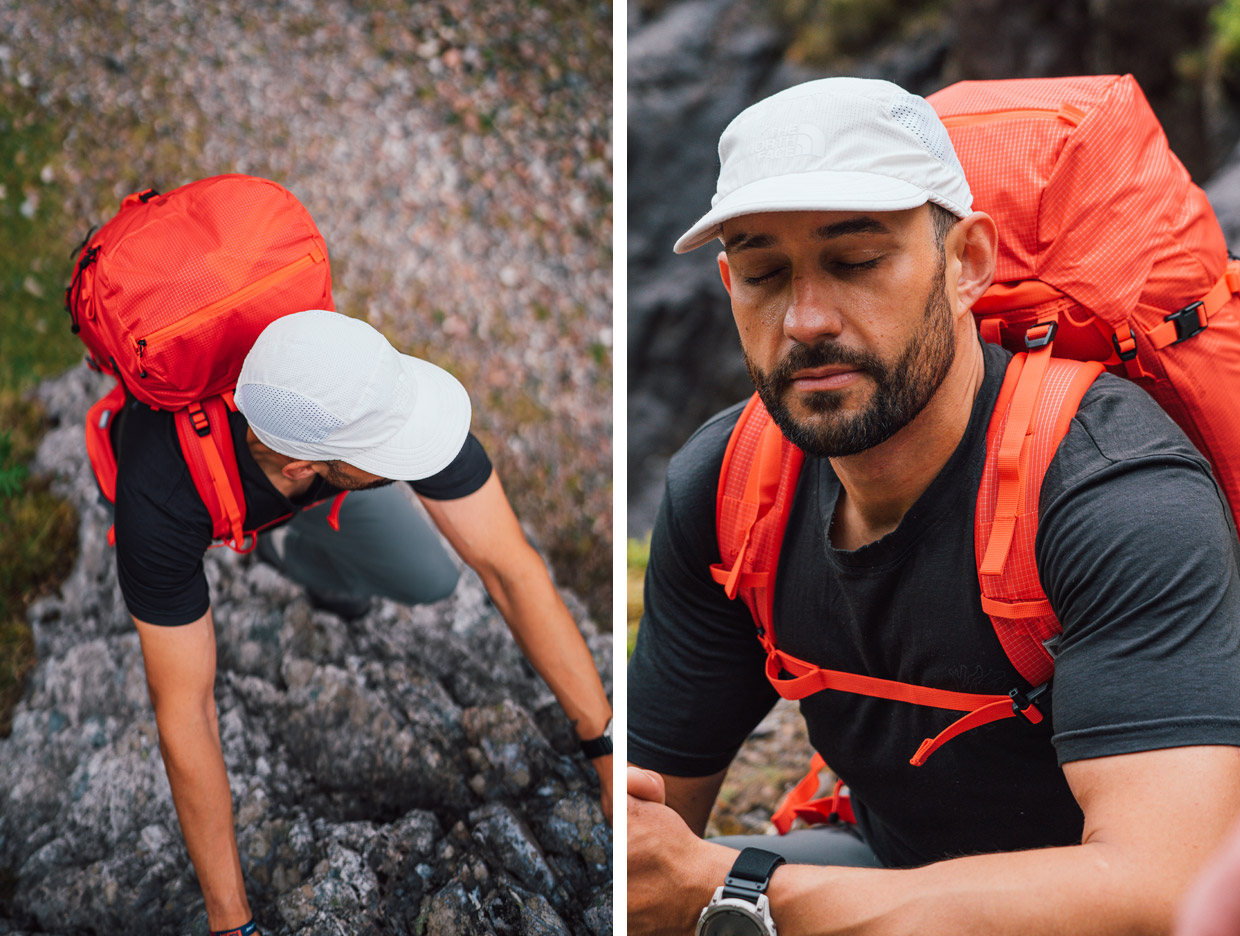
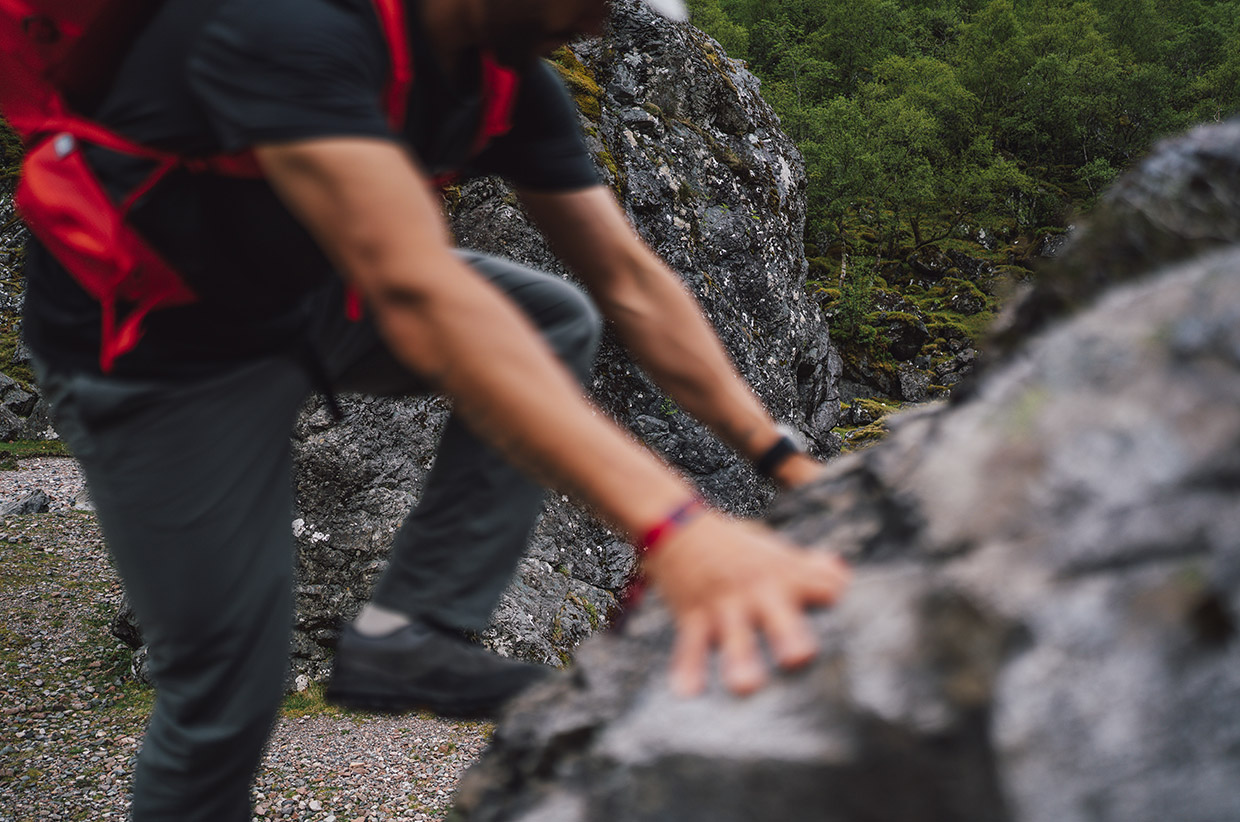
Now, as we stand looking down into the Lost Valley, and beyond the V of the valley mouth to Glen Coe where Adam first came 10 years ago, the emotion is tangible. On the first time up here, he said: ‘It just felt quite liberating. There were some tears at sunrise and sunset, and I just never looked back.’
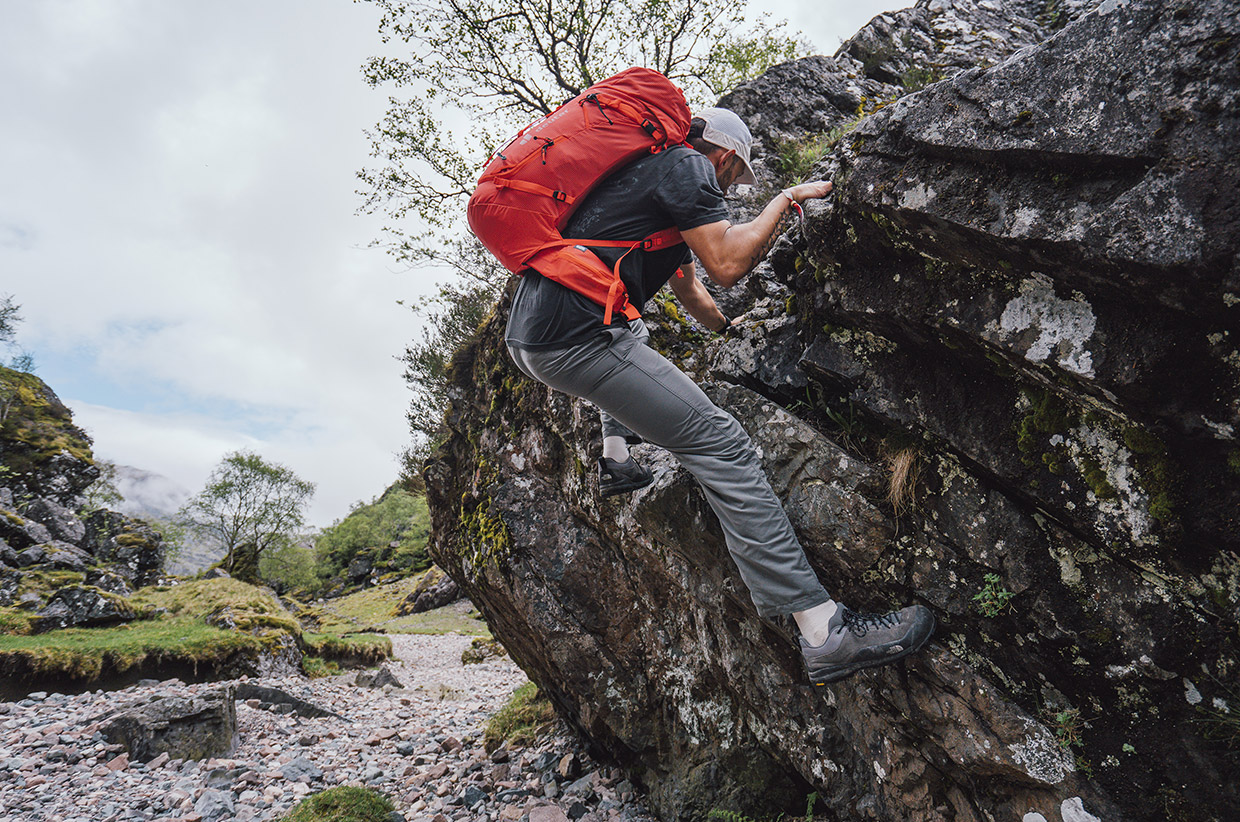
The weather was also similar to the first time Adam visited. Low clouds, and a bit moody. We spent a while scrambling on the rocks, chatting and reminiscing. We remind ourselves of the history of the place. A tattoo on Adam’s arm reads Campbell: his maternal grandfather’s surname, and one that is on the wrong side of history of the Glen Coe Massacre. In 1692 the Campbells were involved in wiping out 38 of the local MacDonald clan, including women and children.
Under his outdoor watch, he shows me another tattoo that reads ‘Taj’, his old nickname. ‘I was a soft, shy, mixed-ethnicity, vulnerable kid that ended up being this guy with a reputation,’ he says. ‘That’s my alter-ego, and it’s only now my old friends see that as a facade. In these mountains, I didn’t have the pressures that I had in Cumbernauld and Glasgow; I didn’t have to act a certain way. I started tapping into who I am today. It was liberating.
‘I get butterflies any time I come here. It’s my favourite place in the world.’
DEUTER GUIDE 34+6
Price: £175
Website: deuter.com
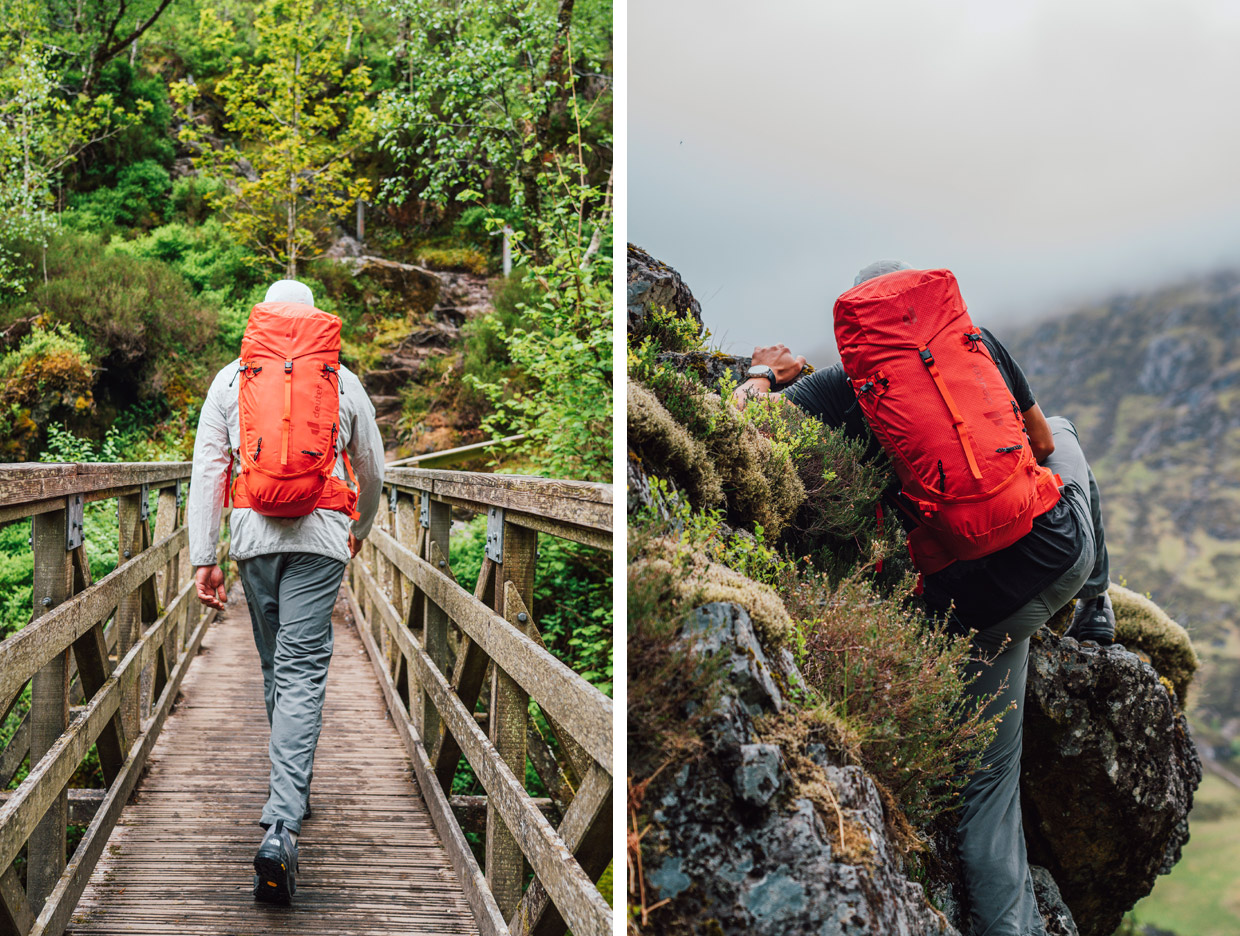
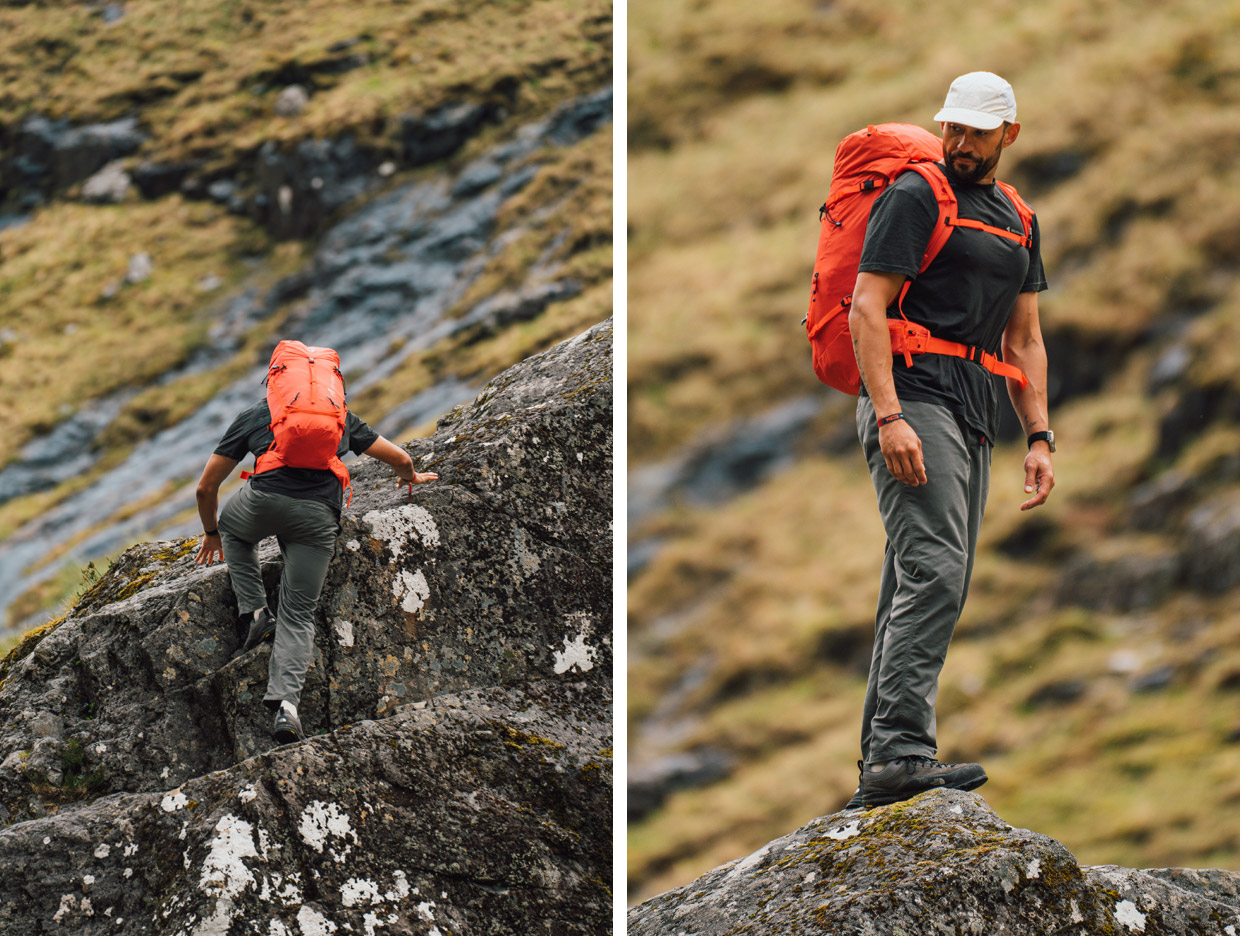
As far as any backpack can have legendary status, the deuter Guide backpack probably does. The series is one of the most respected mountaineering packs on the market. The name gives away its provenance; it was developed by deuter in 1998 with the Association of German Mountain and Ski Guides to work with how people move in the mountains. And the ergonomics remain almost flawless with this iteration. Its renowned durability remains unchanged; this is a seriously sturdy piece of equipment.
deuter was founded in 1898, and today is the biggest manufacturer of backpacks in Europe, which is to say they know what they’re doing. deuter were also one of the first manufacturers to design backpacks specifically for women working in the Alps. There have been dozens of iterations, of course, since 1998, but this deuter Guide 34+6 is recognisable from the first one with its streamlined silhouette, top-loading design, removable lid, and features tailored for roped mountaineering and walking over glaciers. It is pleasingly minimalist, with options for attaching helmets, ropes, walking poles, or ice axes. Like the lid, the hip fins are also removable. We particularly loved the easy front access and the fact you can adjust the backplate. These days it’s also bluesign certified and made from 100 per cent recycled materials.
The deuter Guide remains a classic for good reasons. That’s why you’ll see so many in the mountains of Scotland and across the Alps.
For more information visit deuter.com and find them on Instagram @deuter
Written by Daniel Neilson // @danieljneilson
Photography by John Summerton // @johnsummerton
Produced in partnership with deuter // @deuter