The Human Element in Exploration
From The Field Survive Photograph by Martin Hartley
Dr Nathan Smith is a Fellow of the Royal Geographical Society and specialises in studying psychological extremes, particularly in polar environments and other high-risk settings. Writing for Sidetracked, he shares some of his key learnings
Those in the know will recognise the title of this article as a namecheck to Sir Vivian Fuchs’ reflections following the successful completion of the Commonwealth Trans-Antarctic Expedition. Fuchs was not the first, nor the last, to muse upon the human element of exploratory and adventurous travel. However, his graceful writing and astute observations continue to strike a chord.
Reading his essay, it reminds me of the first time I cast my eyes over the article entitled Homo Invictus: An indomitable species. Interspersed with excerpts from the William Ernest Henley poem Invictus, that paper shone a light on the unwavering and resilient nature of the human species. That paper propelled me on a path of intellectual exploration that continues to this day, a path I continue to follow in pursuit of answers to questions. Not only why (which resulted in the now-famous pithy response from George Mallory), but who are the people choosing to venture into unusual, adventurous, and extreme settings, and how do those very same people cope with the vicissitudes of these demanding, challenging and hostile environments.
I remember the polar endurance athlete Ben Saunders once saying that he was more a doer than an observer of things. My own experience is almost the opposite. I am, by nature, an observer, thinker and analyst. Perhaps it is these skills that make me well-suited to an academic life, behind a desk and deep in thought, rather than in those wild and lonely places. However, over the past few years, these skills have created innumerable opportunities to study the psychological aspects of people in extreme settings.
With an eye on modern thinking and an evolving application of psychological science, my colleagues and I have been fortunate enough to study individuals and groups operating in the most incredible array of environments. Amongst many highlights, I have had the pleasure of working with groups in desert, jungle, mountain and polar settings; contributing to European Space Agency studies in Antarctica; and working with military populations, and those involved in extreme medicine and disaster relief.
What have we learnt from these efforts?
Over the past five years, our many projects have looked at all phases of the expedition experience: from understanding personality and motivation, and monitoring performance and health in extremes at one end, to dealing with post-expedition blues and realising a path towards deliverance, personal development and growth at the other.
As a result of these efforts, we as a community are now more familiar with the personal characteristics of people venturing into extremis, and even have an idea of the traits that might be beneficial for functioning under stress. We have started to understand the motives for entering risky environments. These motivations reflect a range of drivers, and move beyond the view that expeditioners and extreme sport athletes are only sensation-seeking adrenaline junkies.

In my own work, I have been interested in the day-to-day experience of people operating in the expedition environment. My interest in the situational experience is stimulated by the reading of Scott, Shackleton and Thesiger’s diaries. Their accounts provide intimate detail of the stresses and strains associated with prolonged deprivation, but also the majesty of the natural world, and the camaraderie that comes with such an intense shared experience.
With the support of amazing people like Shane Winser at the Royal Geographic Society, Mark Evans (leader of the Crossing the Empty Quarter Expedition), and teams like SPEAR17 and Felicity Aston’s Euro-Arabian expedition group, I have been able to collect large quantities of data, providing an unprecedented insight into the psychological dynamics of expedition life. Findings from these studies are starting to tell us about the daily experience of being on expedition; highlighting an overwhelmingly valuable and positive experience, with the occasional nod to difficulties such as physical exhaustion, injury, teamwork challenges, and in some cases severe sleep deprivation.
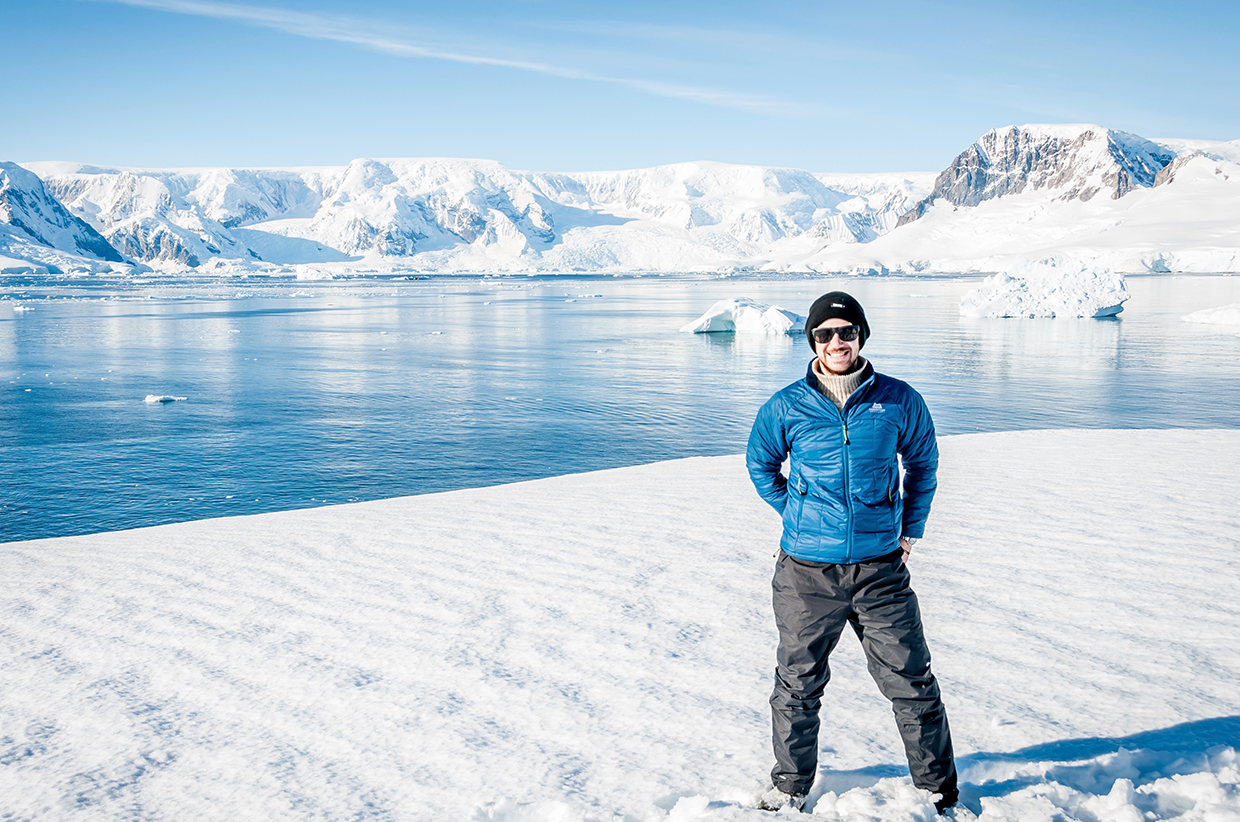
We have found that expeditioners often report feeling misunderstood and unable to fully explain their experiences when they get home. I suppose it is this drive to build empathy, and wanting to get closer to the experience of being on and returning from expedition, that got me out from behind the desk. Since starting work in this area, I have been fortunate enough to explore more; taking a trip to Antarctica, discovering the stark contrasts of the Icelandic interior, crossing the Hardangervidda in Norway, and trying to lead a more adventurous life. Each time I come home I feel a little more connected to the incredible people I have been fortunate enough to study, perhaps partly because I now understand how awful it is to be on the London Underground at rush hour upon getting back from several weeks in isolated bliss.
Where do we go from here?
Colleagues and I are continuing to conduct studies into health and well-being in risky, dynamic, and extreme settings. Our aim is to provide high-quality psychological information in support of expedition endeavours – whether that be related to understanding personnel selection and team-building, or to offer advice on post-expedition transition and reintegration. Certain things have changed since Sir Vivian Fuchs’ 1963 contemplation on the human element in exploration. What has not changed is the desire for humans to go further, faster, and higher, pushing the boundaries of the unexplored. We want to make sure that modern-day pioneers not only survive but thrive in the world’s most demanding environments.