The Scenes Behind the Scenes
Gear Field Journal Explore Gear & Guides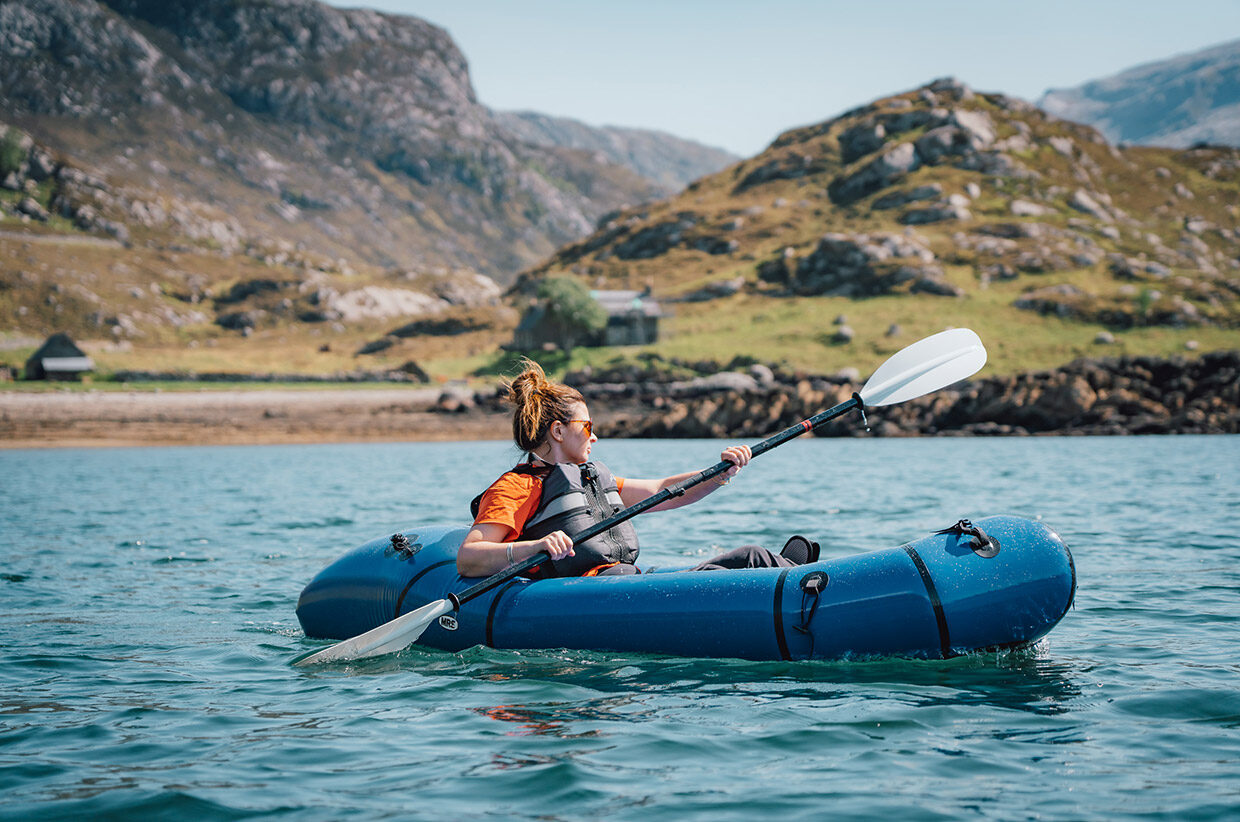
On a recce with Summit Fever Media
Written by: Daniel Neilson // Photography John Summerton
Produced in partnership with Ortlieb
Ellie and Matt Green are Summit Fever Media, one of most in-demand filmmaking companies in the outdoors. John Summerton joins the duo on a packrafting recce to learn more about their methods – and why they’re the perfect new ambassadors for Ortlieb, a manufacturer they’ve used for years to protect their gear.
We put in at Unapool, a tiny Scottish hamlet on the road to Cape Wrath. We were a long way north up here in Assynt. Paddle due west, across the North Minch, and eventually we’d hit Stornoway. Fortunately, the paddle on this clear, blue day in late May was significantly shorter. The reason: we were following Ellie and Matt Green, the couple who make up Summit Fever Media – one of the outdoor industry’s most sought-after filmmaking collaborators. We should know, they’re regulars for Sidetracked projects, and now Ortlieb ambassadors. We were given the opportunity to spy the scenes behind the scenes. It provided an insight into the lengths Ellie and Matt go to scope out a project, to find the exact locations that make their films so evocative, and why everyone wants to work with them.
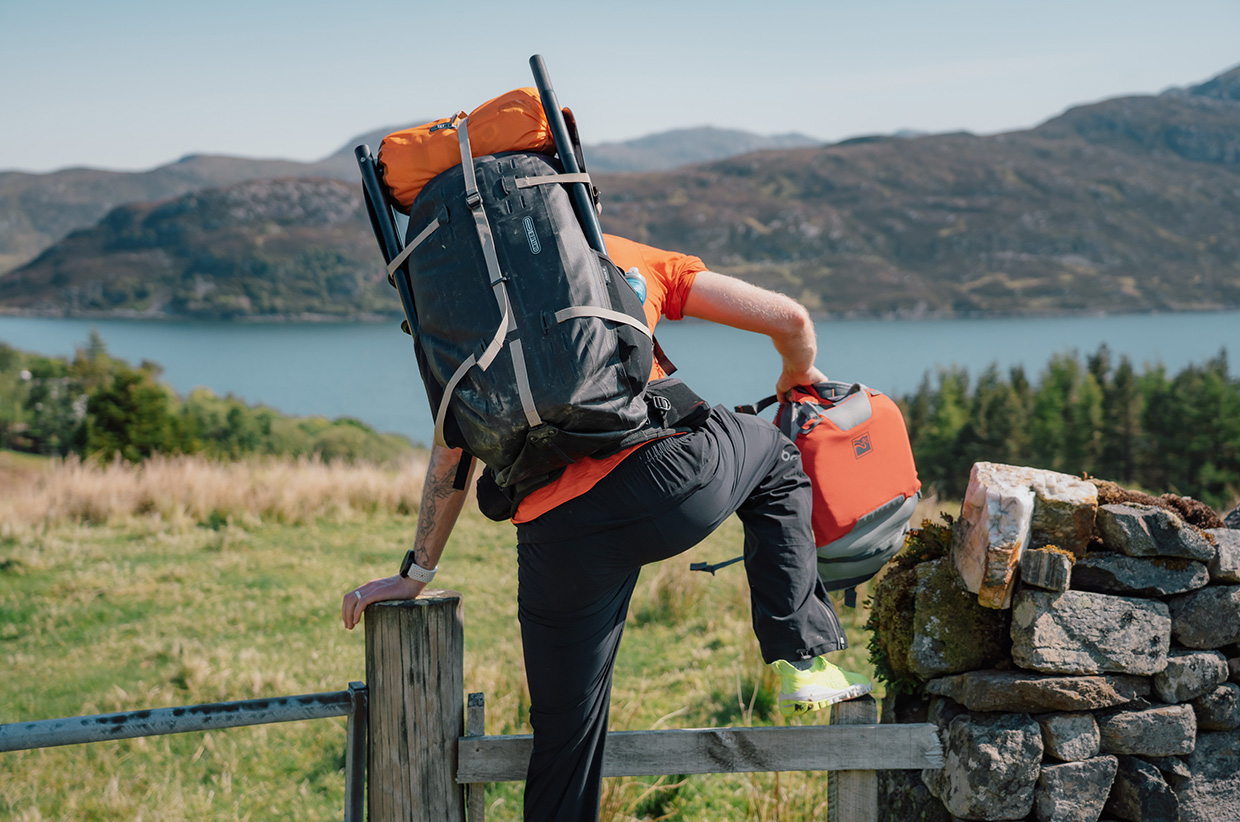
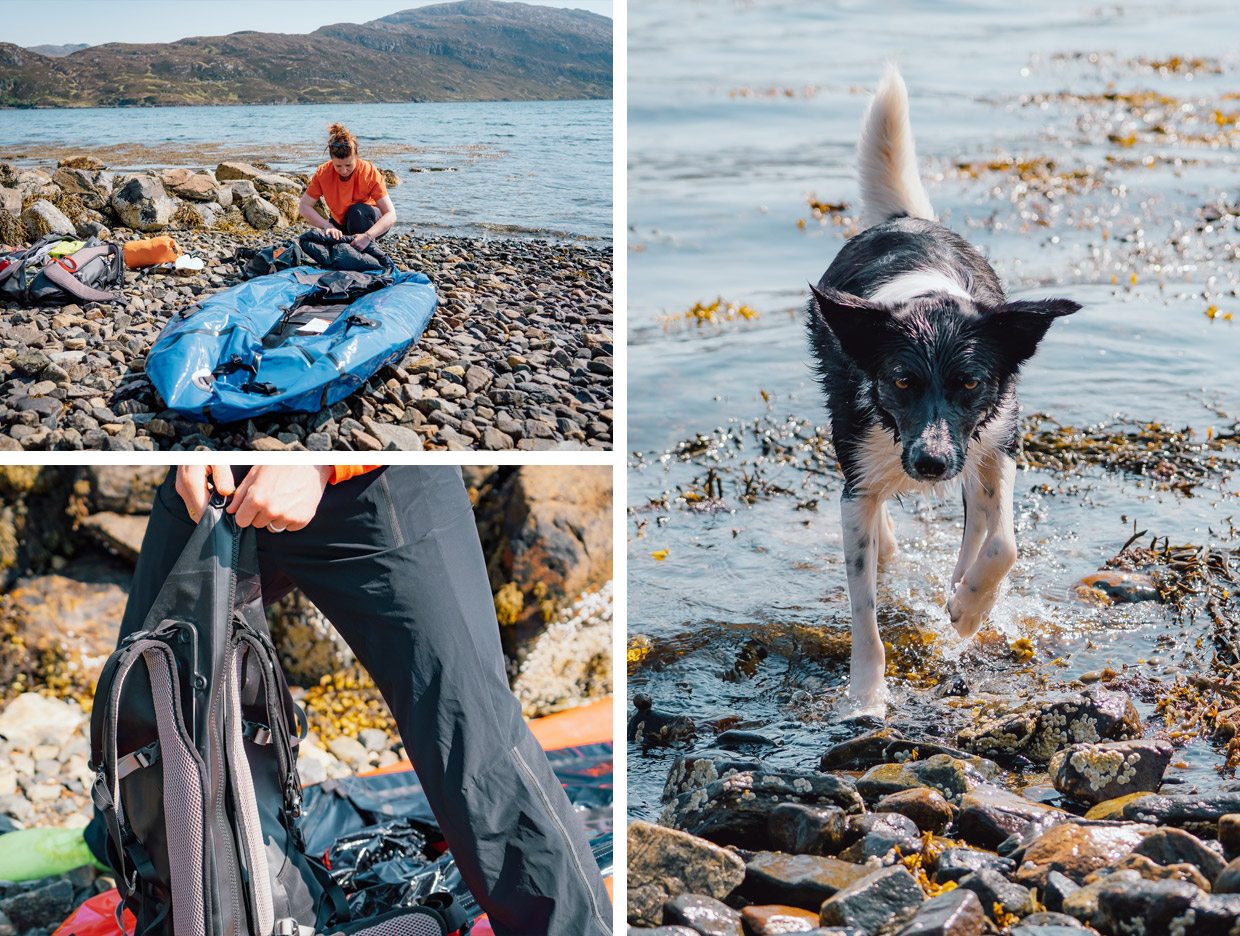
Time to check out possible approaches to the loch. We clambered over a stile and then walked down to a perfect little bay and spit that separates Loch a’ Chàirn Bhàin from Loch Glendhu and Loch Glencoul, two bodies of water that split like a thumb and forefinger reaching out to snap at Bienn Leòid. We found a small beach and met a local man walking his dogs. He runs some nearby holiday cottages, so Matt and Ellie take the chance to gain some local knowledge. ‘Wind’ dominated the conversation; he kept using the word ‘gnarly’.
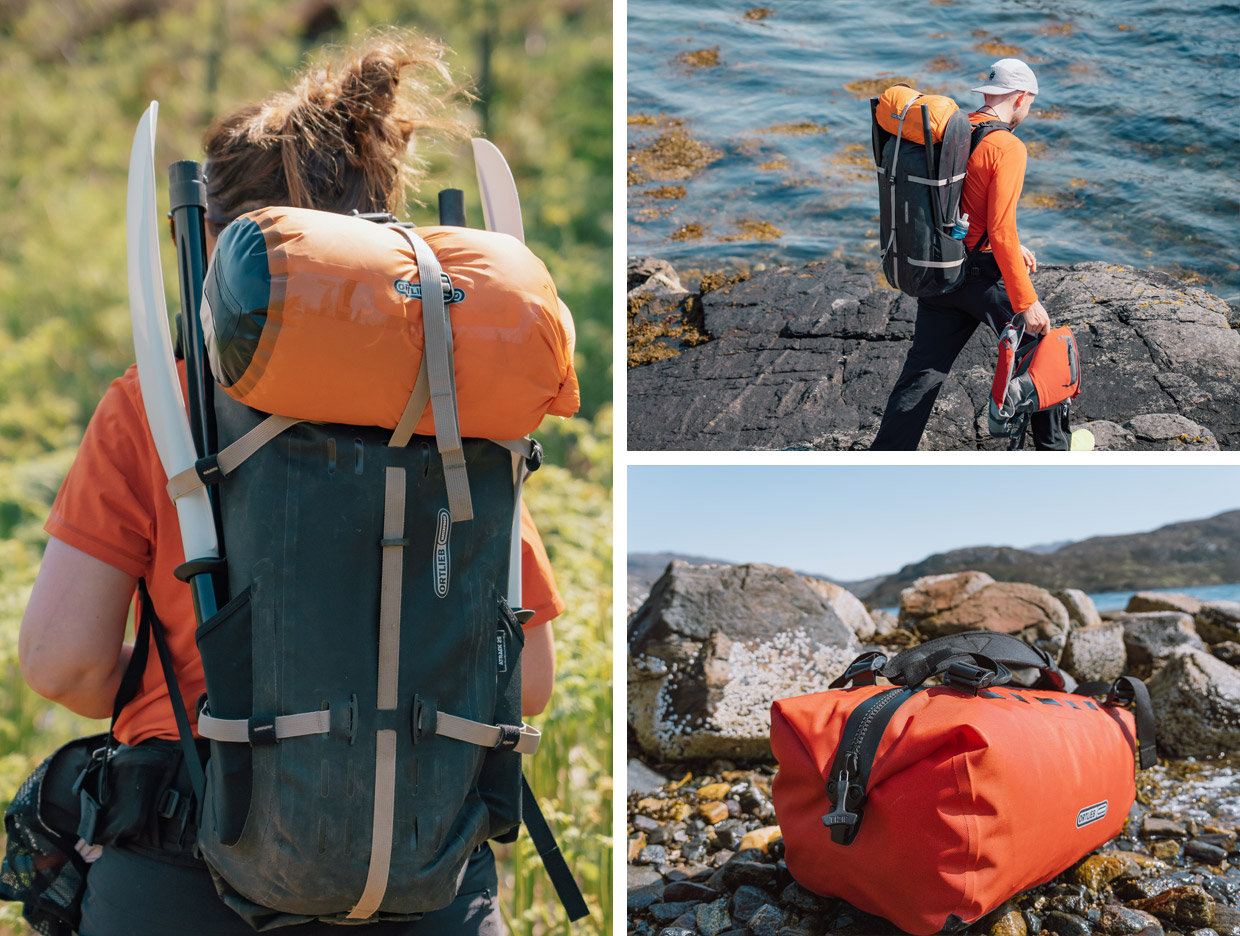
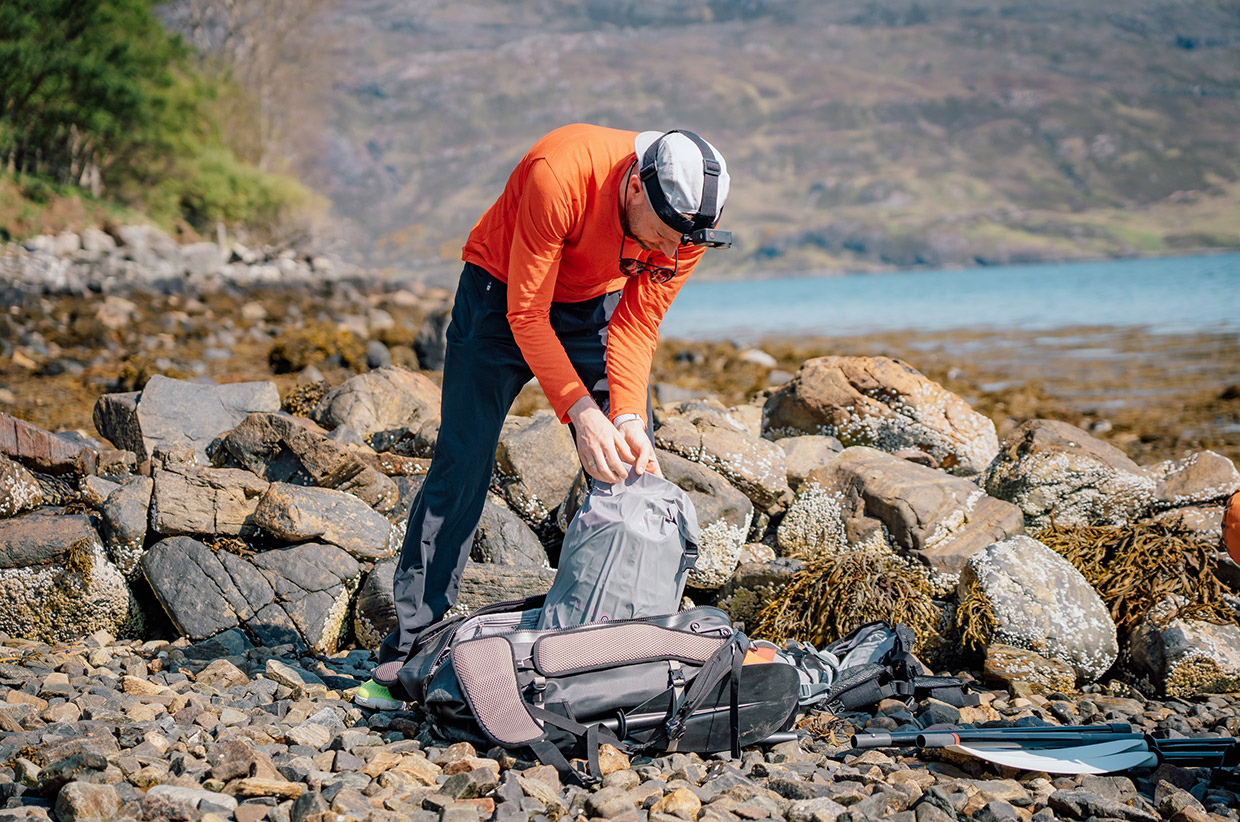
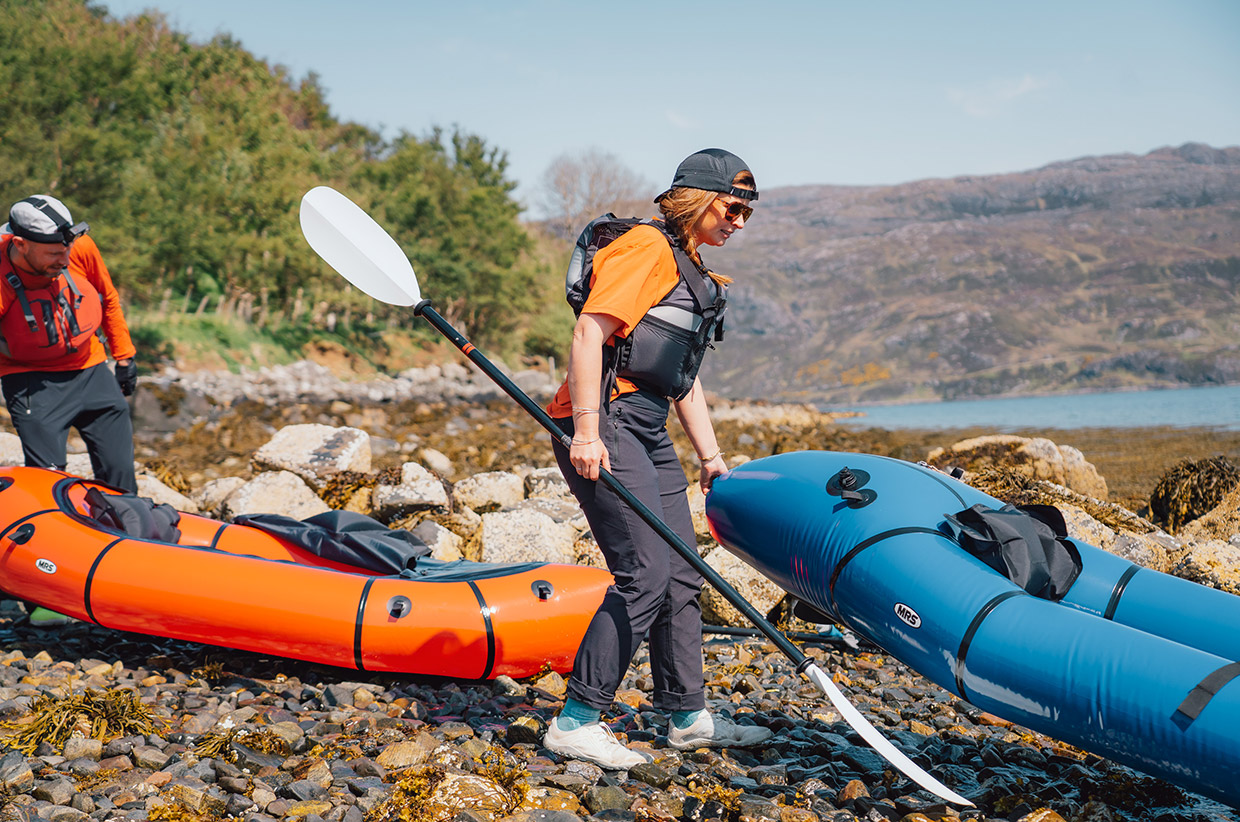
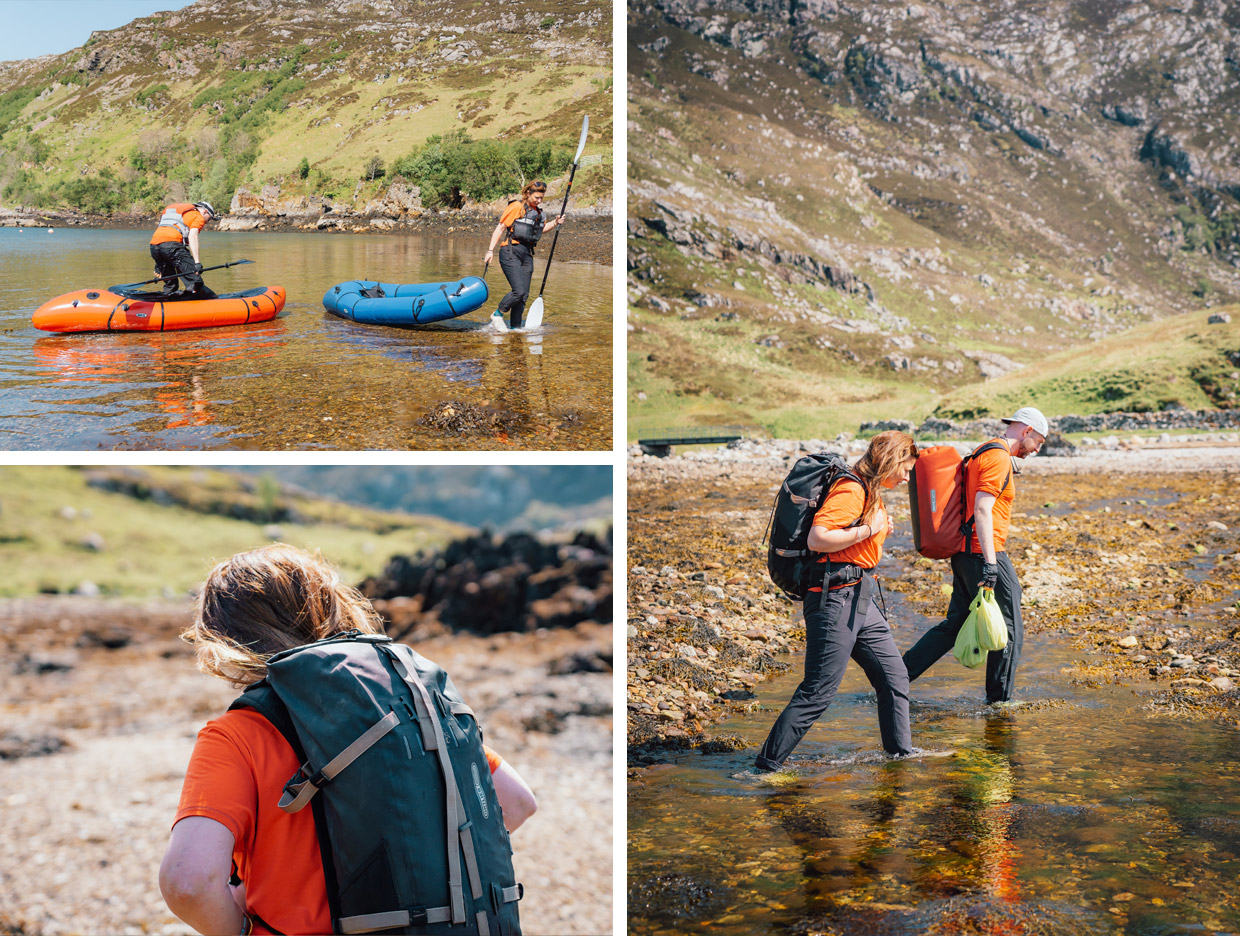
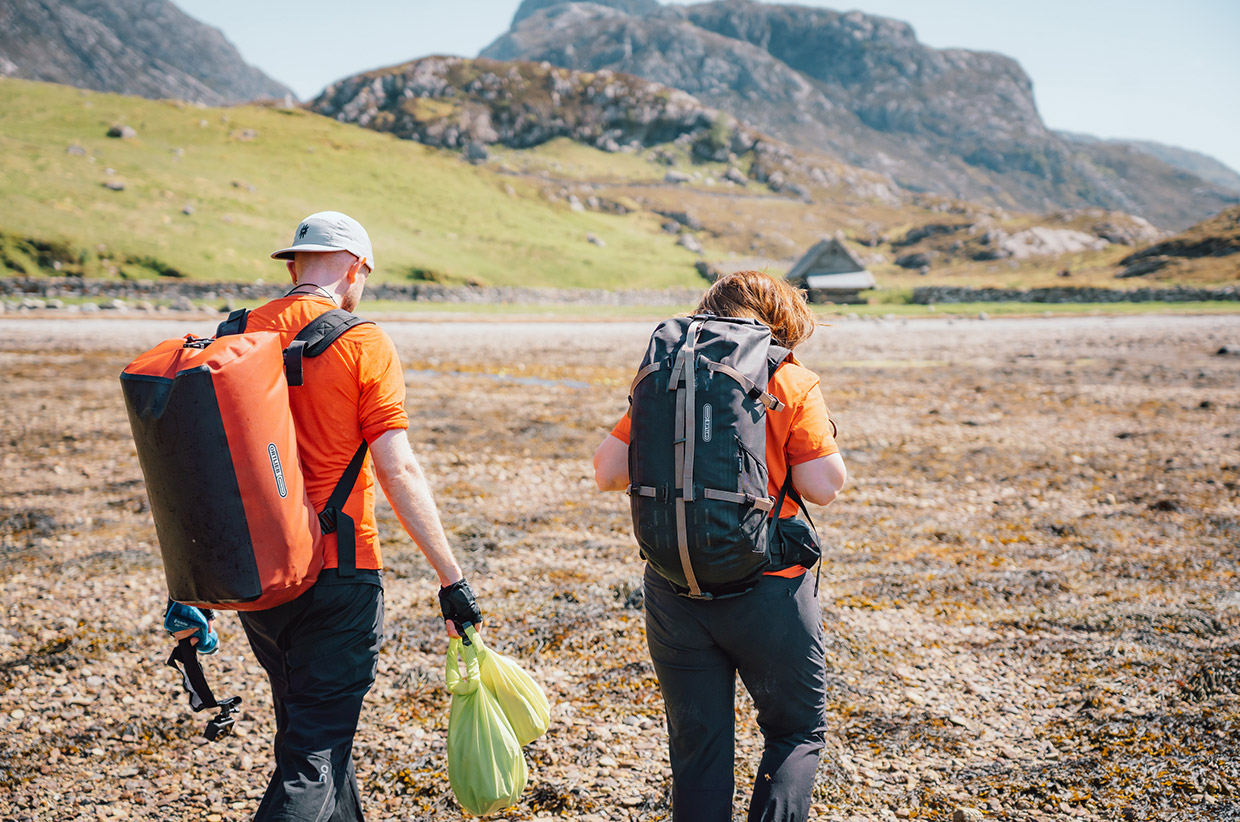
At the shore, we put down our two bags each. Each of us had a packraft and an Ortlieb waterproof bag. Matt had the Ortlieb Atrack 45L, Ellie the Ortlieb Atrack 25L, and John carrying the new Ortlieb Duffle Lite 40L. Inside each, a selection of Ortlieb Dry-Bags. This was a trip that involved a lot of water and a lot of very expensive camera gear, but these backpacks are items that Matt and Ellie use and trust on every trip – regardless of terrain – and have done for years. In fact, the Atrack 45L carried by Matt is the same one they bought many years ago.
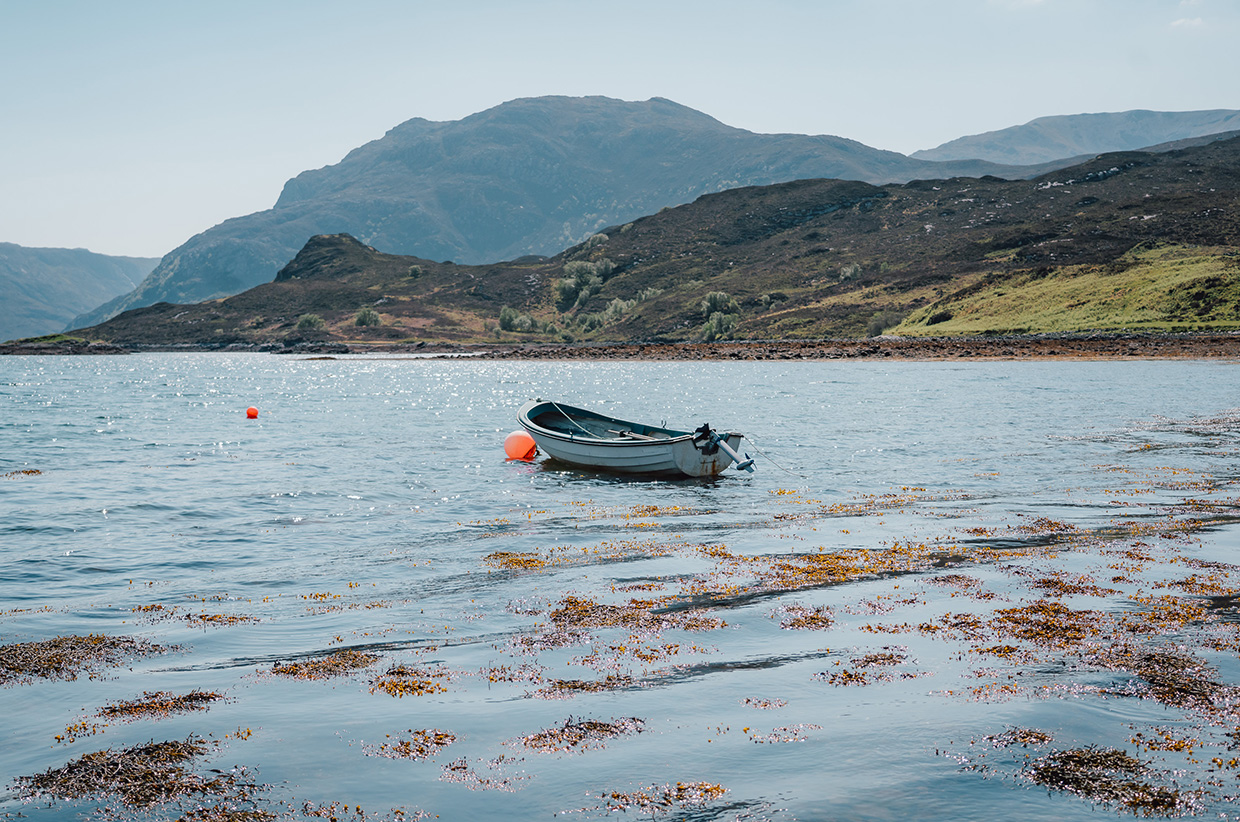
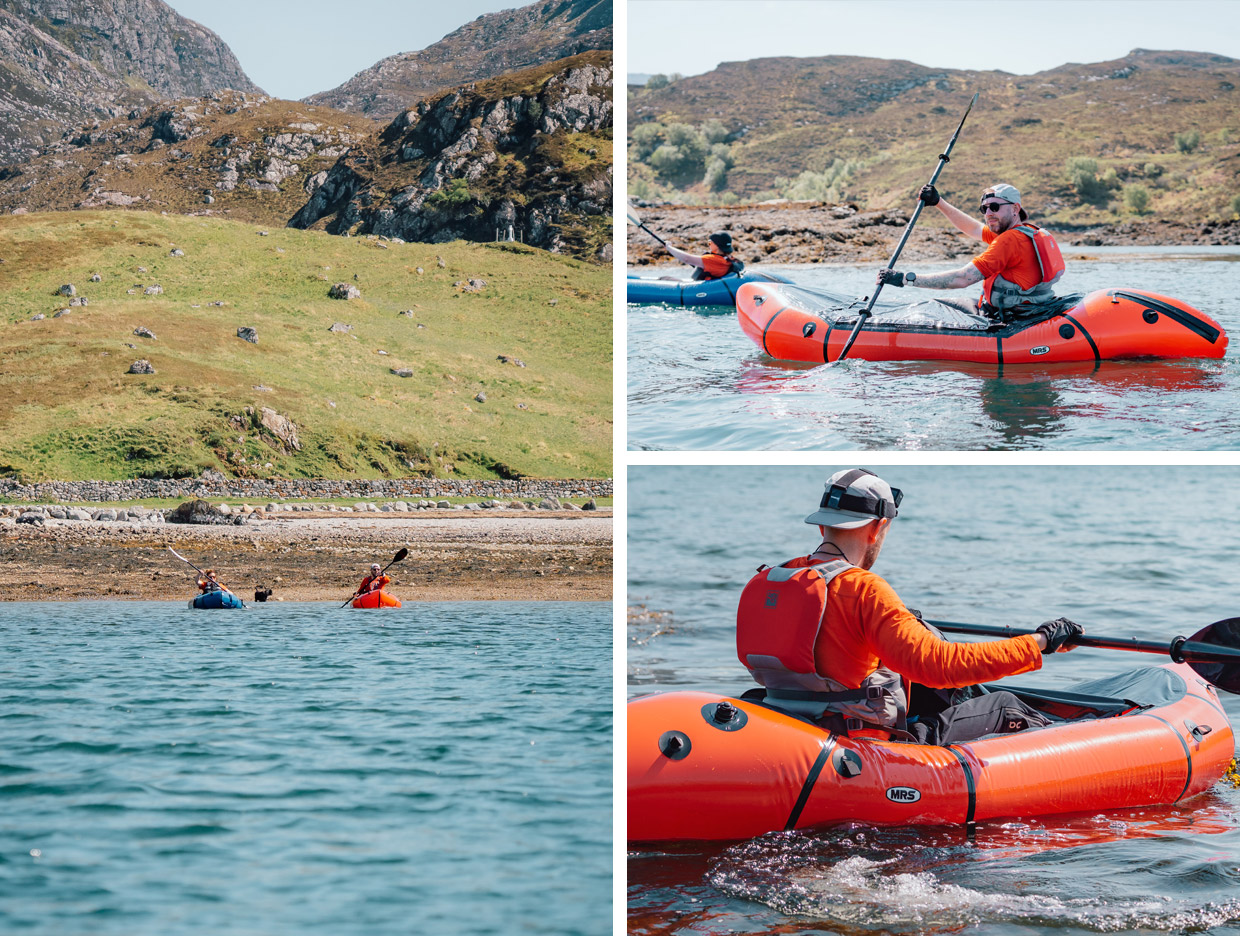
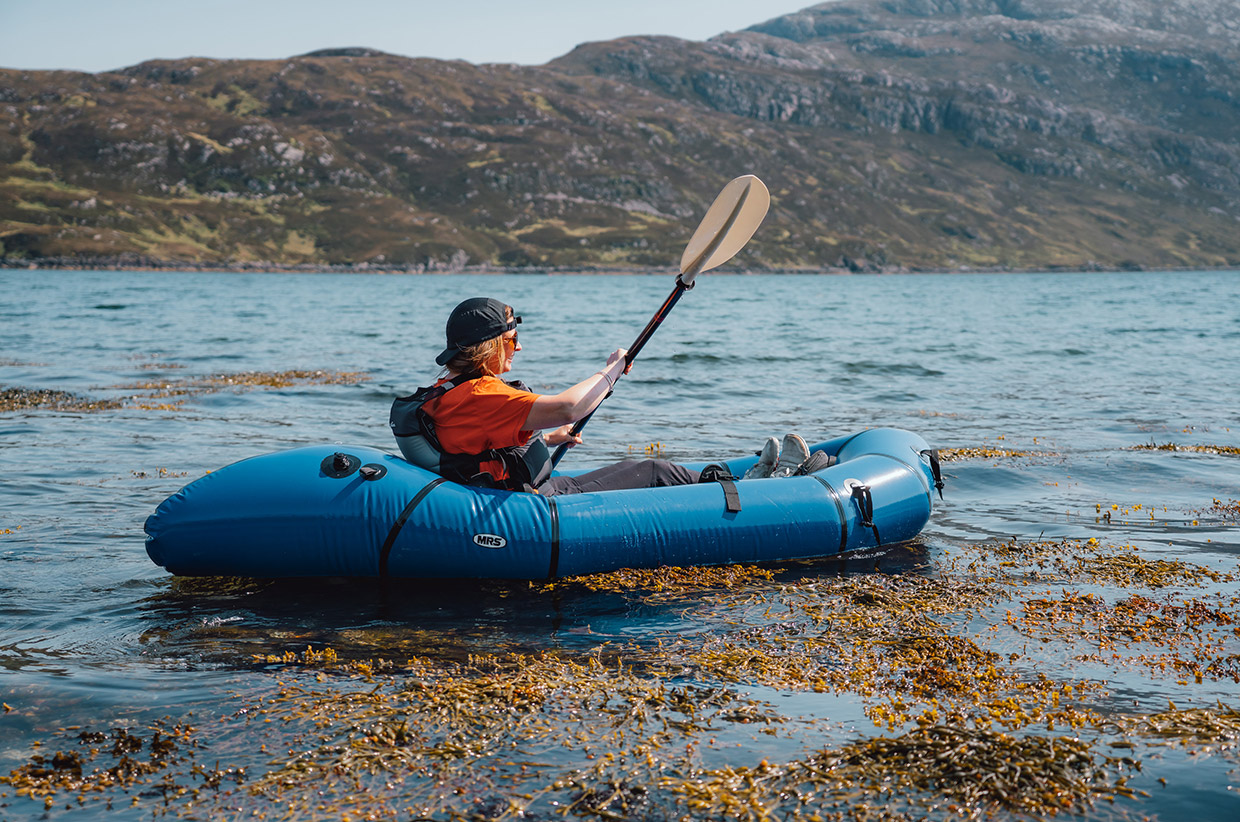
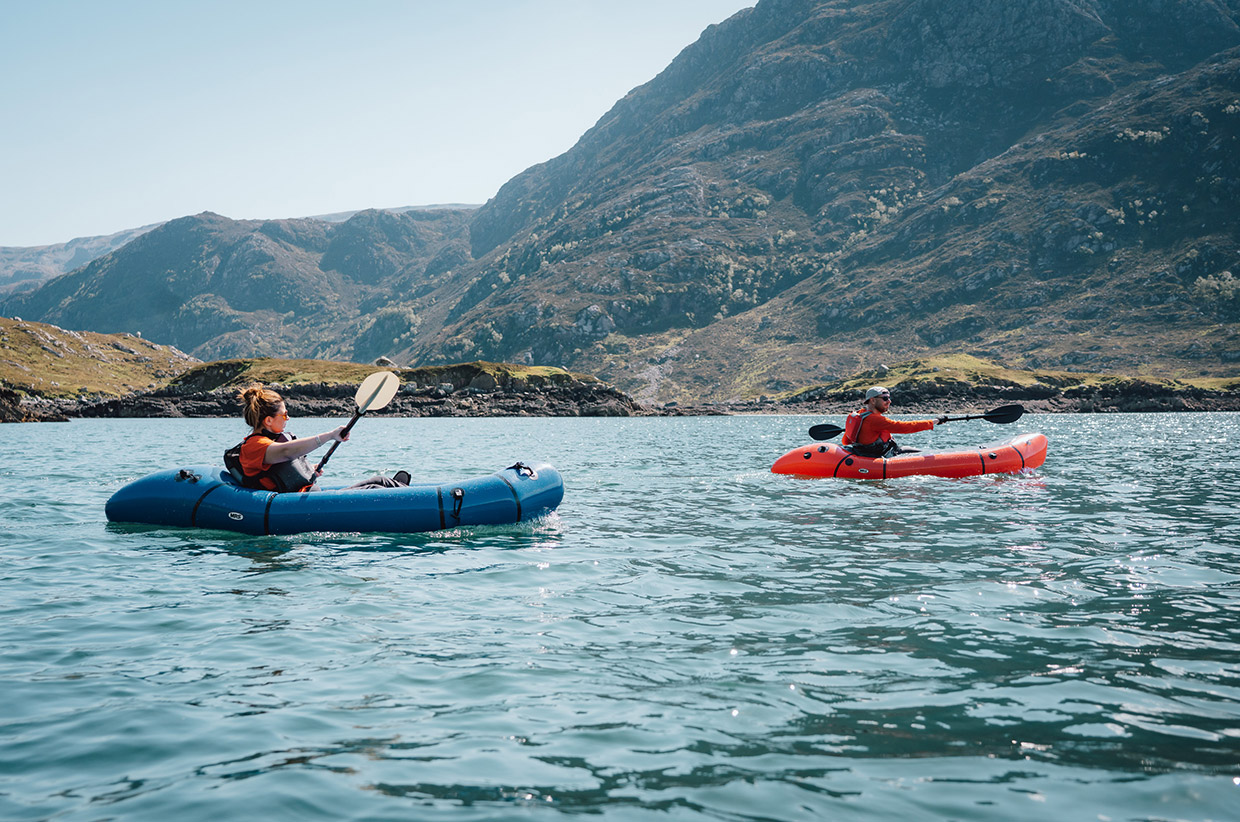
With our packrafts inflated, we waded into the water, threw in our bags, and started paddling down Loch Glencoul. It has been described as the most beautiful loch in Scotland, reminiscent of a Norwegian fjord, with mountains rising high around it – notably Beinn Aird da Loch. Notable why? Well, ask a geologist. From our viewpoint, less than a metre above the loch’s surface, even our amateur eyes (helped by an interpretation board) could see the layers of rock evidencing continental collisions hundreds of millions of years ago. The Lewisian gneiss here at the base of the visible mountain is among the oldest rock on the planet, and layered above it, named with a suitably violent geological term, the Glencoul Thrust split the gneiss. Geologists say ‘thrust’, but it came through at just 2.5cm a year. What it means for us today is a rather lovely view.
In more recent history, Loch Glencoul was a training location for the X-Craft midget submarines: tiny, four-person submarines that saw action in Norway and during the D-Day landings during World War II. Two of the more notorious people to have visited the loch were Andreas Baader and Ulrike Meinhof, founder members of the militant Red Army Faction (and of the Baader-Meinhof Complex) while on the run from the West German secret service. We know this because they signed the visitors’ book at the Kylesku Hotel… for some reason.
But for this trip, it was all about location scouting. Alongside a healthy dose of banter between Matt and Ellie, there was constant chatter focused on the job at hand. The light, the backdrop, the difficulty in bringing interviewees, other photographers, food, drink – all of the elements required on a shoot.
‘Location recces are a really important part of the documentary process because they give you an opportunity to explore the landscape,’ Ellie said. ‘We look at the access to certain points, what the light looks like at different times of day. We’ve got apps that can visualise the light but it’s not quite the same as actually being there. We can also look at practical things such as how adaptable a location is if plans do need to change.’
‘It takes the pressure off when we’re actually shooting the documentary,’ added Matt. ‘You don’t have to make tons of extra decisions. It gives you that extra headspace so you can focus on the storytelling when you’re actually shooting.’
Ellie explained how their experience has grown since they began. ‘You grow your skills over time, and key to that is how important preparation is, of all kinds – including doing recces. That could also take the form of doing more research into your interviewees or storyboarding.’
Against a headwind that a Radio 4 broadcaster may describe as north-westerly three to five becoming six later, and what John described as ‘bloody hard going’, we paddled for two hours towards the end of the loch. Ahead, growing larger and larger as we approached, we could see the gaunt shape of a house and a lower building next to it: Glencoul bothy.
The bothy, according to the Mountain Bothy Association, was once inhabited by John Elliot, his wife Margaret, and their five sons born between 1891 and 1901. A plaque commemorates two of the brothers who died in World War I. The last inhabitants left in the 1950s, and today the bothy is under the care of the Mountain Bothies Association. The house next to the bothy was under scaffolding too.
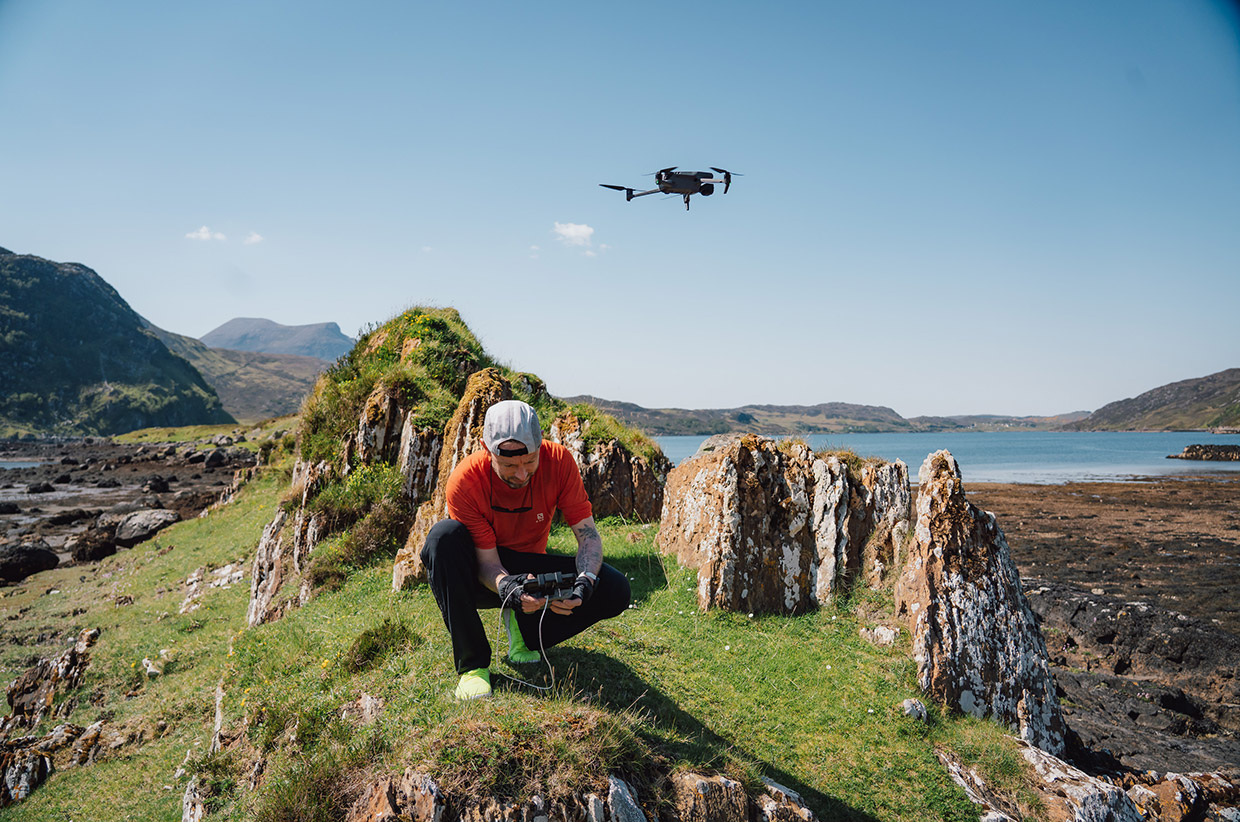
Matt put up the drone to scout other areas and they both looked at the screen intently, nodding, shaking heads, and laughing. It was becoming clear that this wasn’t the right location. Dozens of factors added up to this just being too complicated for a shoot.
Before we headed back, we sat with our sandwiches and chatted about the Ortlieb ambassadorship, and why Ortlieb in the first place.
‘The Ortlieb products just speak for themselves,’ Matt said. ‘ You can really rely on it, and that’s why I bought it in the first place. We just know our kit is going to be dry, or the opposite way around; if we’ve got tons of wet stuff, we know it’s contained.’
Ellie nodded. ‘Our main storytelling stuff tends to be on foot, so we experience a whole variety of different landscapes and weathers, as well as doing a wide range of different sports. We know our gear is sealed and safe. We also know the bags are super durable, which is just so reassuring.’
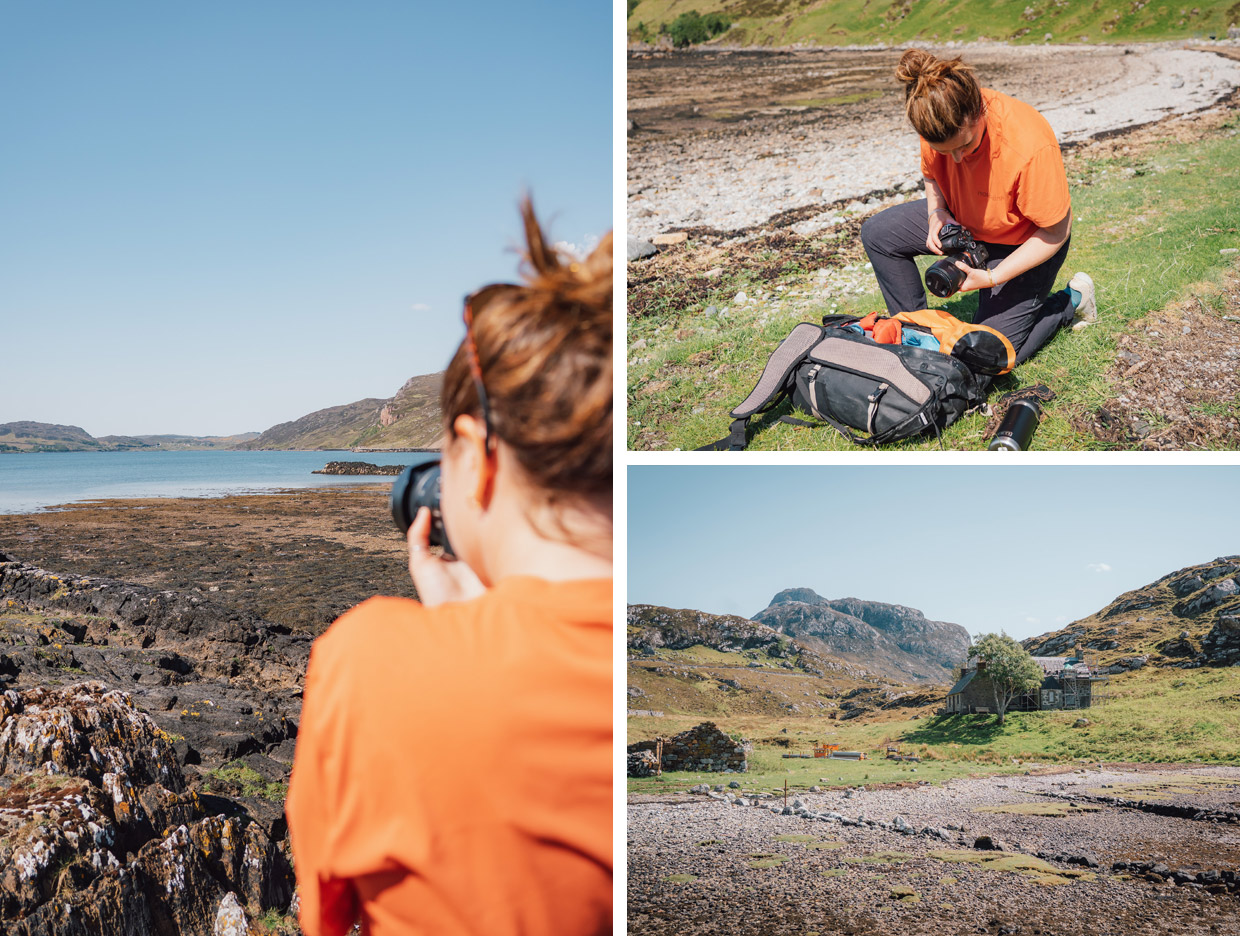
On the recce to visit the bothy at Glencoul, we could tell just how organised they are. There was a flow, a metre, a rhythm to the way they worked. In the Ortlieb Atrack was all the camera gear, and then in the Duffle Lite all the clothing, accessories, and backup kit.
Ellie: ‘Over the years, we’ve developed the way we pack them so we always know where everything is. We often need gear quickly, so it’s not a long hunt.’
One of the aspects Matt and Ellie mentioned, which we’d not really considered, was the dimensions of the bag itself.
‘It’s about having the space you need, but not too much space,’ Matt explained. ‘And also, weirdly, the shape of the bags means they fit stuff really well. I like that it’s clean too – there aren’t loads of straps and stuff that can get caught on things, if you’re walking through somewhere with loads of brambles. It’s easy to put in and out of a packraft or the storage unit of the packraft.’
Under the watchful eye of a curious seal, we began our return trip. The plan had been to stay out in the bothy, portage around the thrusting Beinn Aird da Loch, and back along Loch Glendhu, but with the location ruled out, they made the call to return and head home… there’s always editing to do.
The going was much quicker – twice as fast – but not enough to outpace a seal who followed us nearly all the way back to Kylesku. By the time we got back, the waters were getting a little choppy. It splashed us and our gear. We didn’t talk any more about the bags, but we didn’t need to. They just worked.
For Ellie and Matt, it meant more time location hunting, and another day on a reconnaissance mission, but the films they make – emotive and immersive – will speak for themselves. As Matt said: ‘The more you spend time preparing, the better the results will be.’
For more information, visit https://uk.ortlieb.com/collections/watersport and find them on Instagram @ORTLIEB_waterproof
Written by Daniel Neilson // @danieljneilson
Featuring Summit Fever Media // @sfm_films // @mattgreen_sfm // @elliegreen_sfmedia
Photography by John Summerton // @johnsummerton
Produced in partnership with Ortlieb // @ORTLIEB_waterproof