Those Who Were There
Events Photo: George Finch testing oxygen equipment in 1922. No other details are given but he did much to improve their working. (Photographer unknown)
‘Ascents were made in 1922 and 1924 to a height of 28,000ft, just short of the summit, by men in tweeds and leather boots, and without oxygen.’
Nearly 6,000 people have successfully climbed Mount Everest over the years. The latest exhibition at London’s Alpine Club, however, celebrates three Everest expeditions that failed to put a single person on the summit. Why? In short, because those early climbers blazed a trail for others to follow.
The 1921 expedition was the very first to reconnoitre the Everest region. It not only reached the highest mountain on Earth – a feat in itself, given that its exact whereabouts were uncertain – but discovered a route leading to the summit. In 1922 and 1924 all-out attempts were made to reach the top, the latter expedition cut short by the fabled disappearance of George Mallory and Sandy Irvine.
But despite never having made it to the apex of the mountain, these 1920s climbers accomplished feats that are astonishing even now.
With Nepal closed to foreigners, the only approach to Everest was via India and Tibet, which meant a six-week, 200-mile trek from Darjeeling to Rongbuk to reach the mountain’s North Face. Alpine Club members had excelled in the Himalayas before 1921 but Everest was totally new to them. At the time, altitude sickness and the use of oxygen equipment were only vaguely understood; clothing was rudimentary; food was inadequate. Yet ascents were made in 1922 and 1924 to a height of 28,000ft, just short of the summit, by men in tweeds and leather boots, and without oxygen.

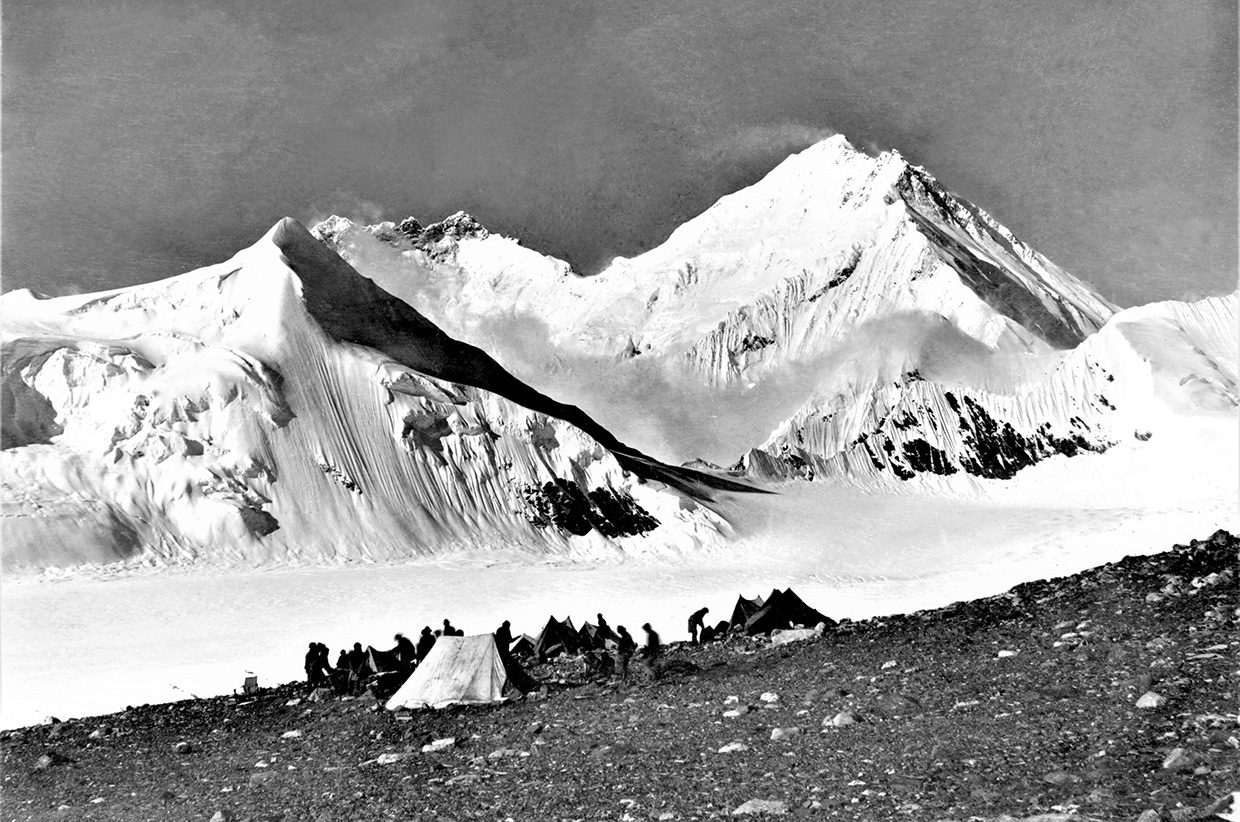
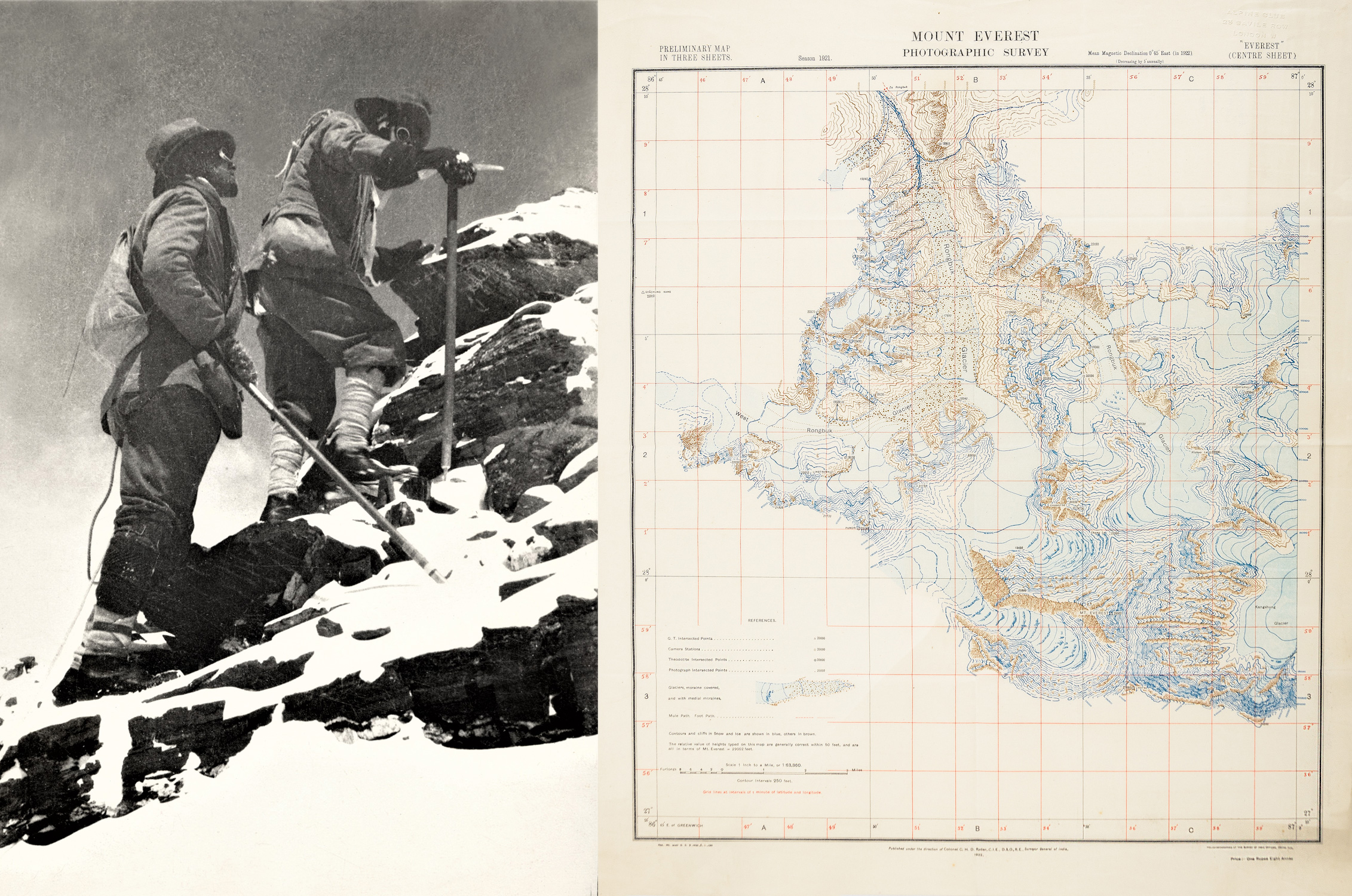

Renowned mountaineer and former Alpine Club president John Porter explains more. ‘These men lived in the true age of exploration,’ he says. ‘Driven by the need to escape the horrors of the Great War and a desire to see Britain first atop the “third pole”, they achieved the remarkable. By using their own records and possessions we hope to give visitors a true sense of the reality of the time and the incredible bravery it took for men like Mallory and Irvine to attempt the summit.’
To mark the centenary of one of the most important chapters in mountaineering history, the climbers’ photographs, letters and diaries are all currently on display as part of an exhibition at the Alpine Club’s HQ in London. Everest, by Those Who Were There 1921, 1922, 1924 re-opens to the public on the September 1st and will remain open until the October 20th. Find out how to book tickets at the Exhibition Page.
The Alpine Club has also produced an exhibition catalogue that reproduces every item from the collection, alongside a detailed examination of the three 1920s expeditions. This is available for purchase at the exhibition or via the Alpine Club website.