Wave of Change
Inspiration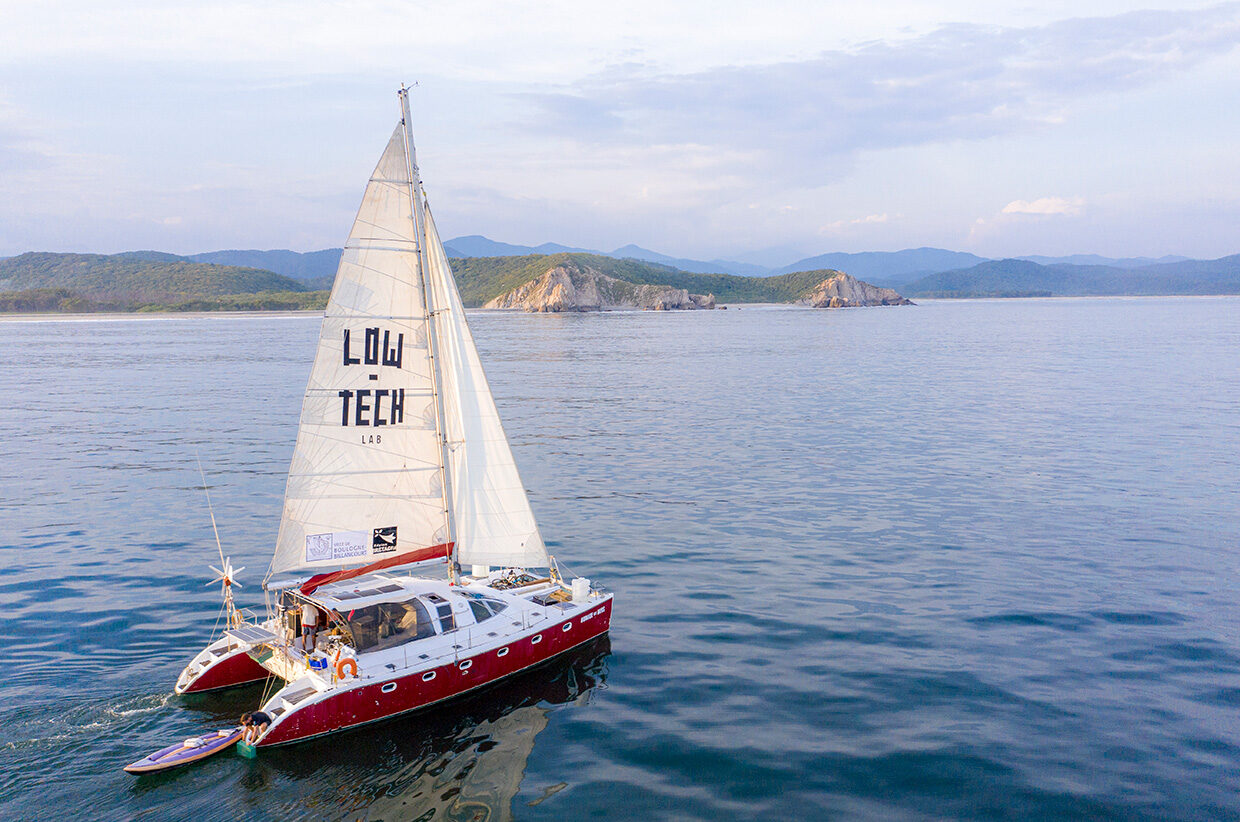
A Self-Sufficient Surfing Adventure
Picture Organic Clothing presents Wave of Change, a film about a sustainable surf adventure on board the Nomade des Mers, or ‘Sea Nomad’ – a catamaran promoting simple, affordable, and environmentally responsible low-tech solutions to basic needs across the world.
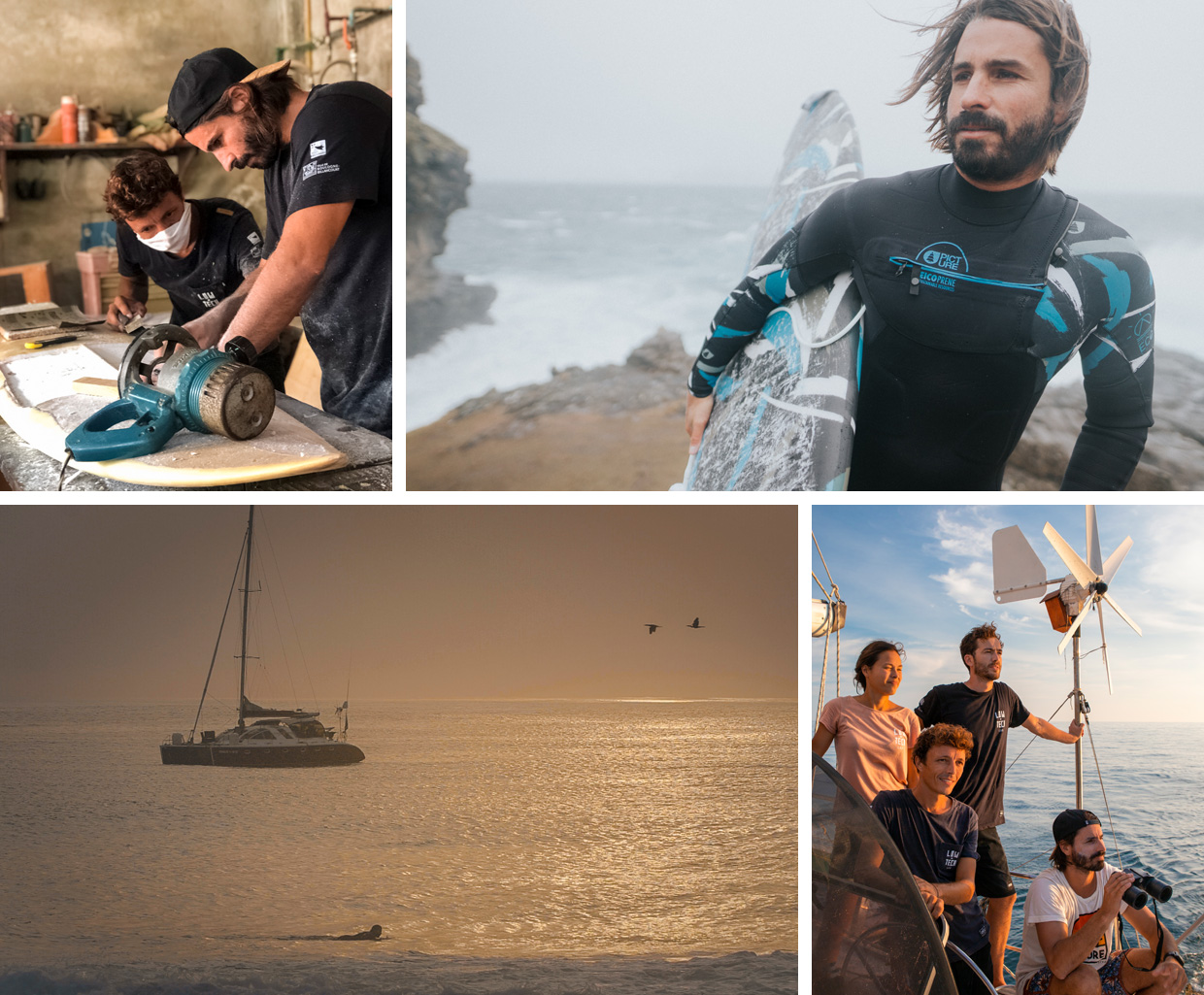
Wave of Change follows professional free-surfer, adventurer, and writer Damien Castera, photographer Pierre Frechou, and low-tech lab specialists Corentin de Chatelperron, Guenolé Conrad, and Caroline Pultz along the coast of Mexico, North America. The crew grow their own plants without soil, fix surfboards with mushroom roots, and generate power using an old bicycle. The lifestyle is self-sufficient, meaningful, and respectful to the environment. Here, from his home in the Basque Country, southern France, Damien shares the lessons he learned.
Sidetracked: Congratulations on the release of Wave of Change. How did the idea come about?
Damien: Thank you! Corentin de Chatelperron (Coco) and I dreamt up the idea of an ocean adventure that would combine our passions for surfing and low-tech back in 2019. Coco is captain of the Nomade des Mers, the catamaran we called home during the film. It’s currently sailing around the world in search of new low-tech innovation.
What is low-tech innovation?
Low-tech innovation means clean and simple minimalist technologies that meet basic needs across energy, food, waste management, hygiene, and health. The key principle uniting all low-tech is that it is easily accessible – and above all, respectful of the environment. With Wave of Change, we set out to put low-tech methods into practice on board the Nomade des Mers and document our experiences so that we could share our adventures with others, and perhaps inspire their own low-tech adventures too.
What types of low-tech did you use during the adventure?
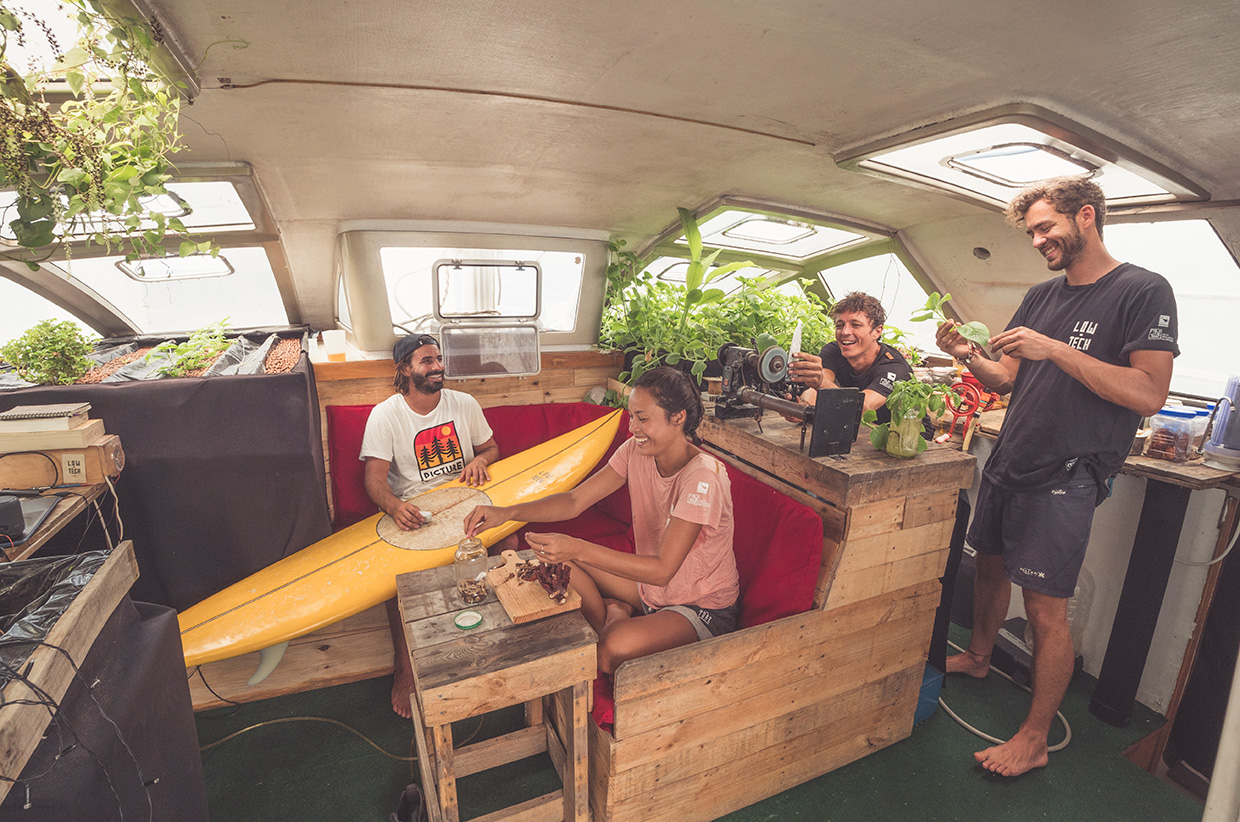
We tried lots of different low-tech methods. We grew a culture of spirulina, which is a protein-rich algae; we farmed crickets that we roasted in a solar-powered oven; we gathered beeswax from farms for our boards; we repaired our surfboards from the roots of the mushrooms we’d been growing. We made a low-tech computer and cultivated plants in hydroponics, a system that involves growing plants using water and urine instead of soil. We gathered unsold fruit and vegetables from markets during our stopovers, dehydrated and stored the edible parts for the trip, and used the rest to feed the crickets and black soldier fly larvae.
What was life like for you on board the catamaran? How did you manage the daily tasks?
Cameraman Pierre Frechou and I quickly adapted to our life on board, living with the rest of the crew. Collaborating and sharing jobs became a vital part of our time together. Everyone was responsible for different tasks, playing to their strengths. We were all responsible for different low-tech areas. My responsibilities, apart from managing the surf forecast and locating surf spots, were to harvest the plants and feed our cricket population. From time to time, I also had to go spearfishing too.
What did you learn from your time on the Nomade des Mers?
From my time in the Bahía de Huatulco, I learned that low-tech creates a lifestyle that gives meaning, respect, and even ecology to our way of life, allowing us to be more respectful of our environment. It was a superb adventure, filled with sailing to the rhythm of the winds and taking advantage of the stopovers to surf. All in total autonomy thanks to the low-tech we used.
How has your life changed since the adventure?
It allowed me to discover new ways of travelling and living, in line with my personal quest to respect and preserve our planet. The trip highlighted to me that using low-tech allows our daily lives to evolve to be more respectful of the environment. It changed my way of thinking about the world, our obsolete desires, consumption, and our real needs. It also allowed me to see that it’s very rewarding to fend for yourself and to achieve a certain level of autonomy. Wave of Change showed us that we could live with very limited means, a lot of imagination and creativity, and going with the flow of the waves and the wind.
The ‘Low-tech Lab’ is the non-profit overseeing the Nomade des Mers project: a real-life floating laboratory.
Damien Castera is a professional free-surfer, adventurer, and ambassador for Picture Organic Clothing. Set up in 2008, Picture Organic Clothing is a B Corp certified outdoor and boardsport brand that creates products made from 100% recycled, organic, or responsibly sourced materials. Find out more about Picture Organic at: picture-organic-clothing.com and follow them on Instagram @pictureorganicclothing
Interview with Damien Castera // @damiencastera
Written by Harriet Osborne // @harrietosborne