More than Two Wheels
Surfpacking the Outer Hebrides
Words & Photography by Adam Gairns and Henna Palosaari
I’ve lost count of how many times I’ve said sorry to Henna today. She’s long since stopped responding.
Sorry for the wind.
Sorry for the weather.
Sorry for cycling past waves with no-one out.
Sorry for my trailer wheel falling off.
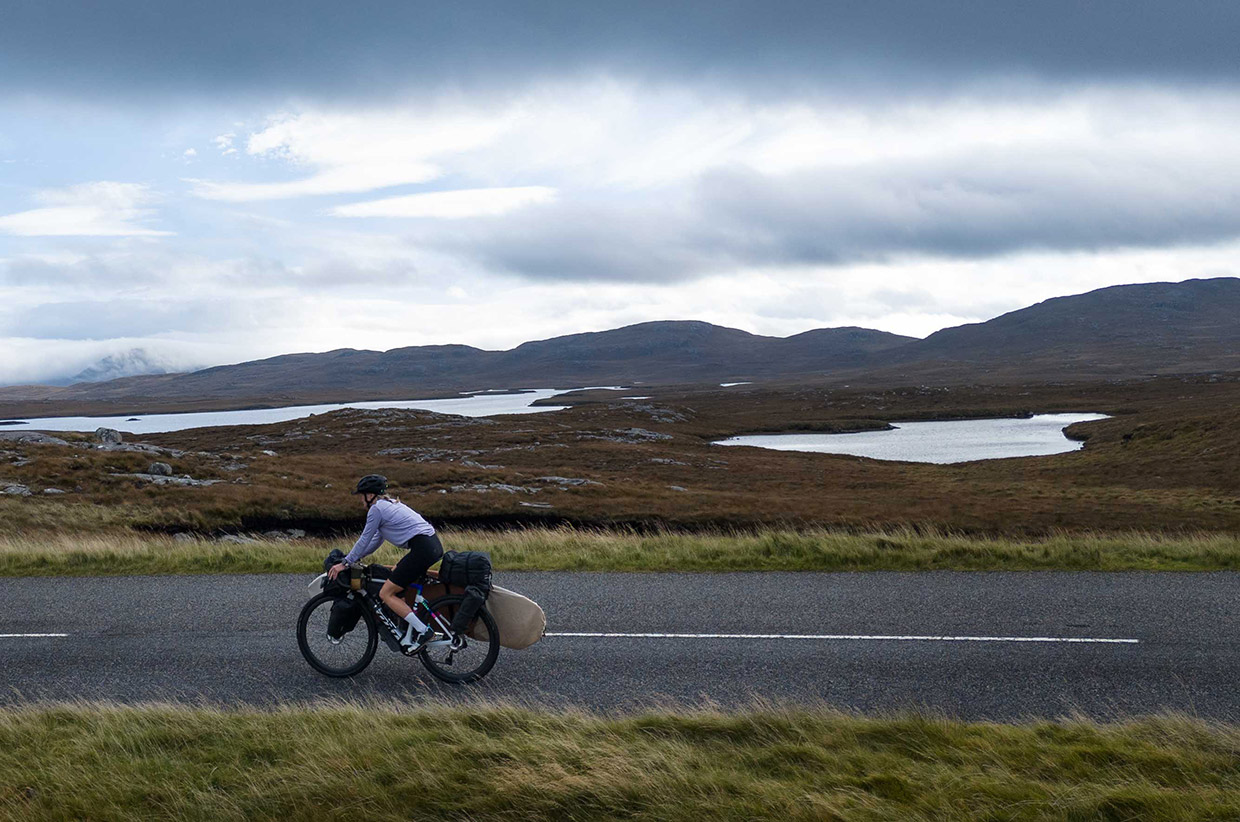
I promised we’d surf, but four days in, we haven’t caught a single wave. We’ve seen them, pointing them out while cycling past into a constant headwind for the last few days, desperately hoping to make the last ferry crossing before we get stuck on the wrong island. Was the dream I sold to Henna many months ago just a fantasy? Have I forgotten how vulnerable you are to the wind here? It’s easy to forget – wind isn’t that big of a deal driving around in a van, but on a bike… well.
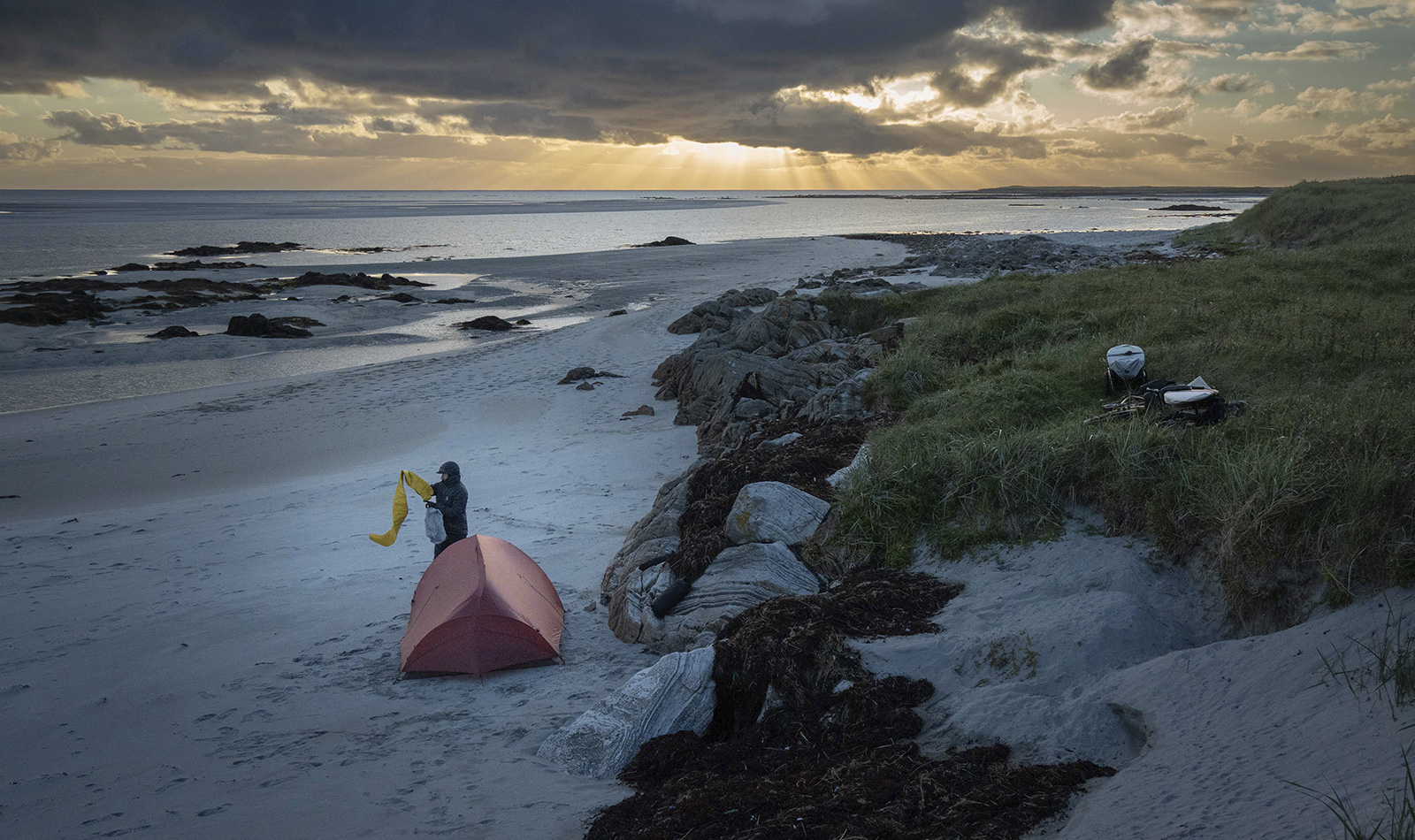
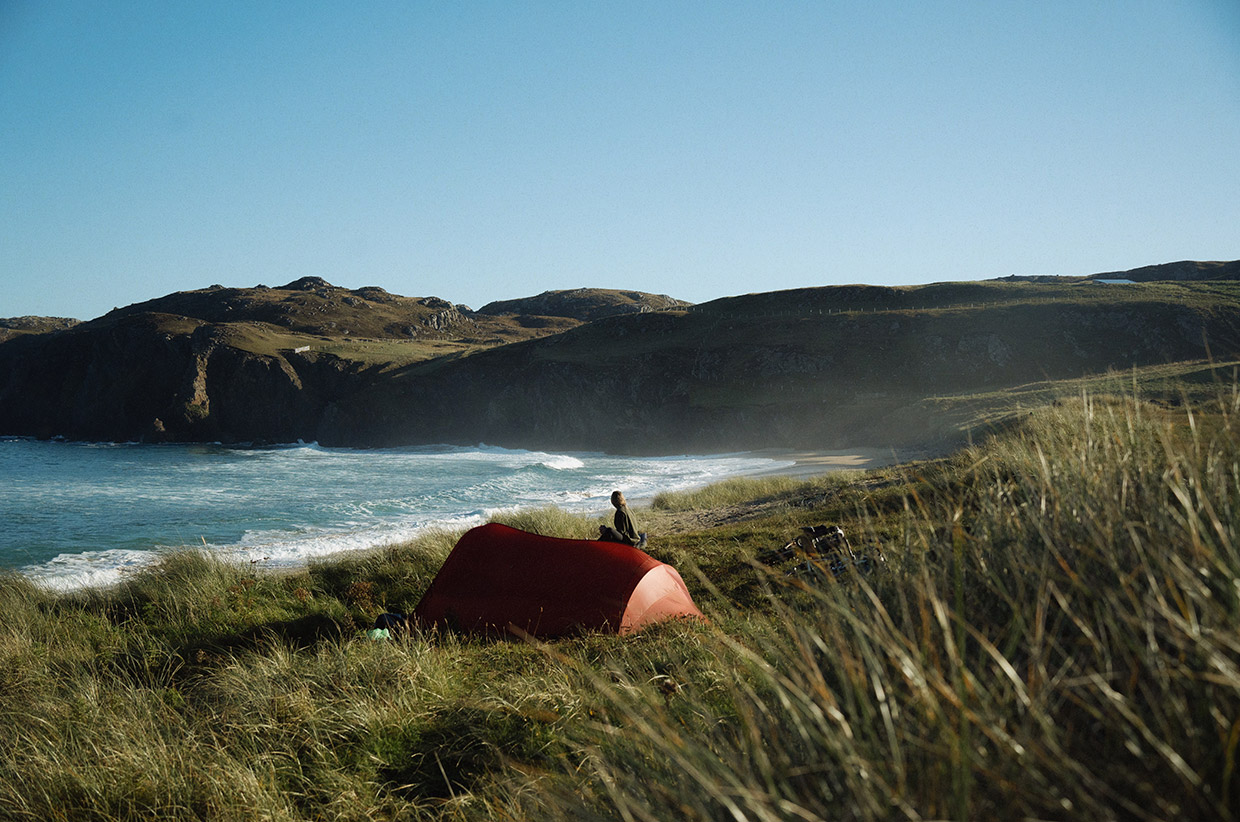
The campsite owner takes one look at us, bikes overloaded with surfboards, our faces showing the fatigue of many hours battling the ever-increasing headwind, a 50km ride that now feels like 150km, and offers a place to shelter behind a static caravan. Maybe she doesn’t believe our tent will last the night in the 90kph winds now rolling in. Maybe she just pities us. Either way, we accept and pitch the tent.
Reality is catching up with the dream.
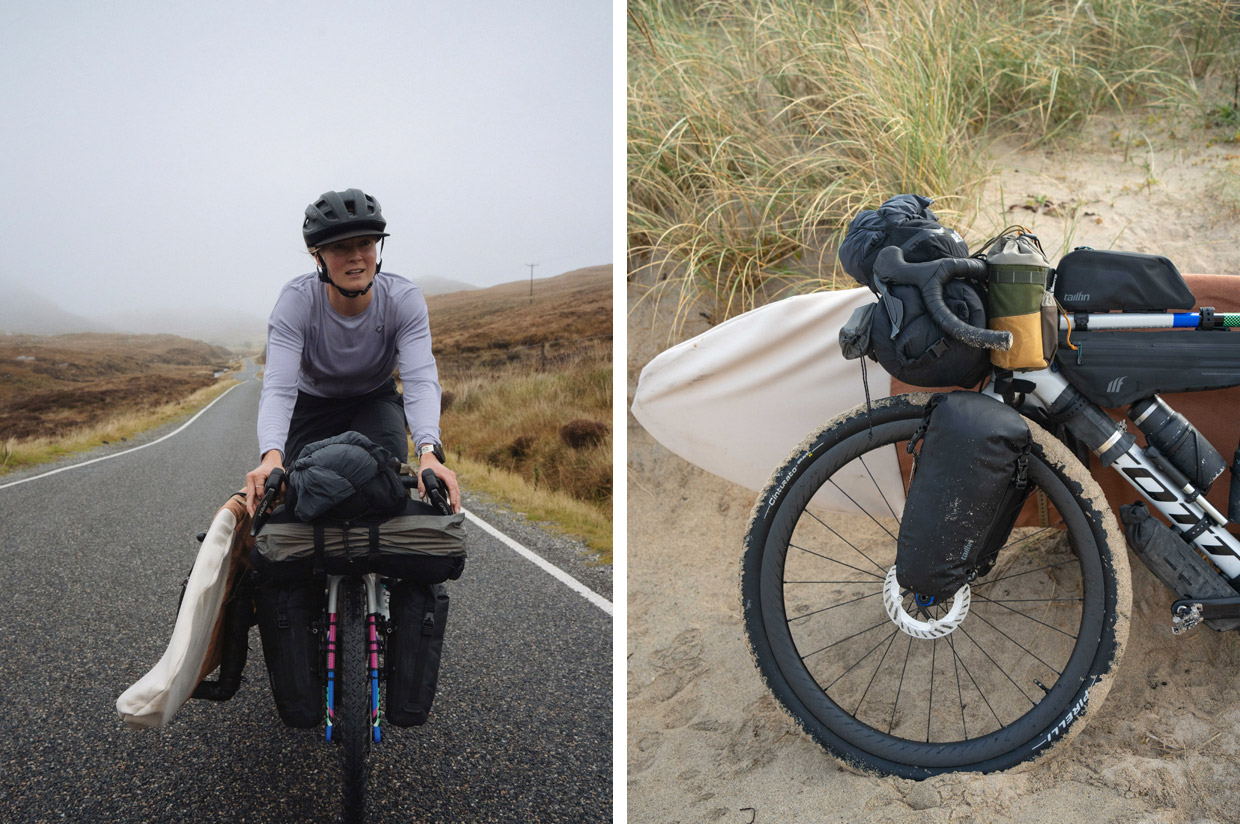
What drives someone to bike down a winding coastline with a surfboard strapped to the side of their bike? For us, the dream is simple: biking the Hebrides, 300km of coastline, endless beaches, and perfect waves waiting to be surfed. But the dream doesn’t mention the 80kph winds that can rip your tent from the ground, the bike mechanicals, or the relentless rain soaking you through.
For me and Henna, choosing bikes over a van wasn’t about convenience. It was about rediscovering the raw freedom of two wheels – that wide-open sense of possibility. The bike gives you your first taste of freedom as a child, and years later, that same feeling still lies within you. Riding isn’t always about how far or fast you ride; it can be about finding a new challenge or enjoying the moment of freedom with each pedal stroke.
But this time, the bike alone wasn’t enough. We wanted to combine it with another passion: surfing. I grew up surfing in the Scottish isles, spending long summer days on the beach with my family. Since then, surfing has shaped many of the big decisions I have chosen in my life so far.
For Henna, surfing came later. After stepping away from track and field, she finally had time to try new sports. She was hooked immediately – drawn to how surfing is both physically demanding and meditative, fully shaped by nature.
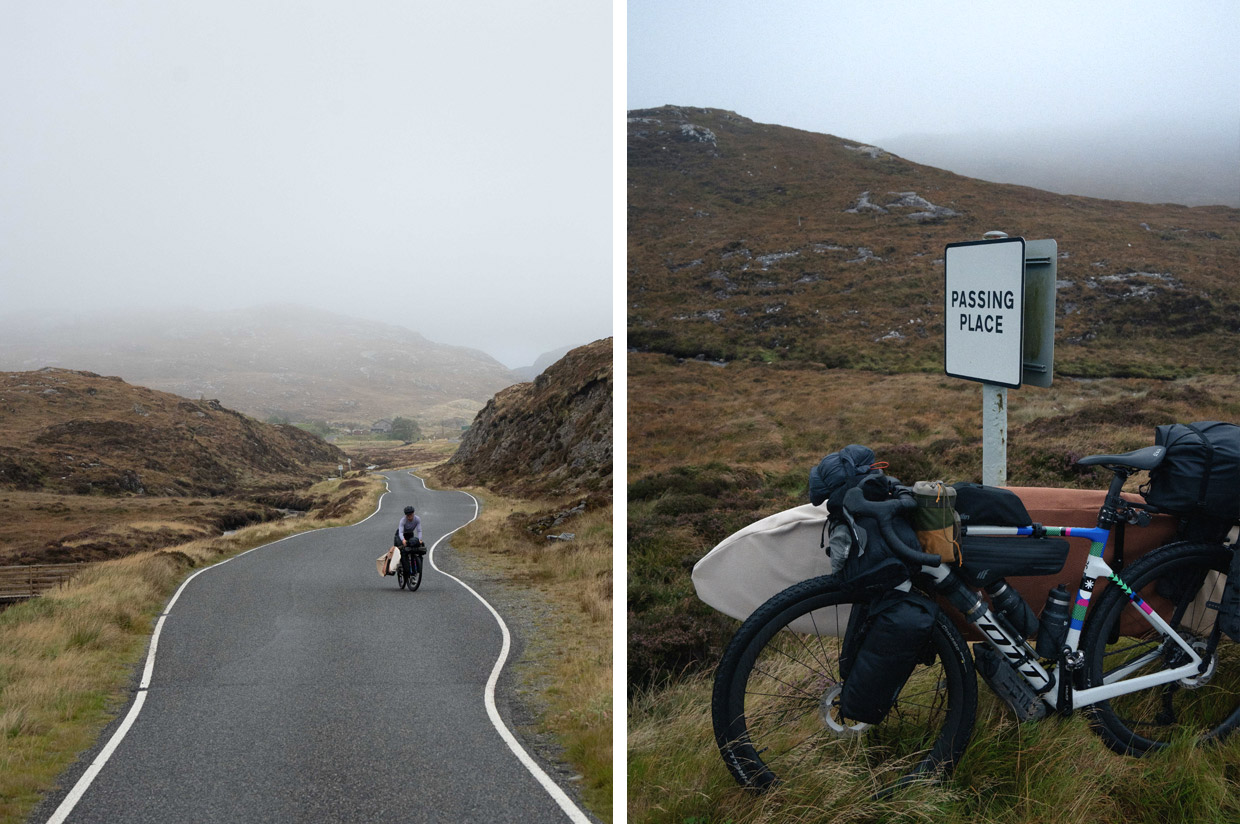
But could we actually combine surfing and bikepacking? The first challenge was figuring out how to carry a surfboard on a bike. There were two main options: mount a rack or tow a trailer. Henna went with the first; I went with the second. Getting both solutions to work took hours in my dad’s garage – tweaking, adjusting, and solving one problem only for another to pop up.
‘Just packing for this trip was a test of will,’ Henna said as she strapped her surfboard on the bike rack. ‘I hope the trip itself goes more smoothly.’
***
Is it worth it?
Henna and I woke to the wind ripping sideways outside the house. We exchanged a knowing look – luckily, we had only a few kilometres to ride to the ferry that day. The dream of 300km of untouched coastline, sunny beaches, and perfect waves started to fade, replaced by creeping doubt. Does this make any sense? Can we even bike in this storm? When will it stop?
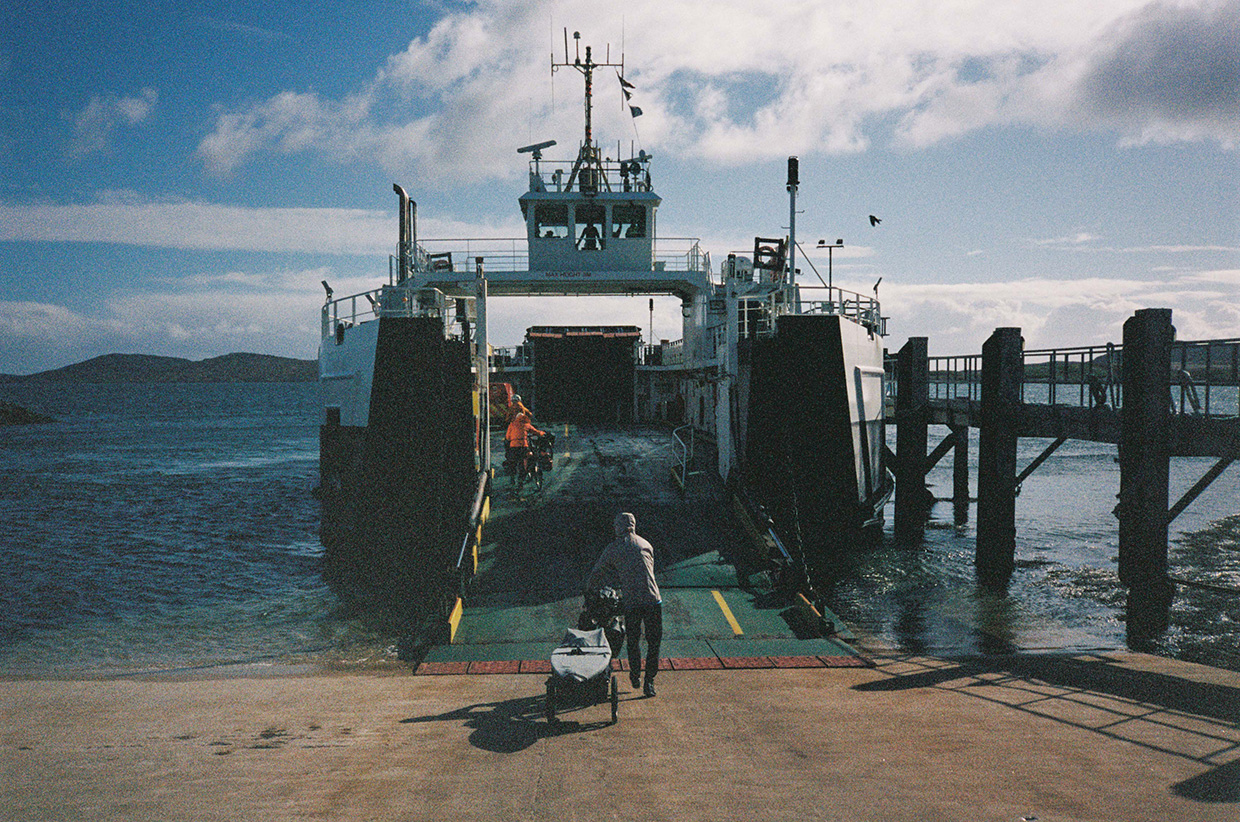
By the time we reached Barra, seasick and drained, the ferry ride had taken its toll. We glanced at each other, both feeling miserable. Henna was pale and exhausted from the rough crossing.
‘Should we stock up on food first, see how we feel after, and then decide what to do?’ I suggested. We ended up booking a night in a hostel 500m from where the ferry dropped us off, hoping the weather would be better tomorrow.
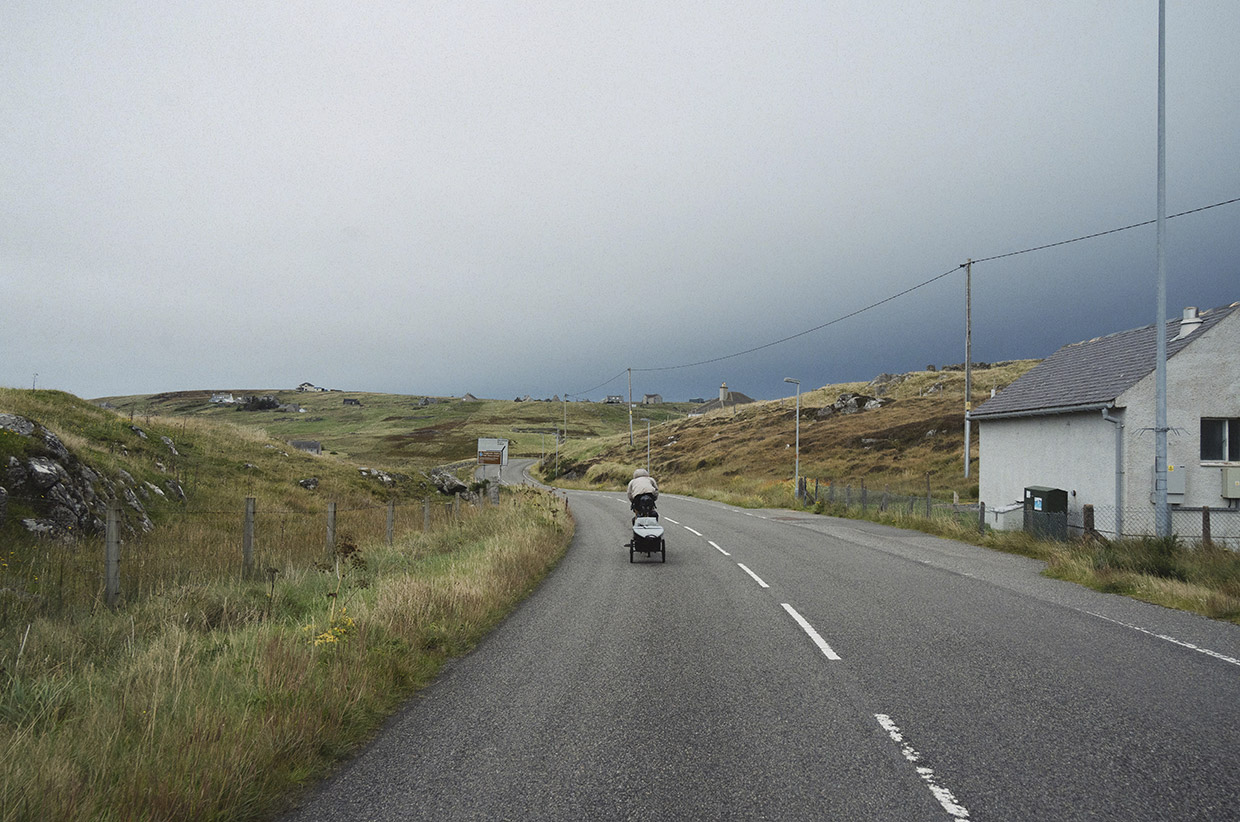
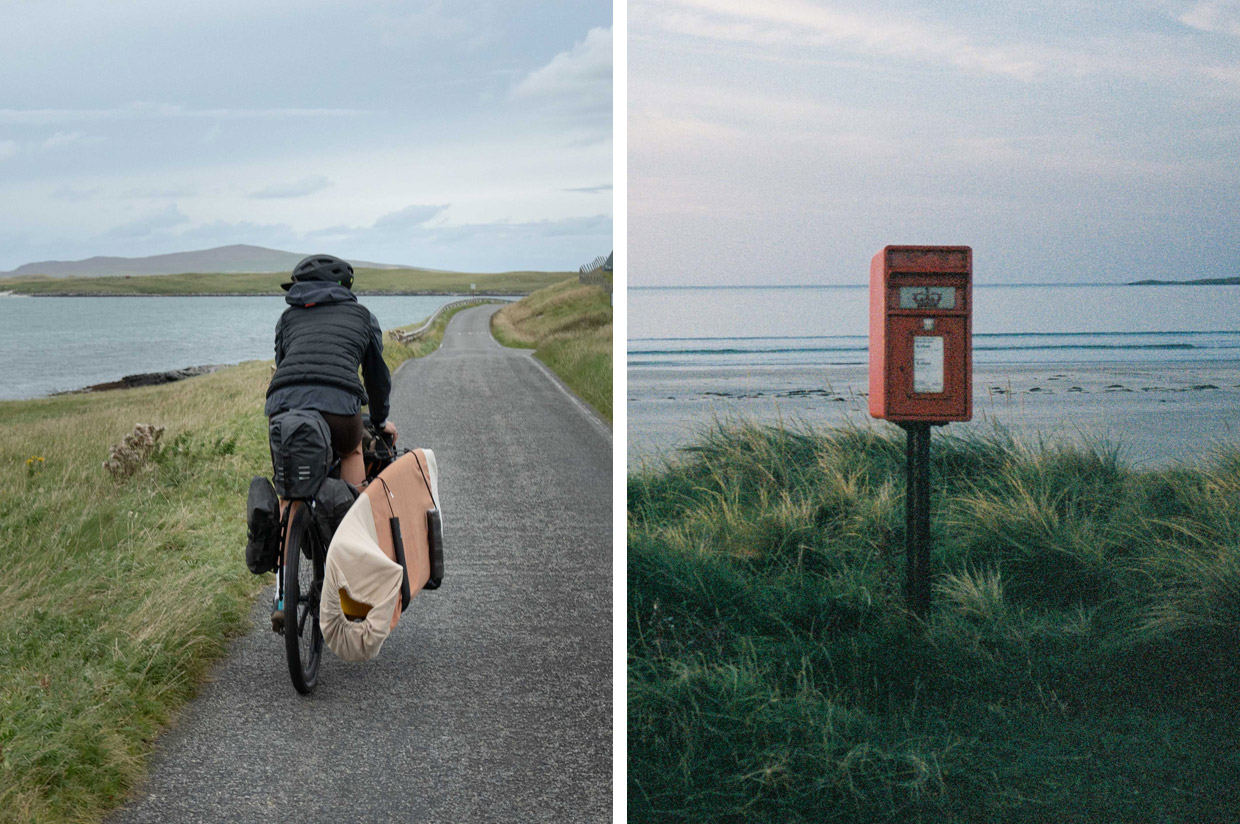
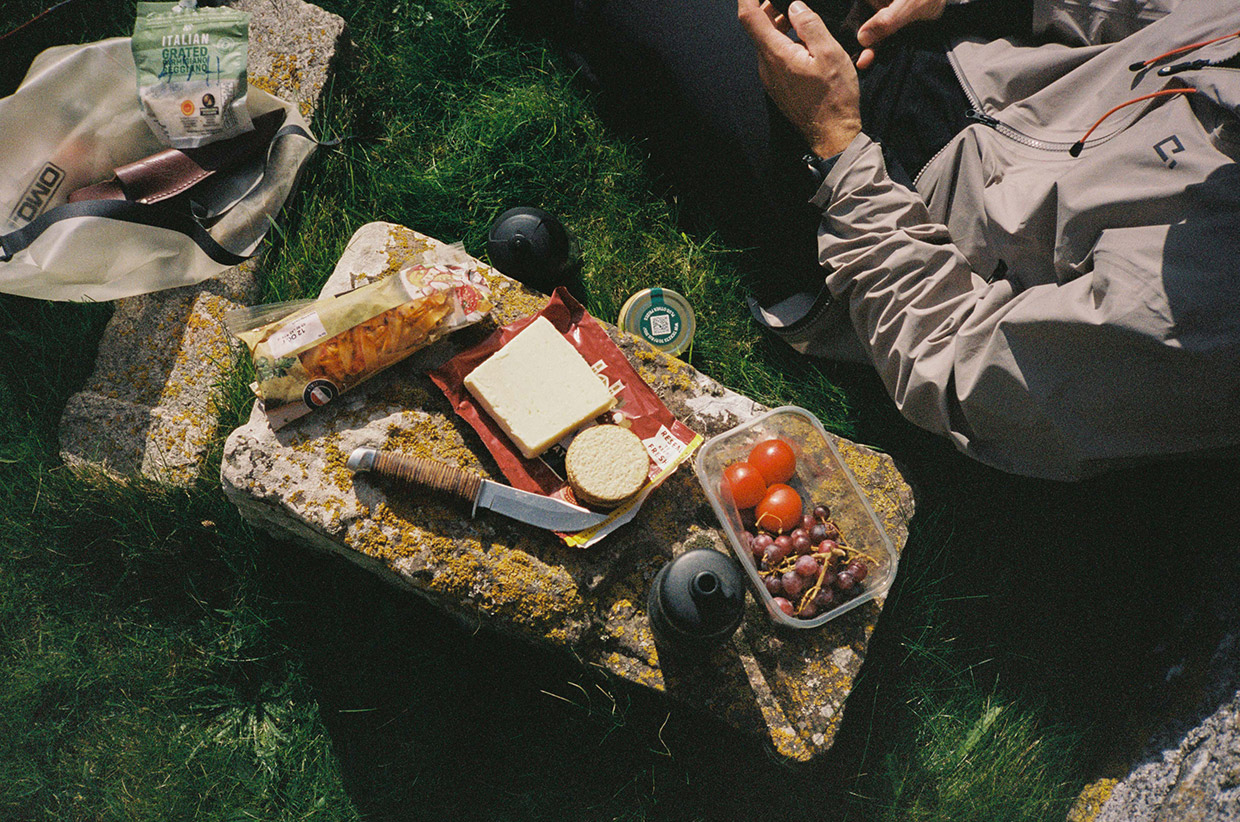
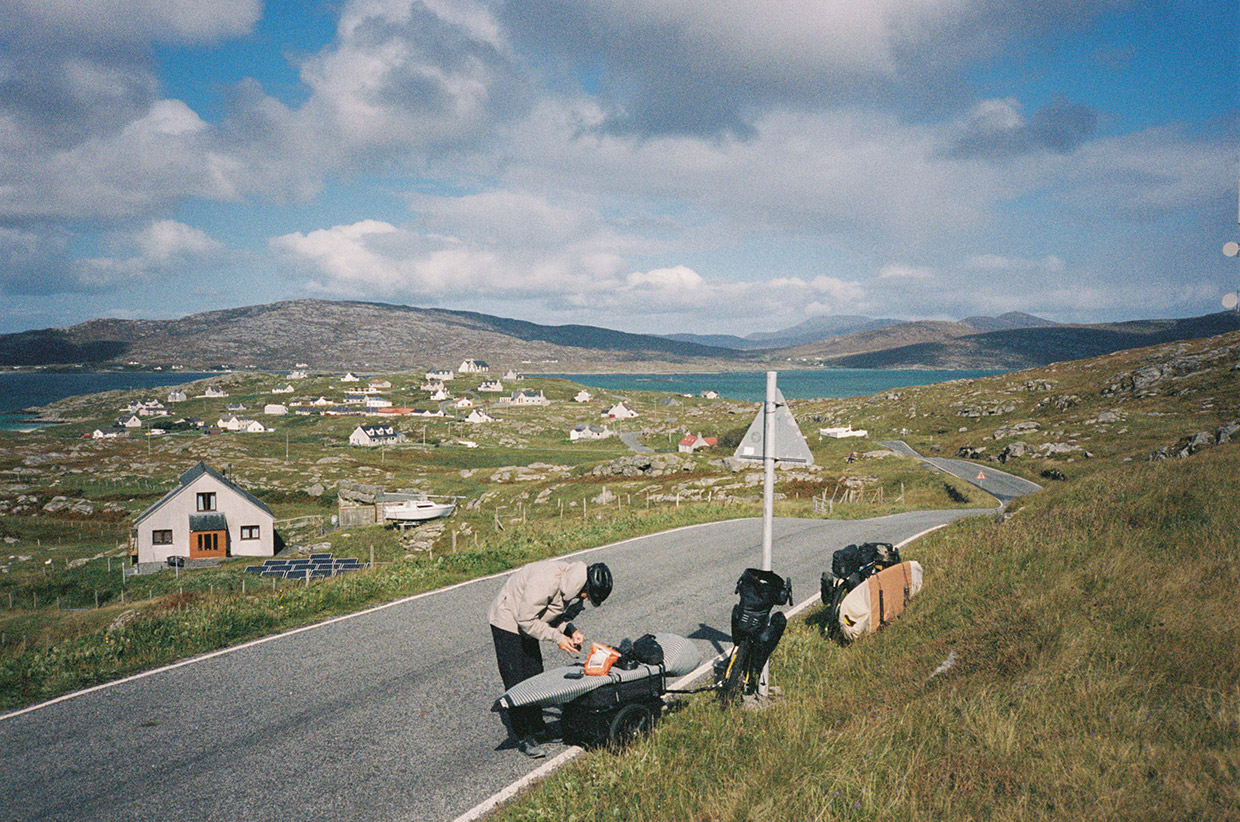
The next day started off promising, and despite the headwind, we managed to cover some ground. But there was too much wind to even think about surfing. On the short ferry crossing, we checked the weather forecast – only to realise this was just the beginning. The real storm was still on its way.
It didn’t just mean bad weather. It meant we wouldn’t be able to surf on the first few islands at all. Instead, we would have to push on, racing to catch the next ferry before we got stranded in the wrong place.
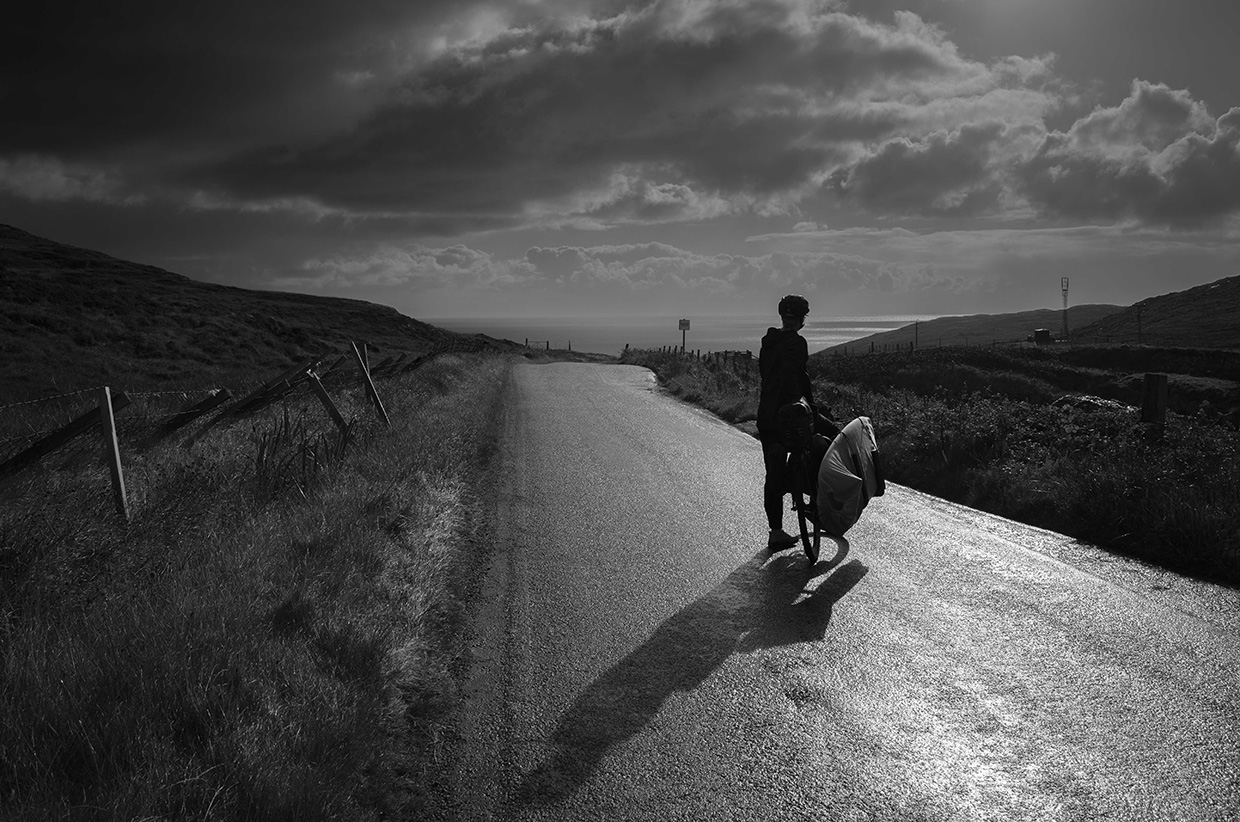
As if battling the weather wasn’t enough, the trailer’s wheel fell off just as we turned in to the campsite on Lewis where we planned to shelter from the storm. We exchanged a tired glance, both silently thinking the same thing: what the heck are we doing? But there was no time to dwell on it. We left the trailer by the crossing, planning to retrieve it later – after we had set up the tent and changed into dry clothes.
***
That night, Henna wrote in her diary:
‘The cold and rain are exhausting in a way I’ve never experienced before. You bike 50km with 500m of elevation gain, but it takes you four hours – four hours of enduring headwinds, cold, and misery. Does it make you wonder if it’s worth it? Yes it does.’
***
The next day, the wind is still blowing at 80kph, so we aren’t in a hurry to get on the bikes anyway – we have the whole day to fix the broken trailer wheel. There’s just one tricky fact: the nearest bike shop to get tools and parts is an eight-hour bike ride away.
A few phone calls later, friends of my parents – who, remarkably, are also on Lewis – kindly cram us into the back of their campervan with all our gear and give us a ride to Stornoway, the location of the island’s only bike mechanic. While Henna checks in to the only available hotel room in town, I rush into the shop an hour before closing. Turns out they don’t fix trailer wheel bearings every day. Hours of problem-solving, an aluminium clothing rail, and a few washers later, a homemade wheel bearing is created. As we walk out of the shop an hour past closing, we let out a sigh of relief – this surf trip might include waves after all.
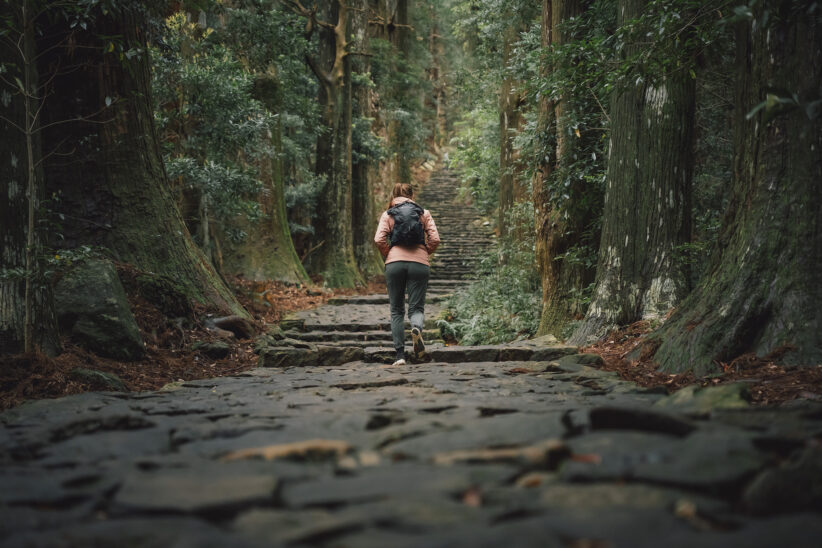
There is so much to take in on these islands. The dramatic shifts in weather, the light, the landscape. Riding a heavy bike, slowly, over time, allows you to absorb all of it, to feel immersed in it. Will a wave feel different when you arrive by bike? Is it more satisfying? Or are your legs too tired to fully enjoy it? I wonder as we climb up onto the moor outside of Stornoway in pouring rain. At this point, the only thing keeping us moving is the promise of better weather. The storm is finally easing, and a clean swell is rolling in. If the forecast is right, we should reach the beach just in time for it. Is this really happening? Are we actually going to surf?
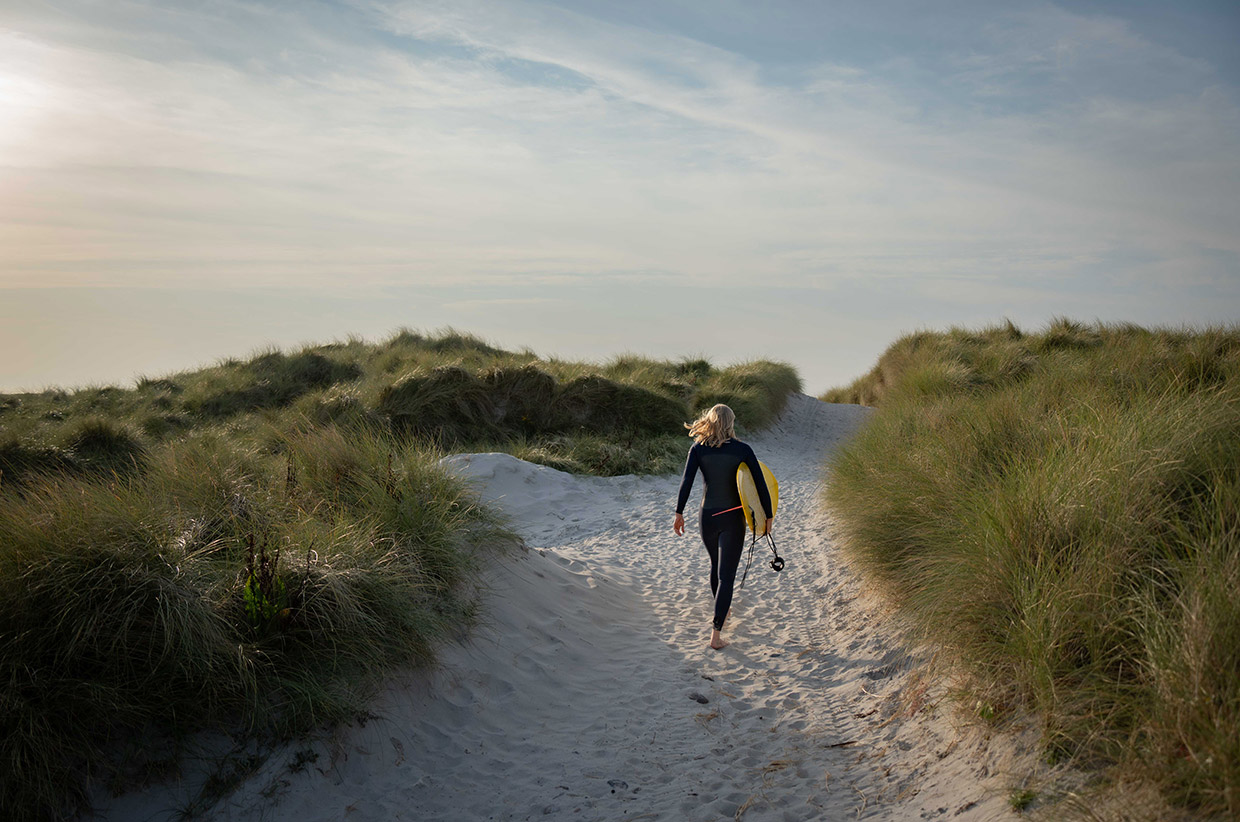
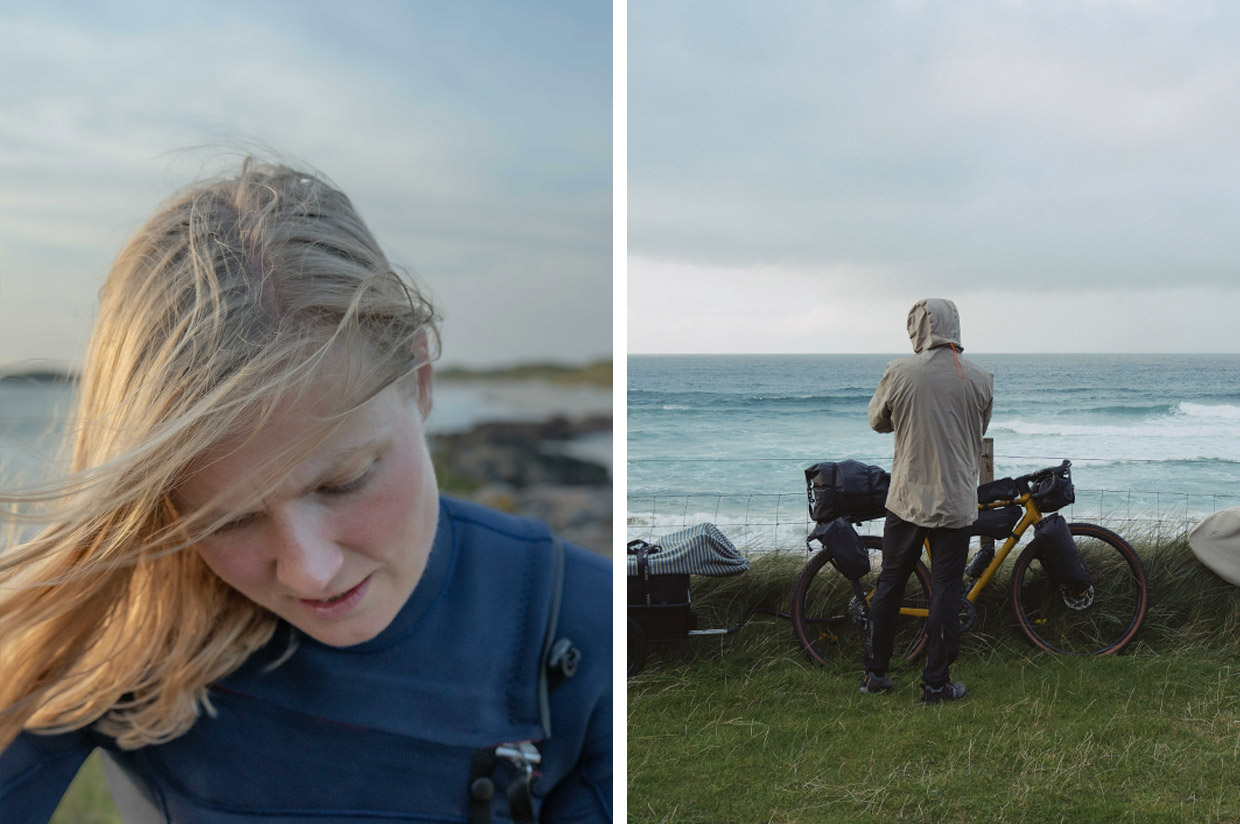

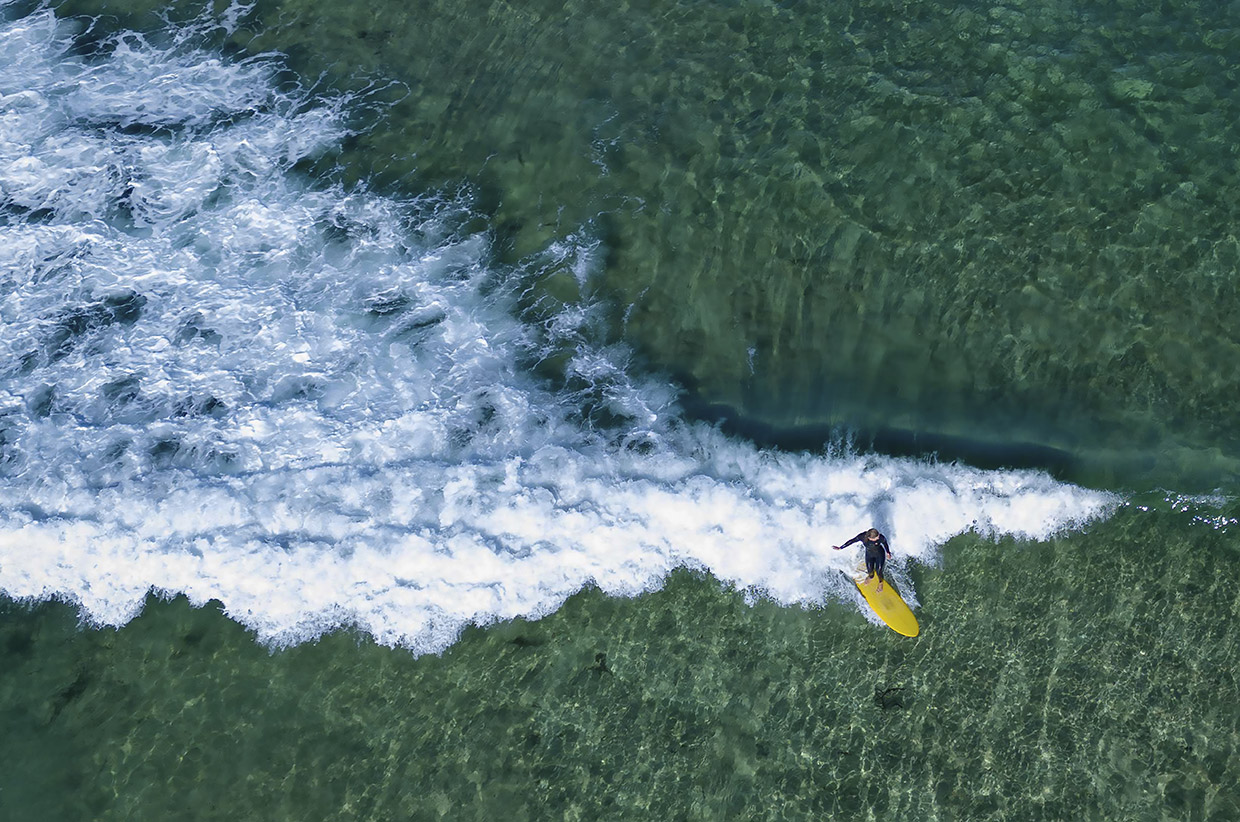
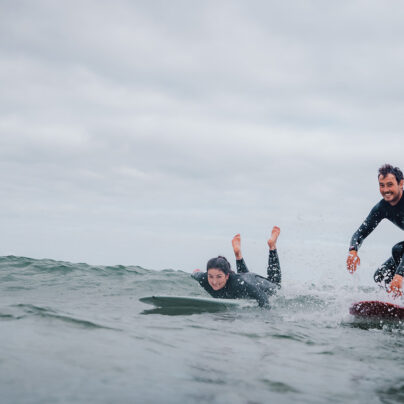
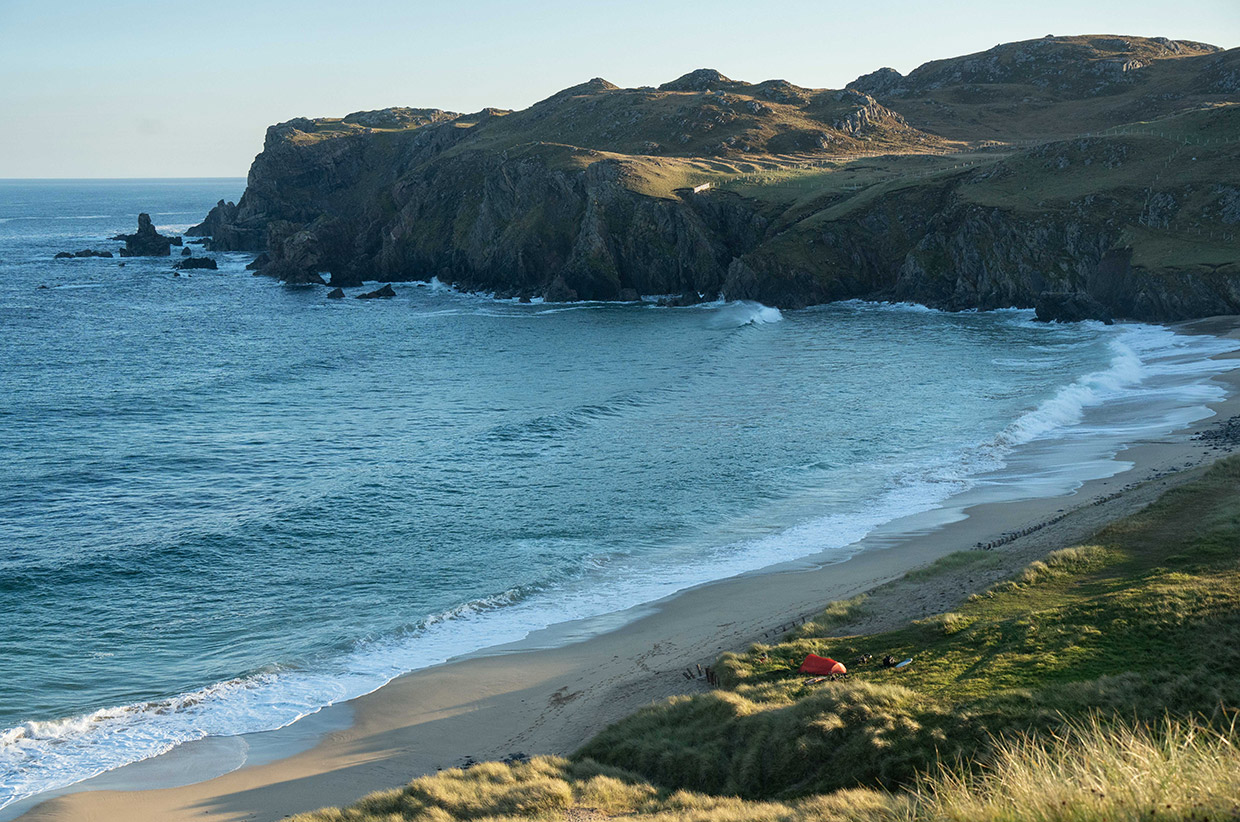
We arrive at the beach after a long battle against the headwind. The ocean is still restless from the storm, but we can see the swell starting to take shape. Henna and I exchange a glance, a small smile – maybe this will work out after all. Without rushing we set up camp, then cook and relax, patiently waiting for the sea to calm. In the last hour of light, we paddle out to catch a few waves, washing off the headwind.
Henna writes in her diary:
‘We’re six days into surfpacking the Hebrides. So far, it’s been two storms and five waves – not exactly what I envisioned. How much are you willing to endure for just a few waves? Or, if you’re lucky, a handful? But maybe it’s not just about the waves. Maybe it’s a lesson in patience, in slowing down when the world keeps telling you to speed up.’
We live in a time where we can be anywhere, any time. Cars, planes – they’ve shrunk the world. We chase perfect conditions, always moving, always searching. But that chase is its own kind of tiring. Not the physical strain of pedalling into the wind with a 40kg bike and a surfboard strapped to the side, but a quieter exhaustion – the mental weight of believing you always need to be somewhere else, somewhere better. To feel that pull, the need to find the best – but what does that even mean? Is it what feels the best? What looks the best? Those are not the same. And maybe learning the difference is the real lesson – the key to letting go, to stopping the endless chase, to finding joy in unexpected places. Like a single sunny wave on a rugged and remote beach after six days of biking in grey.
A morning painted in soft gold, the sea calm and inviting, the waves rolling in just for us – one of the many benefits of camping by the beach. We paddle out to a lineup by ourselves, no wind and no-one else around. My mind quiets, filled with nothing but the warmth of the sun and the rhythm of the water. There is a reason why we chose this place.
The warmth allows our bodies and minds to finally rest after six days of fighting the elements, something we desperately need. And it makes us wonder: what if it had been like this the whole time? It fills us with hope, with belief – that there must be a time and a place where this is the most perfect way to travel. Not despite the struggle, but because of it.
***
Trips are always defined by weather. But I’ve never experienced another trip where I’ve become so vulnerable to it. The right wind for cycling might not be the optimum wind when you arrive at your surf spot. We choose the surf spot based on the swell forecast, a tailwind pushes us all the way there, only to find it’s the wrong wind for surfing. Or, just as quickly, the opposite can happen. A beach might have the perfect swell angle and the right wind, but it’s a gruelling headwind on the bike. Will we get there in time before the tide kills the wave? Will our legs be too battered from the headwind to surf? It’s like we’re drawing a cross, a different wind in each corner: headwind, tailwind, offshore, onshore. In the centre of it all lies a tiny sweet spot – a place where the winds align, where the dream becomes real.
It’s amazing how this little circle, where everything comes together, allows us to dream big. It’s easy to forget about the vulnerabilities of the weather when we’re inside that circle, when the wind is pushing us along, when everything feels like it’s working in our favour.
Tonight, our last evening here, we live in that circle.We cycle the final 30km, the tailwind gently pushing us along, each pedal stroke carrying us closer to a familiar right-hand point break on the island. It’s the kind of wave that rolls effortlessly from take-off all the way to the beach. The same offshore wind we have dreamed about for so long is here, cleaning the waves just as it always does. We paddle out, sitting in the lineup amongst a mix of locals and visiting surfers. There’s a shared smile in the water that evening. We surf for three hours, legs barely holding on. Some waves we kick out earlier than the wave offers, too tired to stay for the long rides that the locals make look so easy. But as the sun dips below the horizon, a sea mist begins to roll in, closing the weather window we have been savouring for the last four days. The mist is a quiet reminder that the end is near. Just as the weather dictated the start of this journey, it now dictates its conclusion. The swell will fade overnight, the headwinds are forecasted to return, and the next storm is beginning to reveal itself.
But now, stretched out on the sun-warmed dunes with her journal, Henna writes once again:
‘The wind and rain, the struggle and doubt – they feel distant now, almost unreal. Isn’t it strange, how easily the mind forgets? Maybe that’s why we keep going. Maybe forgetting is part of believing.’
It’s time to go home.
First published in Sidetracked Volume Volume 33
Words & Photography by Adam Gairns and Henna Palosaari // @honesttoast // @hennapalosaari