Written by Jenny Tough
Photography by John Summerton
Jenny Tough walks, rafts, and cycles the ancient Kumano Kodo pilgrimage trail across Japan’s Kii Peninsula – via cedar forests, a hand-dug riverside onsen, and a fire ritual at journey’s end.
The Kumano Kodo is a network of ancient pilgrimage trails threading through the Kii Peninsula, south of Osaka, in use for over a thousand years by emperors, aristocrats, and commoners alike in search of purification and spiritual renewal. It’s one of only two pilgrimage routes in the world to hold UNESCO World Heritage status, with the other being Spain’s Camino de Santiago. The trails converge on the Kumano Sanzan – three grand shrines (Hongu, Hayatama, and Nachi Taisha), and one temple (Nachisan Seiganto-ji) that represent a rare fusion of Shinto nature worship and Buddhist belief, coexisting in the same sacred mountains.
For our pilgrimage, we walked the Nakahechi, the most historic and popular of its routes, over five days – from Kii-Tanabe on the west coast, through mountain forest to Kumano Hongu Taisha, and then by packraft down the Kumano-gawa to Kumano Hayatama Taisha. We switched to bicycles for part of the final leg as we made our way up to the Kumano Nachi Taisha.
Here are some of the places that shaped our journey.
Stay // Comfort Hotel Kii Tanabe
After arriving in Osaka the day before, we made our way down to Kii Tanabe by train – the JR trains are regular, fast and extremely efficient. After just a couple of hours we arrived in Kii Tanabe and made our way to the hotel on the edge of town. The hotel is a functional and modern base in Kii-Tanabe, the gateway town for the Nakahechi route, and well placed for our final preparations for an early start on the trail.
Details: choicehotels.com
Walk // The Nakahechi Route
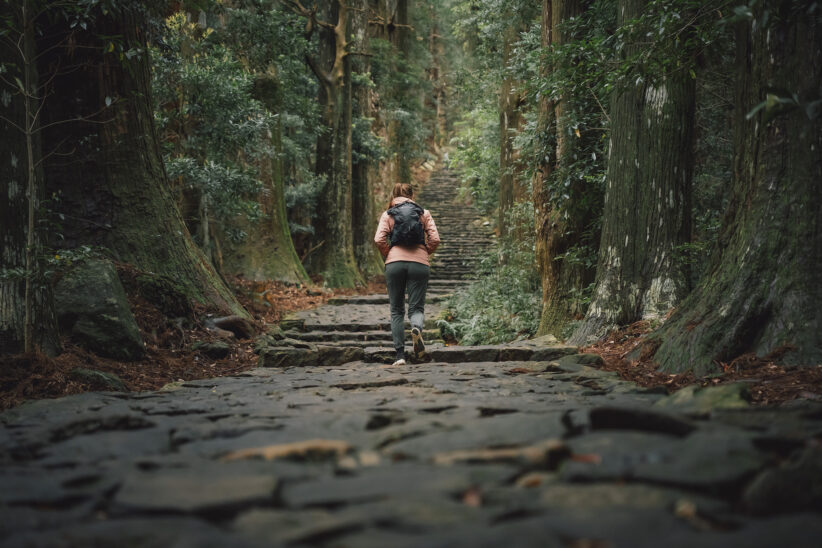
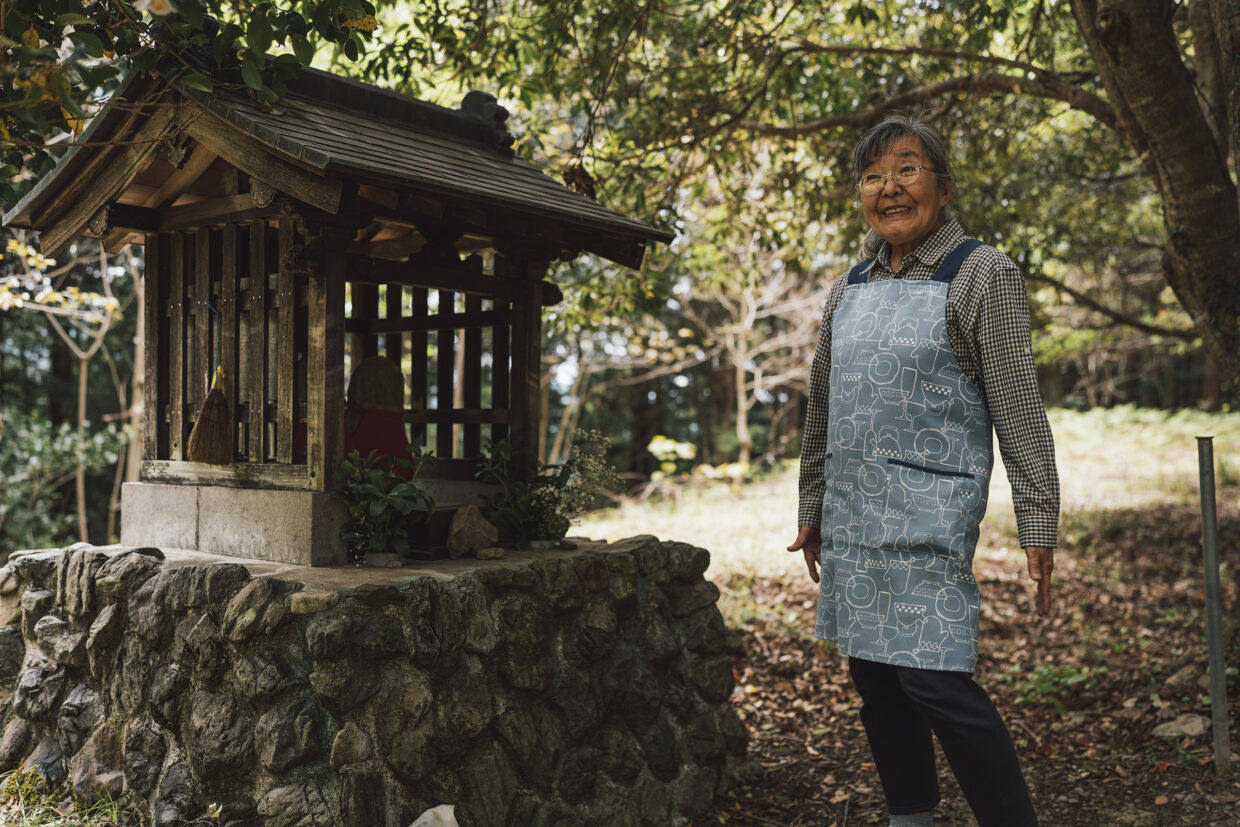
The Kumano Kodo isn’t one trail but a network of ancient pilgrimage routes across the Kii Peninsula; the Nakahechi is the most historic of them, linking the Kumano Sanzan – the three grand shrines and one temple of Hongu, Hayatama, and Nachi. From Takijiri-oji shrine, the trail climbs through cedar forest via a string of oji – smaller shrines that once marked resting points for pilgrims – past jizo statues, sacred wells, and lookout points, before descending to Kumano Hongu Taisha itself.
Our guide for the opening stretch of the Nakahechi, Nobu led us from Kii-Tanabe through to Takijiri-oji and into the first day of forest walking.
Details: @nara_guide_nobu911
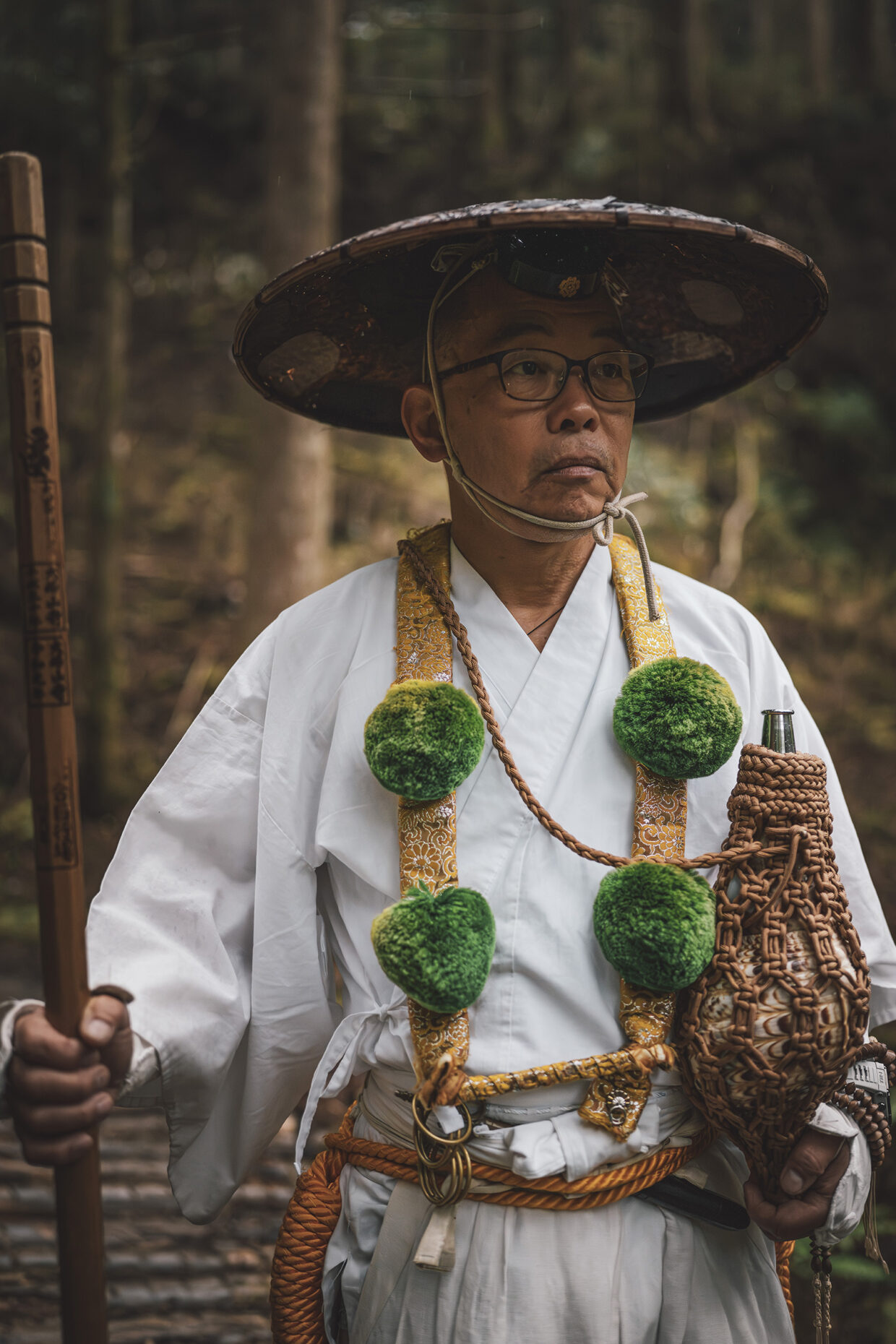
Later on our journey a Yamabushi mountain ascetic and guide called Katsu Ueno led us through the final approach to Kumano Hongu Taisha and later down the Kumano-gawa by packraft. His knowledge of the mountain’s spiritual history (and his refusal to be dampened by rain!) shaped much of the trip. As an interesting side note, when Katsu is ‘off-duty’ as a Yamabushi, he’s a proper adventure athlete and has completed several extreme kayak descents around the world.
Details: kumano-experience.com
Shelter // Guesthouses of the Nakahechi
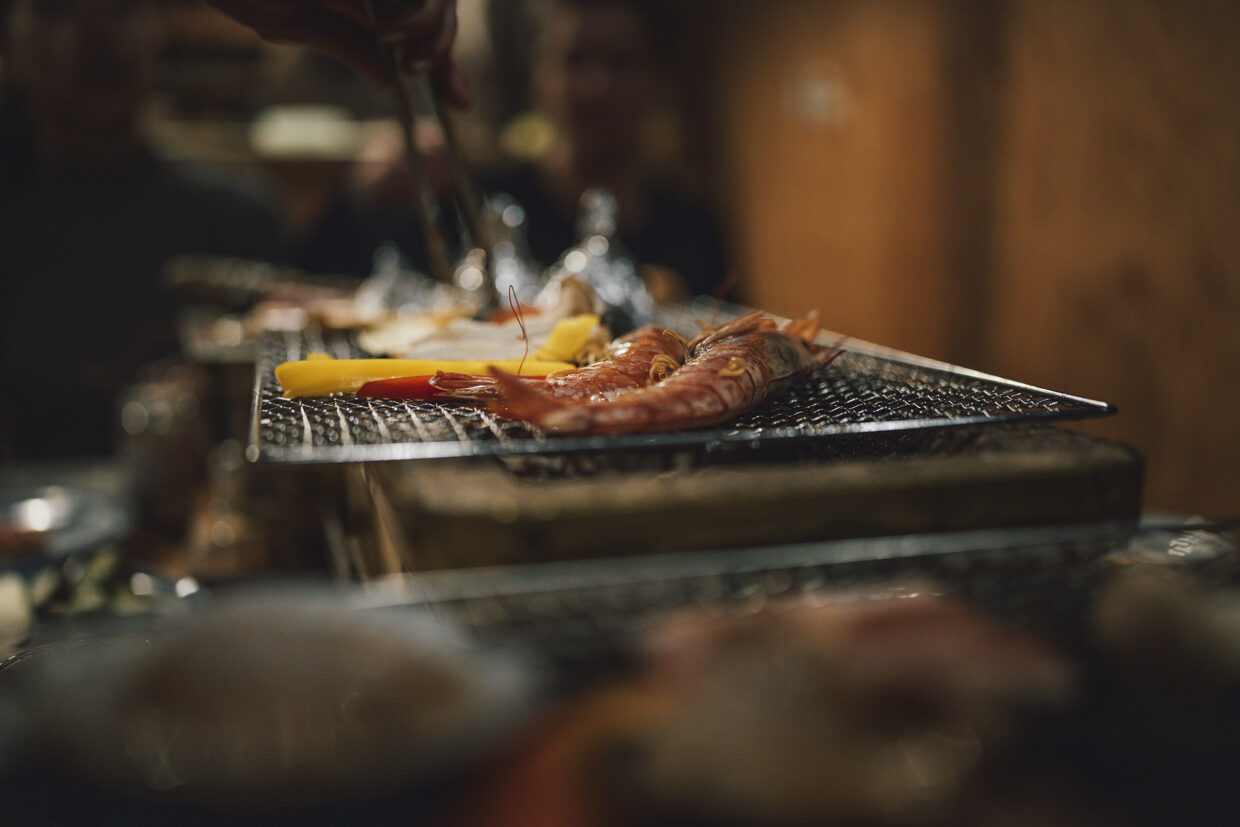
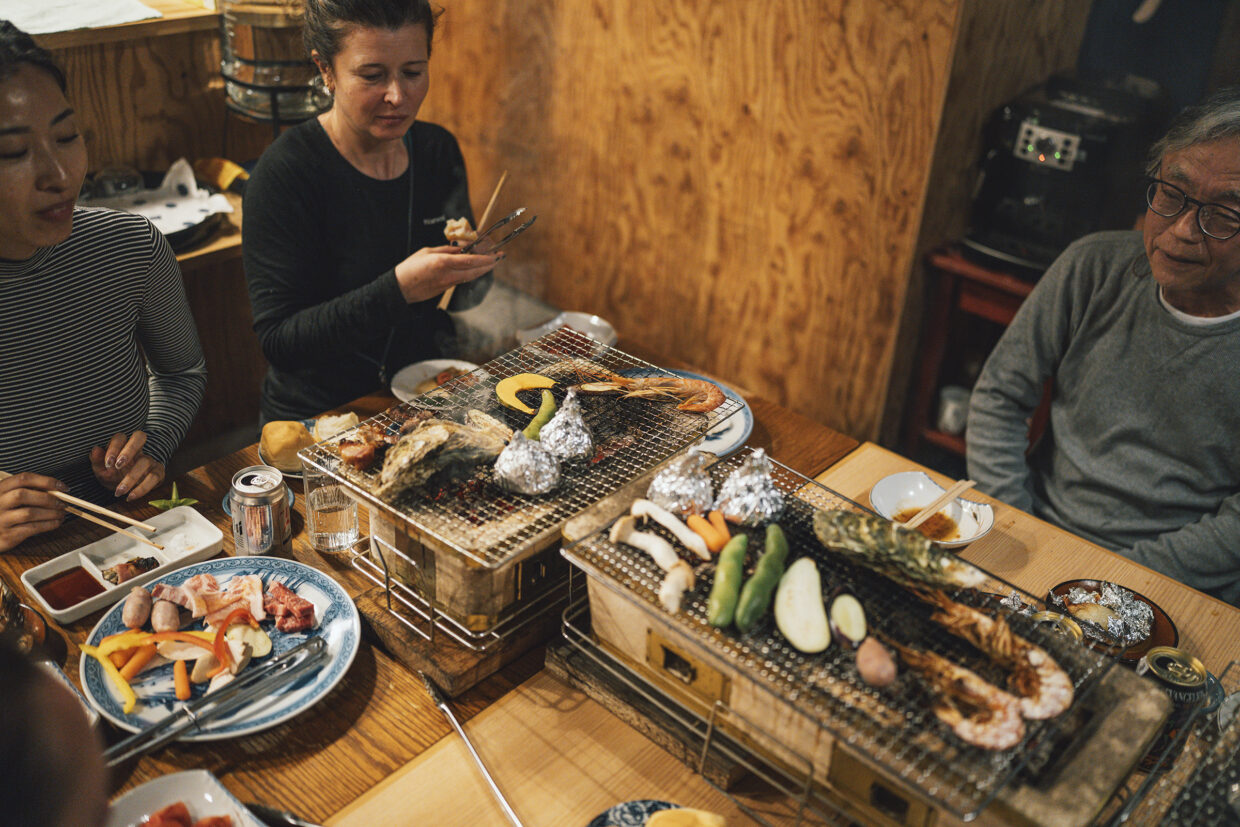
Along the trail there are many small family-run guesthouses. Kodo-no-mori Anchan and Kumano Kodo Inn Hagi, which we stayed at, are among them. They offer simple tatami rooms and delicious, authentic home-cooked dinners (we had a fantastic fish and meat bbq at Inn Hagi, and packed lunches for the trail ahead). Amenities are fairly basic by design, but this fits extremely well into the overall experience – the pilgrimage was never meant to be about luxuries.
Details: kumano-travel.com/kodo-no-mori-anchan and
kumano-travel.com/kumano-kodo-inn-hagi
Soak // Kawayu Onsen
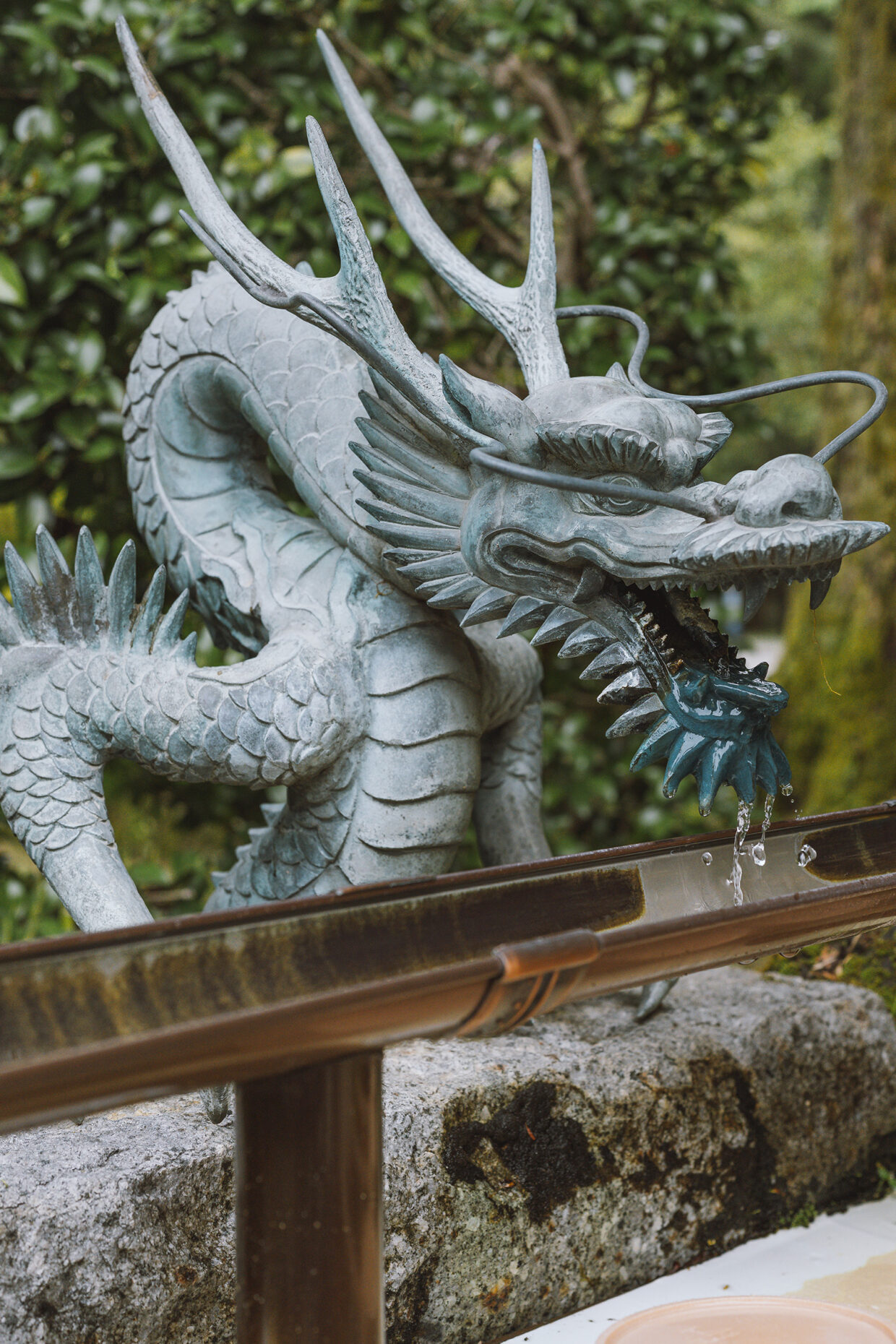
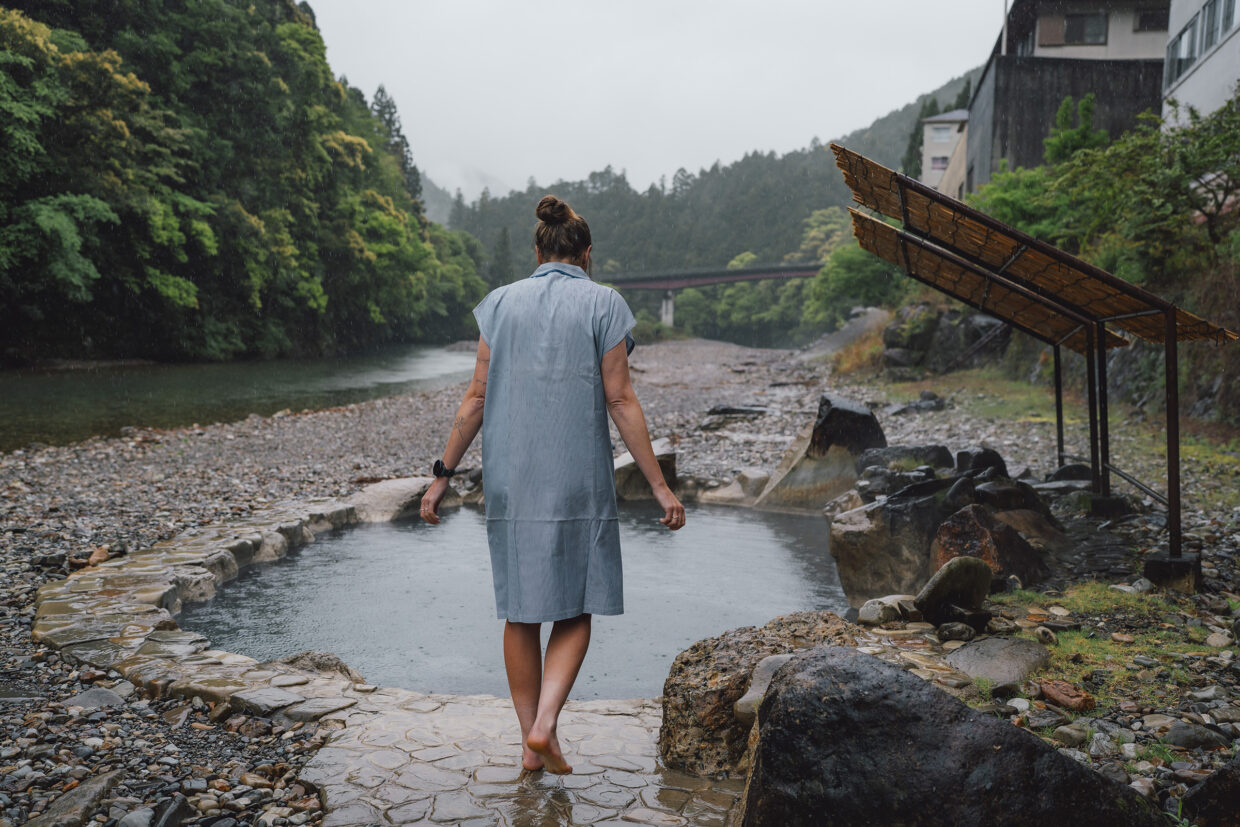
Onsen bathing in Japan stretches back thousands of years, with roots in Shinto purification rites and, later, Buddhist teaching that bathing warded off illness – the two traditions merging into what’s now simply called onsen culture. Along the Kumano Kodo, hot springs carried an even more specific purpose: pilgrims stopped to bathe not just for rest, but to purify themselves before approaching the sacred Kumano Sanzan.
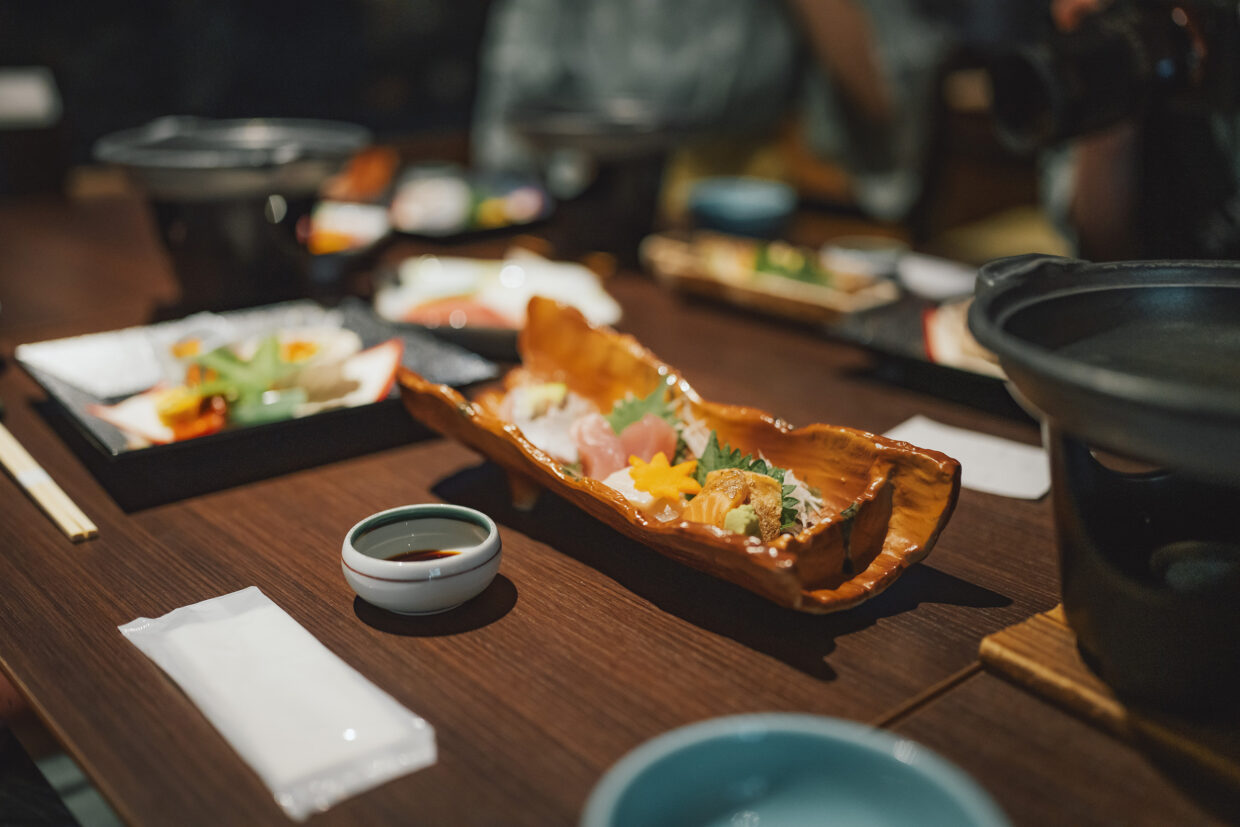
What makes Kawayu even more special is that the spring rises straight up through the gravel bed of the Oto-gawa river. You can simply dig a shallow pit in the riverbank and hot mineral water, often over 70°C at the source, bubbles up to meet the cold river water flowing over it. It was fascinating and extremely hot! We stayed on the riverbank at Kawayu Midoriya, a traditional hotel with its own onsen, made a fitting base for the night. And, a side note here: the food in the restaurant that evening was so good.
Details: urashimaresortsandspa.jp
Raft // The Kumano-gawa River
From Kawayu Onsen, the traditional pilgrim route continues not on foot but by water. Modern pack rafts follow the same course historic pilgrims once took by boat, drifting past Miwa Ohashi bridge to Kumano Hayatama Taisha, where the river meets the Pacific.
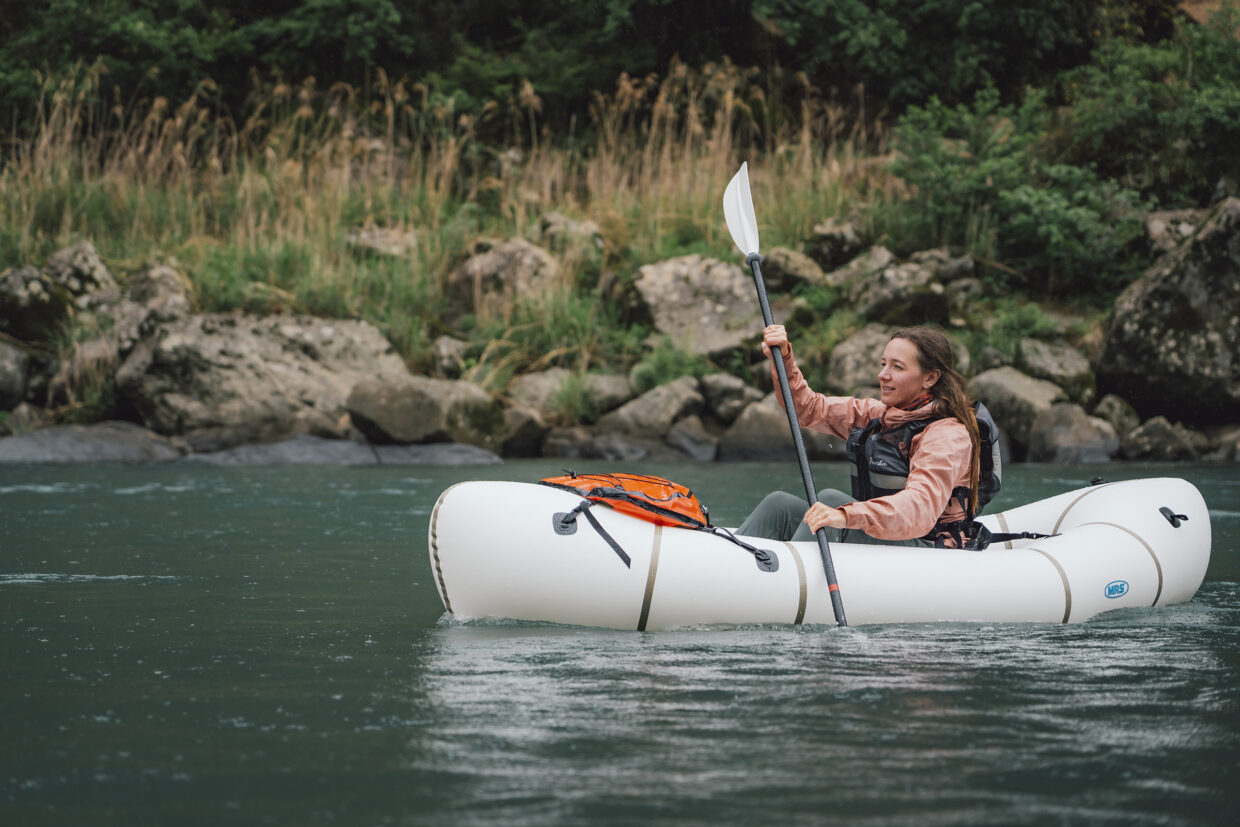
For this part of the journey, we teamed up with MRS Packrafts and used both single and paired rafts. The descent took most of the afternoon, and was a mix of gentle downstream paddling with some more lively rapids to navigate. Despite ending up soaked by the rain and the river, we thoroughly enjoyed this section and highly recommend giving it a try.
For details on MRS Packrafts, visit www.mrsraft.com
After the river descent, we stayed in town in a simple Japanese-style guesthouse and wandered into town to a ramen bar. This was also a new experience for us, ordering from a shokkenki – a vending machine by the entrance to the bar. You insert cash, press a few buttons, present your ticket to the chefs and hopefully you ordered correctly. Don’t forget to slurp too – this is important here.
Ride // Coastal Cycle to Nachi
For the final stretch, we used road bikes, following cycle paths along the populated coastline to Fudarakusan-ji temple, and Kumano Kodo Daimonzaka – towards Nachi Falls, one of Japan’s highest single-drop waterfalls and our finale. Bikes can be hired in all the main towns in the prefecture and are a great way to explore the area.
Arrive // The Kumano Sanzan
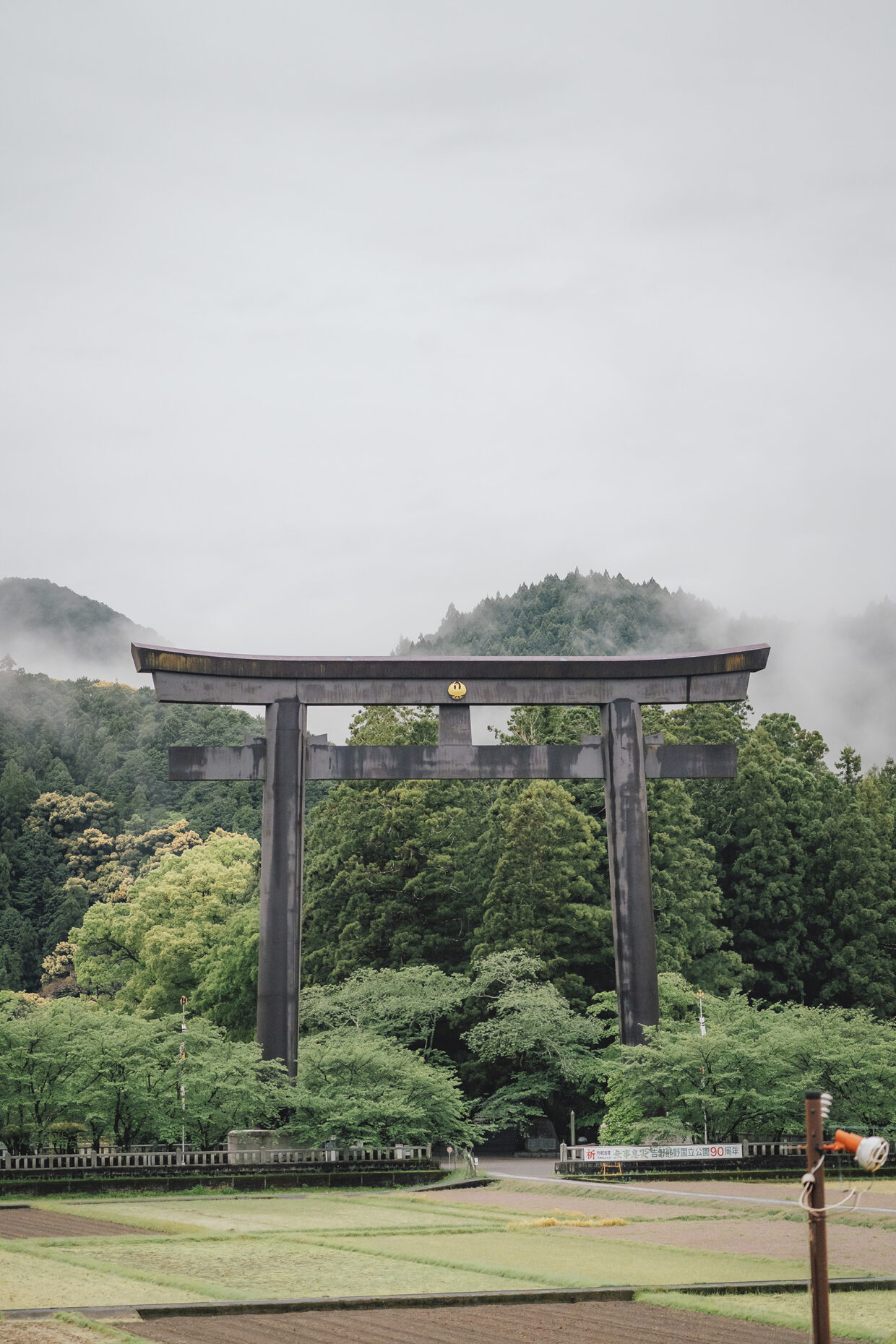
The three grand shrines and one temple are the spiritual heart of the whole pilgrimage, and each one makes you work for it. At both Kumano Hongu Taisha and Kumano Nachi Taisha, the final approach is a steep run of stone steps climbing straight up through the trees – legs already tired from days of walking, before the shrine finally appears at the top.
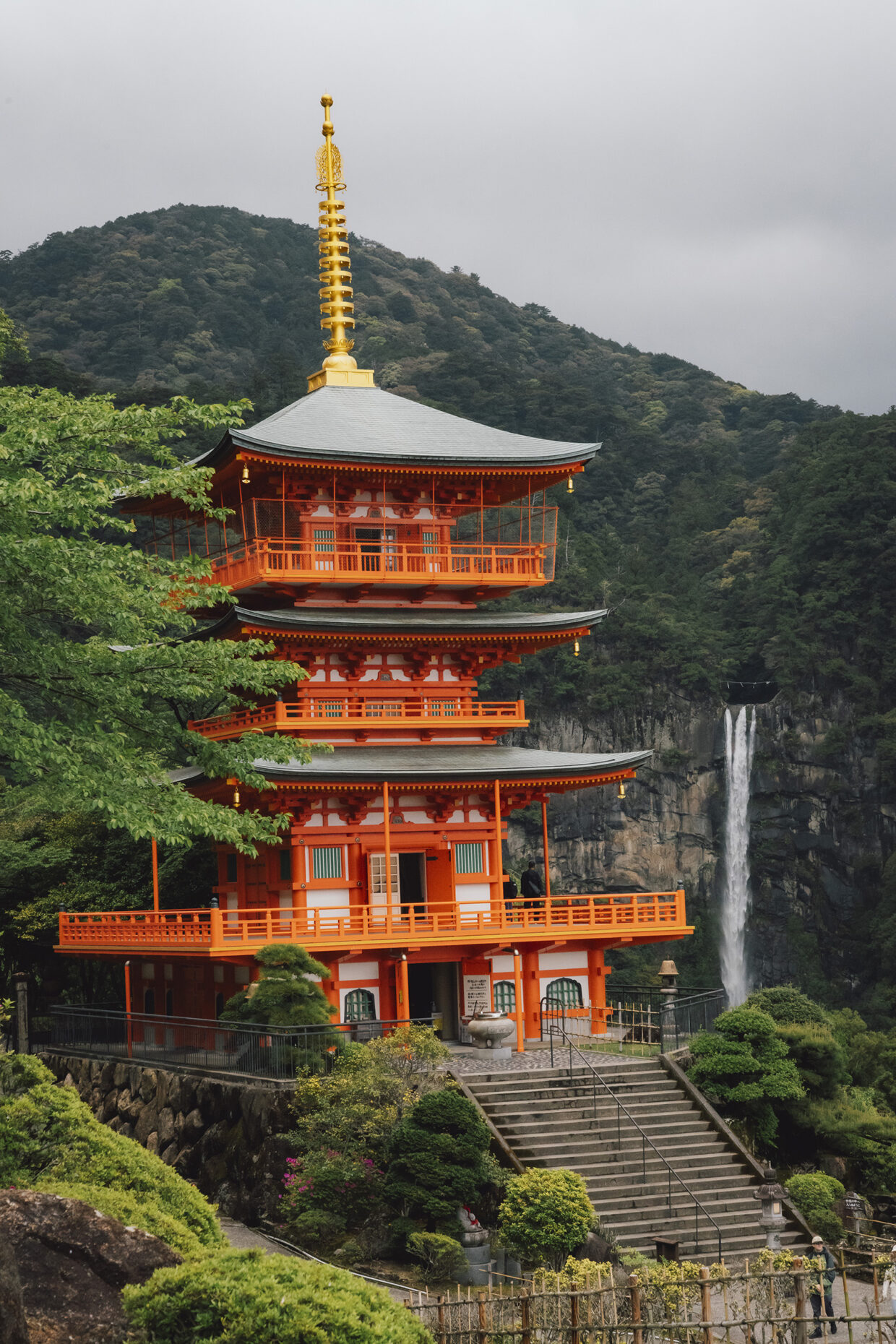
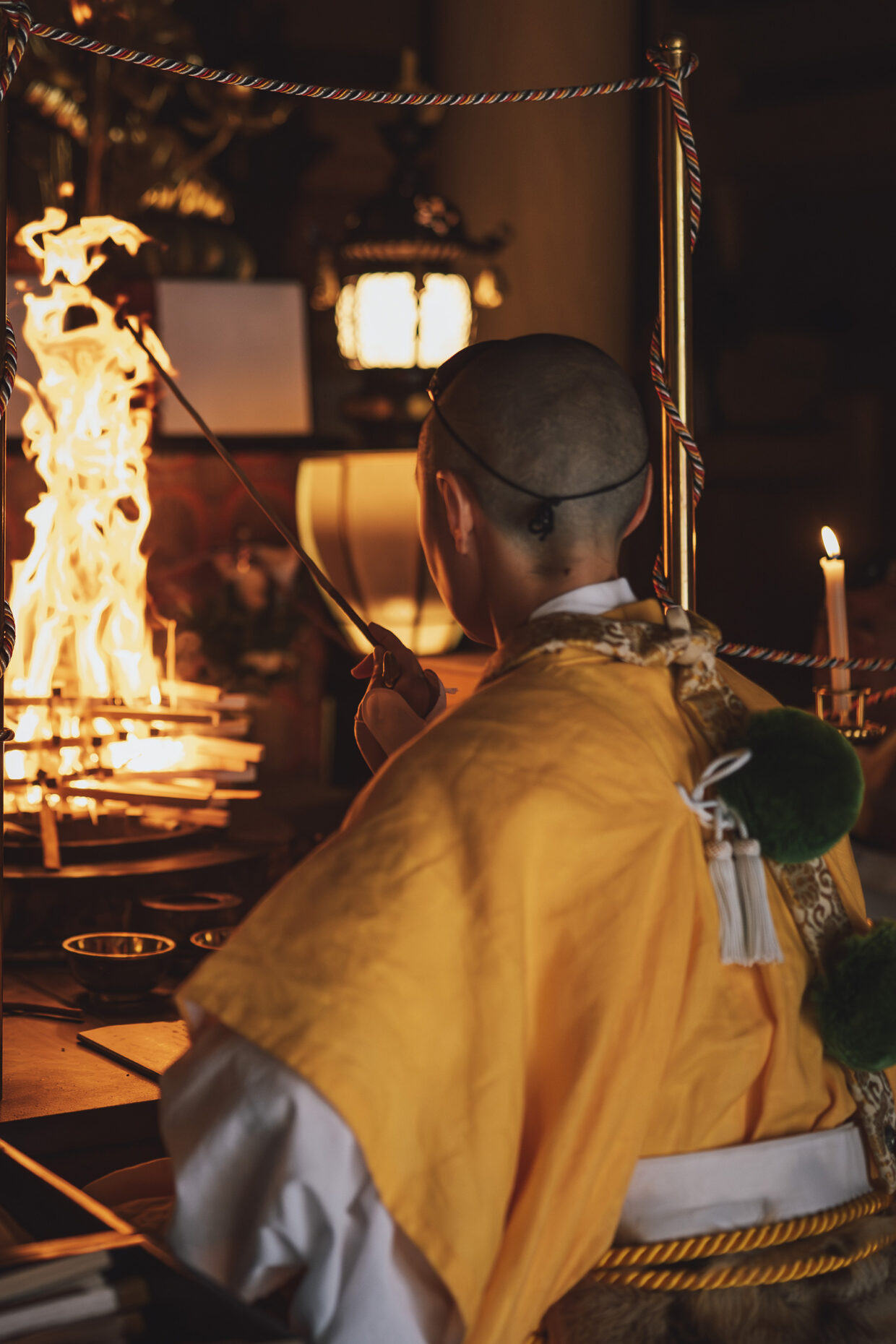
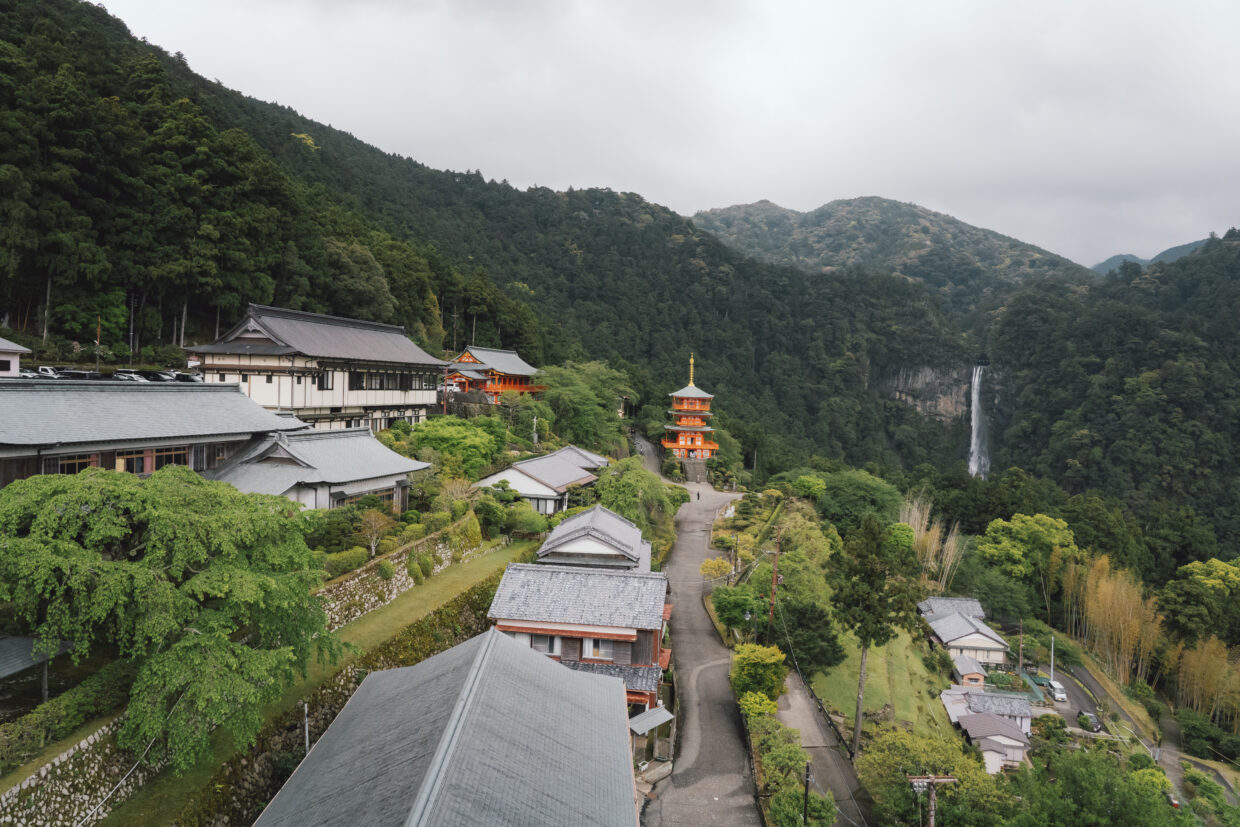
At Nachi Taisha, arriving alongside Seiganto-ji temple’s red pagoda and the falls behind it, we were lucky to witness something completely unexpected: a Goma fire ritual, performed by Yamabushi monks as part of their Shugendo practice. Chanting, taiko drumming, and conch shells built around a roaring bonfire, with wooden prayer sticks fed into the flames by the monks. The team were stunned to silence and I think this was one of the most powerful moments of the whole trip.
A Final Soak // Kamenoi Hotel Nachi-Katsuura
For our last night we were treated to a night in Kamenoi hotel – a traditional Japanese hotel with rooms that have their own private onsen on balconies overlooking the coast. It was the kind of place we could have stayed and enjoyed for days, bathing and gazing up at the mountains in one direction or watching the surfers enjoy the evening swells in the other.
Details: kamenoi-hotels.com/nachikatsuura
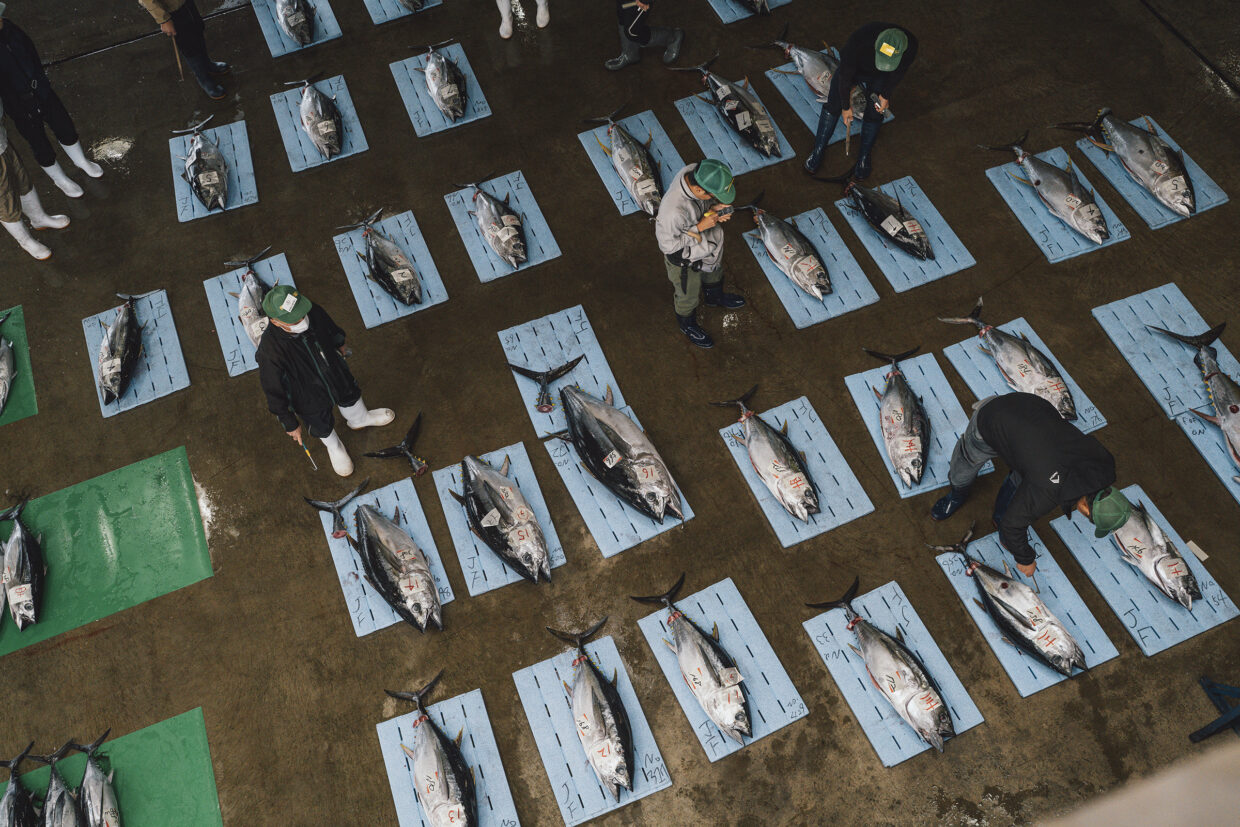
Experience // Katsuura Tuna Auction Market
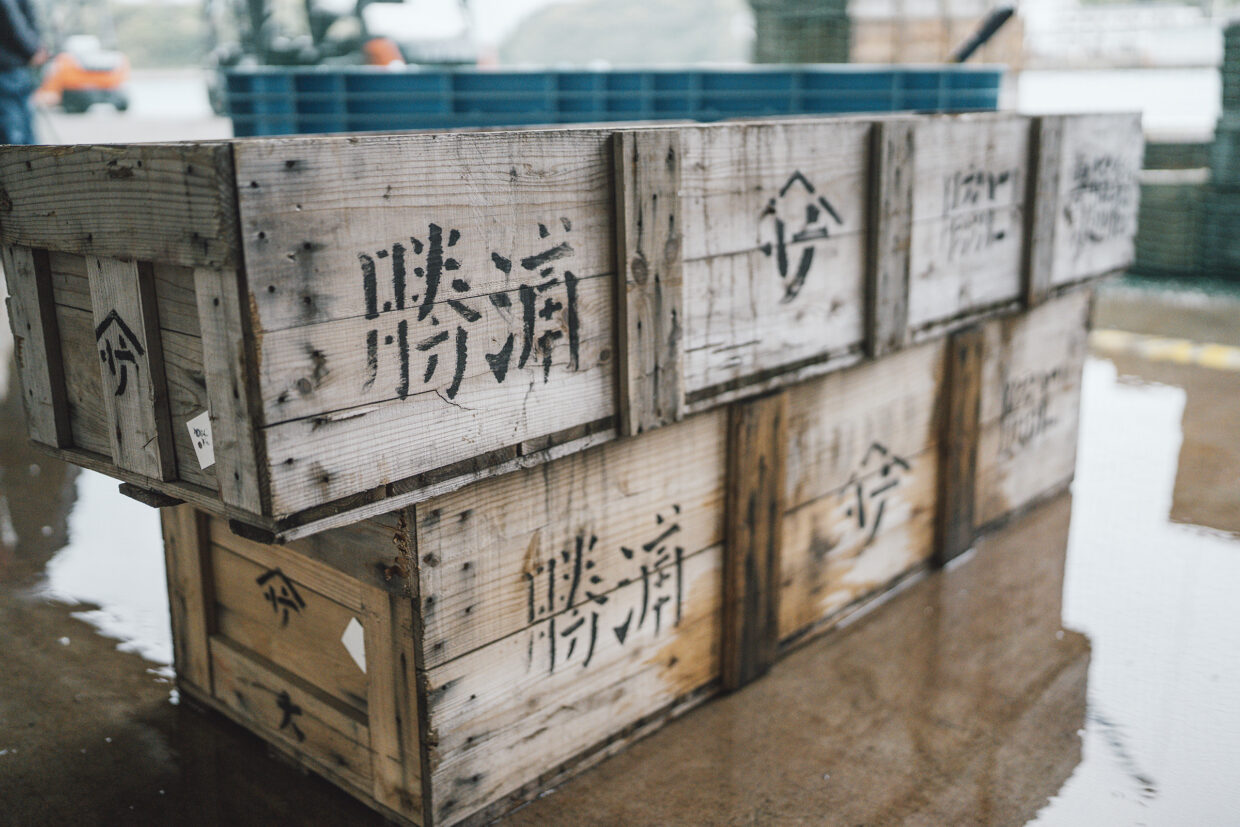
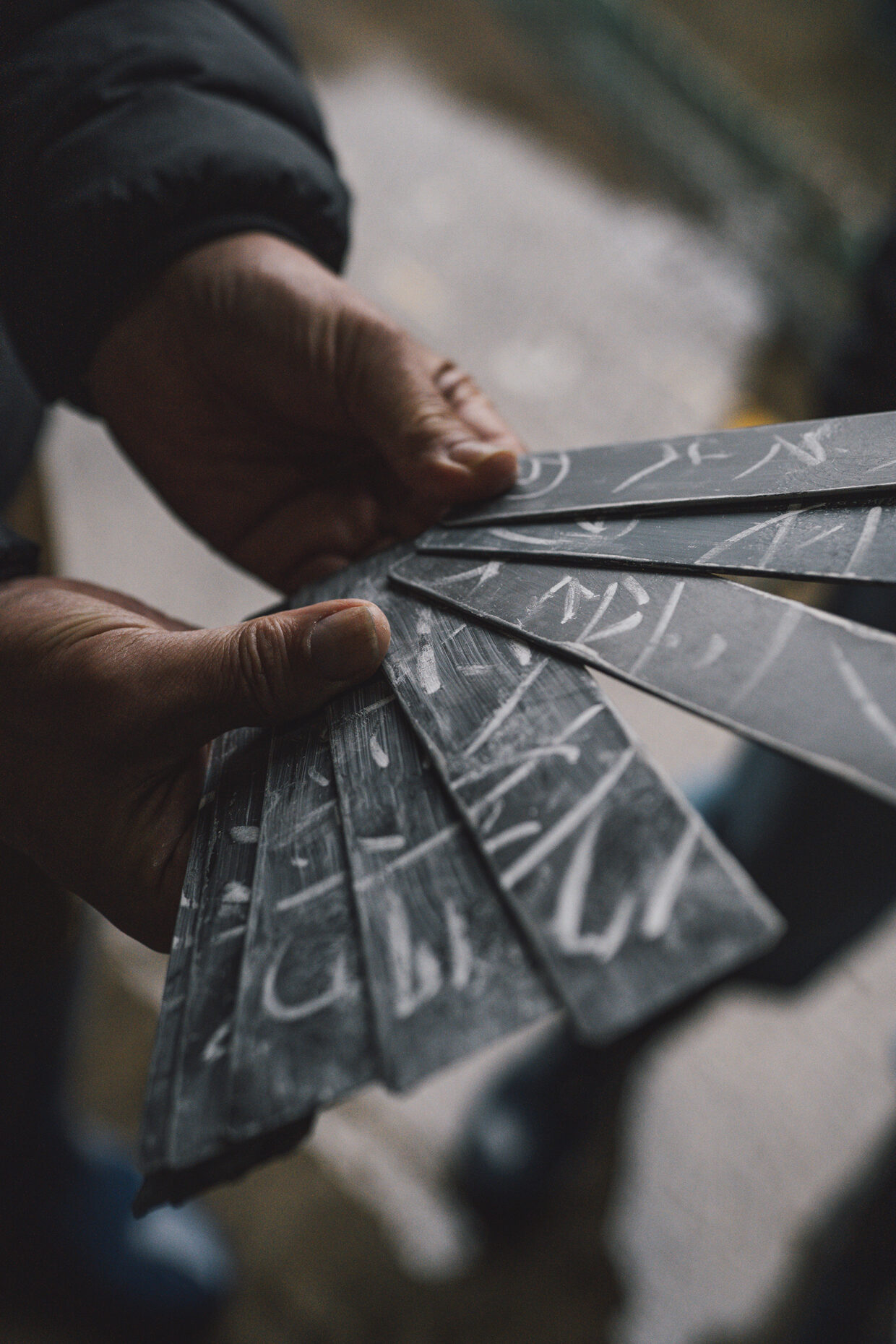
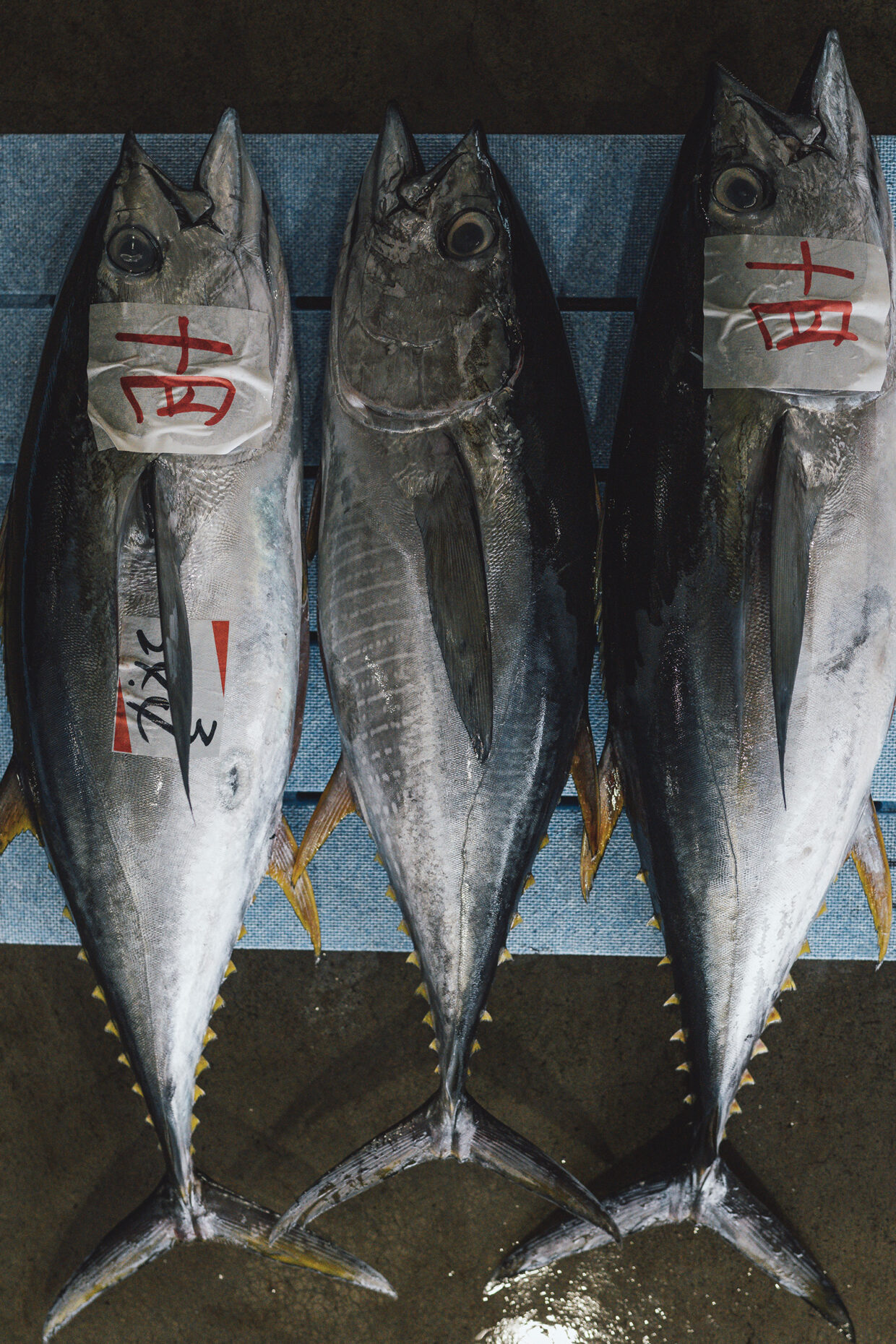
The following morning, before our return to Osaka, we visited the tuna market. Nachi-Katsuura lands more fresh tuna than almost anywhere else in Japan, and the morning auction is open to visitors – either from a public viewing deck or via small guided tours. Auctions run early, from around 7am, most days of the week. This may not be to everyone’s taste, but John and Matt said it was a fascinating experience, albeit quite overpowering on the senses.
To learn more about the Kumano Kodo visit visitwakayama.jp and @visitwakayama on Instagram. Special thanks to Kanae Watari for her belief, support and fantastic organisation of our visit to the Kii Peninsula.
Read the feature story from our journey.
Also from the series: The Lure of the North.
For information on the forthcoming TV series, visit untrailed.tv
Written by Jenny Tough // @jennytough
Photography by John Summerton // @johnsummerton
Film (coming soon) by Summit Fever Media // @sfm_films
Produced in partnership with Wakayama Tourism Federation // visitwakayama.jp // @visitwakayama
Supported by Black Diamond // Montane // Vivobarefoot