Stories Behind the Gear: Exped Lightning
Gear Explore Gear & Guides
Written by Daniel Neilson // Photography by John Summerton
Produced in partnership with Exped
Chances are, the geographical features that make for a good camping spot are also suitable for a witch’s coven. Protection from the wind… and witch hunters. A sheltered spot to make a coffee… or to fire burn and caldron bubble. Where better to appreciate the freedom of backpacking?
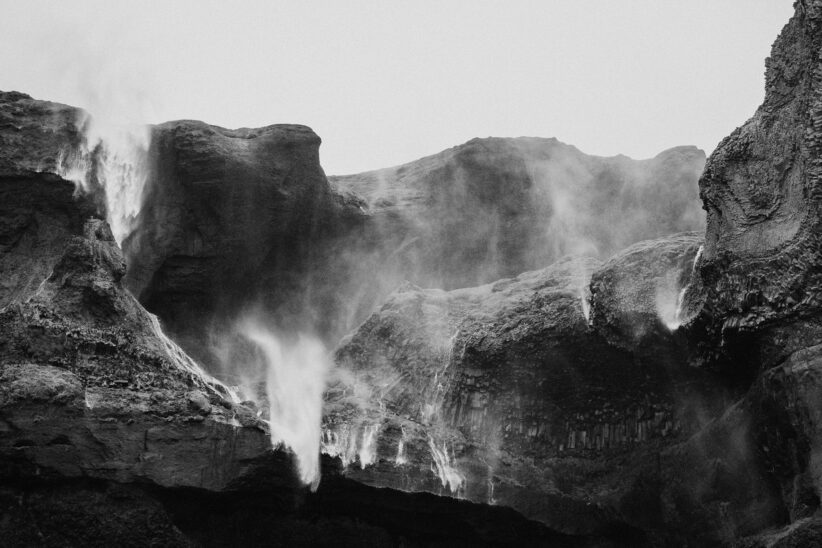
The devil, who was attending such a coven in the Kilpatrick Hills north of Glasgow (as you do), was late on one occasion. In his hurriedness, he circled the hill above the coven and accidentally sliced a cleft in a rock, which we now know as the Whangie. Clumsy perhaps, and we can’t be sure what the witches said (although ‘duck!’ seems likely at first), but the resulting rock formation did make for an even more sheltered location, so overall good for the witches and good for backpackers. The word Whangie is derived from the old Scots word for a slice, as in a ‘whang o’ cheese’, as no-one says anymore. From above, it looks exactly like someone has drawn a knife through a block of cheese.
Geologists have a different theory – the cynics – claiming that it was formed by glacial plucking, a process whereby meltwater at the base of the glacier penetrates cracks in the bedrock and rips up the rock. At the Whangie, the ravine is almost 100m long and less than a metre wide at its narrowest, with rocks towering up to 12m high.
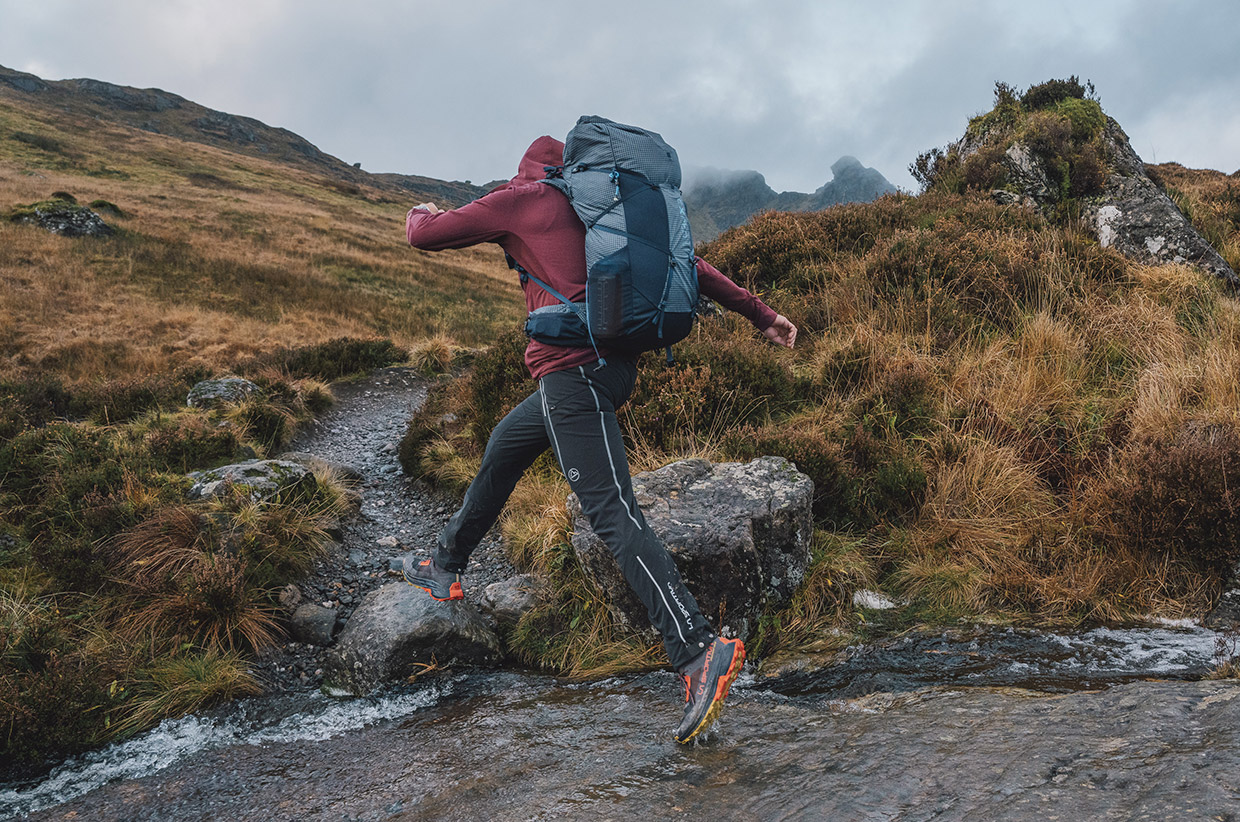

The Kilpatrick Hills of Central Scotland, just south of Loch Lomond and the Trossachs National Park, are small in stature compared to the Highlands farther north, but offer ample opportunities for a brief three-day escape from Glasgow. These volcanic rocks, formed around 340 million years ago, are dotted with Bronze Age cairns and cists. At Auchnacraig, archaeologists discovered the Cochno Stone, a huge rock slab inscribed with Neolithic cup-and-ring mark art.
We’d jumped on part of the John Muir Way, a 134-mile long-distance walk between Helensburgh on the west coast and Dunbar on the east, and wild camping along the route. The Whangie is about 1km off the route, but an unmissable spot to see. We chose a camping spot nearby.
Alongside the scenery, the time spent outdoors, the intrigue and folklore of the British Isles, I find backpacking a hugely satisfying activity – especially at the point you pack up your bags in the morning, turn around and see nothing but a little bit of flattened grass. It’s only giveaway that this was your home for the night. There should be a word for that very specific satisfaction, somehow reiterating the freedom of backpacking – the light, lithe way of travelling. Leaving a trace that only a tracker could follow.


REVIEW: Exped Lightning
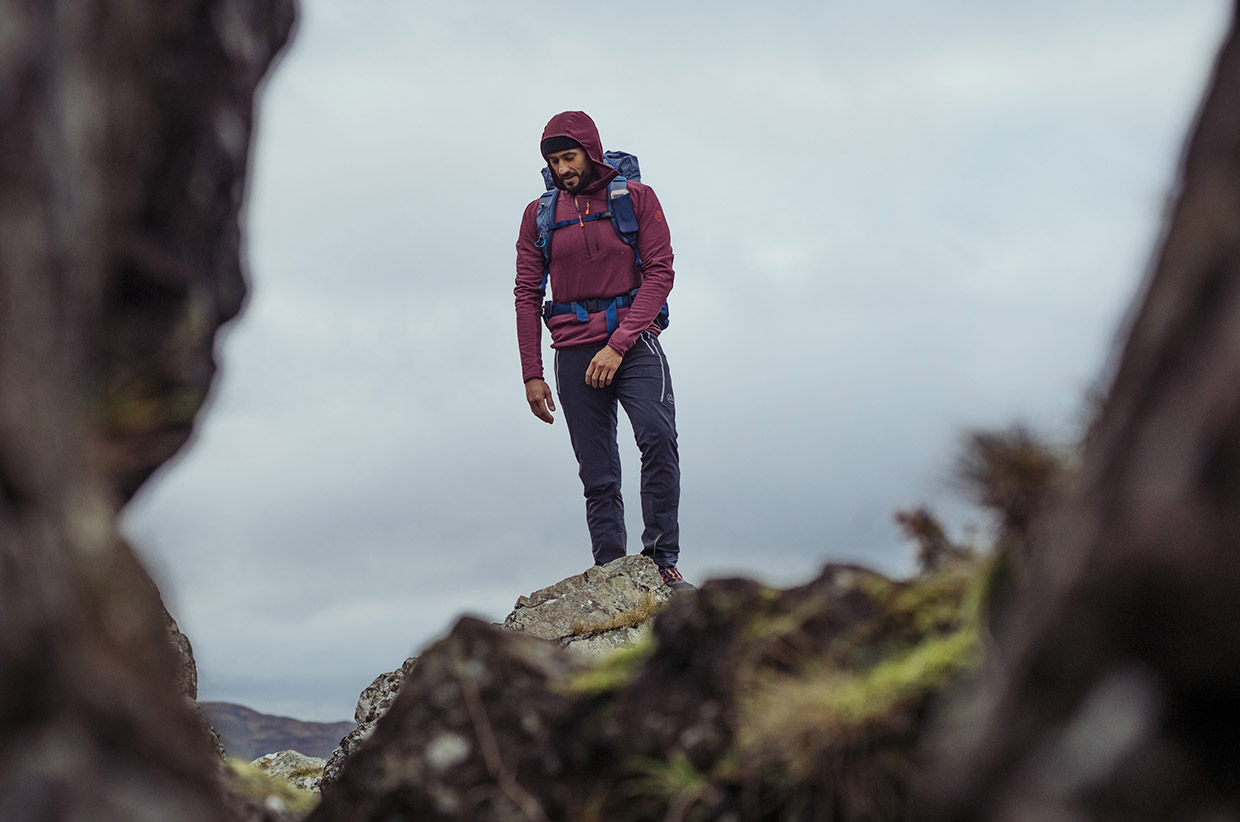
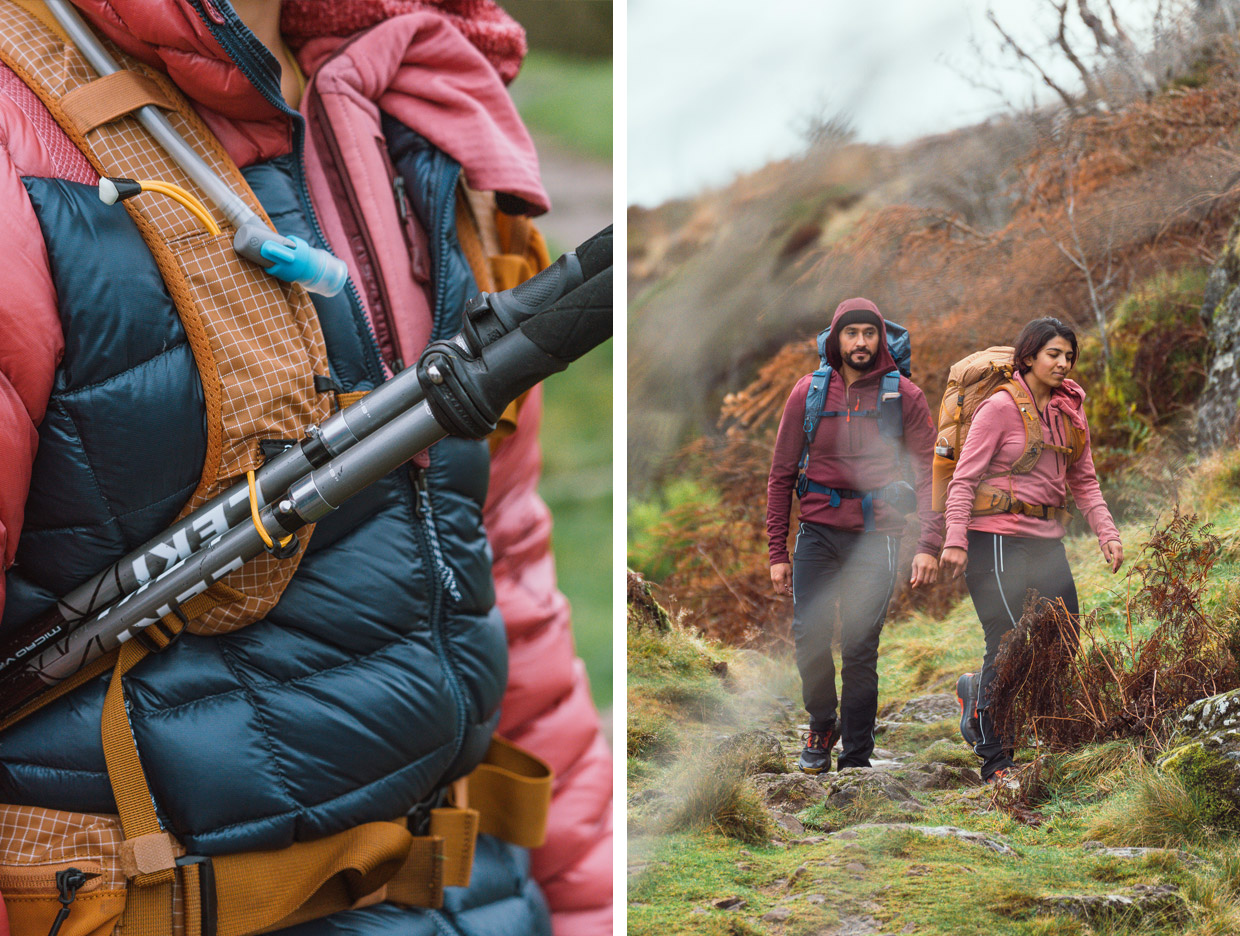
Our key tools for this journey were our backpacks: in this case, the updated Exped Lightning 60. The Lightning series is designed for trekking tours, backpacking adventures, and day hikes, and is the lightest range Exped manufactures; for more volume, look at Exped’s Ridgeline series.
The Lightning comes in 40, 50, and 60L volumes. The 50 and 60 also have an option for small/medium or large/extra-large back sizes.
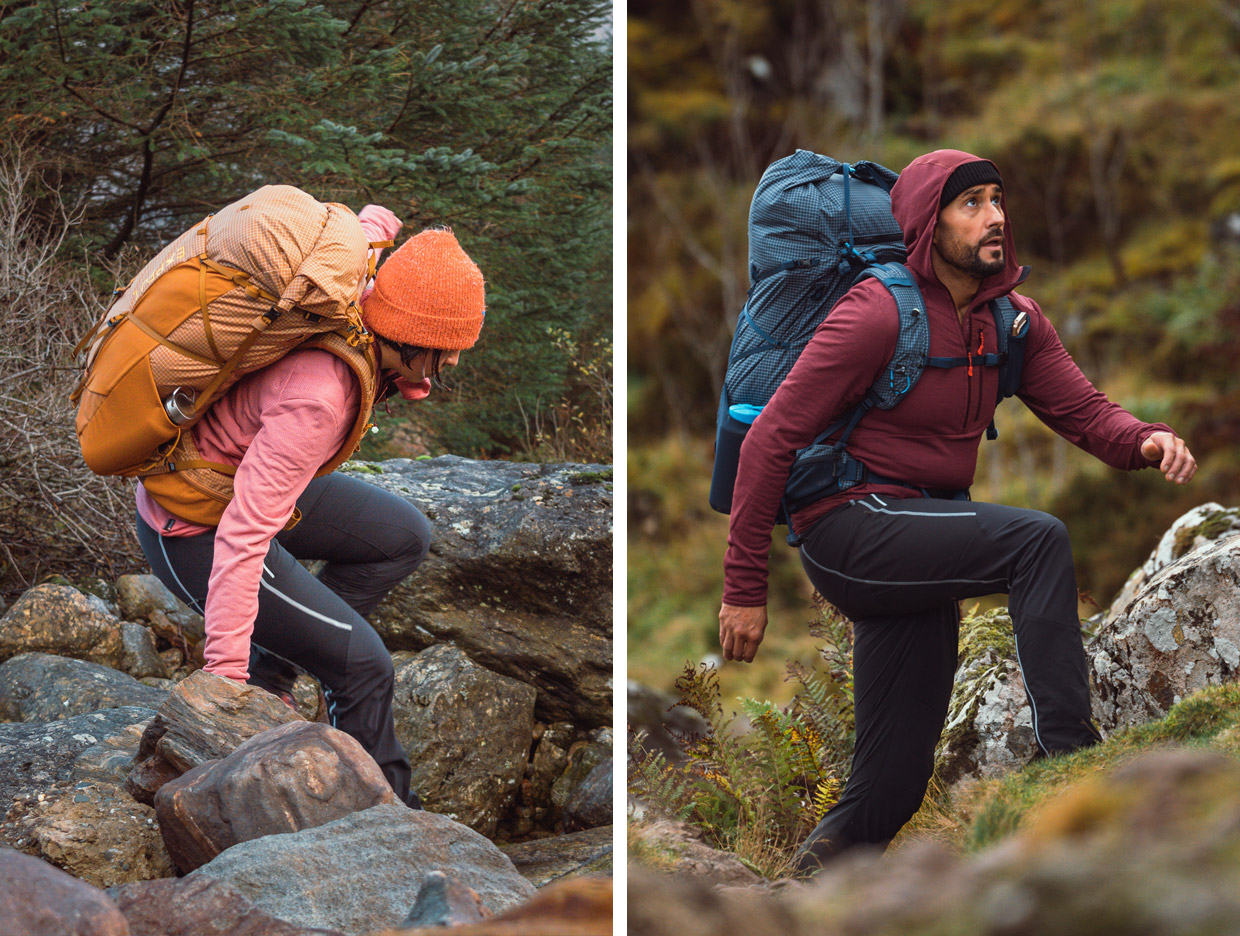
As packs go, the Lightning errs on the minimalist side – a good thing – with only what you need and no superfluous straps flapping around. It’s not quite alpine, but perhaps alpine-inspired. There is one main compartment, with a couple of large mesh side pockets for water bottles, a stretch pocket on the front for wet-weather gear, and a zipped lid pocket, as well as zipped pockets on the hip belt.
For us, the most impressive design element is the compression system. The closure is a roll-top that can be rolled right down for smaller loads. There are also compression straps that zigzag down the pack so you can go as compact as possible. There’s a zip across the roll-top, so you can access items without unrolling it again. A neat solution. It’s tempting, therefore, to go for the larger pack in the range, given its versatility. It’s also very easy to secure other equipment to the exterior of the pack, such as roll mats and broomsticks.
The back system – the wonderfully named T-Rex system – is designed to reduce contact points with the back to allow ventilation, while being easily adjustable along an aluminium stay and cross-piece. The main material is a bluesign® approved 210D ripstop nylon, PU coated for weather resistance (up to 1,000mm water column) and proved both durable and very tough along our trail. Parts of the pack are reinforced with 600D ripstop nylon. It’s unlikely, however, to stand up against the swipe of the devil’s pointed tail, given the look of the Whangie.
The true test of backpack is lack of comment, lack of frustration, and lack of straps flicking in your face. In that, the Lightning passed. And given that the largest backpack still only weighs 1,240g, it’s become a go-to. Thanks to the compression system, it’s versatile enough for day hikes, lightweight backpacking, and visits to our new coven.
For more information visit expeduk.com and find them on Instagram @expedint
Written by Daniel Neilson // @danieljneilson
Photography by John Summerton // @johnsummerton
Produced in partnership with Exped // @expedint