Written by Jenny Tough
Photography by John Summerton
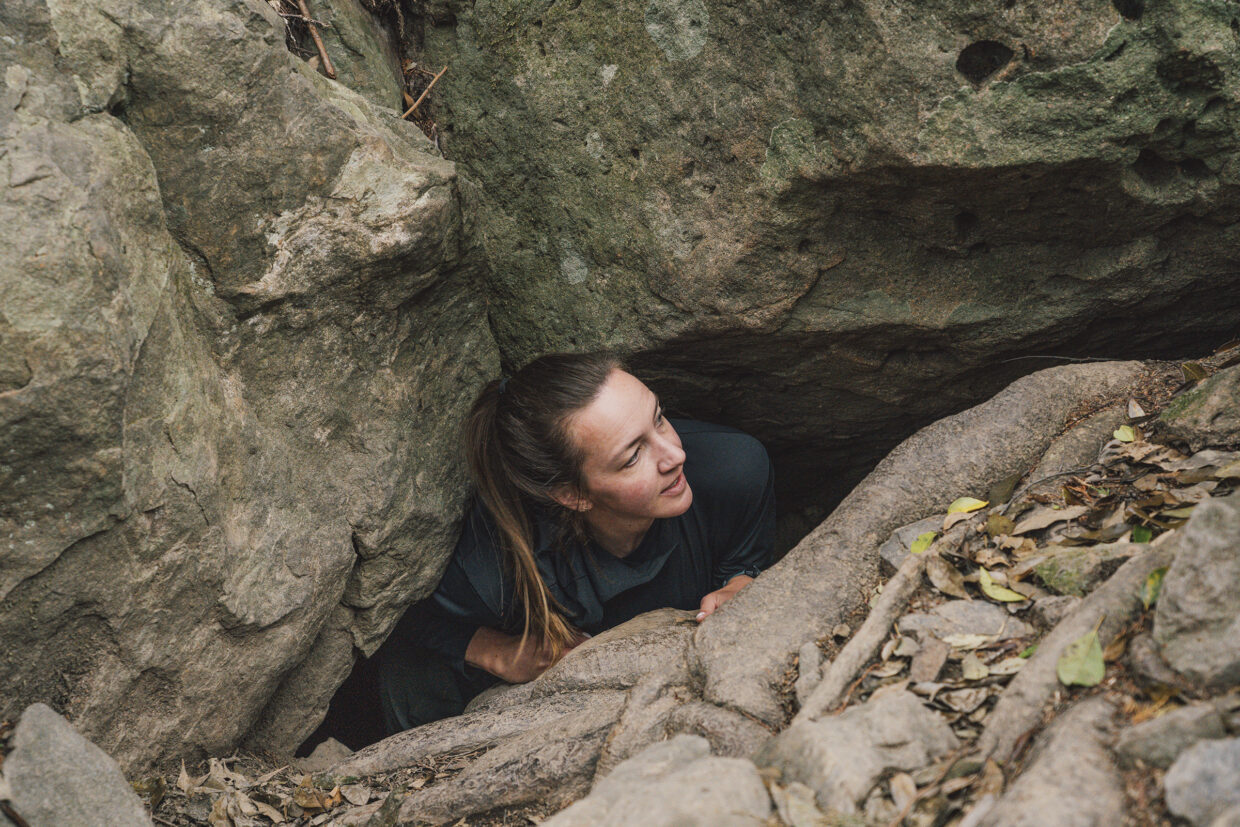
I didn’t expect my day to start with being reborn, yet here I find myself emerging from a narrow cave exit on my hands and knees.
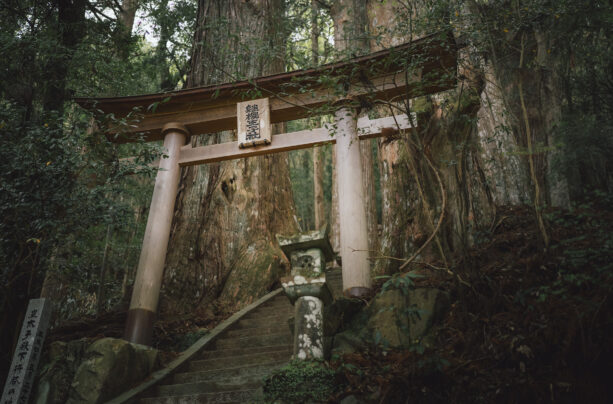
The Tainai Kuguri isn’t much to look at – a dark crevice cut naturally through rock at the Takijiri-oji shrine – but you don’t crawl through something like that and come out the other side unchanged, or at least that’s what I tell myself.
‘Well,’ I say, brushing myself down, ‘that’s quite the way to start the day!’
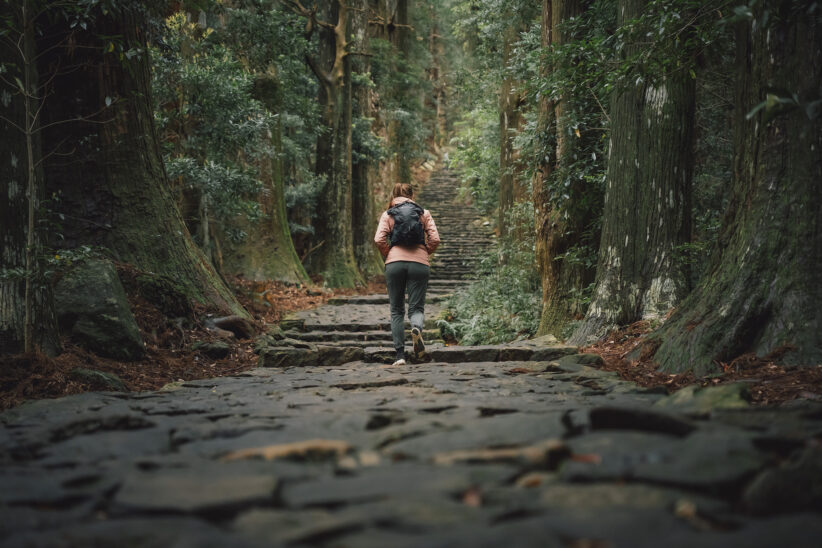
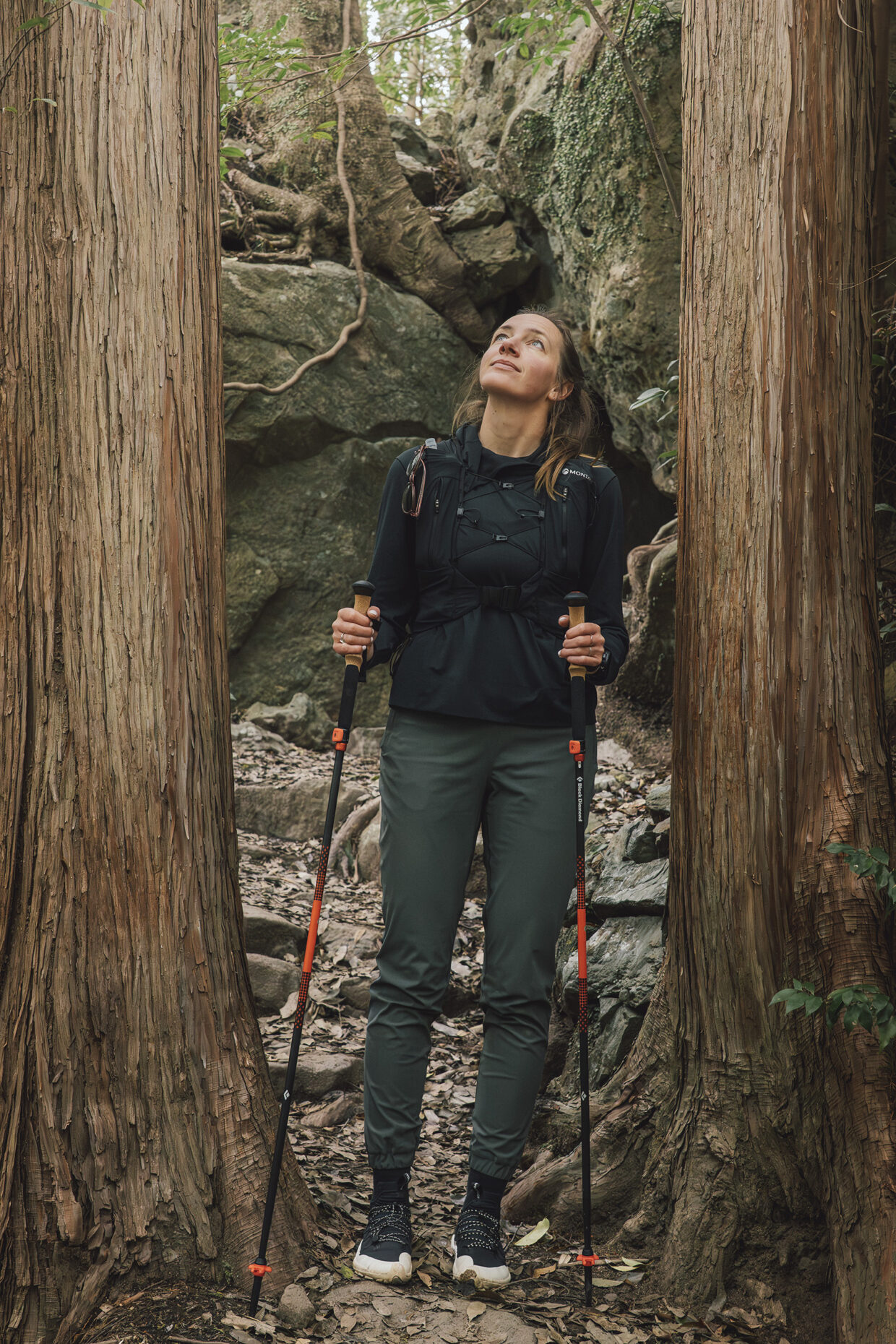
I’ve walked a lot of trails in a lot of countries, and there’s usually a moment when you start to tune in to the landscape – some shift in the air, or the quality of silence – and on the Kumano Kodo it happens almost immediately after we enter the forest. Maybe it’s the cave and the rebirth, or the fact that I am following in the footsteps of travellers making this pilgrimage for centuries. Either way, I tune in. I start to listen.
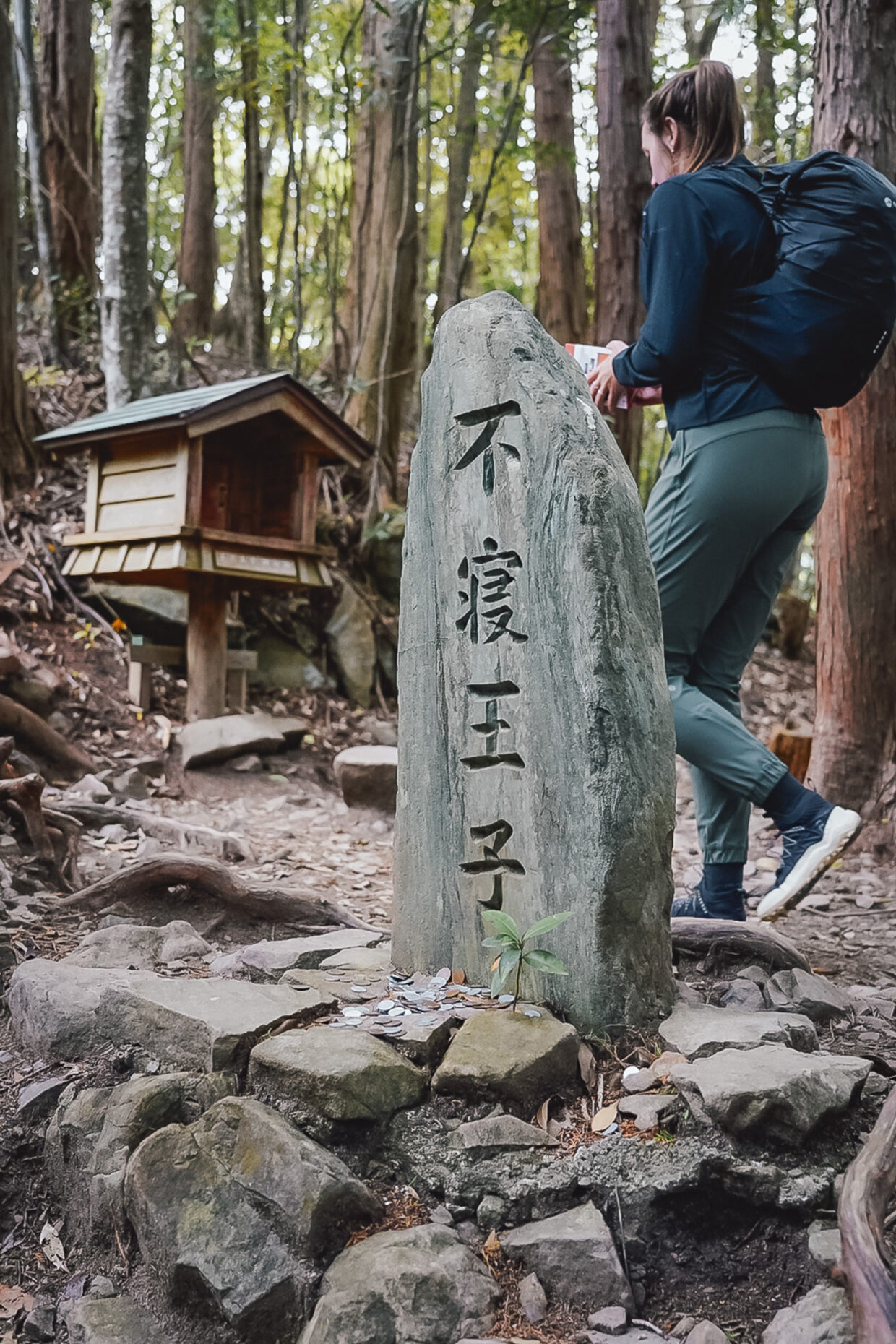
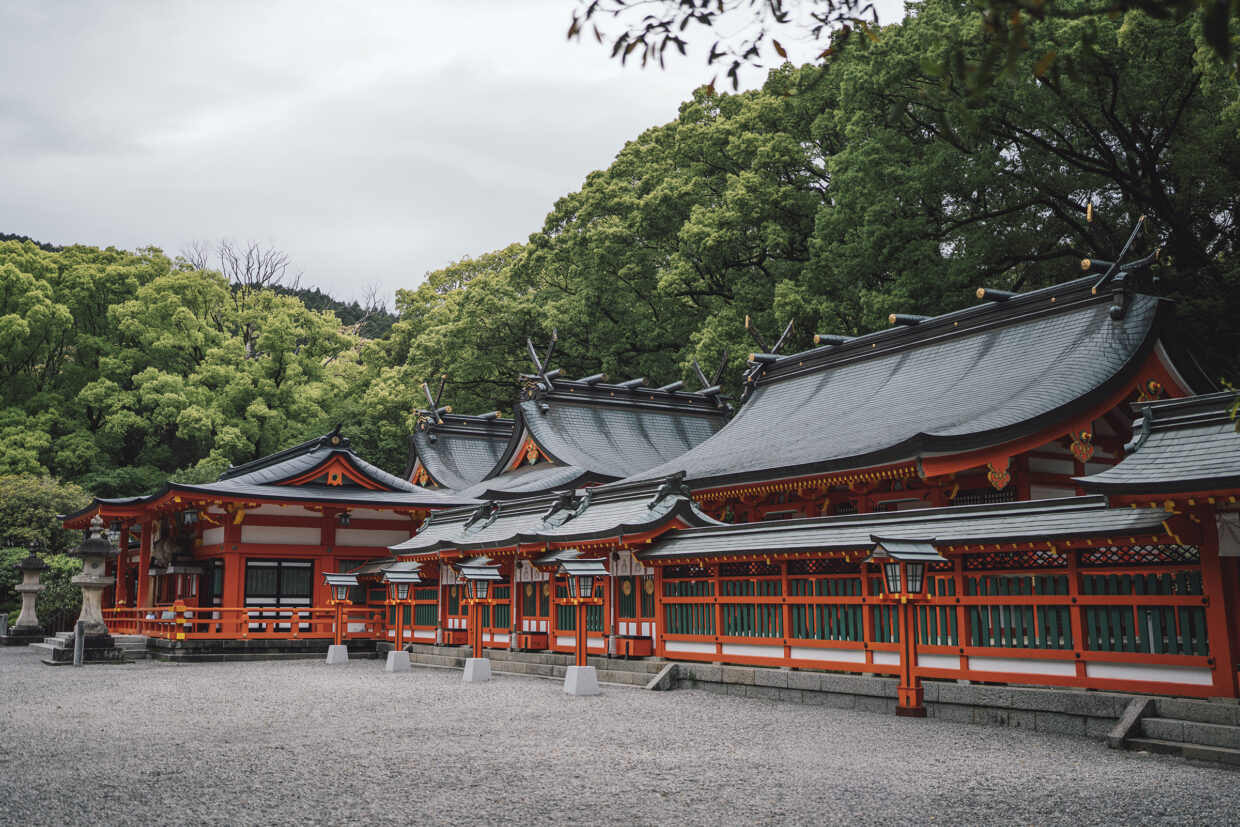
‘We don’t describe ourselves as religious,’ our guide Nobu explains. ‘Shinto and Buddhist shrines are just part of our culture, and so are the rituals, like this pilgrimage.’ The further I dig into the meaning of the Kumano Kodo pilgrimage, dotted frequently with shrines ranging from just a couple of rocks that you nearly miss, to grand shrines with bus-loads of visitors, the more I feel welcome as a guest here. Spirituality and organised religion do not necessarily cross over, and the pilgrims I meet along the way, including the locals, trend towards the former description.
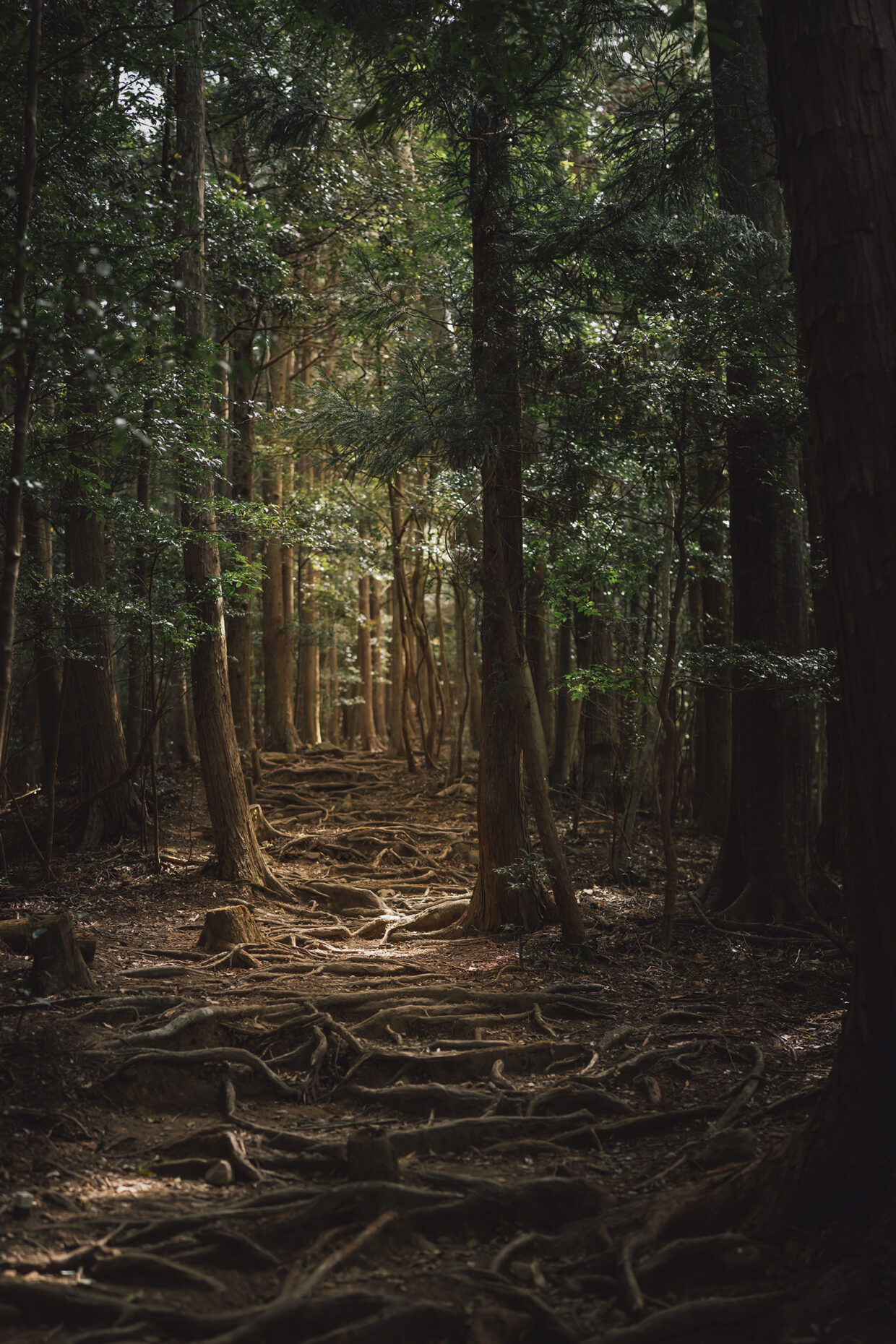
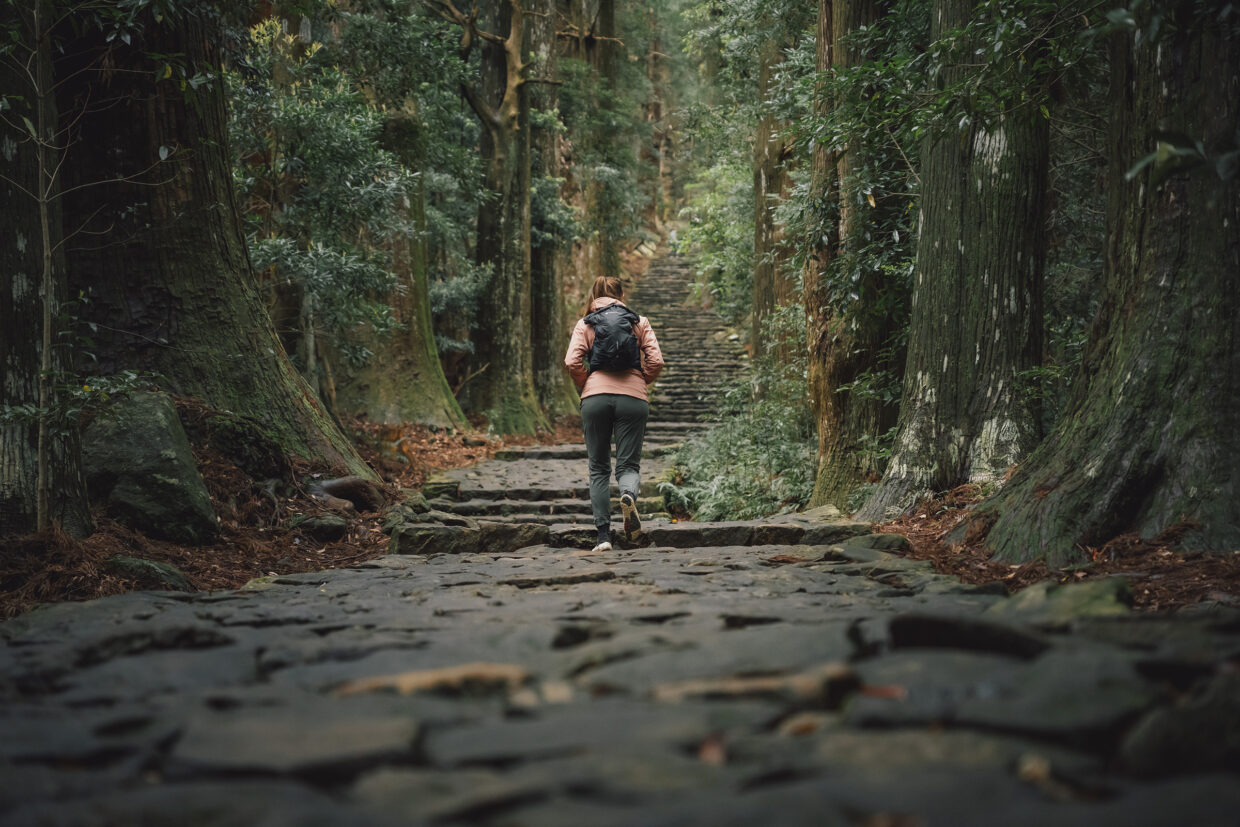
From the Tainai Kuguri cave – the site of my rebirth – we continue on the snaking path of the Kumano Kodo through the forest. Cedar trees shroud us, keeping the outside world out, while we focus on the dirt trail in front of us. There is only the sound of the forest and our own footsteps. I run my hand along mossy rocks and the patterns of bark on the trees, touching the forest as much as I can. I feel immersed.
The trail emerges from the forest at intervals, where small villages have for centuries hosted pilgrims along the ancient routes. A guesthouse welcomes us at one such place. The lodgings are simple here – just a communal dining table, one hot shower, and a few bare rooms with tatami flooring. Pilgrims don’t need extensive amenities. That’s not what this is about. We take our seats around the square table, which has a coal barbecue in the middle, and are offered large plates of fresh vegetables and seafood, along with extra-long chopsticks. Our hosts are eager to see us struggle to use these as we cook our dinner.
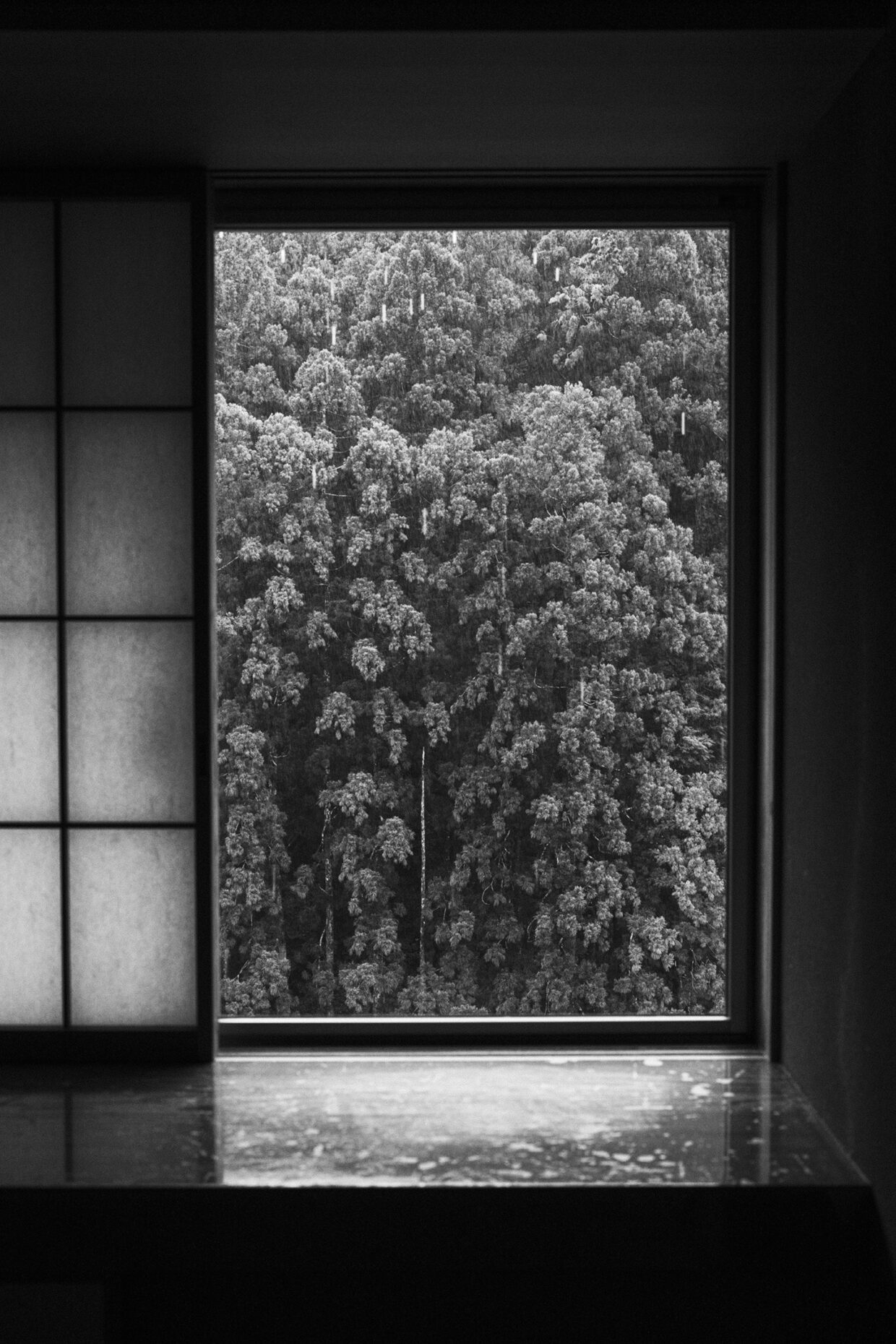
In the morning, a heavy rain has settled in over the peninsula. We don’t stay in bed or make other plans; we just pull on our raincoats and step outside. This morning, we’re meeting a Yamabushi monk who will guide the next few days of our pilgrimage.
Katsumi Ueno is one of those people whose energy draws you in, puts you at ease, and inspires you to be your best. He’s come to meet us dressed in his traditional Yamabushi outfit, but with a modern waterproof jacket and trail-running vest layered on top for practicality.
‘It wouldn’t be the Kumano Kodo without rain!’ he says, beaming, as we huddle under an awning.
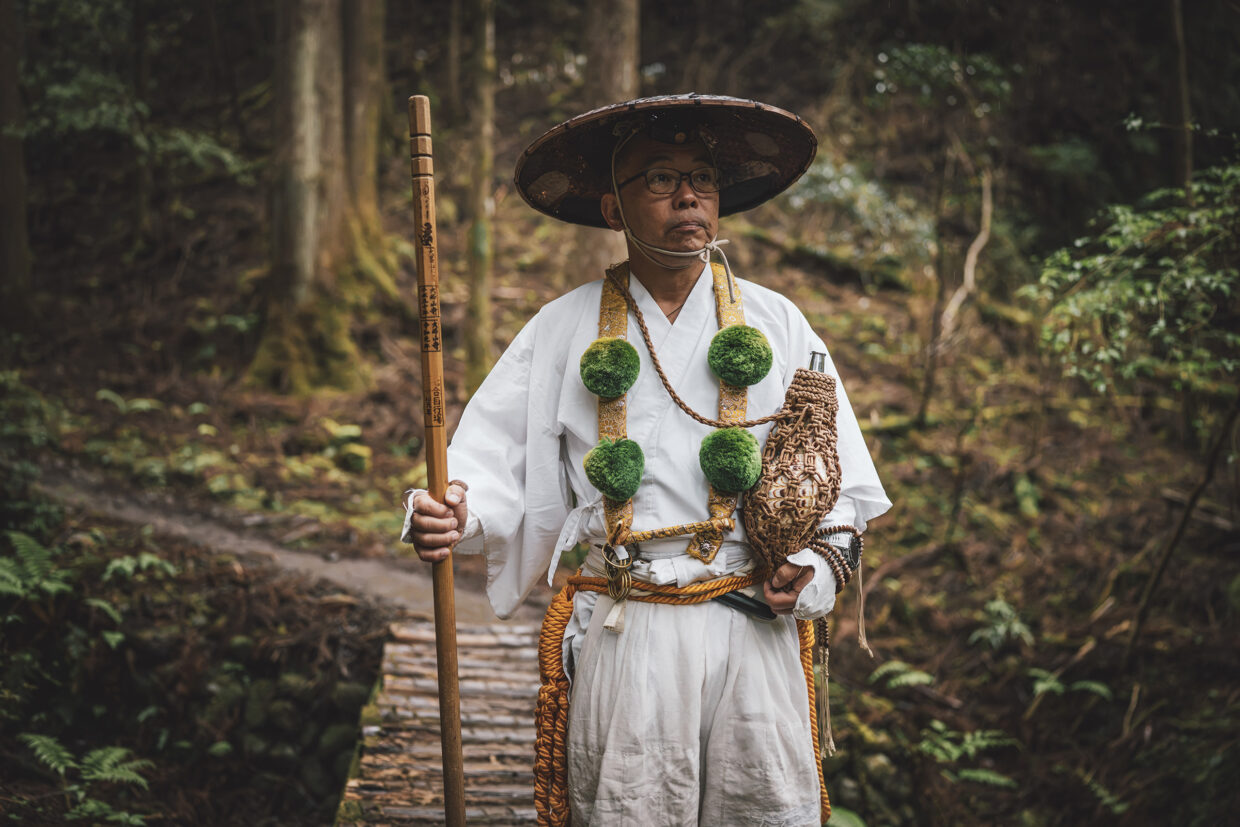
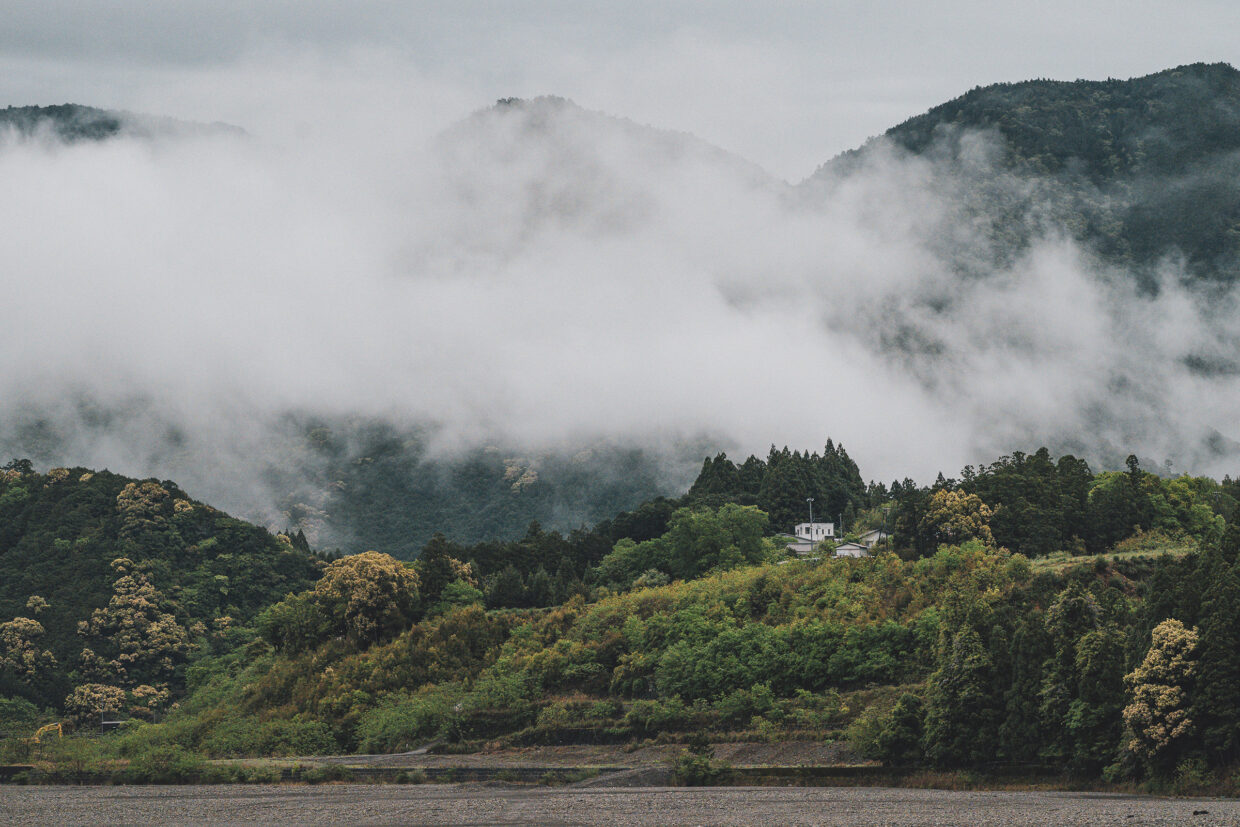
The trail has turned muddy in places, and the water is splashing up from our footsteps as much as it is sluicing down on us from above. We are soaked to the bone, so we keep moving. Whenever we stand still we’re instantly shivering. Watching Katsumi in his traditional garb, I can’t help but think about the centuries of pilgrims who came this way without modern outdoor gear. I resolve not to complain about anything.
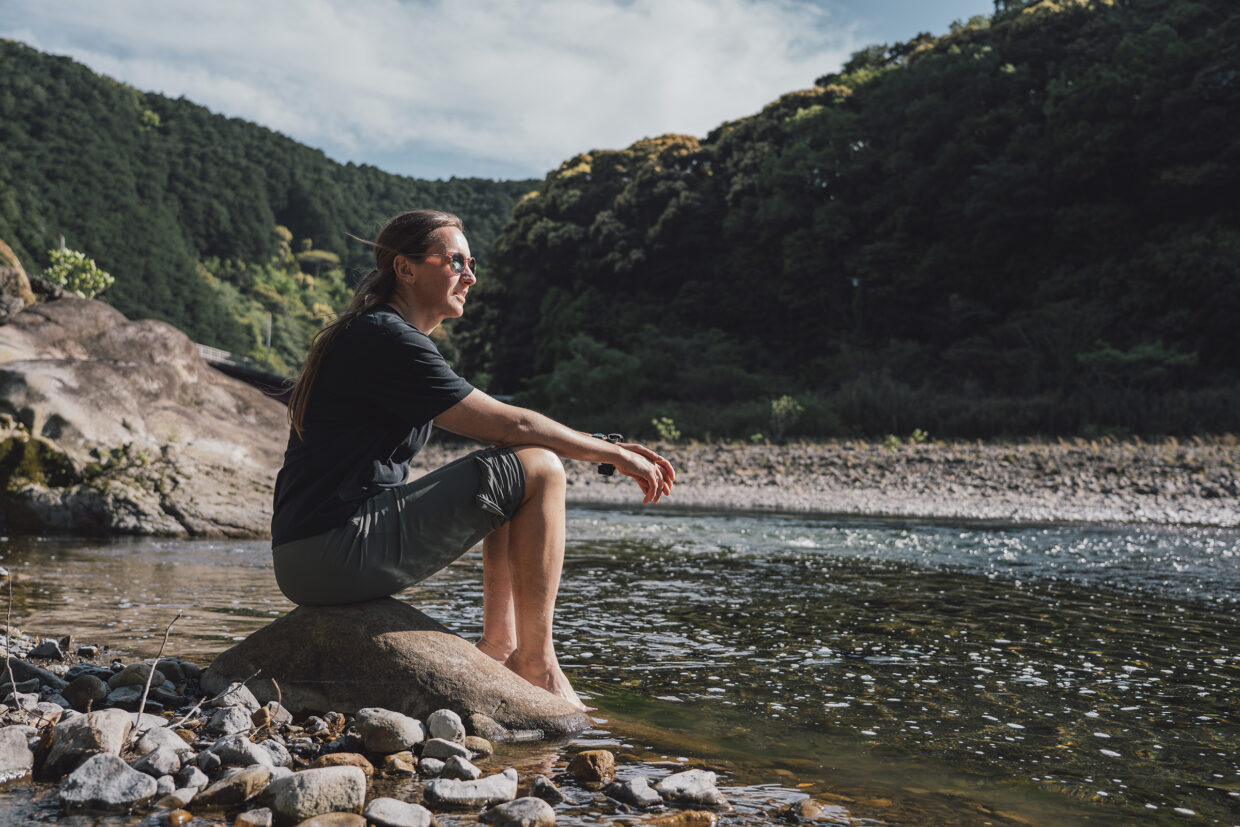
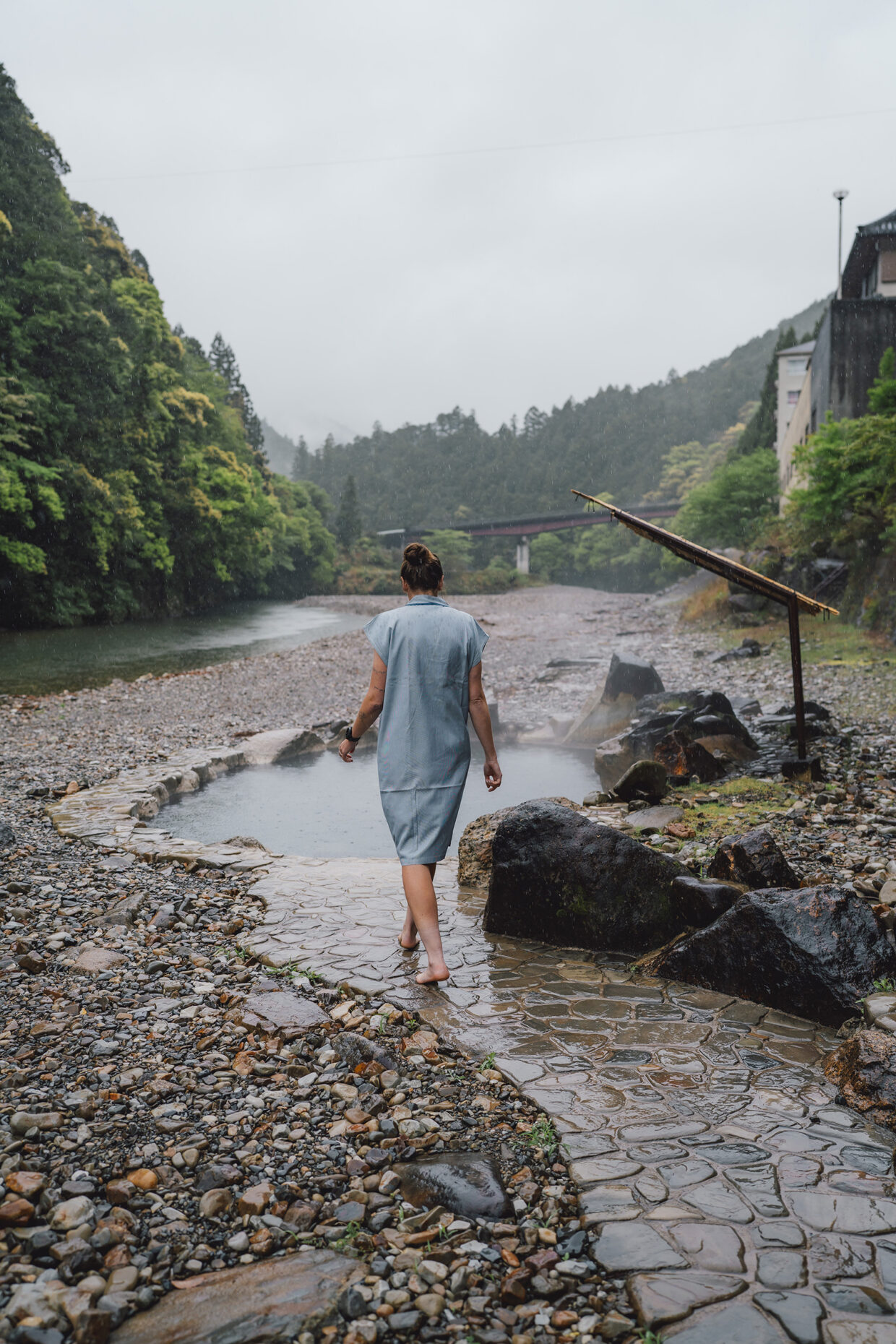
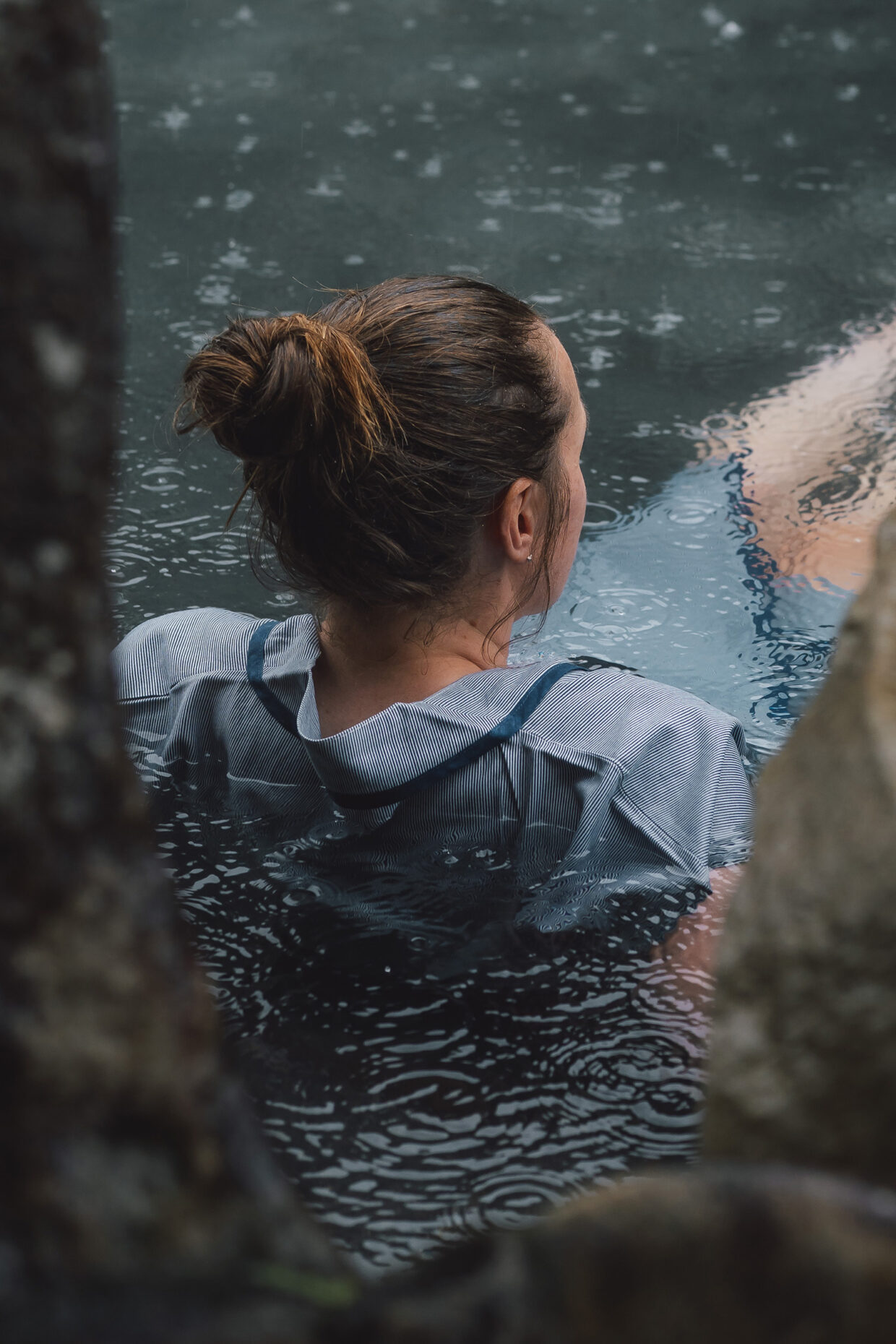
In the evening, we recover quickly when we arrive at the village of Kawayu Onsen. The onsen water is so abundant here that locals and visitors dig small holes in the riverbank beaches, where hot water quickly springs up – voila, a hand-dug onsen is yours to use. I lie back in the hot water with the crew (thankfully, robes are provided for the very public outdoor bathing), and we watch the river glide effortlessly past while our tired legs are rejuvenated.
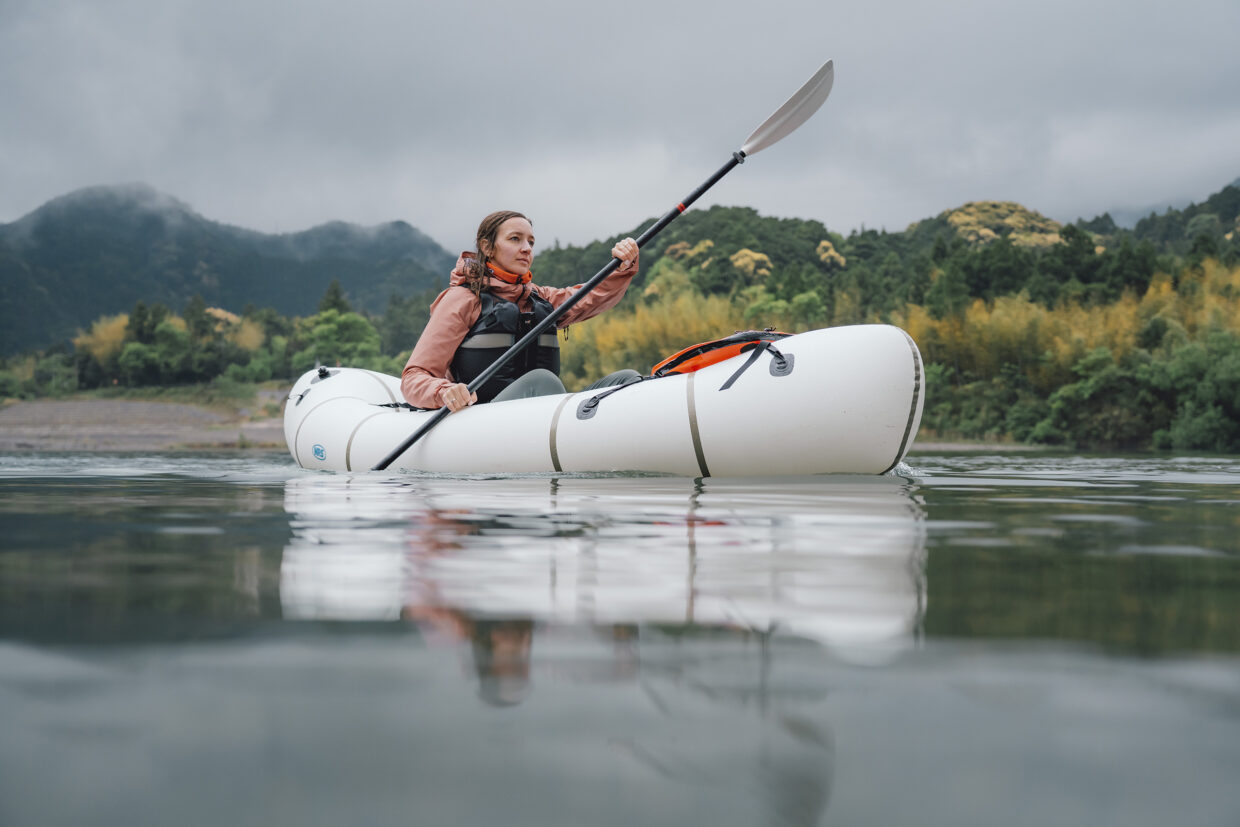
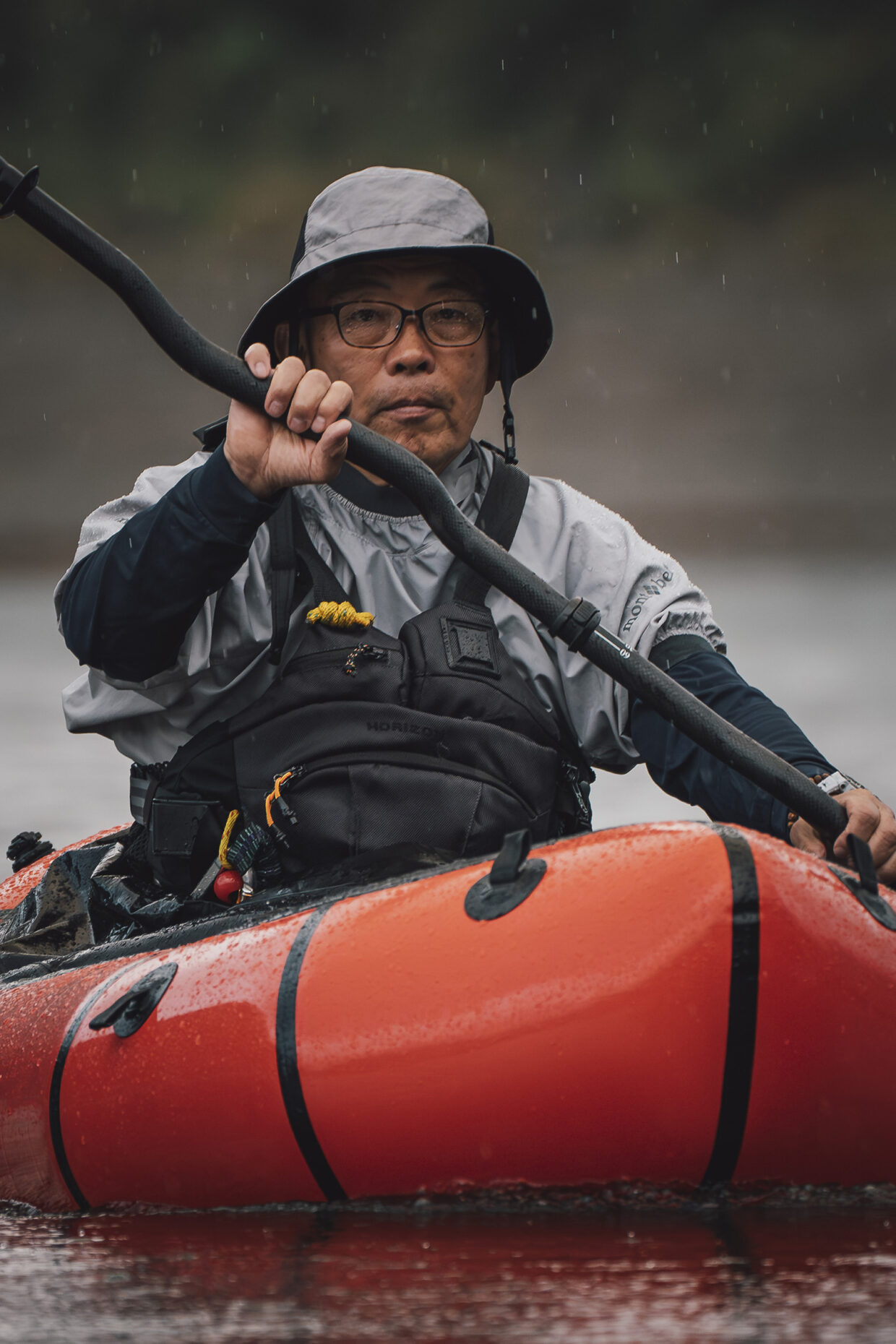
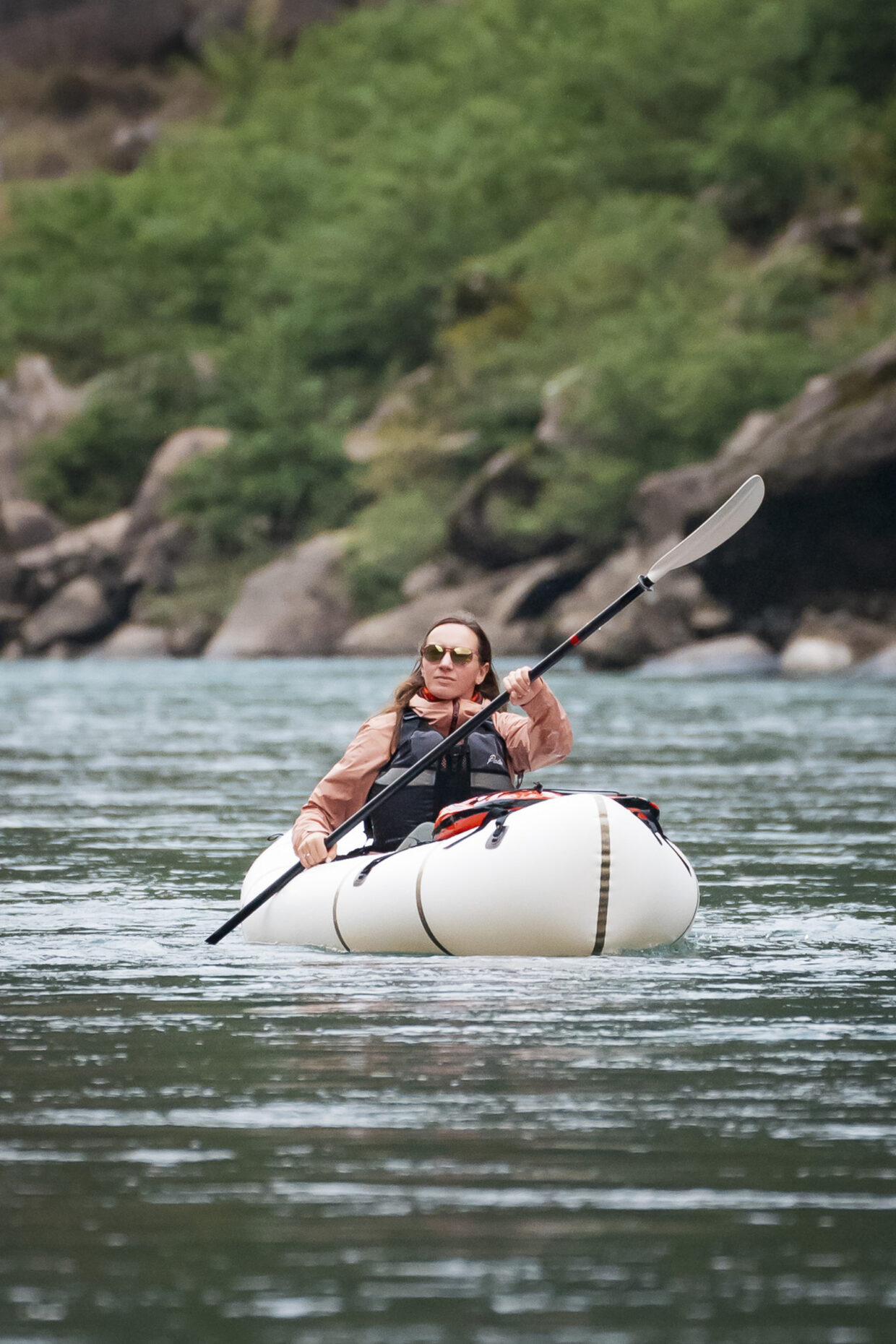
From this point, on day four of our pilgrimage, our legs will get a rest while we descend the river, following the traditional path of pilgrims. While the trail continues on land, historically many pilgrims would have taken a boat from this point. Katsumi has a modern spin on that history: packrafts.
The water of the Kumano-gawa River is a clear blue-green, and we launch our entourage of vessels from a pebbled beach, letting the current do most of the hard work. There are a few small rapids to negotiate, and Katsumi and I are laughing like happy children as we race down them, water spraying our faces and temporarily pooling in our rafts. We finally pull into shore after we cross under Miwa Ohashi bridge, the river now spilling out into the Pacific Ocean. We have reached the stairway of the Kumano Hayatama Taisha Grand Shrine, which we will ascend in the morning (after one more beautiful but intense rainstorm).
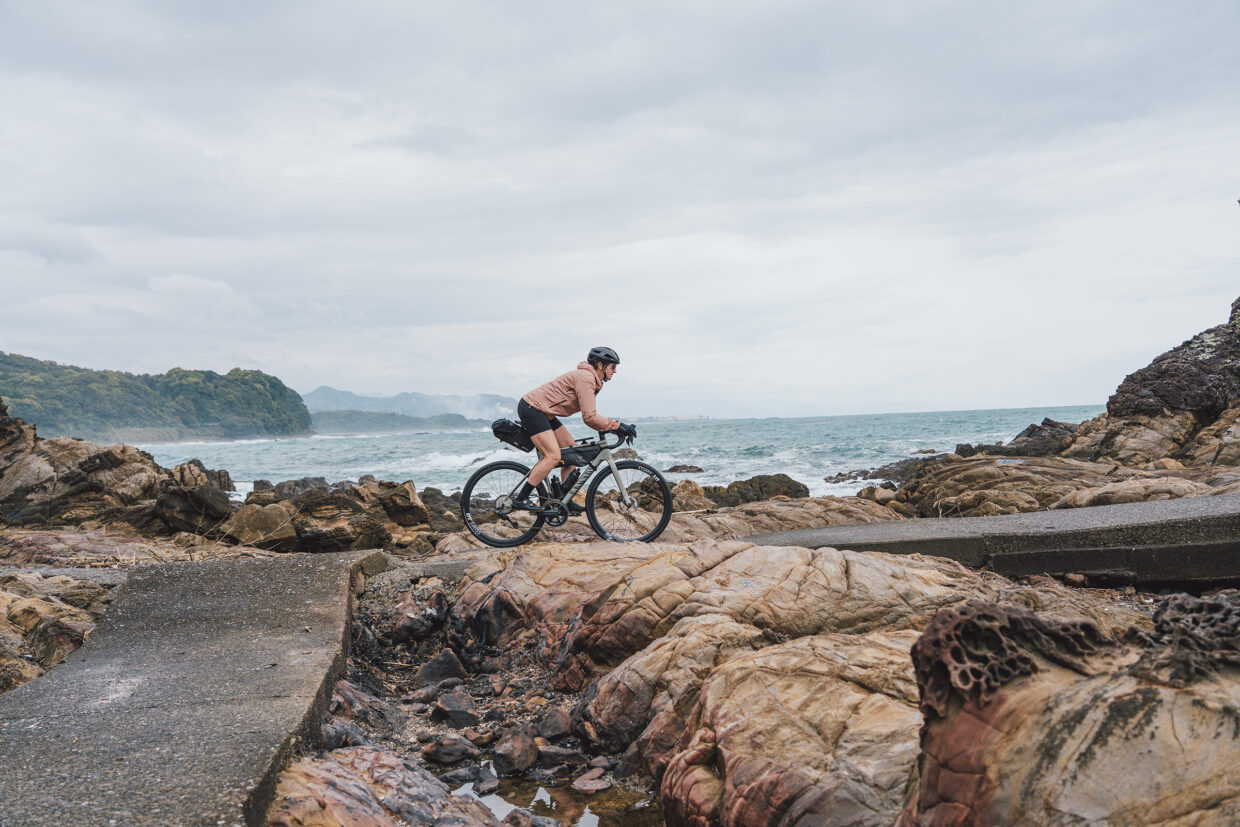
From the trails, to the water, to the streets: for the final leg of my pilgrimage, I am united with my road bike. The ancient trails for this coastal segment of the route double as very real infrastructure for the populated coastline, so, in order to maintain my human-powered journey, I opt to use my bike and follow the cycle paths next to the main road to take me towards the final destination, the Nachi Falls.
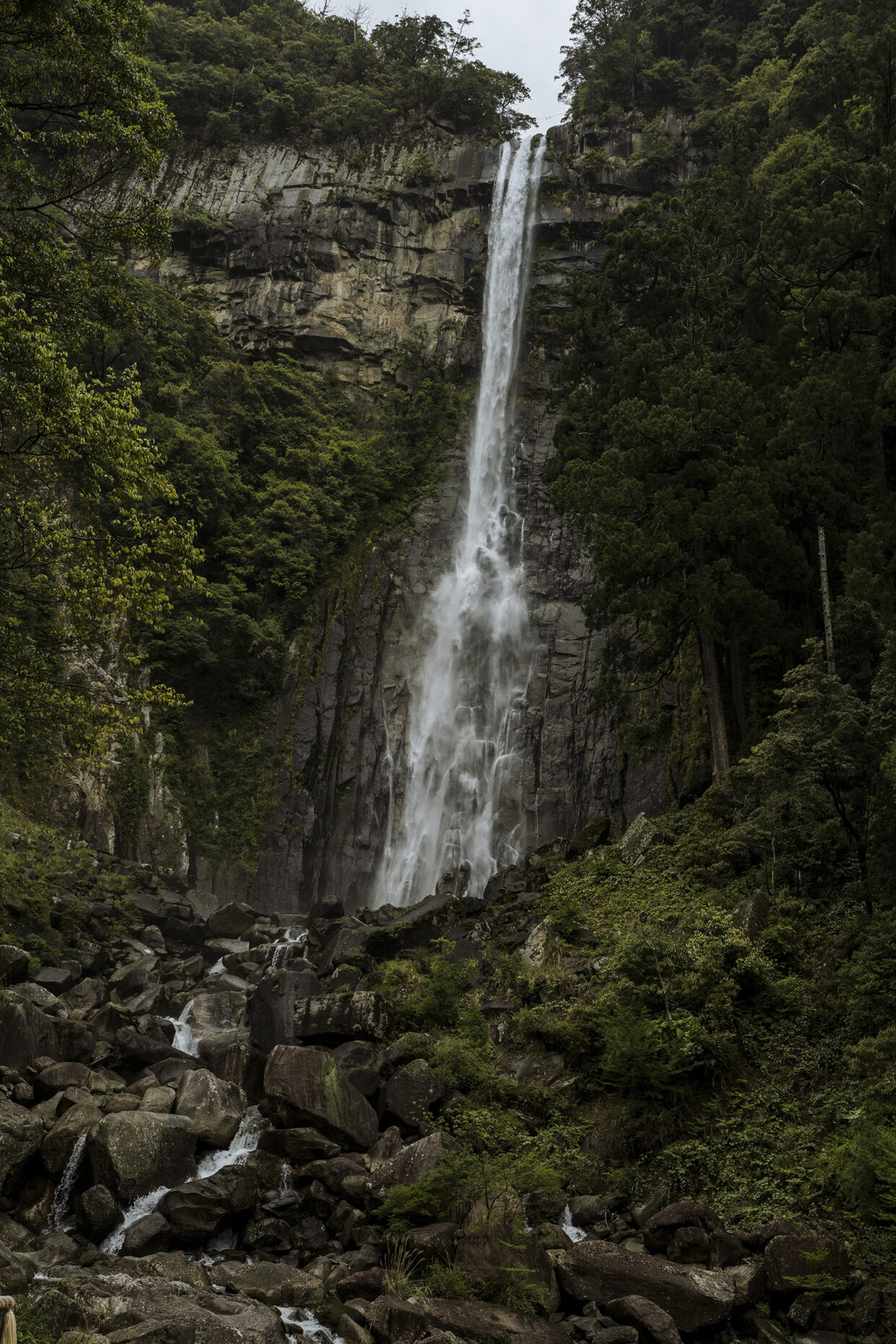
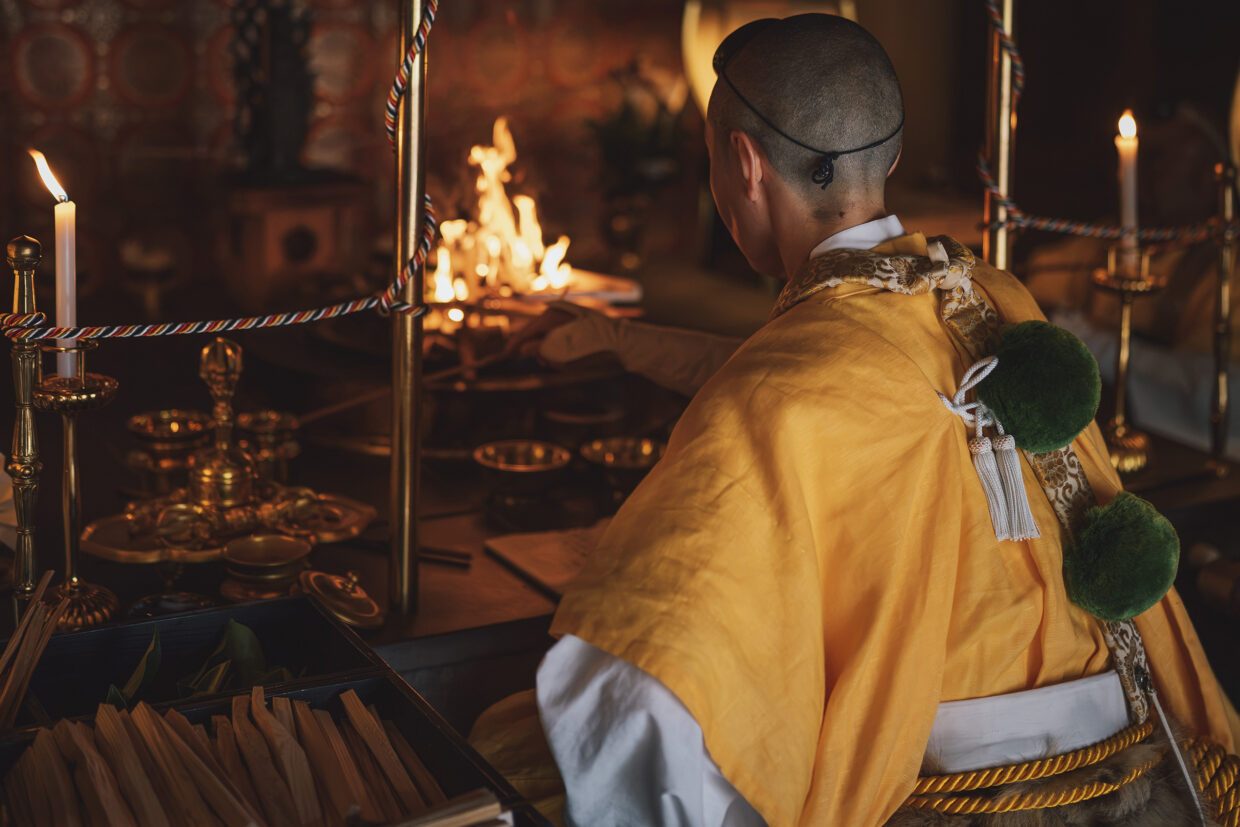
The image of the giant Nachi Falls behind a Buddhist temple, Nachisan Seiganto-ji, is a well-known photo, used on tourism brochures to show off the beauty of not just Wakayama, but Japan as a whole. And for good reason. The IRL scene leaves us all speechless. While the rest of my crew eventually hoist their cameras to capture their own version of the famous shot, I stand on the grounds of the Kumano Kodo finale and just take it all in. Around me are pilgrims who have hiked for days or weeks; worshippers communicating with the deities at the various shrines on the grounds; tourists dressed in kimonos taking photographs; and a flurry of Yamabushi monks, gathering for the fire ritual that is about to start.
Of course, I don’t understand a lot about what’s going on during the ritual, and I’m so grateful that the Yamabushis have welcomed us in. But, even if I don’t understand the language in the chanting, the energy of the ritual is like nothing I’ve experienced before. The fire grows in front of the nun leading the proceedings as the chanting and drumming grow louder, an entire room full of monks, nuns, and worshippers in unison. I don’t know if it’s five minutes or an hour – I am completely and truly entranced. When the ritual ends, I realise I haven’t taken a breath in a while, and finally turn my head away from the flames to see the other people in the room. We leave in silence, our hearts stilled and satisfied by what we’ve just been a part of.
The Kumano Kodo surprised me at every turn. I had felt nervous about the term ‘pilgrimage’, worried that I would be that kind of tourist infiltrating a religious experience, but at every turn I was welcomed, and even aided in understanding the rituals, history, and significance of the shrines and temples along the route. Despite tourists like me getting involved, the entire pilgrimage felt extremely authentic, and I did honestly have a handful of spiritual experiences in the forest when I would let the group walk ahead and leave me with the trees and moss for a few steps. I learned an immense amount about spirituality and religion in Japan, and yes, the food was excellent. It’s a place to come with an open heart and open mind, and, if you do come as a true pilgrim, you may even get to experience a rebirth, or something close to it.
Read the destination guide to the Kii Peninsula based on our journey.
Also from the series: The Lure of the North.
For details of the upcoming TV series, visit untrailed.tv.
Written by Jenny Tough // @jennytough
Photography by John Summerton // @johnsummerton
Film (coming soon) by Summit Fever Media // @sfm_films
Produced in partnership with Wakayama Tourism Federation // visitwakayama.jp // @visitwakayama
Supported by Black Diamond // Montane // Vivobarefoot