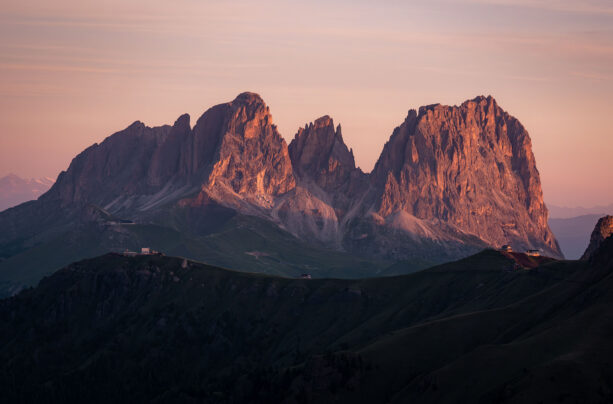
The reality? As usual, drawing the line on the map proved to be a lot simpler than the challenge itself. We chose the peaks not just for their altitude or prominence but for their character. Each over 3,000m, we’d need a little more time than the usual 24 hours, but three peaks in three days had a clean ring to it – so the three of us headed to north-east Italy to see if we could pull it off…
The idea was simple: take a similar concept to the UK’s ever-popular Three Peaks Challenge and bring it into grander Alpine terrain in the heart of the Dolomites.
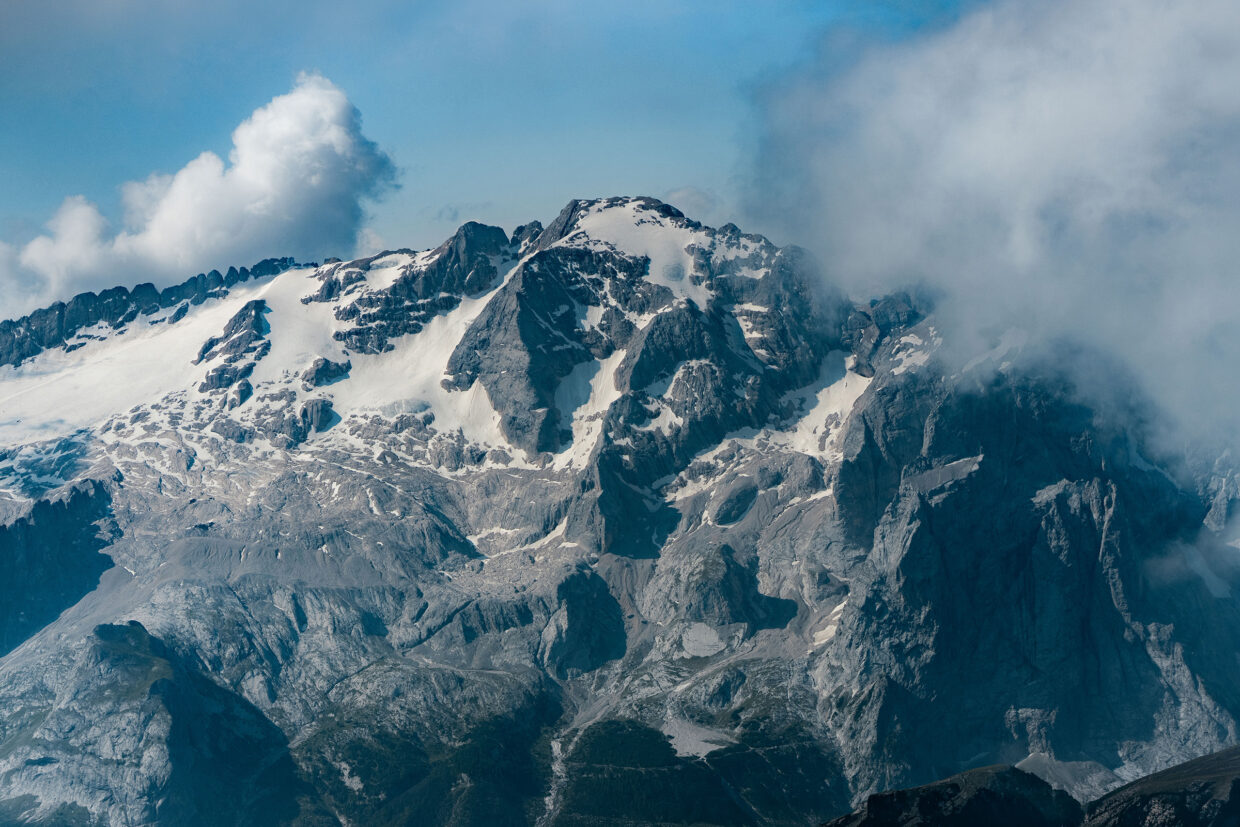
ICE // Marmolada (3,343m)
The glaciated crown jewel of the Dolomites
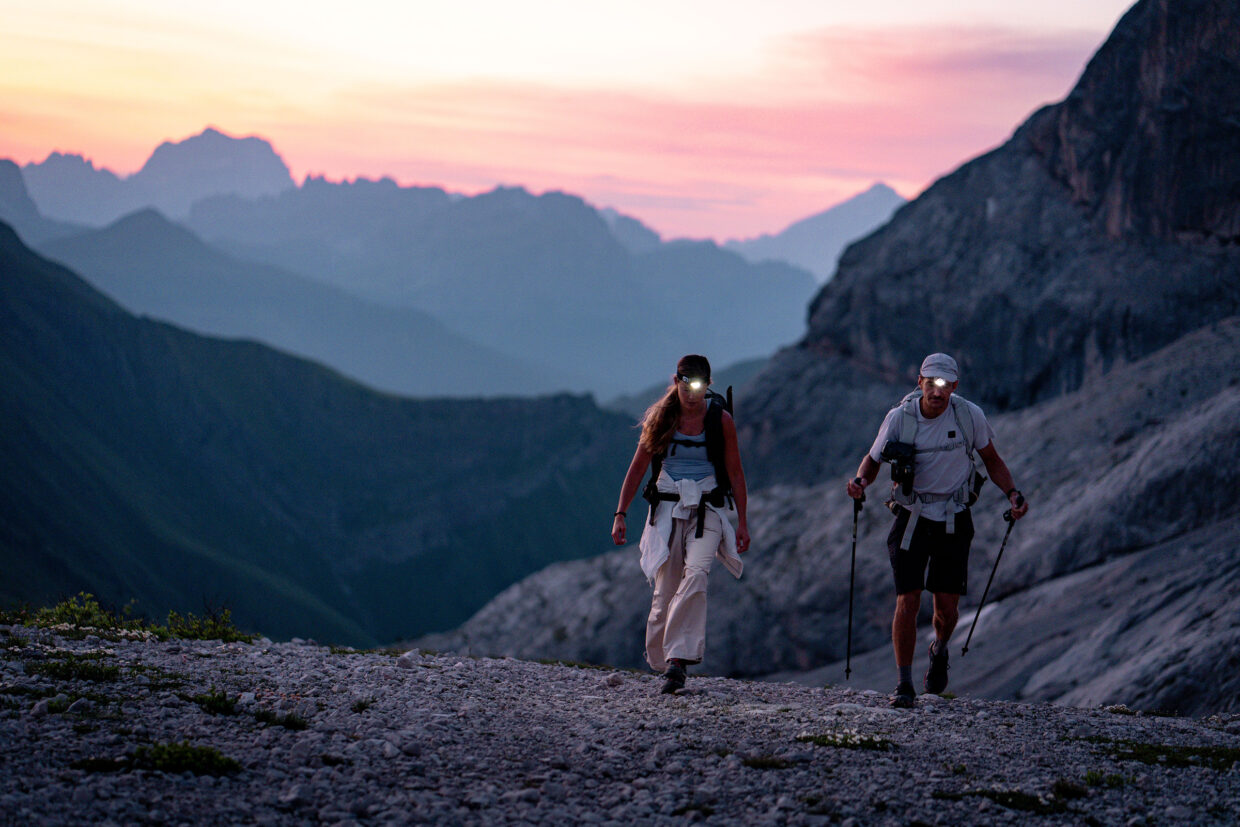
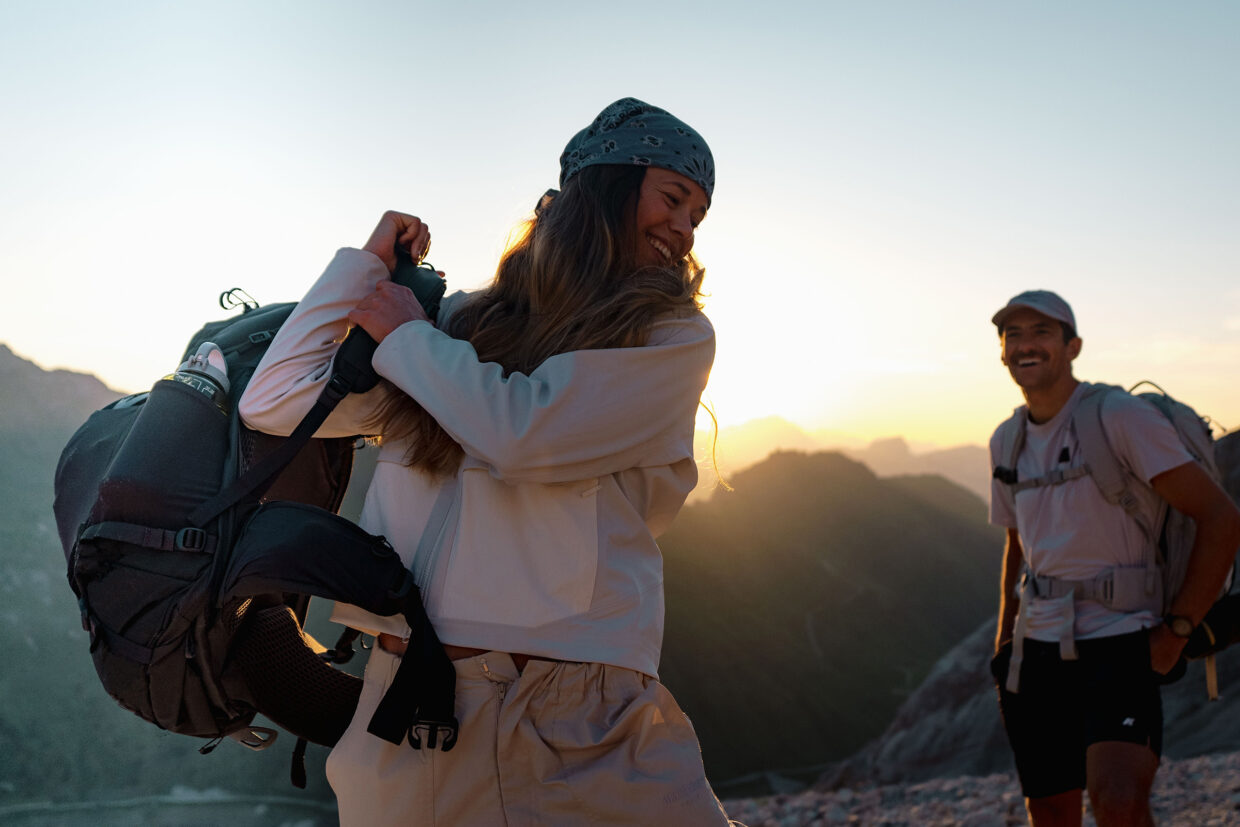
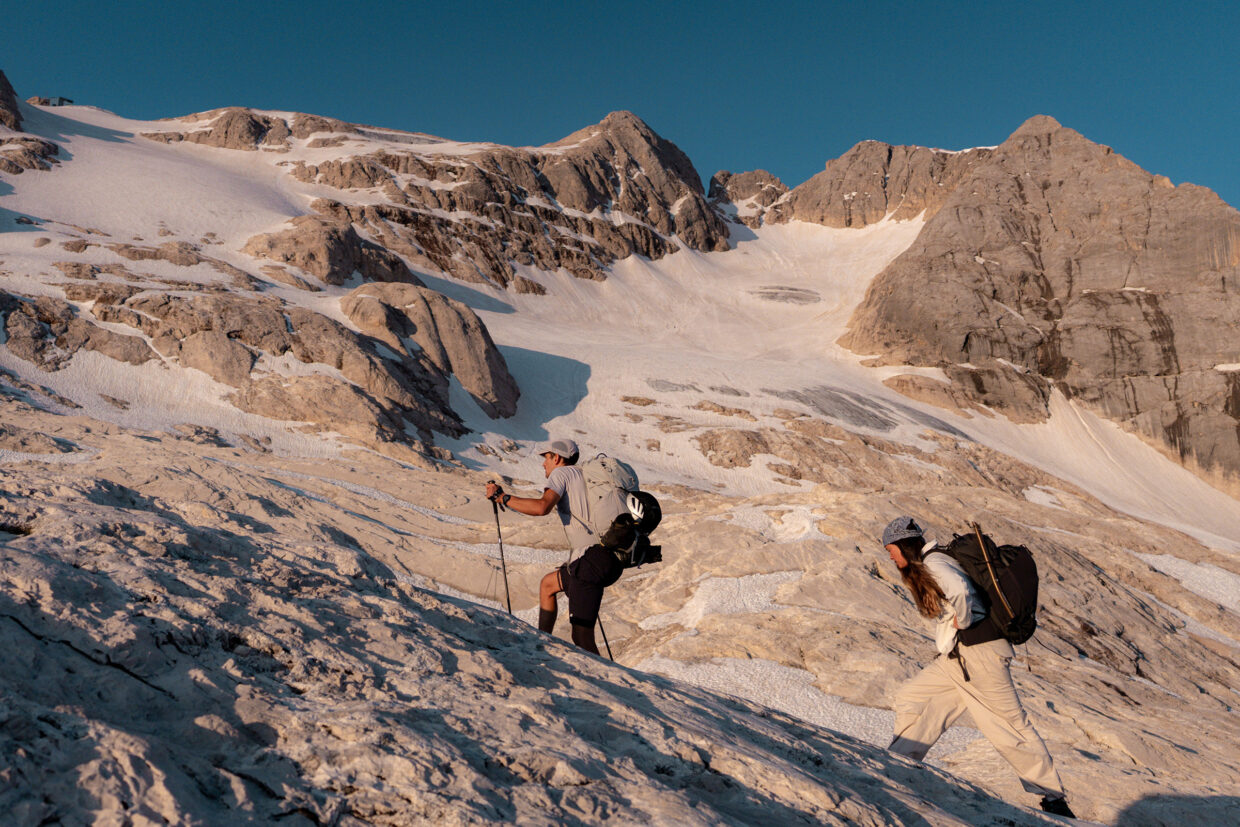
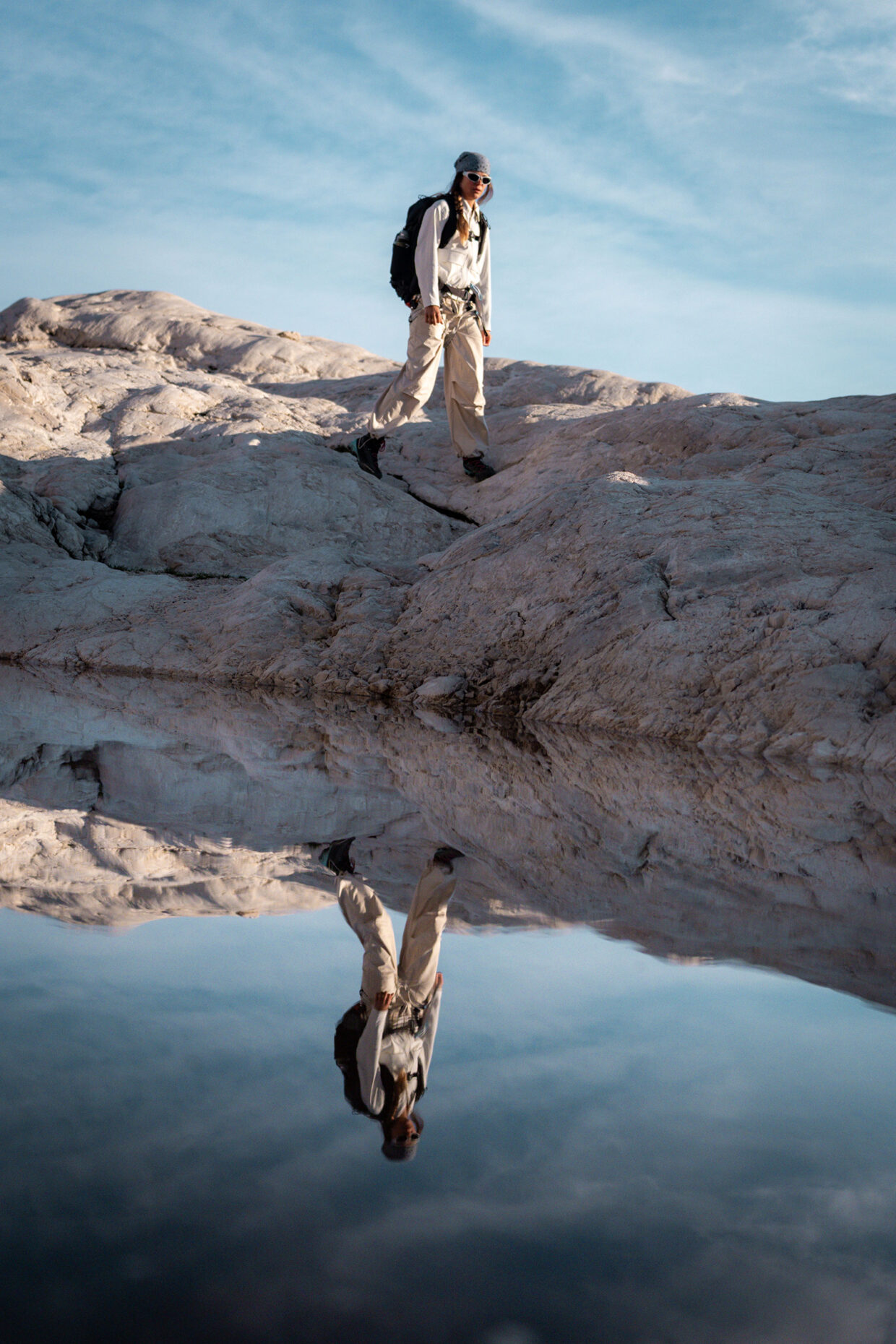
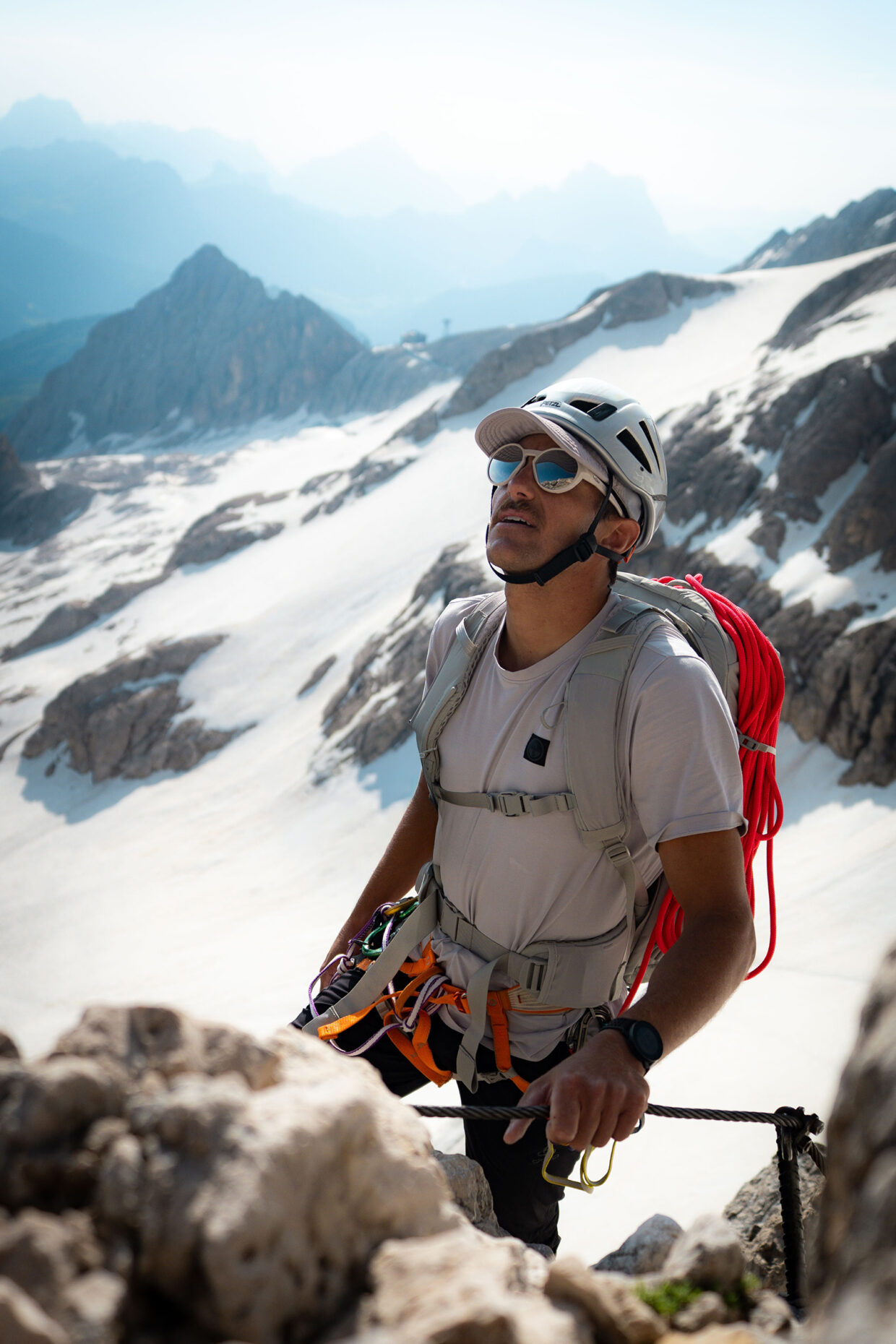
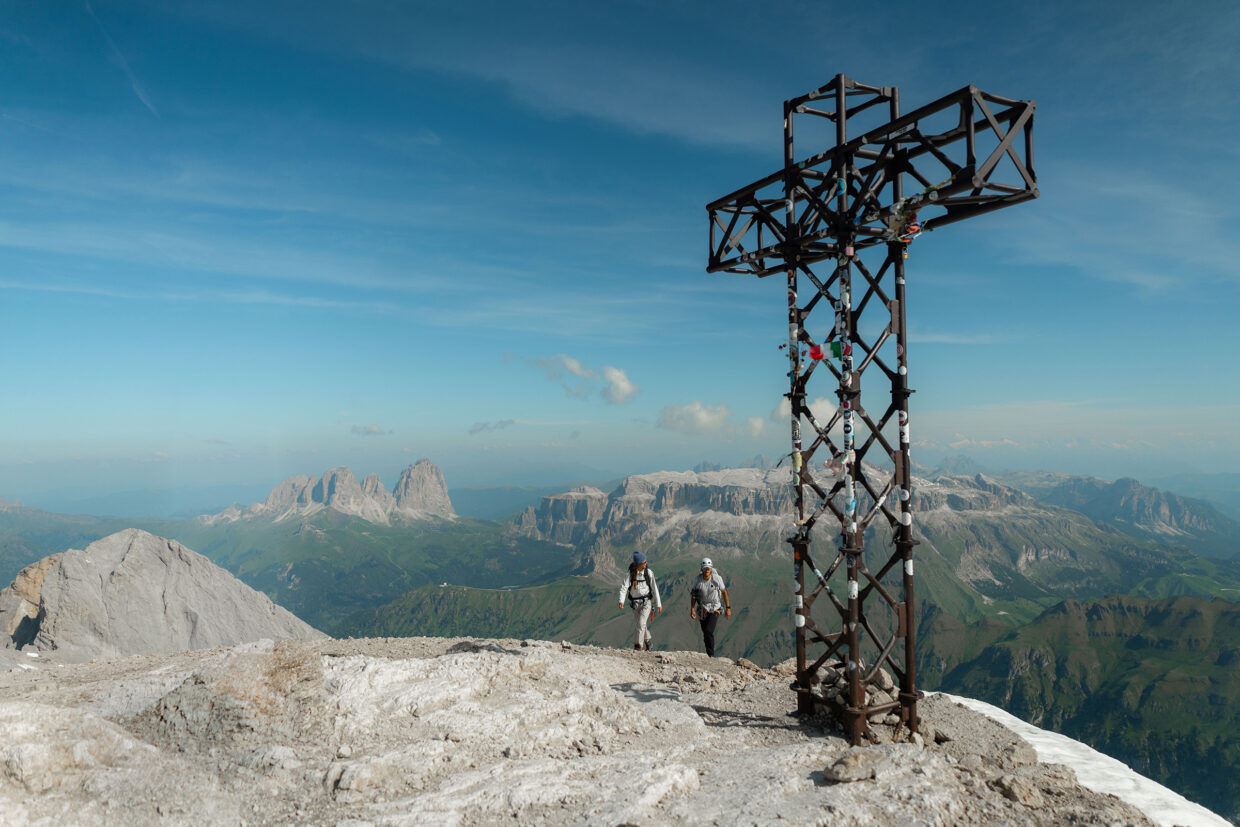
We started with the highest mountain first, and the only one we’d need full glacier kit for. With temperatures soaring across the Alps, a 3.00am alarm was as much about safety as sunrise chasing; we aimed to be off the glacier before the heat of the day could loosen rock and ice. Marmolada is a vast, beautiful massif and home to one of the few remaining glaciers in the Dolomites. We’d need to cross this before tackling the final rocky ridge to Punta Penia. Above 3,000m, every step became noticeably slower, but as the sun rose, we climbed through steep limestone gullies to the summit, where soaring 360° views opened across the range.
I know we had a lot of hard work still to come, but it felt great to see the project, which I’d scoped using maps and guidebooks months before, finally underway. With the first peak in the bag, we descended hungry and with legs worked before continuing towards the next mountain. Our day ended with a cold swim, some well-earned pasta, and a night in the refuge.
IRON // Civetta (3,220m)
A towering limestone fortress of the Dolomites
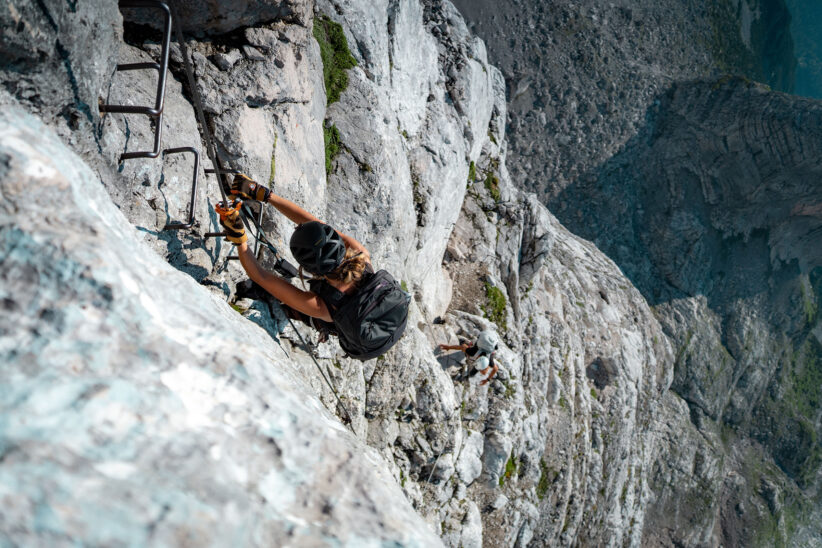
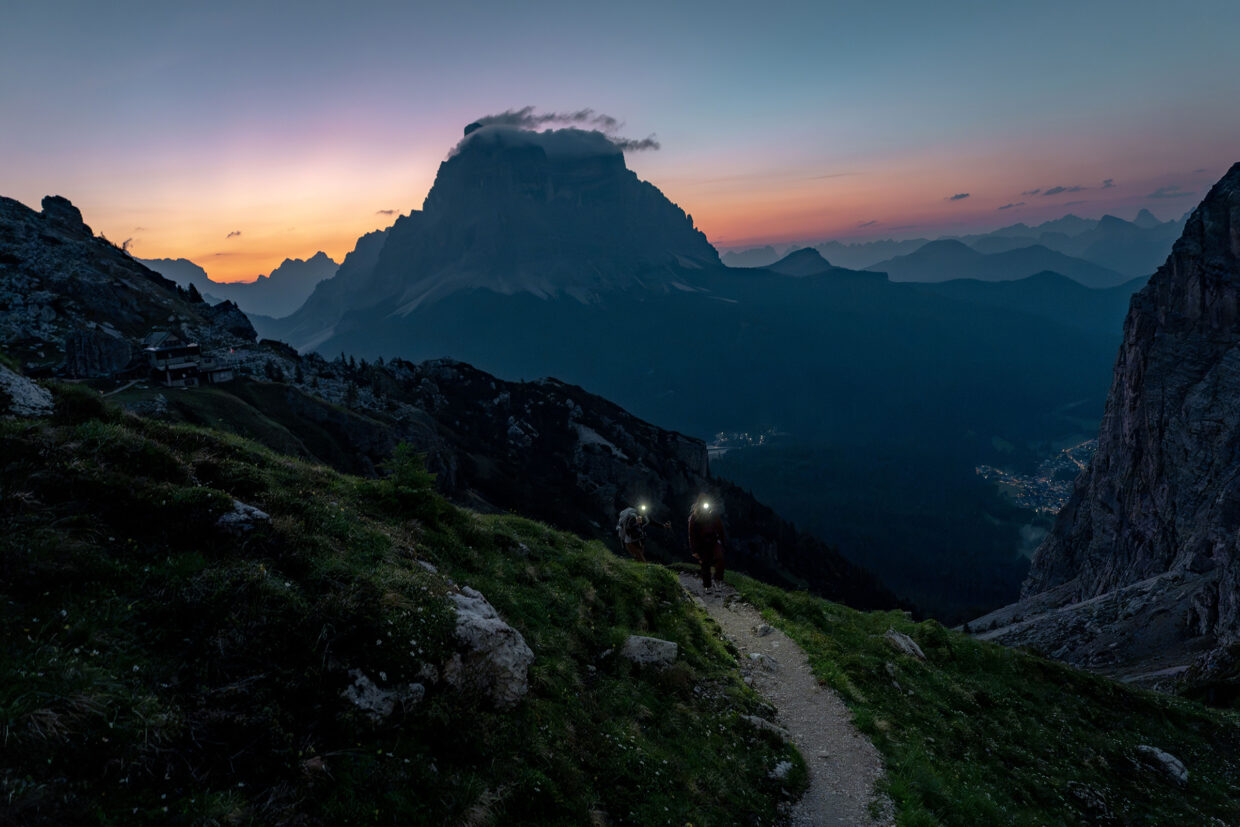
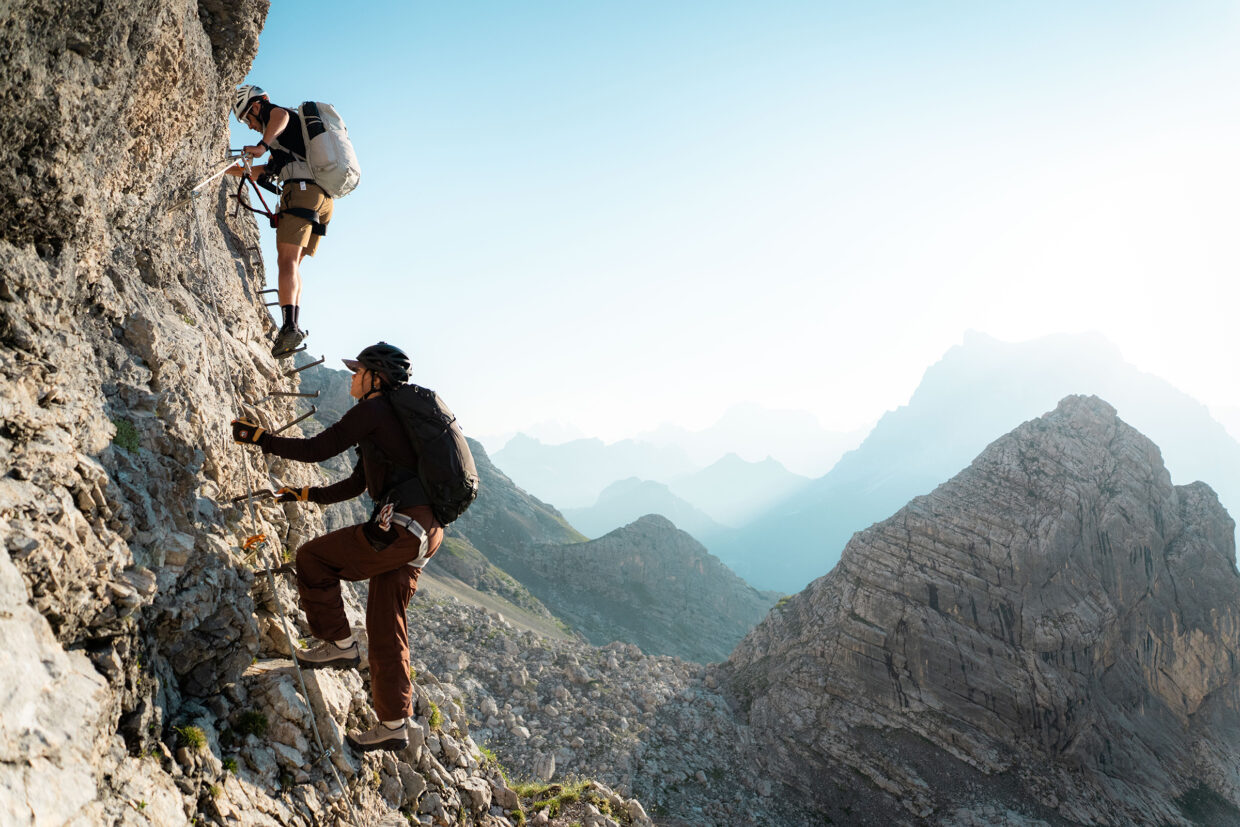
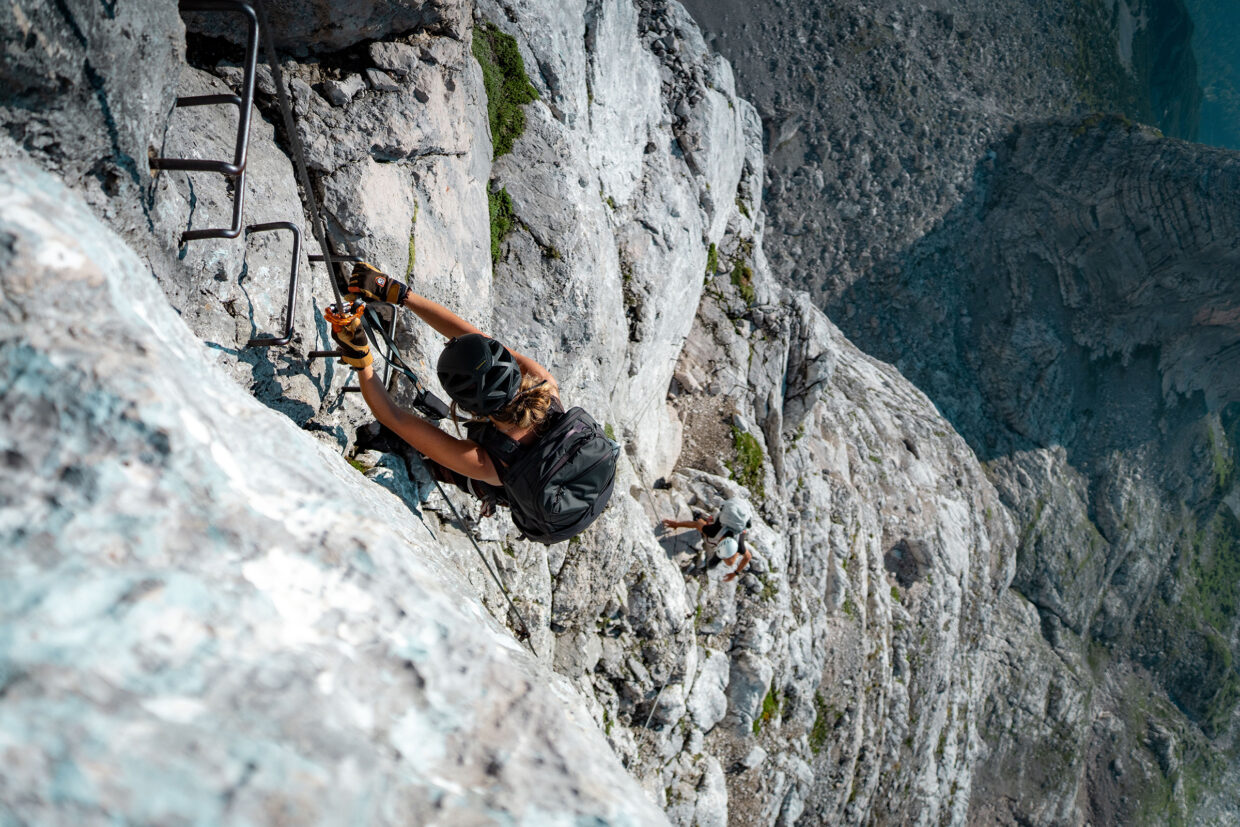
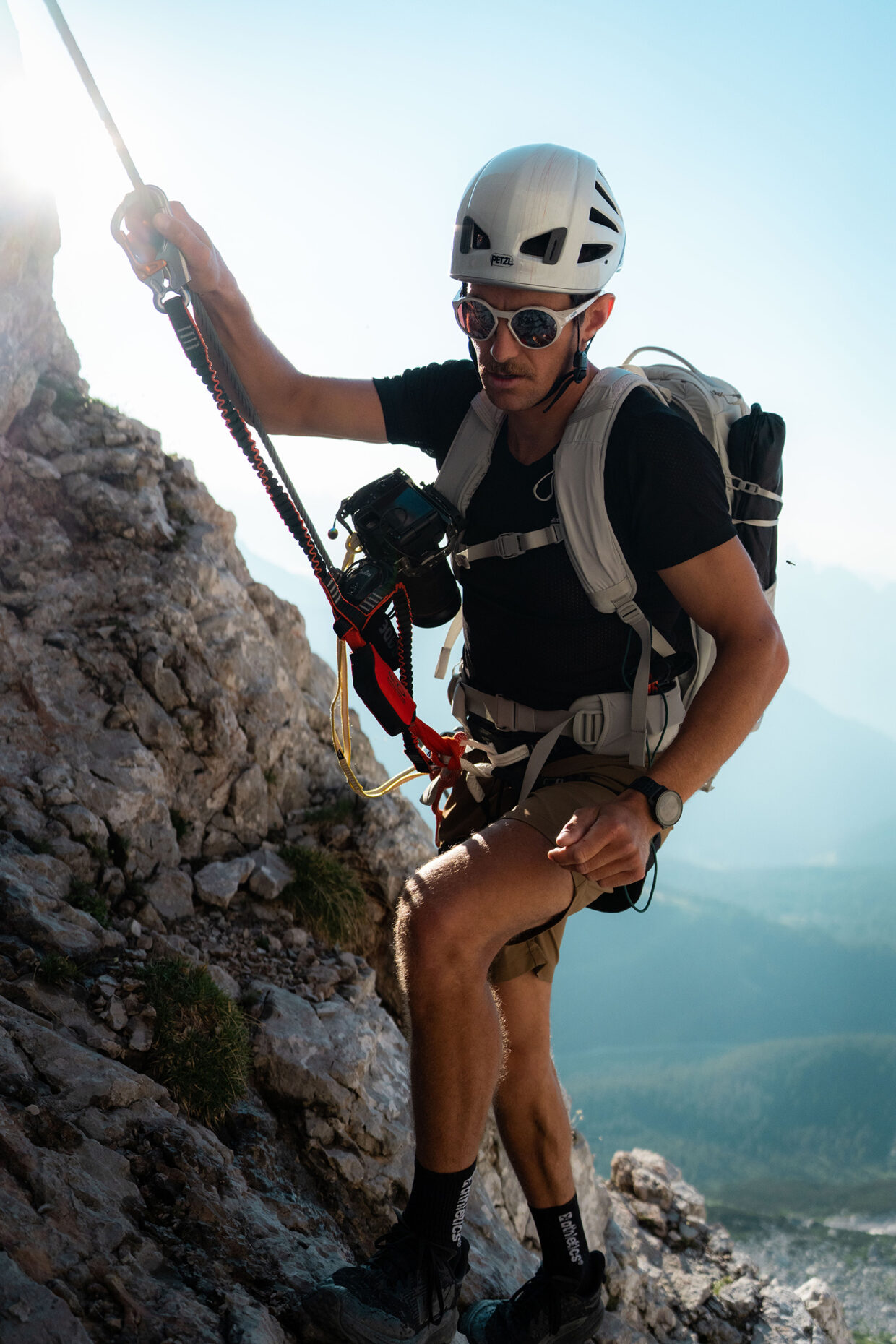
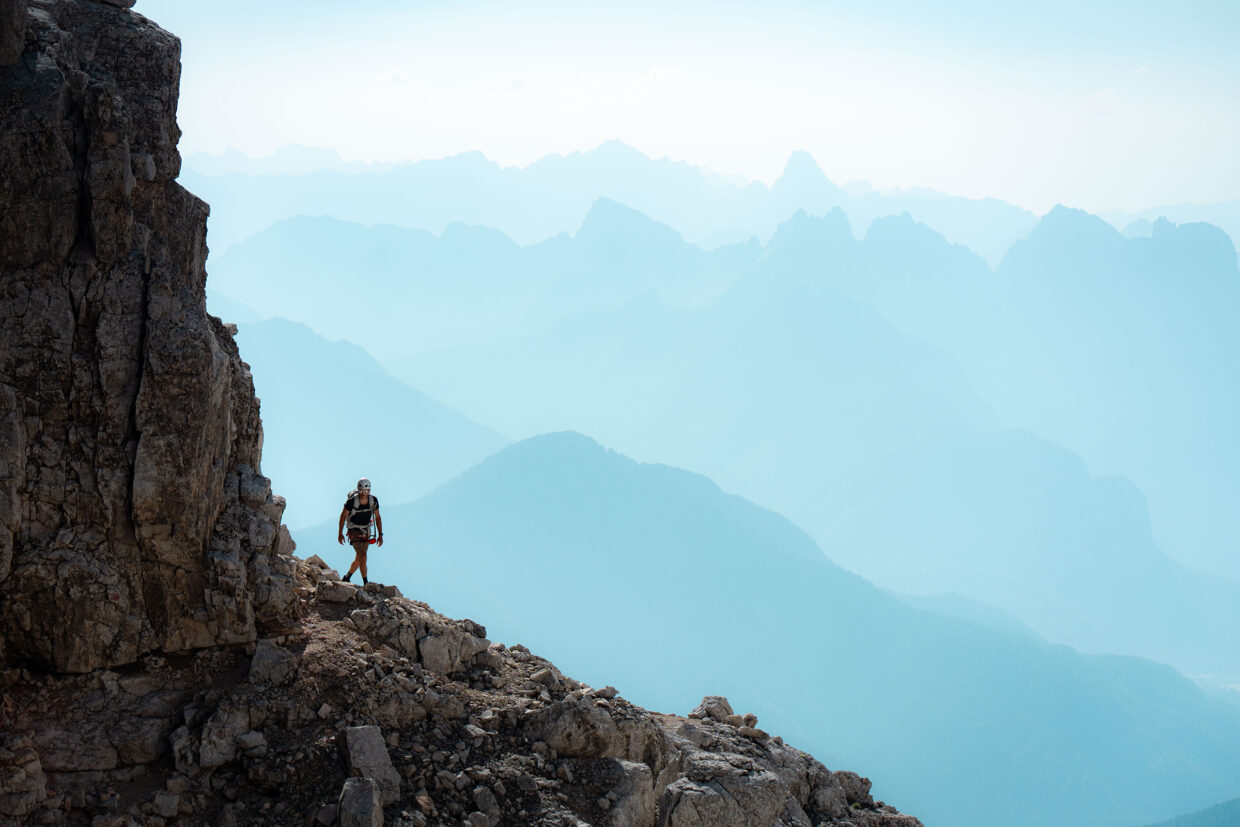
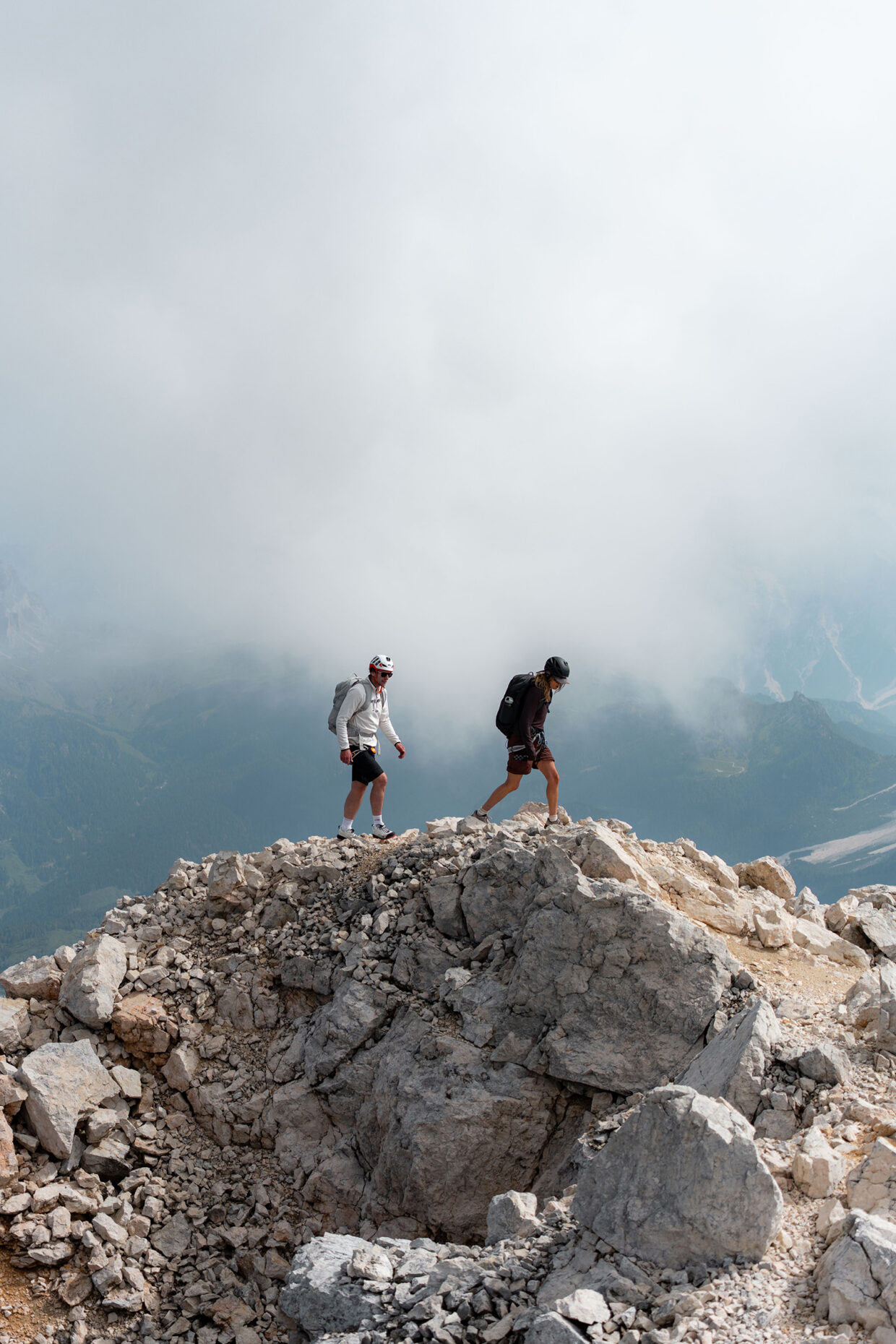
Our second mountain, although lower in elevation, had a truly intimidating presence. Civetta’s North Face rises 2,000m from the valley floor, and it would prove our most technical challenge yet: a relentless 1,000m via ferrata of vertical ladders, exposed limestone, and scrambling. Originally developed in the 19th century but strongly associated with the First World War, via ferrata use fixed cables, ladders, and metal steps to open up spectacular mountain terrain to those with a harness and a strong head for heights. We headed out before dawn, still feeling the previous day in our legs, following a beautiful balcony trail towards the foot of the face before clipping into the steel and settling into a rhythm.
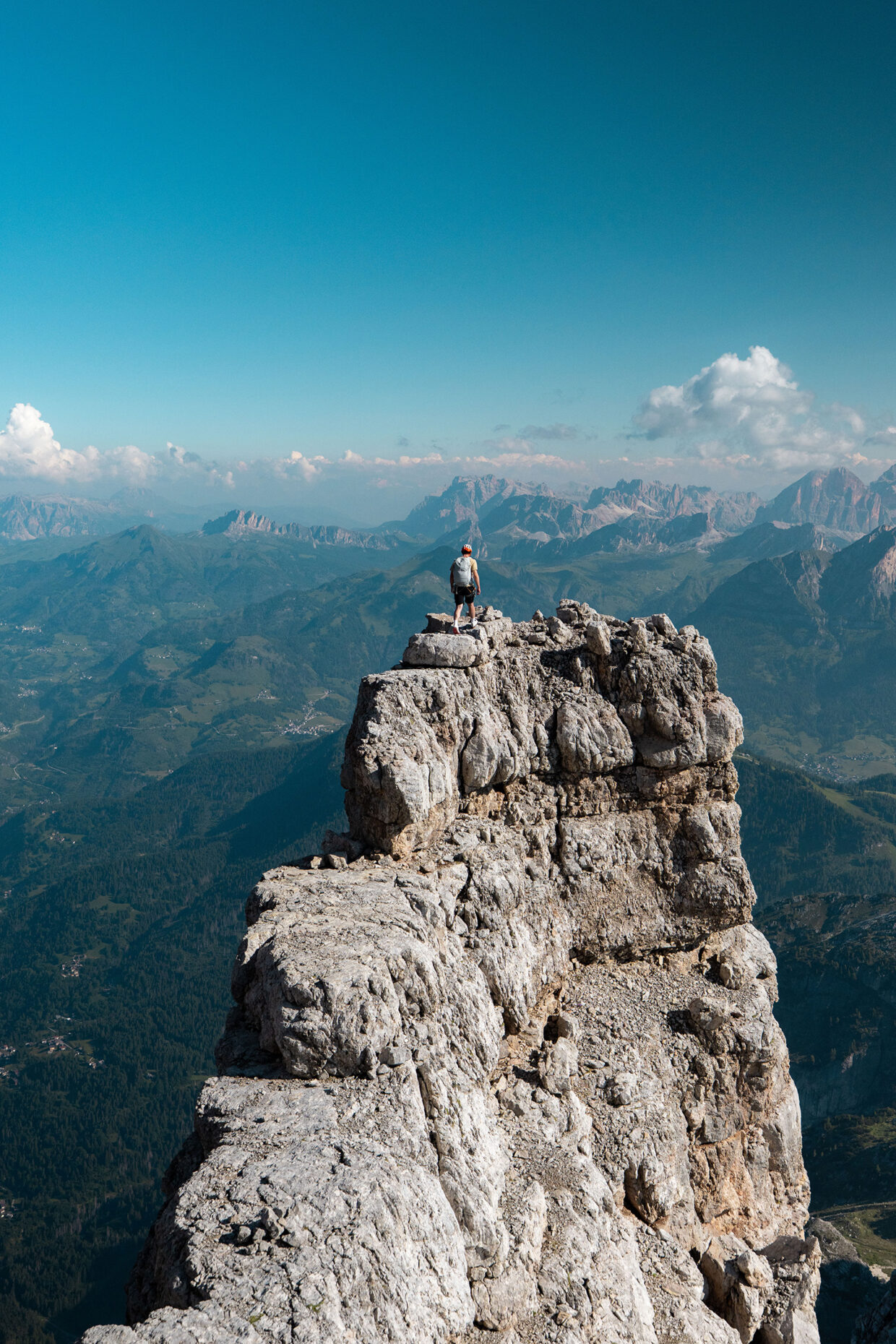
As the enclosed gullies gave way to an exposed ridge, the views exploded in both directions, revealing the immense scale of Civetta’s North Face. The summit delivered exactly what we’d hoped for: three friends above an ocean of limestone, already looking towards the next peak. But the descent proved even more brutal. Endless scree eventually gave way to ladders and hiking trails, nearly 2,000 vertical metres below. By the bottom all three of us were limping.
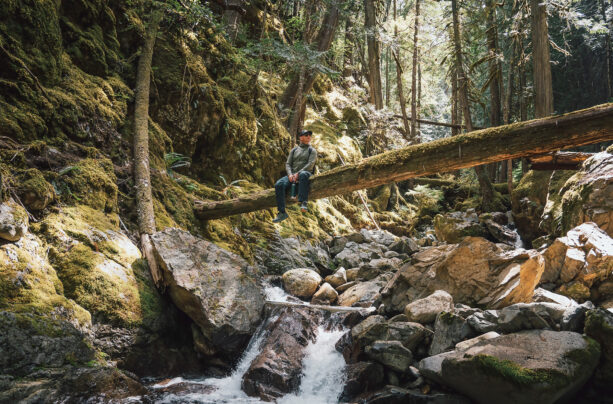
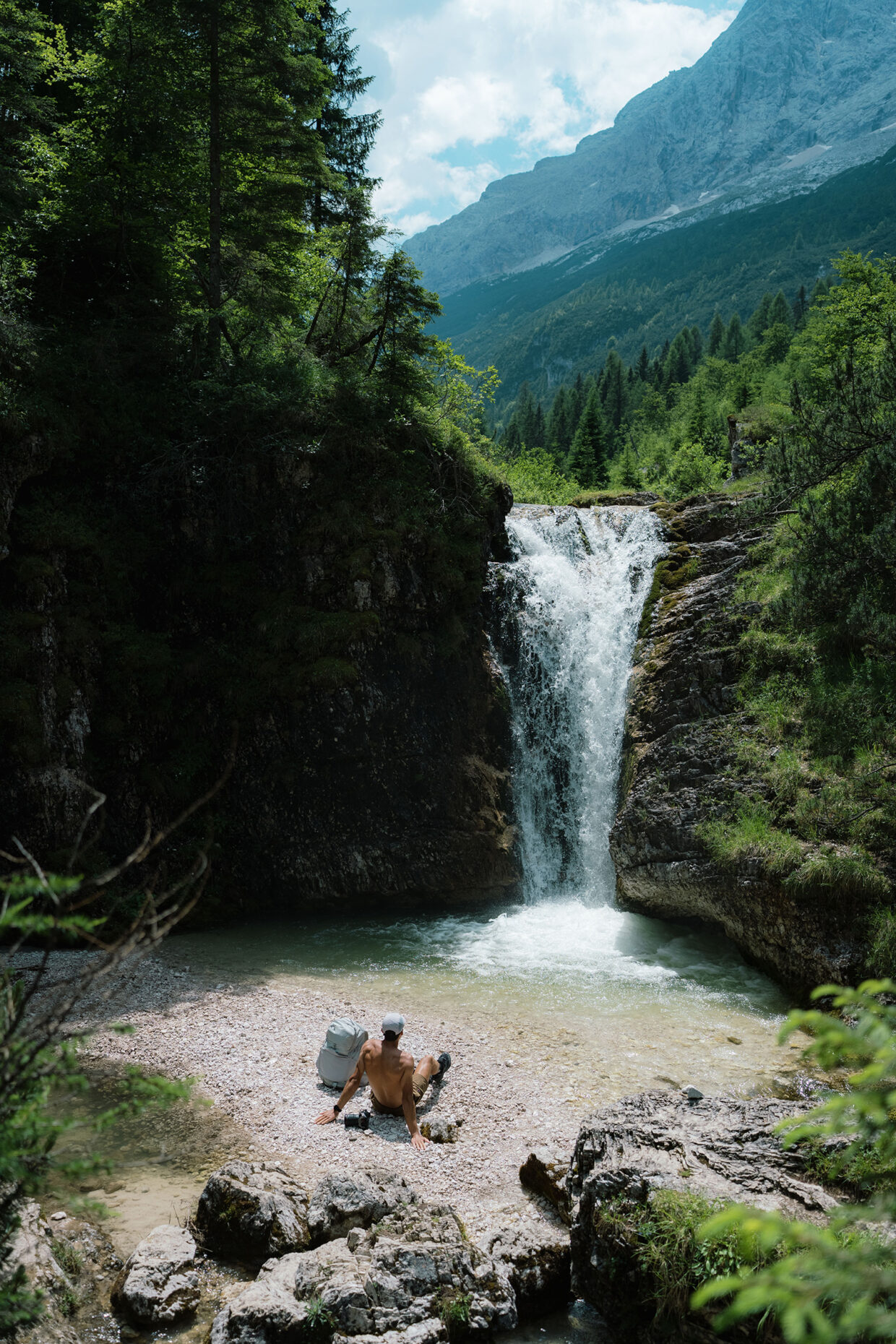
The trail towards tomorrow’s mountain, Pelmo, only added to the doubt, until we found a hidden waterfall and plunged into its icy pools, briefly numbing two days’ worth of battered legs.
STONE // Piz Boè (3,152m)
A broad massif topped by a perfect pyramid of rock
Back in civilisation and with a mouthful of pizza, we faced the reality of our swollen knees and conceded that our original plan, Pelmo, was no longer within reach. It was another peak with complex rocky terrain from start to finish and no easy way up – or, more crucially for our bodies, down. Although I was reluctant to deviate from the plan, it was clear that continuing would be a little unsafe, perhaps risking more serious ongoing injury. Back to the maps, we found an alternative we’d already spotted from Marmolada’s summit: Piz Boè, affectionately nicknamed by Ebba ‘Cake Mountain’.
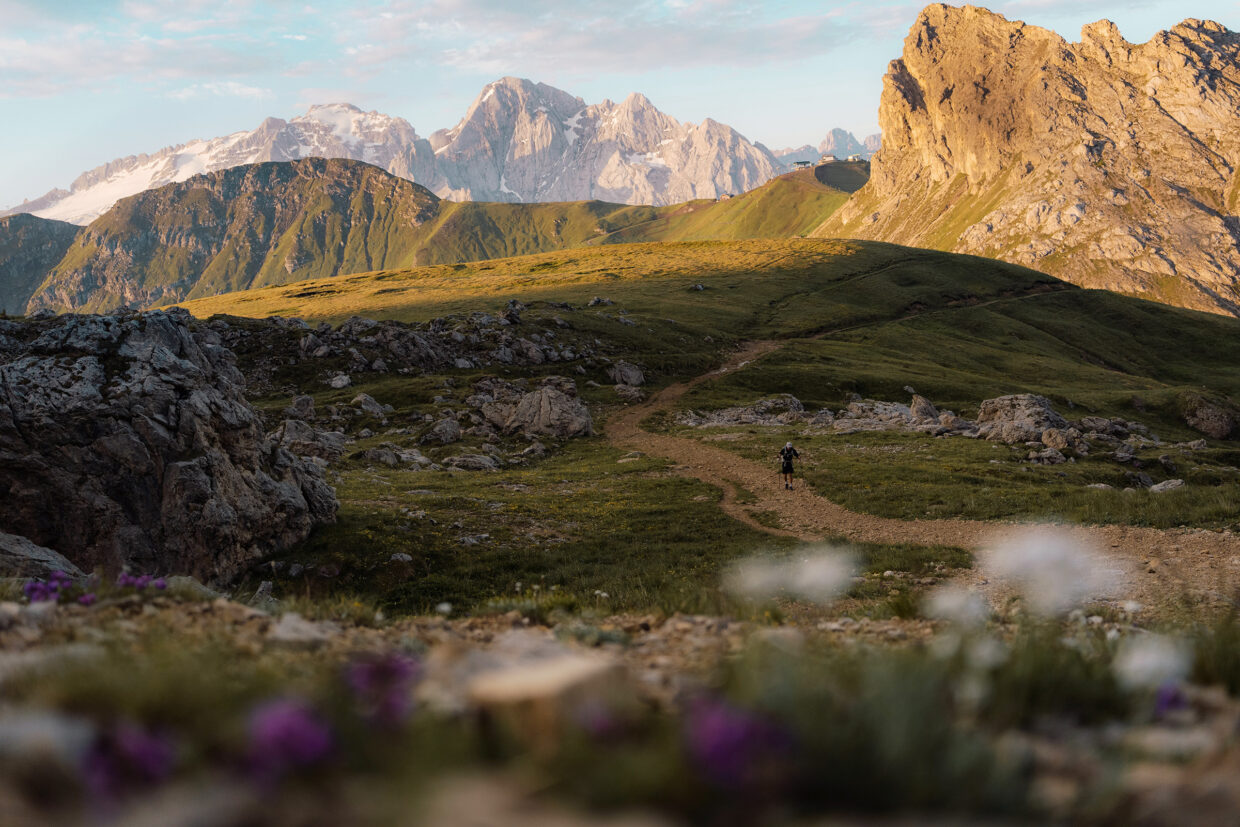
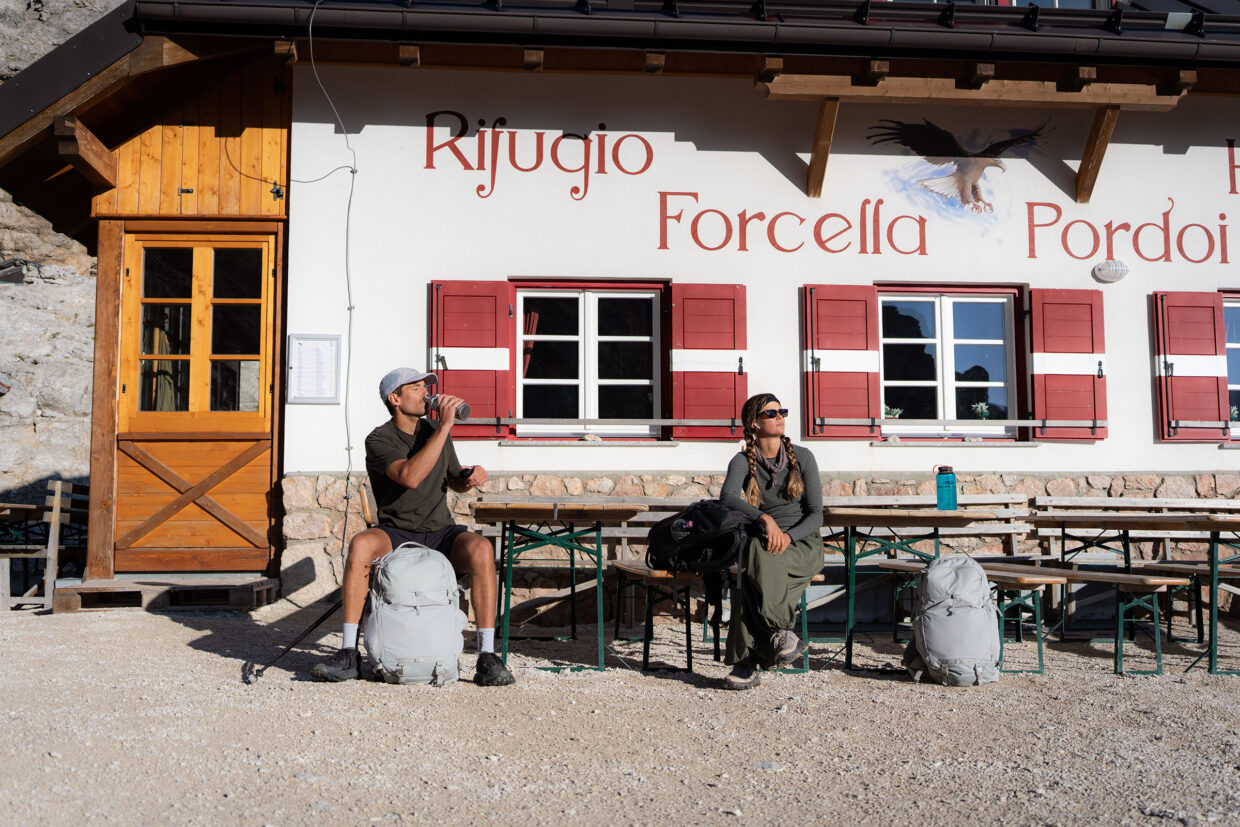
At 3,152m, Piz Boè still promised a worthy finale to our three-peak journey, but with a slightly less technical ascent and, more importantly, a much shorter descent that better suited our battered legs. By morning, Mauri couldn’t bend his knee properly, yet somehow through bloody-mindedness (or stupidity) he continued upwards. We climbed from flower-filled Alpine meadows into the broad couloir, and stopped unexpectedly at Forcella Pordoi where a refuge was serving breakfast, perfectly timed to restore some energy and morale. From there, we crossed Piz Boè’s vast rocky plateau. The terrain was rough but never quite reached the intensity of Civetta. Finally the summit cross came into view.
Standing on top didn’t feel like triumph as much as relief that we’d listened to our bodies, adapted instead of stubbornly making poor decisions – but also relief that, despite everything, we’d still completed a journey that a few days earlier had existed only as an idea sketched across a map.
The motivation and excitement for this adventure were rooted in climbing these three specific peaks in as many days, each with its own distinct Dolomiti character. But standing on the summit, the satisfaction came not from following the plan to the letter, but from sharing a journey of all its highs and lows with two equally ambitious good friends.
Words and photography by Aaron Rolph // @aaronrolph
Featuring Maurizio Marassi // @mauri_marassi and Ebba Forsgren // @ebbaforsgren
Supported by Stubble & Co // @stubbleandco