Simple Choices
A Bikepacking Adventure in Mongolia
Words: Alba Xandri // Photography: Alba Xandri & Ricard Calmet
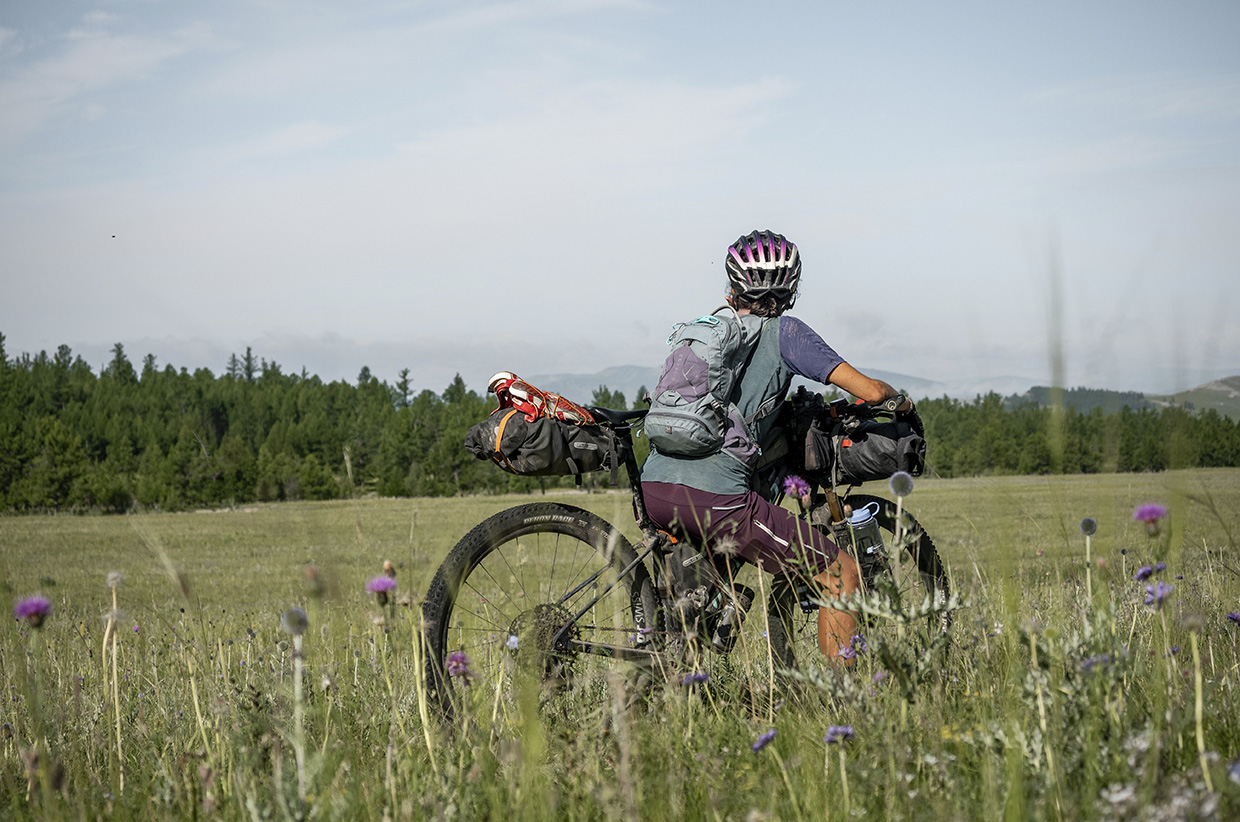
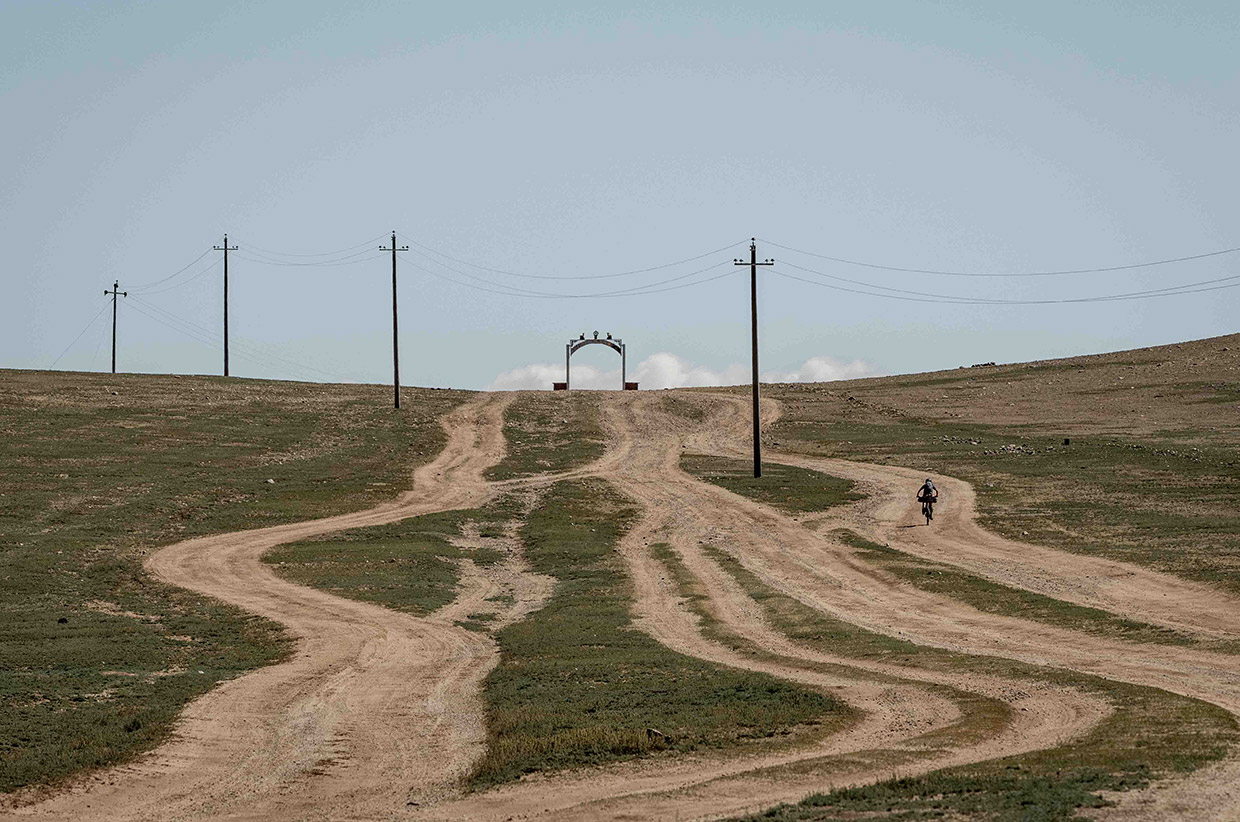
The air grew heavier as the sky shifted above, dark clouds rolling in like an army. I glanced over at Ricard, pedalling ahead of me through the Mongolian steppe. His short, unruly hair, poking out from under his cap, was tossed by the wind. Sweat and mud streaked his face. Although I couldn’t see his expression, I knew he was watching the sky closely, just like me.
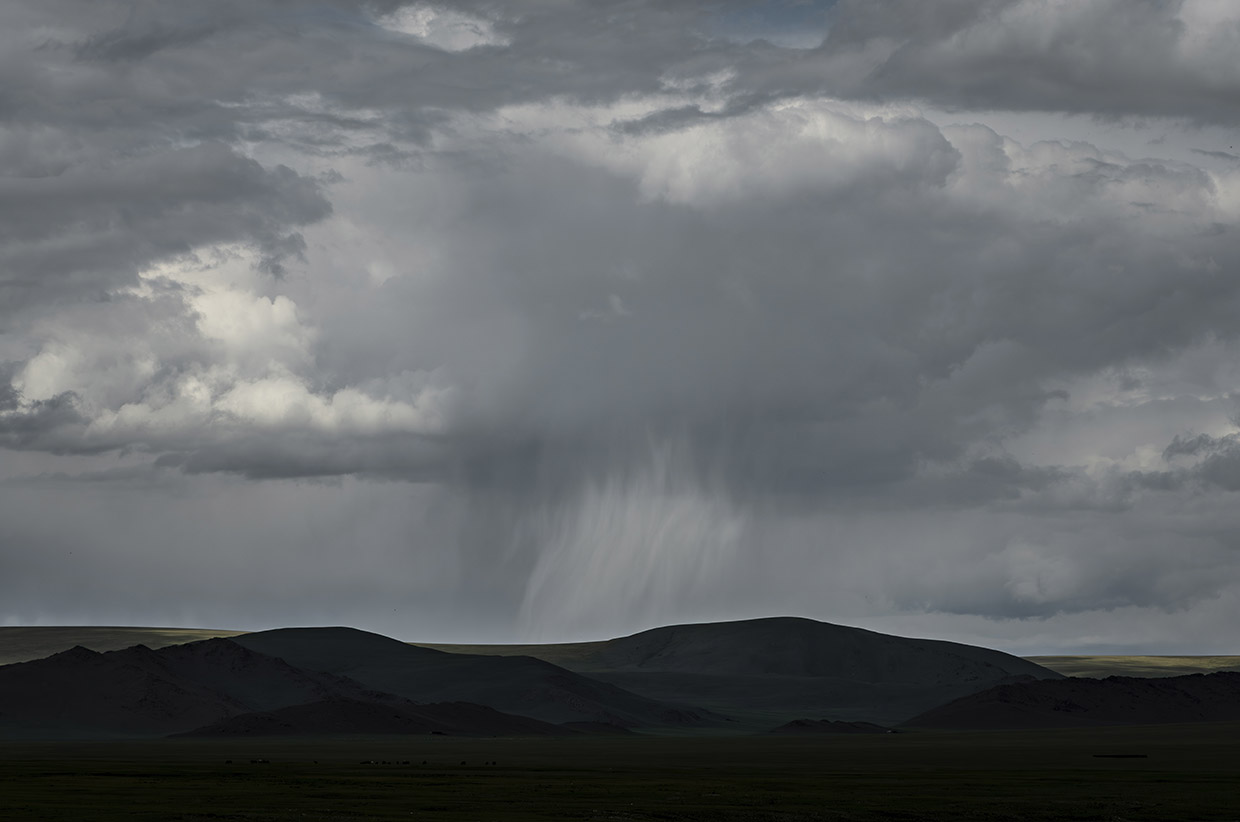
We were warned that climate change had reached Mongolia. July had always been characterised by sunny mornings and stormy afternoons, like August in our own Pyrenees, but now some days it was already raining early in the morning. It was midday in the Khangai Mountains, and we were on alert due to the quickly changing colours in the sky – from intense blue to the white of towering cumulonimbus, and now to this leaden gloom.
‘Think we can outrun this one?’ I called ahead to Ricard, trying to sound nonchalant, though my eyes kept darting back to the wall of cloud.
‘When did we ever outrun a storm?’
He was right. Ricard, quieter than me, contemplative, was always looking at the world through a camera lens. While I was often more practical, Ricard was the one who stopped to look at a crack in the earth or the way the light fell on a mountain, as though he saw something in those moments that most people missed. In this case he was seeing the obvious.
The first heavy drops of rain splattered against my face. ‘Fine,’ I said, laughing. ‘I admit it. We never outrun storms.’
The first rumbles of thunder echoed through the mountains. We both knew the drill: find shelter. Fast.
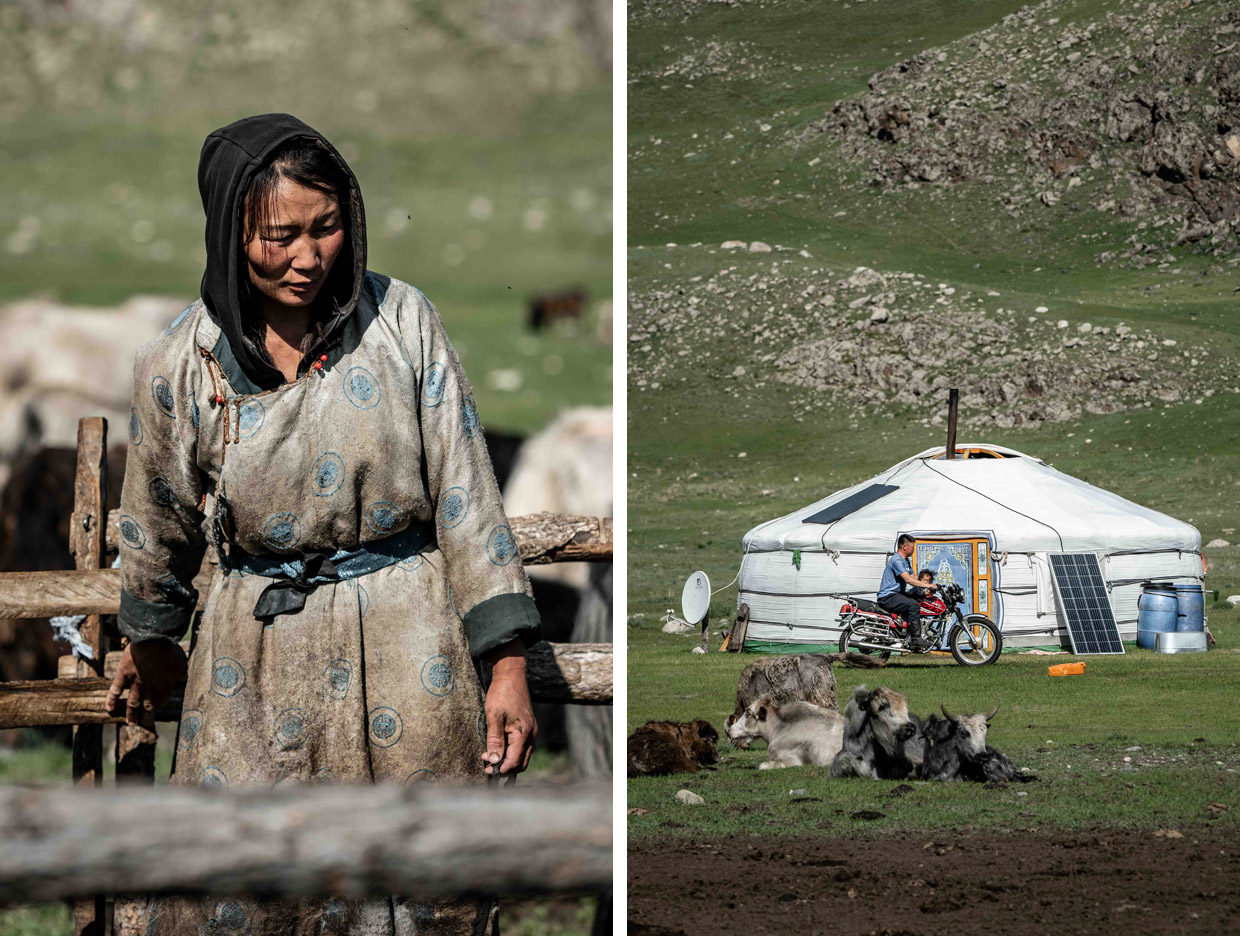
We spotted an isolated shape in the grey distance – a ger, the traditional Mongolian yurt, and we veered towards this comforting structure without hesitation as the storm gained strength behind us.

As we reached the ger, the rain intensified, and I felt the cold wash through my thin cycling layers. I knocked and pushed the door open, hoping the people inside would offer us shelter, and the warm, earthy smell of burning dried yak dung filled my lungs. My eyes strained to adjust while we hovered there on the threshold, half in and half out. So close to safety.
I heard a woman call out a word I couldn’t understand, but the tone of hello was unmistakable. A bright flash, another peal of thunder, and suddenly the moment had a theatrical vibe. As my vision grew accustomed to the low light, I realised that several people were sitting facing us: the woman who had greeted us, two men smoking, and small children playing on the floor. All faces looked in our direction. The woman stood to look at us.
The first thing I noticed about her was a strikingly alert gaze. Eyes twinkled. She assessed me and Ricard quickly, with the calm of someone who has seen hundreds of storms. There was no immediate outpouring of friendship from her, but it was not an unfriendly gaze either; just one of brisk practicality. Then I noticed the deep pattern of lines and wrinkles on her face and hands. This was a person who lived a tough life in a tough place – and mostly lived that life outside. But, although clearly old, she carried herself with a strong posture.
‘Bayarlalaa [Thank you],’ I said, hoping our bedraggled appearance spoke for itself. My Mongolian was very rough, but by the woman’s sudden smile I could tell she appreciated the effort.
Only now did she nod and gesture for us to enter. So I stepped inside with Ricard close behind, and we peeled off saturated jackets, shivering. The woman gestured for us to sit left of the door, and through further gestures we realised that we were not to remove our shoes. We thanked them again and sat on the floor next to a central stove they had just lit. Warmth gradually returned to our bodies. The men looked at each other, nodded their greetings to us, and raised their hands to the fire. Thunder continued to crackle outside and rain drummed on the roof.
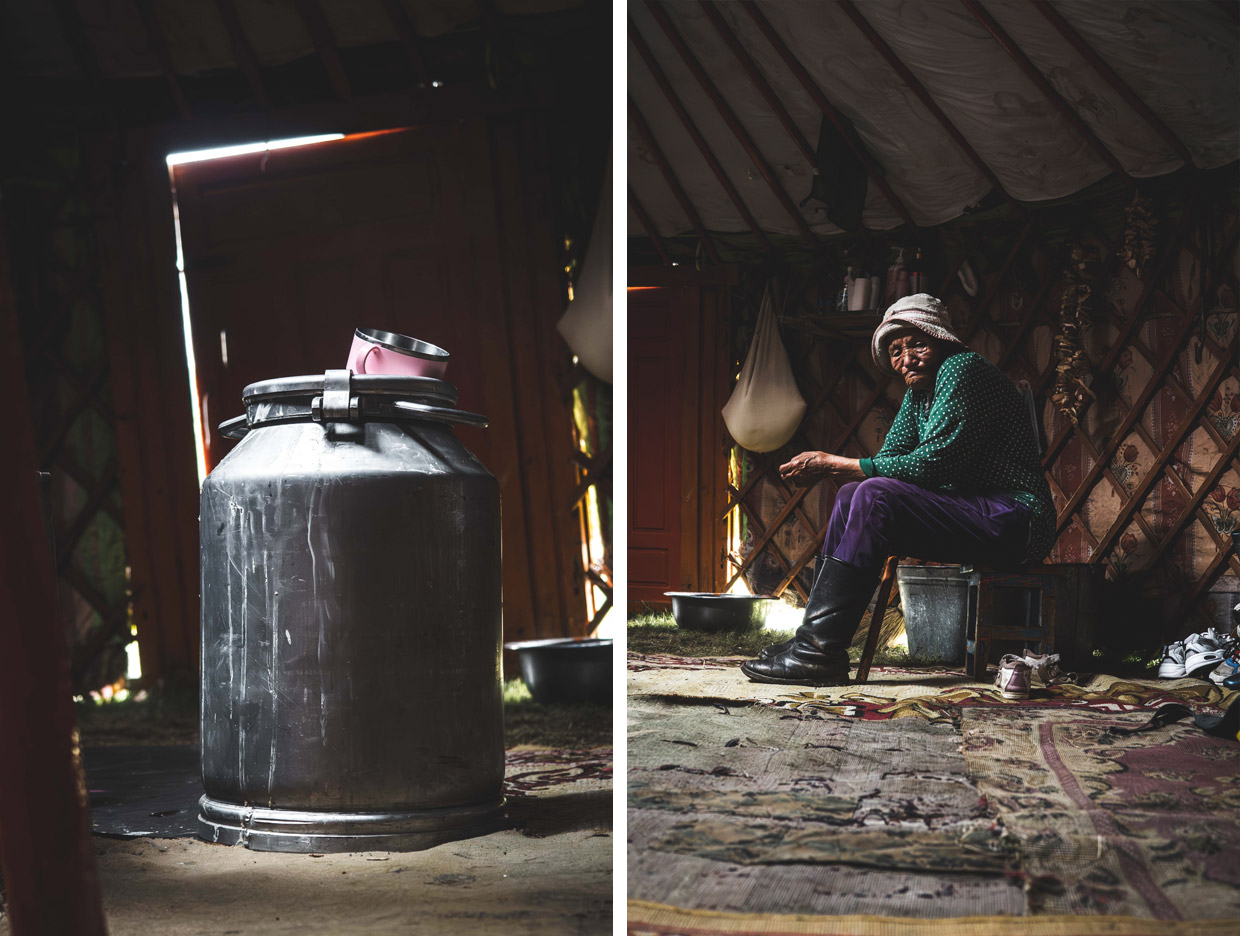
A warm, golden glow wavered around the circular space we found ourselves in. My eyes were better adjusted to the dim light now. As I looked around I could see colourful tapestries adorning the walls, as well as low shelves holding jars, five or six books, and various small items. This small and intensely personal space had a peaceful feeling to it. Is that how these people felt about it – these generous people who had let us in from the storm, assessing our intentions based on no more than a smile and a word?
The old woman brewed milk tea and served aaruul (dried milk curd), orom (clotted cream), and bread. The orom – the cream of the milk that I had loved as a child – transported me back through the years. When my grandmother had boiled the milk, she’d call me to serve the cream with some sugar. I always waited for that moment with the excitement of anticipating a great gift.
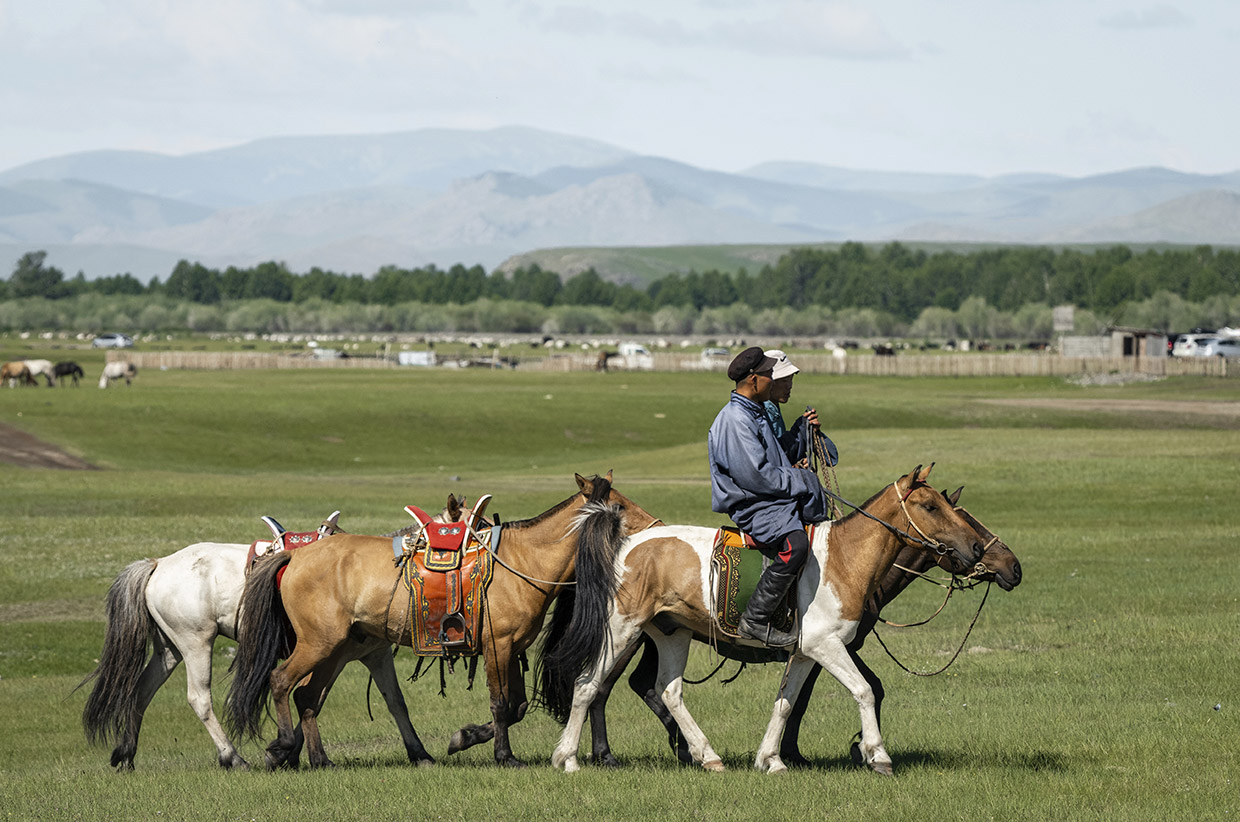

We had only sought shelter from the rain, but found ourselves enjoying the hospitality, grateful for this quiet moment, grateful for an enforced pause. We always seemed to be rushing around. But this feeling had repeated itself throughout our long journey – the sense that we had so much to learn from nomadic communities. They had pressures and worries of their own, of course, but we did not see them rushing. Especially when nature had other plans for their day. They knew when to push and when to rest. I always sensed quiet respect from them.
‘You think the storm will last long?’ Ricard asked, and I found myself smiling with contentment as I looked around the cosy space, the memories of childhood flavours still on my palate. ‘Who knows?’ I replied. ‘Maybe it’s the moments like these – the unexpected pauses – that we’re really looking for.’
The storm howled outside, but here the world was still. Our hosts carried on doing what they were doing: smoking, playing, working, with occasional quiet words amongst themselves and friendly smiles in our direction. The fire crackled. Scents of milk tea and smoke enriched the air. And for once I didn’t feel the need to go anywhere or do anything.
***
Our route continued north towards Lake Khövsgöl, Mongolia’s largest lake. The terrain changed from open steppe to a more alpine landscape – a mountainous land dominated by bristling ranks of Siberian larch trees. The tracks grew harder and the weather wilder.
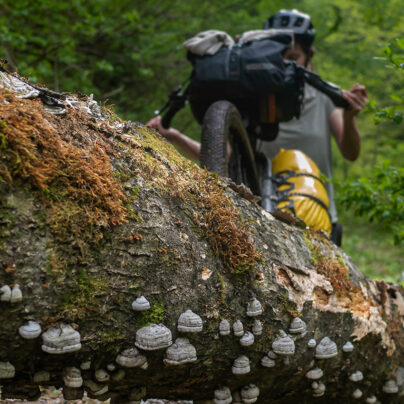
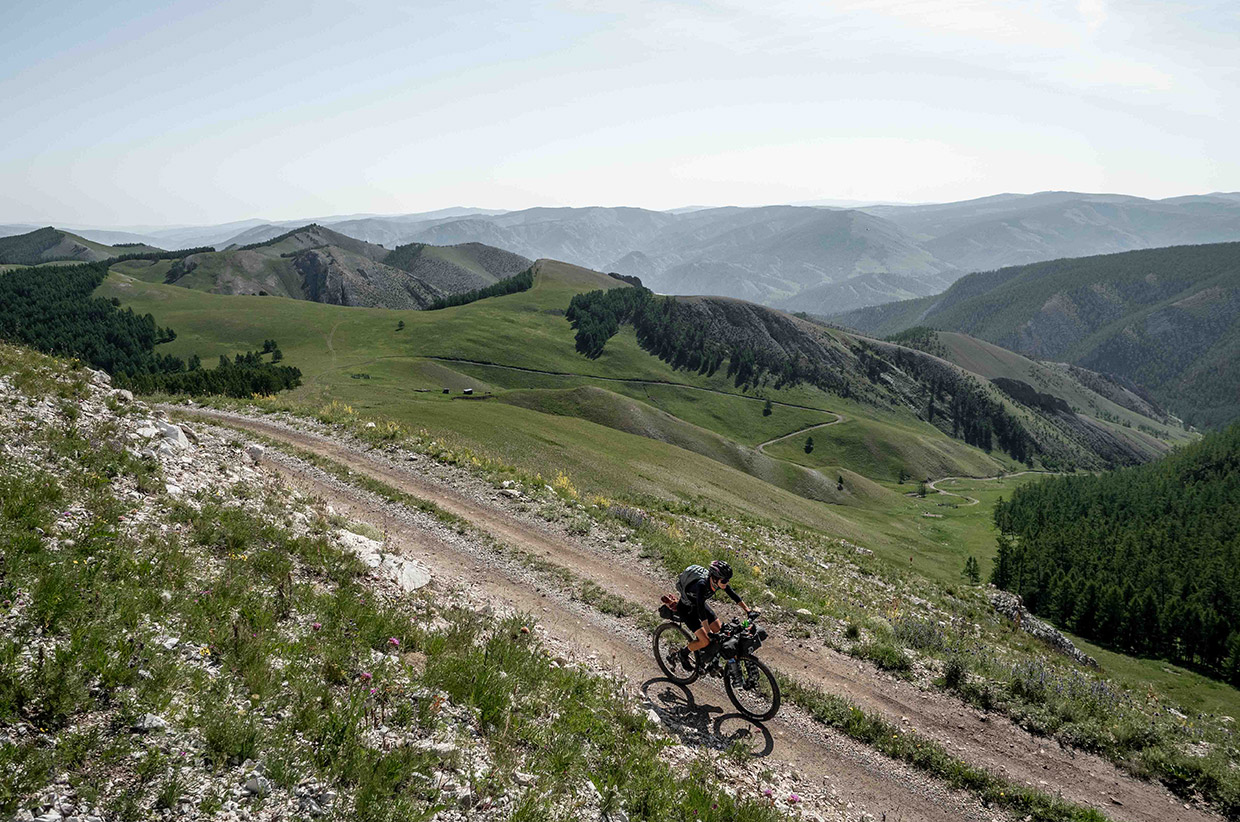
The next two days took us through the mountains of Khoridol Saridag. The cross-country track we followed from Khargal soon became a trail, then a path, and finally a vague swampy route. We pushed our bikes for kilometres until we found a dry patch next to the river to camp. The next day, it was time to take the 2,370m mountain pass that would lead us to the track connecting us to the village of Ulaan Uul. It was not going to be easy. The elevation gain, as well as the altitude, daunted me as we traced the route on our map.
The next day, when it was time to ascend the pass, felt off. Laden with questions. My pedals felt heavy that day. Again the weather deteriorated more quickly than expected. The sky above folded in on itself, black clouds creeping across the blue, threatening rain. I glanced at Ricard, who was hunched over against the wind. I could see him breathing hard. My own heart hammered in my ears as I sucked in the thin air.
‘Think we’ll make it over the pass?’ I asked, and Ricard called back over his shoulder, ‘Could be a tough one.’
I chewed on that thought for a moment. What if the river’s too high to cross? What if we get stuck? What if… a bear? What are we actually trying to achieve today? The questions lingered, unspoken.
Ricard slowed and glanced at me. ‘You OK?’ So much of our communication on this trip was unspoken at this point. He knew there were doubts swirling in my mind.
I stopped pedalling, feeling the cold wind pressing at my back. ‘Yeah,’ I said, but the word felt hollow. We had been cycling for so long. We’d come so far. But why? What were we seeking? Did we need to cross this pass to find it?
Ricard looked at me for a moment longer, then nodded toward the darkening horizon. Maybe we’re not meant to figure it all out right now. The thought came from me, but it’s what I imagined Ricard would say. I didn’t know what to add, so we stood in silence. Then the rain started – small drops at first, then faster, colder. And just like that, another storm broke.

We both tilted our heads up, letting the cold rain sting our faces. For a moment, it felt like the world was resetting itself. The mountains rose in sharp contrast against the dark sky. This landscape was wild and raw, yes, but there was fierce beauty in it. Meaning too. A lesson, maybe. Perhaps many lessons.
‘Guess we just keep going,’ I said, the realisation simple but comforting. A time to rest and a time to push. This time there was no friendly ger to shelter us. Storm or no, our way forward was clear, and in that realisation the doubts melted away.
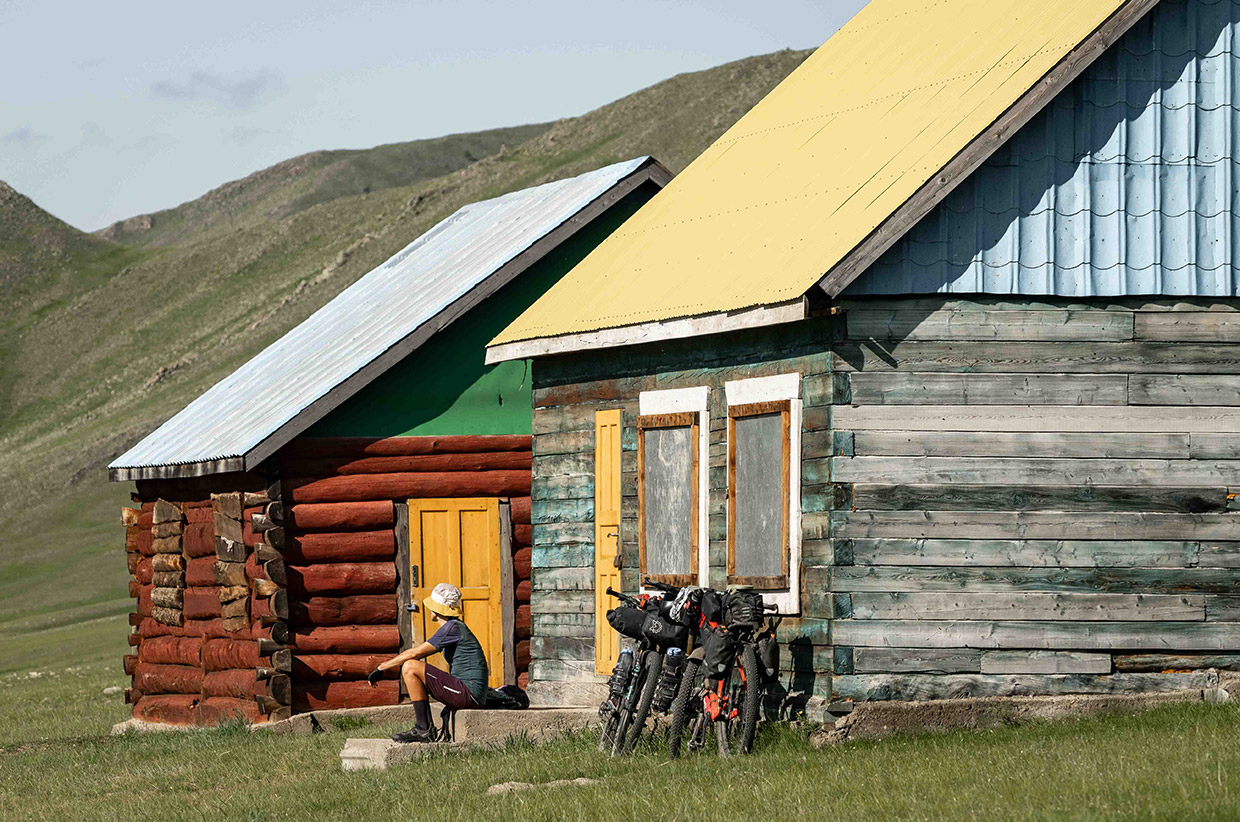
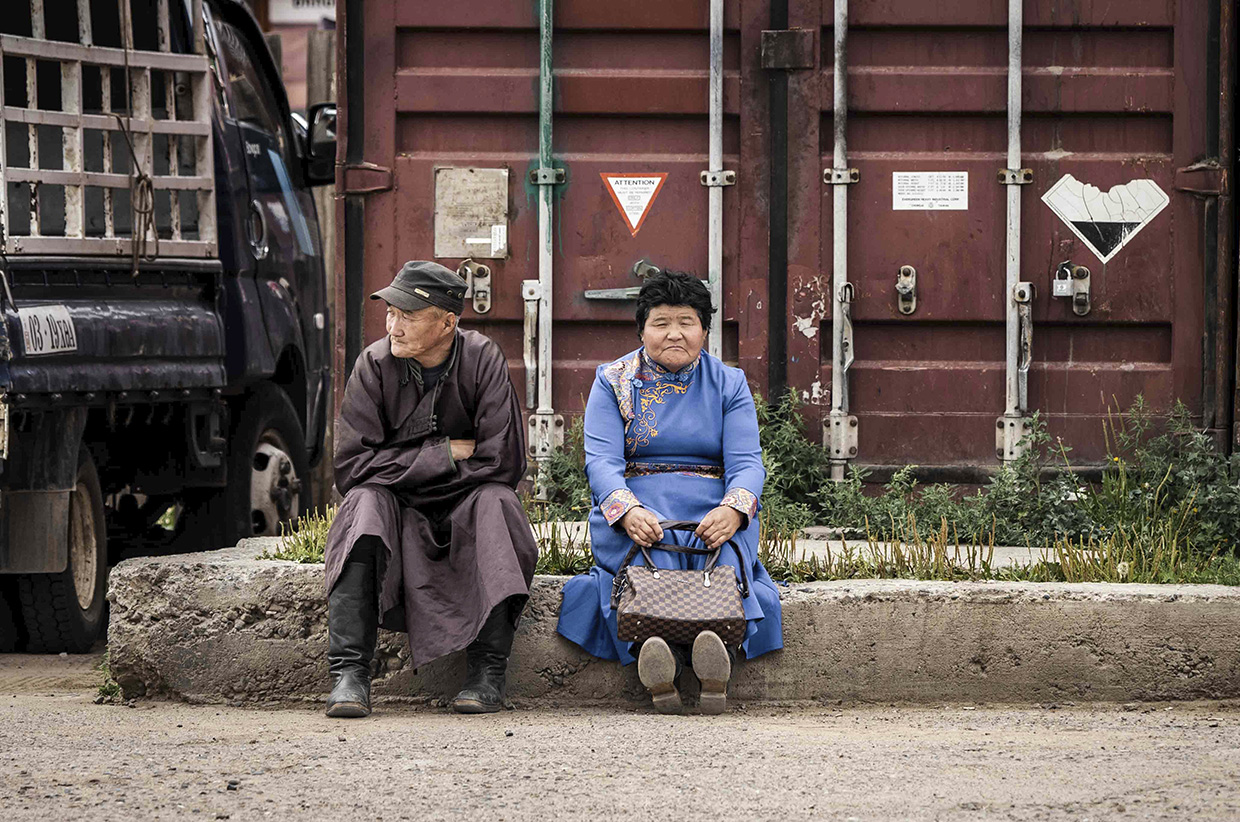
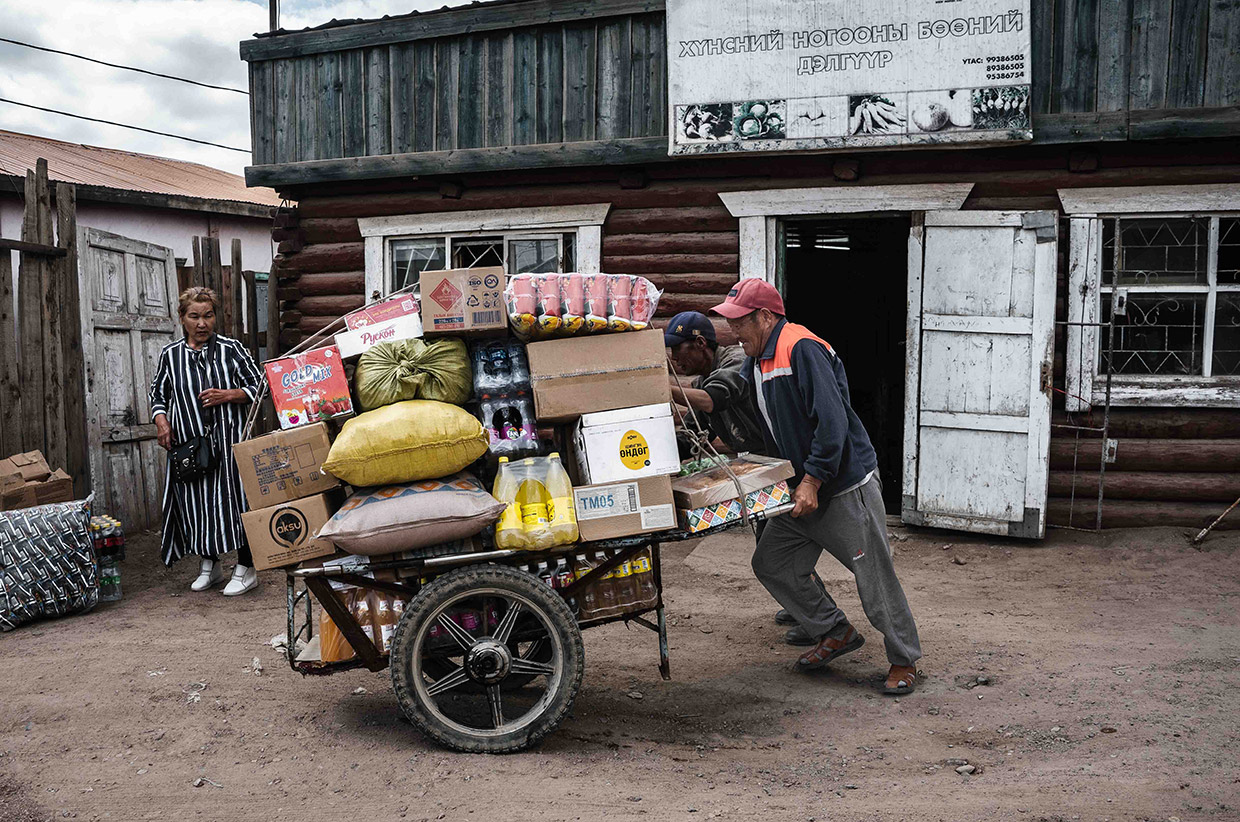
After a lot of pushing, walking, and cycling, we finally made it to Ulaan, a village of colourful houses that appeared out of nowhere. There we ate, shopped for the next few days, and rested both body and mind. A stretch close to the border with Russia followed – involving a tense moment at a police checkpoint – followed by leaving the mountains and forests of the north behind, returning to the steppe.
After Bayanzürkh, our next stop was Uliastai before facing the final leg of our journey. We followed the usual ritual: eating well and buying provisions. This time, however, exhaustion hit, and we decided to rest for a couple of days. We left a little fresher.
We approached the sacred peak of Otgon Tenger. It loomed larger than we had imagined, jagged and shrouded in clouds, and its colossal bulk made us feel tiny in its presence. Once again we found ourselves climbing towards a high pass. This one was nearly 3,000m high, the terrain rocky and unforgiving under our tyres. A capricious wind pushed us back one moment and gave us a fleeting tug forward the next. But these little jolts of help were illusory at best. Each and every pedal stroke was an effort.
‘Feeling the altitude yet?’ Ricard called from ahead, voice strained but steady.
I didn’t answer immediately. The air was thinner, each breath a little more laboured. But we had been through this before. I kept moving.
Ricard slowed and stopped, and I pulled up beside him. He wiped his brow, exhausted. ‘I thought this would be easier,’ he said with a quiet laugh. ‘But there’s something about this place. It makes you realise what’s important. It’s just… being here.’
A typical Ricard thought, but I knew exactly what he meant. We’d come far enough now to understand. We didn’t need easy – but also we had nothing to prove. We had to test ourselves – but also show humility before nature. Allow ourselves to be moulded by this experience rather than enforce our shape upon it. Be happy with what is in front of us right now. Maybe that’s what presence is, I thought. We’re here to be present, to have this experience.
At the top of the pass, the land spread out before us: wide valleys, rolling hills, and mountains that stretched endlessly. Otgon Tenger rose in the distance, its peak hidden by clouds. The air was thin, the wind biting, but I didn’t mind. This moment was another gift.
Ricard’s face was flushed with effort but his eyes full of wonder. We didn’t need to speak. The journey had already spoken for us.
First published in Sidetracked Volume 32. If you enjoyed this story, please consider subscribing to our print magazine. We collate and present the very best adventure travel stories and ship worldwide three times per year..
Words: Alba Xandri // Photography: Alba Xandri & Ricard Calmet // @alba_xandri